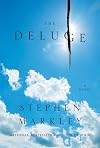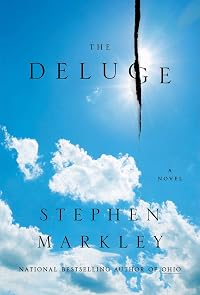
The Deluge
by Stephen Markley
On This Page
Description
"This book is, simply put, a modern classic. If you read it, you'll never forget it. Prophetic, terrifying, uplifting." --Stephen King From the bestselling author of Ohio, a masterful American epic charting a near future approaching collapse and a nascent but strengthening solidarity. In the first decades of the 21st century, the world is convulsing, its governments mired in gridlock while a patient but unrelenting ecological crisis looms. America is in upheaval, battered by violent weather show more and extreme politics. In California in 2013, Tony Pietrus, a scientist studying deposits of undersea methane, receives a death threat. His fate will become bound to a stunning cast of characters--a broken drug addict, a star advertising strategist, a neurodivergent mathematician, a cunning eco-terrorist, an actor turned religious zealot, and a brazen young activist named Kate Morris, who, in the mountains of Wyoming, begins a project that will alter the course of the decades to come. From the Gulf Coast to Los Angeles, the Midwest to Washington, DC, their intertwined odysseys unfold against a stark backdrop of accelerating chaos as they summon courage, galvanize a nation, fall to their own fear, and find wild hope in the face of staggering odds. As their stories hurtle toward a spectacular climax, each faces a reckoning: what will they sacrifice to salvage humanity's last chance at a future? A singular achievement, The Deluge is a once-in-a-generation novel that meets the moment as few works of art ever have. show lessTags
Recommendations







Member Reviews
Summary: A novel imagining the interaction of accelerating impacts of climate change and the unraveling of societies.
I should say at the outset that there are a number of reasons not to read this book:
It’s long–880 pages
It’s scary, because it reads like our news feeds on steroids–both in accounts of extreme weather and other climate change impacts and societal unraveling.
It involves movement back and forth in narrating the lives and actions of a disparate set of characters, all a part of a growing crisis intermixed with collages of news articles, fictional op-ed columns, and magazine articles. It’s not always easy to keep track of it all.
It’s raw with graphic descriptions of violence, of various iterations of sex, and adult show more language.
Yet, despite all this, I could not put it down and I can’t stop thinking about it and talking about it. The lead character in this book is really our planet–its ice sheets, its oceans, its atmosphere, and its weather. Markley portrays in vivid detail the extreme weather events we already are seeing–in even greater extremes. Unprecedented snow storms. An atmospheric river flooding California (certainly written before the recent actual weather events). Monstrous hurricanes with 250 mph winds. Fires that destroy Los Angeles. Sea levels inundating coastal cities. Midwest flooding. Triple digit heat domes a routine summer event. Melting permafrost and ocean floors releasing methane, leading to cascading increases in global warming.
The novel moves between the stories of a collection of characters. A passionate environmentalist, Kate Morris, founds a creative movement, Fierce Blue Fire, starting both local community development groups and a national lobbying effort to pass environmental legislation, ultimately gutted by carbon interests. Her story is told mostly through the eyes of Matt, her partner in an “open” relationship–the terms dictated by Kate. Tony Pietrus, is a scientist who discovers and models what happens when underwater methane is released through oceanic warming. Then there is the Pastor, a has-been actor who undergoes a conversion and becomes a religious alt-right charismatic figure who eventually runs for president as a tool of the carbon lobby. Jackie is a savvy ad exec, who crafts the media strategy that guts the climate legislation Kate had fought so hard for who goes on to join her partner, Fred, in building a global investment fund leveraging the changing energy and social situation to make lots of money for investors at the expense of the world’s poor–until she regains a conscience. There is a group of climate radicals, 6Degrees, committed to using violent means to stop big coal and corporate America that through compartmented protocols and infiltration of computer networks, evades detection while staging a series of increasingly violent bombings. Keeper, an ex-addict trying to put his life back together with the help of an immigrant pastor in a small town community and gets swept up in 6 Degrees activity. And there is Ashir, who writes memoranda to a congressperson that are really personal narratives. He is a brilliant analyst and mathematician whose predictive algorithm ends up being exploited by everything from sports betting to the investment fund Jackie and her partner, Fred, manage.
All of these characters’ stories unfold against the backdrop of an unraveling country. States seceding, An irreconcilably divided political environment controlled by powerful lobbies. A tanking economy. Food and power shortages. Increasingly violent and aggressive militias. And a similarly unraveling international situation. A series of “martyrdoms” lead to what seems an awakening and embrace of the actions needed to stabilize an ever-warming world, but one requiring generations of brave effort to do so.
While one might find faults with the book, its length, structure, and character development, I thought it all worked in the end. I found myself actually caring about many of the people. As I said, I couldn’t put it down. And it made me ask the question–could all this really happen? I find myself very troubled by the fact that I have no good argument to say, “it can’t happen here?” A society that threatens public health and political officials over wearing a piddly little face mask during a highly infectious pandemic strikes me as ill-prepared or disposed to enact radical and long term societal-wide changes to reduce global warming. Despite all we know and all the talk about energy-saving and renewables our U.S. carbon emissions went UP 1.3 percent in the last year.
Can fiction speak to what all our white papers and models have not? What Markley does is take a holistic look at what happens to a society when increasingly extreme weather disrupts the fabric of our lives on an increasingly pervasive scale. The picture isn’t pretty. He bids us to look into the abyss. While some act with nobility and courage, for many others, the worst nature dishes out brings out the worst in humans. He raises profound questions about whether our democratic republic can survive these stresses. There are indications that he hangs on to hope even while portraying how challenging the world will be for our children and grand-children. And perhaps that is where we need to be–both clear-eyed, and passionately hopeful. Lord have mercy!
____________________
Disclosure of Material Connection: I received a complimentary review copy of this book from the publisher. show less
I should say at the outset that there are a number of reasons not to read this book:
It’s long–880 pages
It’s scary, because it reads like our news feeds on steroids–both in accounts of extreme weather and other climate change impacts and societal unraveling.
It involves movement back and forth in narrating the lives and actions of a disparate set of characters, all a part of a growing crisis intermixed with collages of news articles, fictional op-ed columns, and magazine articles. It’s not always easy to keep track of it all.
It’s raw with graphic descriptions of violence, of various iterations of sex, and adult show more language.
Yet, despite all this, I could not put it down and I can’t stop thinking about it and talking about it. The lead character in this book is really our planet–its ice sheets, its oceans, its atmosphere, and its weather. Markley portrays in vivid detail the extreme weather events we already are seeing–in even greater extremes. Unprecedented snow storms. An atmospheric river flooding California (certainly written before the recent actual weather events). Monstrous hurricanes with 250 mph winds. Fires that destroy Los Angeles. Sea levels inundating coastal cities. Midwest flooding. Triple digit heat domes a routine summer event. Melting permafrost and ocean floors releasing methane, leading to cascading increases in global warming.
The novel moves between the stories of a collection of characters. A passionate environmentalist, Kate Morris, founds a creative movement, Fierce Blue Fire, starting both local community development groups and a national lobbying effort to pass environmental legislation, ultimately gutted by carbon interests. Her story is told mostly through the eyes of Matt, her partner in an “open” relationship–the terms dictated by Kate. Tony Pietrus, is a scientist who discovers and models what happens when underwater methane is released through oceanic warming. Then there is the Pastor, a has-been actor who undergoes a conversion and becomes a religious alt-right charismatic figure who eventually runs for president as a tool of the carbon lobby. Jackie is a savvy ad exec, who crafts the media strategy that guts the climate legislation Kate had fought so hard for who goes on to join her partner, Fred, in building a global investment fund leveraging the changing energy and social situation to make lots of money for investors at the expense of the world’s poor–until she regains a conscience. There is a group of climate radicals, 6Degrees, committed to using violent means to stop big coal and corporate America that through compartmented protocols and infiltration of computer networks, evades detection while staging a series of increasingly violent bombings. Keeper, an ex-addict trying to put his life back together with the help of an immigrant pastor in a small town community and gets swept up in 6 Degrees activity. And there is Ashir, who writes memoranda to a congressperson that are really personal narratives. He is a brilliant analyst and mathematician whose predictive algorithm ends up being exploited by everything from sports betting to the investment fund Jackie and her partner, Fred, manage.
All of these characters’ stories unfold against the backdrop of an unraveling country. States seceding, An irreconcilably divided political environment controlled by powerful lobbies. A tanking economy. Food and power shortages. Increasingly violent and aggressive militias. And a similarly unraveling international situation. A series of “martyrdoms” lead to what seems an awakening and embrace of the actions needed to stabilize an ever-warming world, but one requiring generations of brave effort to do so.
While one might find faults with the book, its length, structure, and character development, I thought it all worked in the end. I found myself actually caring about many of the people. As I said, I couldn’t put it down. And it made me ask the question–could all this really happen? I find myself very troubled by the fact that I have no good argument to say, “it can’t happen here?” A society that threatens public health and political officials over wearing a piddly little face mask during a highly infectious pandemic strikes me as ill-prepared or disposed to enact radical and long term societal-wide changes to reduce global warming. Despite all we know and all the talk about energy-saving and renewables our U.S. carbon emissions went UP 1.3 percent in the last year.
Can fiction speak to what all our white papers and models have not? What Markley does is take a holistic look at what happens to a society when increasingly extreme weather disrupts the fabric of our lives on an increasingly pervasive scale. The picture isn’t pretty. He bids us to look into the abyss. While some act with nobility and courage, for many others, the worst nature dishes out brings out the worst in humans. He raises profound questions about whether our democratic republic can survive these stresses. There are indications that he hangs on to hope even while portraying how challenging the world will be for our children and grand-children. And perhaps that is where we need to be–both clear-eyed, and passionately hopeful. Lord have mercy!
____________________
Disclosure of Material Connection: I received a complimentary review copy of this book from the publisher. show less
Stephen Markley had high ambitions for his book: “emotionally reorient the reader around what’s happening, so we can actually feel in our hearts what the stakes of this moment actually are.”
This moment refers to the ongoing predicament of our biosphere: The Deluge is climate fiction.
As with any book, it won’t work for everyone. Especially if you don’t believe rapidly reducing our carbon emissions is necessary, or if you feel the current American political & economical system generates enough equity, The Deluge might annoy you for ideological reasons. Markley does try to be balanced – more on that below – but it’s no denying this book advocates progressive measures rather than conservative ones. It’s impossible to write show more books that appeal to everybody on the political spectrum, and this book won’t convince anyone who doesn’t already think society is in peril because of human emissions. But for those who do, it will put the urgency in much, much sharper focus.
So, for me, Markley did achieve his goals: the novel gave me new insights, and it affected me emotionally. I cried numerous times while reading it, and it put a knot in my stomach – tight and then even tighter.
The Deluge is set in the US, and its 880 pages chronicle 2013 to 2040. It is a big, big book of the sprawling kind, told through the eyes of seven characters – a scientist, a poor drug addict, an ecoterrorist, a Washington policy adviser, an advertising strategist, a high profile activist and her partner.
These characters all have families and friends, and it is trough their well-drawn relations Markley managed to evoke strong emotions in me, as the cast experience climate catastrophes and political upheaval primarily while they are connected to other human beings. In a sense, this book is as much about love and friendship as it is about ecological systems and politics: we fear for what’s coming, because we fear for our loved ones.
The Deluge is immersive, cinematic reading. Stephen King called it the best book he read in 2022 and “a modern classic (…) Prophetic, terrifying, uplifting.” I concur. At times I felt 14 again, utterly absorbed by The Stand. Markley wrote that kind of book – with the occasional boardroom debate thrown in. It’s arguably better, as The Stand had no real-world stakes.
The novel was 13 years in the making, and so Markley had to constantly revise and change stuff he’d already written to suit new political and scientific developments. It makes it an exceptionally timely book: to really experience what Markley pulled off, you need to read this now – not in 10 years.
So what exactly does he achieve in The Deluge – aside from showing, on a basic level, what could happen the coming decades: drought, fire, flood, food scarcity, inflation, migration & death?
(...)
Full review on Weighing A Pig Doesn't Fatten It show less
This moment refers to the ongoing predicament of our biosphere: The Deluge is climate fiction.
As with any book, it won’t work for everyone. Especially if you don’t believe rapidly reducing our carbon emissions is necessary, or if you feel the current American political & economical system generates enough equity, The Deluge might annoy you for ideological reasons. Markley does try to be balanced – more on that below – but it’s no denying this book advocates progressive measures rather than conservative ones. It’s impossible to write show more books that appeal to everybody on the political spectrum, and this book won’t convince anyone who doesn’t already think society is in peril because of human emissions. But for those who do, it will put the urgency in much, much sharper focus.
So, for me, Markley did achieve his goals: the novel gave me new insights, and it affected me emotionally. I cried numerous times while reading it, and it put a knot in my stomach – tight and then even tighter.
The Deluge is set in the US, and its 880 pages chronicle 2013 to 2040. It is a big, big book of the sprawling kind, told through the eyes of seven characters – a scientist, a poor drug addict, an ecoterrorist, a Washington policy adviser, an advertising strategist, a high profile activist and her partner.
These characters all have families and friends, and it is trough their well-drawn relations Markley managed to evoke strong emotions in me, as the cast experience climate catastrophes and political upheaval primarily while they are connected to other human beings. In a sense, this book is as much about love and friendship as it is about ecological systems and politics: we fear for what’s coming, because we fear for our loved ones.
The Deluge is immersive, cinematic reading. Stephen King called it the best book he read in 2022 and “a modern classic (…) Prophetic, terrifying, uplifting.” I concur. At times I felt 14 again, utterly absorbed by The Stand. Markley wrote that kind of book – with the occasional boardroom debate thrown in. It’s arguably better, as The Stand had no real-world stakes.
The novel was 13 years in the making, and so Markley had to constantly revise and change stuff he’d already written to suit new political and scientific developments. It makes it an exceptionally timely book: to really experience what Markley pulled off, you need to read this now – not in 10 years.
So what exactly does he achieve in The Deluge – aside from showing, on a basic level, what could happen the coming decades: drought, fire, flood, food scarcity, inflation, migration & death?
(...)
Full review on Weighing A Pig Doesn't Fatten It show less
I want to be charitable to Stephen Markley's extrapolation of the American future, circa 2023. When he sent this honking great slab of eco-fiction to the galleys, Trump and Covid were in the rear-view mirror, generative AI was just a concept, and the Metaverse was the next big thing. So it makes sense that in Markley's attempt at the Great American Climate Change Novel, we get, post-Biden, an establishment woman Democratic pres followed, in 2028 as things are hotting up, by a black socially conservative Republican, also a woman, who's keen on decarbonisation. American democracy proves robust — even when the shit really hits the fan in the late 2030's, we still have presidential debates, swing states and an electoral college. Markley's show more very aware of the fault-lines in American society, the frailty of democracy, and the poisonous influence of corporate cash, but reading this book in 2025, his doomsday timeline feels comically optimistic. But that's forgivable — anyone setting their book in the immediate future is going to get custard pied by events one way or another. What's harder to overlook is a kind of naive, cozy belief in liberal institutions that seems to permeate Markley's vision. The New York Times and, even funnier, NPR continue to define the discourse for years to come — in 2028, a couple of the characters celebrate getting Big Carbon ads pulled from the Colbert show and the NYT, as if YouTube and Facebook didn't exist. Which in fact they don't — all social media now takes place on a VR platform idiotically named "Slapdish", in "worldes" (personal spaces) and "xperes" (interactive stuff). This is the future Zuckerberg wanted, back in lockdown days when I was gallumphing round my living room playing VR pingpong with my pal Baulty.
The narrative is split between eight or nine characters, most of them educated and more or less privileged, with a supporting cast of thousands of BIPOC and LGBTQ+ representations of American Diversity. Markley proudly shows off his writing chops with a mix of first, second, and third-person narration and some gimmicky offset boxed chunks of text that don't say anything that couldn't have been said less flashily. Among the principal cast, there's the authorial stand-in character, a chickenhearted writer dude who's too bland to be more than mildly annoying, there's an autistic Arab-American savant whose climate emergency status reports to politicos are Markley's way of politely dumping info, a single-mom eco-terrorist of Hispanic descent, a celebrity climate scientist who tells it like it is, an advertising flack who greenwashes for Big Carbon before getting into hedge funds, a bunch of activists who banter and bicker and bang one another, and their leader, a mercurial/insufferable chick of Jamaican-Navajo-Swedish descent who gives the lie to the notion that a flawed character is an interesting one. There's also a token poor person (with an opioid problem, obviously) whose sections are our only respite from the activist-political class. I've skipped a few, but there's a curious flatness to the lot of them, like they've been steamrollered by the weight of the theme; cut from climate-calamity cookie dough.
Is it too long? Yes, yes of course it bloody is. They could have reduced it by about a sixth just by taking a red pen to all Markley's ostentatious displays of wonkery. We spend hours in smoke-filled (metaphorically) rooms haggling over climate legislation, hours more at activist meetings where the nature of the solution and the ethics of direct action are thrashed out. At times the book feels like a white paper masquerading as fiction. As late as page 866 we get hit with 300 words about something called the Climate Mitigation Authority ("CMA") and the Climate Authority Auditor-General, "a watchdog supervisory board tasked with delivering annual reports on the CMA's activities and the ability to shut them down if they are deemed illegal under its mandate [...] the CMA was created as an eleven-member panel, each member serving a five-year term". This is the future Stephen Markley wants: you can't finish a novel without reading and understanding several pieces of legislation. Hack out all this crap, and a few superfluous subplots like Jack's fling with the Pastor, and you'd have a more manageable book, but I suspect the high page-count here is actually a selling point — it's big so it must be clever, the prospective purchaser is supposed to think.
The thing is, The Deluge is actually quite clever. The reams of public policy, while dull, plot a plausible hail-Mary to get us out of our fix. The book's arc of inexorably escalating climate and weather-related devastation plays out frighteningly, and whether it's an L.A. firestorm, a Midwest haboob, or a monster hurricane in the Carolinas, Markley's disaster coverage is great, immediate and palpable in a way his characters aren't. He knows how to craft a sentence, too, though his best writing comes at quiet or pastoral moments, usually when drippy writer guy and obnoxious activist gal are off hiking and fucking al fresco somewhere. Most of the prose is dry and functional. Ultimately though, it's a political novel, boring in parts, already outdated in parts, but with its heart very much in the right place. Maybe the Great American Climate Change Novel will only be possible after the climate emergency is over. Although who knows if there'll still be an America, or novels, by then. show less
The narrative is split between eight or nine characters, most of them educated and more or less privileged, with a supporting cast of thousands of BIPOC and LGBTQ+ representations of American Diversity. Markley proudly shows off his writing chops with a mix of first, second, and third-person narration and some gimmicky offset boxed chunks of text that don't say anything that couldn't have been said less flashily. Among the principal cast, there's the authorial stand-in character, a chickenhearted writer dude who's too bland to be more than mildly annoying, there's an autistic Arab-American savant whose climate emergency status reports to politicos are Markley's way of politely dumping info, a single-mom eco-terrorist of Hispanic descent, a celebrity climate scientist who tells it like it is, an advertising flack who greenwashes for Big Carbon before getting into hedge funds, a bunch of activists who banter and bicker and bang one another, and their leader, a mercurial/insufferable chick of Jamaican-Navajo-Swedish descent who gives the lie to the notion that a flawed character is an interesting one. There's also a token poor person (with an opioid problem, obviously) whose sections are our only respite from the activist-political class. I've skipped a few, but there's a curious flatness to the lot of them, like they've been steamrollered by the weight of the theme; cut from climate-calamity cookie dough.
Is it too long? Yes, yes of course it bloody is. They could have reduced it by about a sixth just by taking a red pen to all Markley's ostentatious displays of wonkery. We spend hours in smoke-filled (metaphorically) rooms haggling over climate legislation, hours more at activist meetings where the nature of the solution and the ethics of direct action are thrashed out. At times the book feels like a white paper masquerading as fiction. As late as page 866 we get hit with 300 words about something called the Climate Mitigation Authority ("CMA") and the Climate Authority Auditor-General, "a watchdog supervisory board tasked with delivering annual reports on the CMA's activities and the ability to shut them down if they are deemed illegal under its mandate [...] the CMA was created as an eleven-member panel, each member serving a five-year term". This is the future Stephen Markley wants: you can't finish a novel without reading and understanding several pieces of legislation. Hack out all this crap, and a few superfluous subplots like Jack's fling with the Pastor, and you'd have a more manageable book, but I suspect the high page-count here is actually a selling point — it's big so it must be clever, the prospective purchaser is supposed to think.
The thing is, The Deluge is actually quite clever. The reams of public policy, while dull, plot a plausible hail-Mary to get us out of our fix. The book's arc of inexorably escalating climate and weather-related devastation plays out frighteningly, and whether it's an L.A. firestorm, a Midwest haboob, or a monster hurricane in the Carolinas, Markley's disaster coverage is great, immediate and palpable in a way his characters aren't. He knows how to craft a sentence, too, though his best writing comes at quiet or pastoral moments, usually when drippy writer guy and obnoxious activist gal are off hiking and fucking al fresco somewhere. Most of the prose is dry and functional. Ultimately though, it's a political novel, boring in parts, already outdated in parts, but with its heart very much in the right place. Maybe the Great American Climate Change Novel will only be possible after the climate emergency is over. Although who knows if there'll still be an America, or novels, by then. show less
The Deluge takes place in the near future – a future in our lifetime for most of us. We have continued to do too little too late to check the progress of climate change and it has reached a tipping point with catastrophic consequences. Political dysfunction and polarization has brought extremism to the boiling point. It’s a mess and the wheels are coming off the train. And a scientist makes a discovery with huge implications for the climate at the same time he receives a death threat, possible exposing him to anthrax. What follows is a far too realistic, far too possible a future and it’s terrifying.
The construction of The Deluge reminded me of Ohio at first. It begins with all these characters who are seemingly unrelated. I think show more of the characters are being in a sort of whirlpool, at the beginning they are all floating around in the very separate lives, doing science, doing drugs, doing activism, and doing crime. As the story moves forward, connections begin to appear and they come closer and closer until they are on a a faster and faster, tighter and tighter spiral toward catastrophe.
The Deluge presumes we don’t’ do very much about climate change, gridlock and partisan polarization seeming to put us on a trajectory toward climate disaster. Then, in a sort of Nixon-Going-To-China moment, a Republican is elected on a pledge to address climate change. Of course, the petrochemical lobby finds a willing and ingenious marketer who comes up with a strategy to derail the bill.
Meanwhile, a scientist studying underwater methane gets a death threat and an anthrax scare, an addict wins a small lottery jackpot and goes on a real bender, a guy meets the love of his life on a summer job and takes off with her for a wild ride of a life, a mathematician who is neurodivergent disappoints his parents by using his talent in sports betting, a woman meets a famous actor and she spends the night with him. A man and a woman have breakfast in a diner and discuss the Iraq War. It all sounds so mundane, but it isn’t.
After the first part, we begin to see a few more connections as their lives start to converge. Much of the story is focused on climate change. They are dealing with the effects of rising sea levels and extreme weather. It’s hard to describe The Deluge. It is one possible future, a future made likely by our continuing reliance on gas and oil. It is the scariest book I can recall reading. Stephen King has nothing on Stephen Markley for creating a nightmarish world and tossing us in it. It’s scary because it is possible, even probable.
I liked The Deluge even though it is scary and depressing and all to possible. As in Ohio, the narrative language is lush and powerful. He is too good a writer to have all the characters have the same felicity with language and does a remarkable job of writing in the voice of his various characters. One weakness, though, is Ashir, the mathematician. Markley wrote him as neurodivergent. I suppose that was one way to excuse his didactic voice. Some of his chapters feel like white papers. Bur, as a reader, when I feel like I am being preached at, I feel hostile. That is my biggest complaint with the book, that there is this didactic thread that runs through it.
I understand. The time to act on climate has passed again and again and it’s nearing the point of no return. It’s urgent, the most important issue we face. And we just go through life in a sort of la-di-denial of reality. However, I think the rest of the book is more persuasive than the pedantry of Ashir’s chapters. But if you can read this book without feeling the urgency of the climate crisis, what’s wrong with you?
The Deluge will be out on January 10th. I received an e-galley and ARC from the publisher through Shelf Awareness and NetGalley.
The Deluge at Simon & Schuster
Ohio review
Stephen Markley author site
https://tonstantweaderreviews.wordpress.com/2022/12/27/the-deluge-by-stephen-mar... show less
The construction of The Deluge reminded me of Ohio at first. It begins with all these characters who are seemingly unrelated. I think show more of the characters are being in a sort of whirlpool, at the beginning they are all floating around in the very separate lives, doing science, doing drugs, doing activism, and doing crime. As the story moves forward, connections begin to appear and they come closer and closer until they are on a a faster and faster, tighter and tighter spiral toward catastrophe.
The Deluge presumes we don’t’ do very much about climate change, gridlock and partisan polarization seeming to put us on a trajectory toward climate disaster. Then, in a sort of Nixon-Going-To-China moment, a Republican is elected on a pledge to address climate change. Of course, the petrochemical lobby finds a willing and ingenious marketer who comes up with a strategy to derail the bill.
Meanwhile, a scientist studying underwater methane gets a death threat and an anthrax scare, an addict wins a small lottery jackpot and goes on a real bender, a guy meets the love of his life on a summer job and takes off with her for a wild ride of a life, a mathematician who is neurodivergent disappoints his parents by using his talent in sports betting, a woman meets a famous actor and she spends the night with him. A man and a woman have breakfast in a diner and discuss the Iraq War. It all sounds so mundane, but it isn’t.
After the first part, we begin to see a few more connections as their lives start to converge. Much of the story is focused on climate change. They are dealing with the effects of rising sea levels and extreme weather. It’s hard to describe The Deluge. It is one possible future, a future made likely by our continuing reliance on gas and oil. It is the scariest book I can recall reading. Stephen King has nothing on Stephen Markley for creating a nightmarish world and tossing us in it. It’s scary because it is possible, even probable.
I liked The Deluge even though it is scary and depressing and all to possible. As in Ohio, the narrative language is lush and powerful. He is too good a writer to have all the characters have the same felicity with language and does a remarkable job of writing in the voice of his various characters. One weakness, though, is Ashir, the mathematician. Markley wrote him as neurodivergent. I suppose that was one way to excuse his didactic voice. Some of his chapters feel like white papers. Bur, as a reader, when I feel like I am being preached at, I feel hostile. That is my biggest complaint with the book, that there is this didactic thread that runs through it.
I understand. The time to act on climate has passed again and again and it’s nearing the point of no return. It’s urgent, the most important issue we face. And we just go through life in a sort of la-di-denial of reality. However, I think the rest of the book is more persuasive than the pedantry of Ashir’s chapters. But if you can read this book without feeling the urgency of the climate crisis, what’s wrong with you?
The Deluge will be out on January 10th. I received an e-galley and ARC from the publisher through Shelf Awareness and NetGalley.
The Deluge at Simon & Schuster
Ohio review
Stephen Markley author site
https://tonstantweaderreviews.wordpress.com/2022/12/27/the-deluge-by-stephen-mar... show less
Few issues have as far-ranging of a potential impact as climate change. Like nuclear weapons or global war, it has a very real potential to end human life on this planet, yet it is not (yet) taken seriously in political conversations in America. Instead, we dilly-dally about old debates like whether authoritarianism or democracy is a better form of practical government. In this book of futuristic fiction, Markley tries to predict how the American experiment might evolve over the next 20 years in light of science. Warning: It resembles more of a dystopia than a utopia.
Markley tells a very wide set of intertwining stories involving over a dozen main characters (with many points of view). The main narrative centers on one intriguing show more protagonist named Kate Morris, who advocates for the well-being of the planet. She stages multiple peaceful protests and becomes famous for her cause. Abundant subplots involve violent demonstrators, craftiness among politicians, a scientist seeking a future for his family, and both the rich and poor of America. Climate change, not myopically siloed here, involves other issues like social justice and the inflexibility of the American government.
To be honest, I sense a few limitations. The entire first half of this novel is somewhat confusing with so many points of view. It does come together into a tight conclusion. Further, the political stance advocates for an unapologetically wide leftist agenda, even more ambitious than the recent Green New Deal. This limits the potential audience. Although my newspaper sometimes seems to disagree with me, I sincerely hope our future governments will prove more responsive than this novel portends. No widespread political healing from the upheavals of recent years are predicted. Finally, the main narrative development takes place among the strum und drang of the environment, not among the characters, and the environment can be a big drama queen in this story. That tended to slow my intrigue into the plot.
Markley had a highly successful debut novel (Ohio) and captured some big-name endorsements (like Stephen King) for this work. Further, the big-name publisher (Simon & Schuster) pioneering a 900-page work says that someone believes in his talent. But the above limitations keep me from fully embracing this work. There’s so much dystopian material with a happy ending only appended that the art of the fiction-writing seems limited. I would have liked to see more character development of the actual characters, not just the weather. Of course, I support awareness of the cause and implore the American public to embrace needed economic reforms. Markley can and should raise awareness of this needed topic. We must face the realities of what we’re doing to the environment very soon, before it’s too late. show less
Markley tells a very wide set of intertwining stories involving over a dozen main characters (with many points of view). The main narrative centers on one intriguing show more protagonist named Kate Morris, who advocates for the well-being of the planet. She stages multiple peaceful protests and becomes famous for her cause. Abundant subplots involve violent demonstrators, craftiness among politicians, a scientist seeking a future for his family, and both the rich and poor of America. Climate change, not myopically siloed here, involves other issues like social justice and the inflexibility of the American government.
To be honest, I sense a few limitations. The entire first half of this novel is somewhat confusing with so many points of view. It does come together into a tight conclusion. Further, the political stance advocates for an unapologetically wide leftist agenda, even more ambitious than the recent Green New Deal. This limits the potential audience. Although my newspaper sometimes seems to disagree with me, I sincerely hope our future governments will prove more responsive than this novel portends. No widespread political healing from the upheavals of recent years are predicted. Finally, the main narrative development takes place among the strum und drang of the environment, not among the characters, and the environment can be a big drama queen in this story. That tended to slow my intrigue into the plot.
Markley had a highly successful debut novel (Ohio) and captured some big-name endorsements (like Stephen King) for this work. Further, the big-name publisher (Simon & Schuster) pioneering a 900-page work says that someone believes in his talent. But the above limitations keep me from fully embracing this work. There’s so much dystopian material with a happy ending only appended that the art of the fiction-writing seems limited. I would have liked to see more character development of the actual characters, not just the weather. Of course, I support awareness of the cause and implore the American public to embrace needed economic reforms. Markley can and should raise awareness of this needed topic. We must face the realities of what we’re doing to the environment very soon, before it’s too late. show less
The Short of It:
This book left me feeling very frustrated and honestly, a little sick to my stomach. Climate change is terrifying.
The Rest of It:
In the first decades of the 21st century, the world is convulsing, its governments mired in gridlock while a patient but unrelenting ecological crisis looms." ~ Indiebound
In 2013, Tony is a scientist studying the effects of undersea methane. His discoveries are not welcome and result in death threats. As he continues with his studies, which take him into the mid-2030s, we are introduced to a cast of characters. Some broken, some desperate, some so driven that they are oblivious to their paths of destruction.
This is an ambitious and terrifying read because it gives us a glimpse of where we are show more headed. We are experiencing the effects of climate change now, but reading about what our lives could be 15 years from now is especially terrifying because I’m not sure we can do much about it at this point. So much damage has already been done. Is this our fate? Temps so hot that life cannot be sustained?
The Deluge is not a fun book to read but it is an important read. It’s nearly 900 pages but I plowed through it, hopeful that I’d find some glimmer of good somewhere in the text. That was not to be. This book will shake you up and leave you very unsettled. If that was Markley’s intent, then he succeeded.
Why read it? Because it’s important to consider how our actions affect life as we know it. Environmentally, rising temps, drought, poisonous gasses, and really, waste in general can do us in. Holing up in the safety of our homemade cocoons won’t save future generations.
Markley paints a very scary picture of the future. Do with that what you will.
For more reviews, visit my blog: Book Chatter. show less
This book left me feeling very frustrated and honestly, a little sick to my stomach. Climate change is terrifying.
The Rest of It:
In the first decades of the 21st century, the world is convulsing, its governments mired in gridlock while a patient but unrelenting ecological crisis looms." ~ Indiebound
In 2013, Tony is a scientist studying the effects of undersea methane. His discoveries are not welcome and result in death threats. As he continues with his studies, which take him into the mid-2030s, we are introduced to a cast of characters. Some broken, some desperate, some so driven that they are oblivious to their paths of destruction.
This is an ambitious and terrifying read because it gives us a glimpse of where we are show more headed. We are experiencing the effects of climate change now, but reading about what our lives could be 15 years from now is especially terrifying because I’m not sure we can do much about it at this point. So much damage has already been done. Is this our fate? Temps so hot that life cannot be sustained?
The Deluge is not a fun book to read but it is an important read. It’s nearly 900 pages but I plowed through it, hopeful that I’d find some glimmer of good somewhere in the text. That was not to be. This book will shake you up and leave you very unsettled. If that was Markley’s intent, then he succeeded.
Why read it? Because it’s important to consider how our actions affect life as we know it. Environmentally, rising temps, drought, poisonous gasses, and really, waste in general can do us in. Holing up in the safety of our homemade cocoons won’t save future generations.
Markley paints a very scary picture of the future. Do with that what you will.
For more reviews, visit my blog: Book Chatter. show less
A couple of years ago, I read Stephen Markley’s novel, Ohio. I found it challenging to get into the story, so I was hesitant about reading The Deluge. While browsing a 2-for-1 Audible sale, this book caught my eye, and I decided to give it a try someday. Besides, Stephen King had blurbed it, calling it “a modern classic.” Uncle Steve wouldn’t steer me wrong, would he?
This year, I’m participating in the Goodreads Community Challenges. I enjoy browsing the qualifying books to see which ones I already own or have been wanting to read as inspiration for my reading choices. I was pleased to find The Deluge on the list for the Lighting Round in the summer collection, and I felt compelled to tackle this 40+ hour audiobook.
The book show more description initially intimidated me and left me uncertain about its purpose. Similar to my experience with Ohio, I didn’t know what journey I was embarking on with this novel. It was intriguing and engaging from the very beginning, but I couldn’t shake the feeling of uncertainty about its significance. Eventually, it all came together for me, and I realized its purpose. It’s one of those books I’m glad I persevered with and enjoyed thoroughly. Well, as much as one can enjoy a book that realistically depicts our grim future concerning climate change and politics.
The Deluge is a climate fiction novel that spans from 2013 to the 2040s. It weaves together the lives of several interconnected individuals, each grappling with the escalating impacts of climate change. Markley presents a hyper-realistic portrait of a world ravaged by superstorms, wildfires, and social upheaval through a diverse cast of characters, including scientists, activists, terrorists, and ordinary people. It’s my understanding that Markley dedicated 10 years to researching environmental and political trends. This book serves as both a dire warning and a hopeful call to action.
Unfortunately, this book could almost be read as nonfiction, as some events he predicted, like the LA fires, have occurred since its publication in 2022. It’s unsettling to contemplate the future when fires, flooding, and extreme heat have become our reality.
The diverse cast of characters from various walks of life made the novel well-rounded, and I found myself forming strong opinions about their behaviors. It’s a great book when there are characters whose roles I genuinely enjoy and those I absolutely detest.
I questioned whether the book truly needed to be so long, and I believe it did. The ending was emotionally intense, with a lot of frayed edges in my opinion. I suspect that was the author’s intention, as the subject matter of climate change and politics doesn’t have a straightforward, definitive conclusion. Strangely enough, I came to expect the book to continue indefinitely. With so many characters, I kept anticipating the story would return to them, but it didn’t. While the conclusion to their portion of the story was either stated or simply assumed, my curiosity lingered. I found myself still wanting to know more. Interestingly, I find book endings like this intellectually challenging.
The audiobook is narrated by a large cast of 14 narrators, which was overall well-produced. I usually enjoy books with multiple narrators, but I took some time to adjust to this one. I’m not sure which voice actor narrated which character, but there were several male voices that I found off-putting. After over 40 hours, I managed to get used to some of the robotic voices, but I still found them somewhat annoying. The following voice actors narrated The Deluge:
Corey Brill
Danny Campbell
Gibson Frazier
Stephen Graybill
Soneela Nankani
Joy Osmanski
Melissa Redmond
Aida Reluzco
André Santana
Neil Shah
Aven Shore
Shakira Shute
Pete Simonelli
Shaun Taylor-Corbett
I have photos and additional information that I'm unable to include here. It can all be found on my blog, in the link below.
A Book And A Dog show less
This year, I’m participating in the Goodreads Community Challenges. I enjoy browsing the qualifying books to see which ones I already own or have been wanting to read as inspiration for my reading choices. I was pleased to find The Deluge on the list for the Lighting Round in the summer collection, and I felt compelled to tackle this 40+ hour audiobook.
The book show more description initially intimidated me and left me uncertain about its purpose. Similar to my experience with Ohio, I didn’t know what journey I was embarking on with this novel. It was intriguing and engaging from the very beginning, but I couldn’t shake the feeling of uncertainty about its significance. Eventually, it all came together for me, and I realized its purpose. It’s one of those books I’m glad I persevered with and enjoyed thoroughly. Well, as much as one can enjoy a book that realistically depicts our grim future concerning climate change and politics.
The Deluge is a climate fiction novel that spans from 2013 to the 2040s. It weaves together the lives of several interconnected individuals, each grappling with the escalating impacts of climate change. Markley presents a hyper-realistic portrait of a world ravaged by superstorms, wildfires, and social upheaval through a diverse cast of characters, including scientists, activists, terrorists, and ordinary people. It’s my understanding that Markley dedicated 10 years to researching environmental and political trends. This book serves as both a dire warning and a hopeful call to action.
Unfortunately, this book could almost be read as nonfiction, as some events he predicted, like the LA fires, have occurred since its publication in 2022. It’s unsettling to contemplate the future when fires, flooding, and extreme heat have become our reality.
The diverse cast of characters from various walks of life made the novel well-rounded, and I found myself forming strong opinions about their behaviors. It’s a great book when there are characters whose roles I genuinely enjoy and those I absolutely detest.
I questioned whether the book truly needed to be so long, and I believe it did. The ending was emotionally intense, with a lot of frayed edges in my opinion. I suspect that was the author’s intention, as the subject matter of climate change and politics doesn’t have a straightforward, definitive conclusion. Strangely enough, I came to expect the book to continue indefinitely. With so many characters, I kept anticipating the story would return to them, but it didn’t. While the conclusion to their portion of the story was either stated or simply assumed, my curiosity lingered. I found myself still wanting to know more. Interestingly, I find book endings like this intellectually challenging.
The audiobook is narrated by a large cast of 14 narrators, which was overall well-produced. I usually enjoy books with multiple narrators, but I took some time to adjust to this one. I’m not sure which voice actor narrated which character, but there were several male voices that I found off-putting. After over 40 hours, I managed to get used to some of the robotic voices, but I still found them somewhat annoying. The following voice actors narrated The Deluge:
Corey Brill
Danny Campbell
Gibson Frazier
Stephen Graybill
Soneela Nankani
Joy Osmanski
Melissa Redmond
Aida Reluzco
André Santana
Neil Shah
Aven Shore
Shakira Shute
Pete Simonelli
Shaun Taylor-Corbett
I have photos and additional information that I'm unable to include here. It can all be found on my blog, in the link below.
A Book And A Dog show less
Members
- Recently Added By
Published Reviews
“The Deluge” is long on ambition. It’s also long, weighing in at nearly 900 pages — baggy, restless, immersive. Centrifugal forces threaten to tear it apart, but Markley soldiers on, in hyper-real mode. A kind of metanovel floats just above the surface of “The Deluge,” satire that reads like a darker, dissonant riff on Joe Klein’s “Primary Colors,” unfolding in collages of show more tabloid headlines, Vanity Fair profiles and opinion pieces by the likes of Al Gore, interspersed among the chapters. The author’s just as fascinated with the sausage-making of legislation as with greenhouse gases.... Markley’s eye is on the near future, but he’s also preoccupied with the near past, relitigating recent traumas: a Washington in lockdown, N.Y.P.D. teams fanning across Lower Manhattan and a Trump 2.0 who makes the original look like a stroll in the park. The Covid pandemic seems “long ago.” This is fiction on an impossibly grand scale. We struggle to wrap our arms around it.... Markley’s right to peer forward, though: defiant, Cassandra-like, screaming into the void. Novelists often preen as moralists, but he’s the genuine article. As humanity hurtles needlessly toward catastrophe, the powerful make and break the rules, dodging accountability and sucking up resources. Meanwhile, it’s getting hot in here, and there, and everywhere. show less
added by Lemeritus
Stephen Markley’s new climate-change epic, “The Deluge,” is a lot. A lot of characters, a lot of politicking and a lot of devastation, filling a lot of pages. But a lot of it is entertaining, and its length is purposeful: A realistic projection of the collapse of civilization as we know it takes some easing into. As one character puts it: “One must be careful in the handling of show more difficult realities. People cannot hear bad news all at once.” ... For all its well-researched details about methane hydrates and carbon sequestration, and all the weather calamities it depicts, “The Deluge” isn’t just concerned with climate change. Another major theme is something else it posits as an immediate risk: identity politics, which in this novel leads to divisive, distracting tribalism, exacerbates white supremacism and shifts our focus away from the radical change required to fix our most existential problems. That’s an extremely debatable point, but you can see why Markley includes it. He’s tried to write a big, unifying novel that has something for everyone — fans of horror, thrillers, science fiction, literary fiction and more. So it’s only natural that he’d play to both sides of the political aisle. He’d make room for hobbits and wizards if he realistically could. This novel might try to do the impossible; but as with the climate, so with novels: Why not try? show less
added by Lemeritus
Ahyper-realistic, alarming vision of the world destabilized by climate change. This sprawling novel, about 900 pages long, covers three decades of American life, beginning in 2013, as partisan divisions widen and the effects of rising global temperatures become more pronounced, and extending to a cataclysmic near future marked by social and ecological collapse.... This is an exhaustively show more researched book, crammed full of commentary and speculation on contemporary trends: widening wealth gaps, political polarization, the inefficacy of reformist measures to address environmental threats, the blinkered resistance of conservative forces, the inevitability of violent assaults on scapegoats as currents of irrationality pulse through the nation. There are intriguing surprises in this chronicle of accelerating disorder and anomie, and the conclusion rewards those who persevere through the thickets of character development, though overall the novel has difficulty sustaining narrative momentum, and its extraordinary length seems, at last, rather unjustified.... This is an exhaustively researched book, crammed full of commentary and speculation on contemporary trends: widening wealth gaps, political polarization, the inefficacy of reformist measures to address environmental threats, the blinkered resistance of conservative forces, the inevitability of violent assaults on scapegoats as currents of irrationality pulse through the nation. There are intriguing surprises in this chronicle of accelerating disorder and anomie, and the conclusion rewards those who persevere through the thickets of character development, though overall the novel has difficulty sustaining narrative momentum, and its extraordinary length seems, at last, rather unjustified. show less
added by Lemeritus
Lists

Books Read in 2023
5,638 works; 147 members

Top Five Books of 2024
795 works; 264 members

LIT - Il Bookclub Della McMusa
51 works; 1 member
Author Information

6 Works 1,348 Members
Some Editions
Awards and Honors
Awards
Common Knowledge
- Canonical title*
- Le déluge
- Original title
- The Deluge
- Original publication date
- 2023-01-10
- First words
- One of the grad assistants has left the mail in a pile by the lab's primary computer. The first envelope Tony Pietrus opened was a confirmation letter from the American Geophysical Union for an appearance at the annual AGU to... (show all) present initial research findings. The second envelope would change the way Tony felt about the world. He never got around to the rest of the day's mail. -The Phase Transitions of Methane Hydrates, 2013
- Canonical DDC/MDS
- 813.6000
- Canonical LCC
- PS3613.A75426
*Some information comes from Common Knowledge in other languages. Click "Edit" for more information.
Classifications
Statistics
- Members
- 472
- Popularity
- 65,072
- Reviews
- 15
- Rating
- (3.88)
- Languages
- English, French, Italian
- Media
- Paper, Audiobook, Ebook
- ISBNs
- 9
- ASINs
- 4