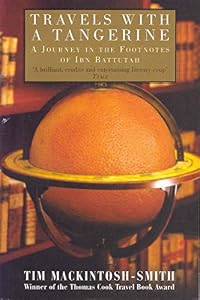
Travels with a Tangerine : A Journey in the Footnotes of Ibn Battutah
by Tim Mackintosh-Smith
Following Ibn Battutah (1)
On This Page
Description
Ibn Battutah set out in 1325 from his native Tangier on the pilgrimage to Mecca. By the time he returned twenty-nine years later, he had visited most of the known world, travelling three times the distance Marco Polo covered. Spiritual backpacker, social climber, temporary hermit and failed ambassador, he braved brigands, blisters and his own prejudices. The outcome was a monumental travel classic. Captivated by this indefatigable man, award-winning travel writer Tim Mackintosh-Smith set out show more on his own eventful journey, retracing the Moroccan's eccentric trip from Tangier to Constantinople. Tim proves himself a perfect companion to this distant traveller, and the result is an amazing blend of personalities, history and contemporary observation. show lessTags
Recommendations













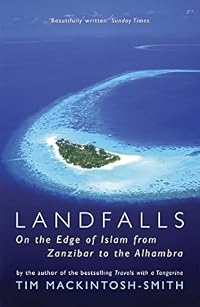
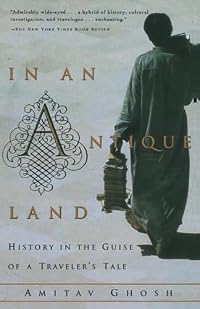





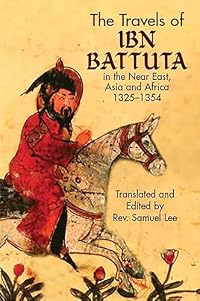

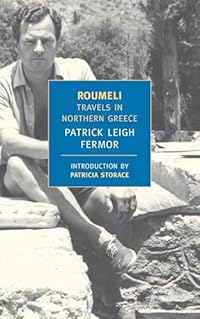


Member Reviews
As others have observed, Tim Mackintosh-Smith does a very good impersonation of the charming, old-fashioned type of eccentric British scholar, both on screen and on the printed page. Quite a scary thought when I realise that he and I must have been contemporaries at university, though I don't think we ever met. I'm not that old, am I?
Travels with a tangerine simply oozes with charm — the nicest possible sort of ooze, Dundee marmalade, perhaps — a very English mix of erudition, self-deprecation, silly schoolboy puns, and that strange obsession with defecation that goes with a certain type of English middle-classness. He's quite aware of this, and frequently mocks himself for doing it. Interestingly, he cites Patrick Leigh Fermor as show more one of the travel writers he most admires.
It's a pure pleasure to follow him on his quasi-random wanderings around Morocco, Egypt, Syria, Oman, Turkey and the Crimea. Don't be surprised if it leaves you with an inexplicable urge to read medieval Arabic travel books, though.
I read Ibn Battutah's Travels (in Mackintosh-Smith's abridgement of the Gibb translation) just before Travels with a Tangerine (I had seen the TV documentaries a few years earlier): if possible, I think it is best to start out by forming your own impression of Ibn Battutah before you get Mackintosh-Smith's image of him lodged into your mind. Ibn Battutah (with the occasional help of M-S's discrete footnotes) is great fun and perfectly accessible to the ordinary reader, although few of us would have found our way to him without a bit of a nudge from Mackintosh-Smith. I have at least half a dozen books on my shelves where Ibn Battutah features in the index, but until I saw Mackintosh-Smith talking him up on the telly it never occurred to me to go and read him myself. That's Mackintosh-Smith's mission in operation: he's quoted in an interview (by Justin Marozzi) as saying "I shall not rest until people are saying 'Who's Marco Polo?' and they're saying, 'He's the Venetian Ibn Battutah'!" Of course, there is a bit more to it too: Mackintosh-Smith also wants to give his Western readers a gentle reminder that Arabs and Muslims are just ordinary people like the rest of us, and that there's more to the Middle East than what we see on television news.
Mackintosh-Smith calls his technique "inverse archaeology", by which he seems to mean the search for traces of the present in the texts of Ibn Battutah and his contemporaries. He's always especially keen to find human traces: people, or stories, with a direct connection back to something Ibn Battutah mentions. Surprisingly often, he succeeds, and we can really feel his thrill when someone is able to cap a story Ibn Battutah tells or identify a person mentioned in the text as an ancestor. But he also loves looking for the buildings, tombs, and even camp-sites that Ibn Battutah describes, all of which he describes in a fresh, interesting way. I'm looking forward to the second instalment (and the third, when it comes...). show less
Travels with a tangerine simply oozes with charm — the nicest possible sort of ooze, Dundee marmalade, perhaps — a very English mix of erudition, self-deprecation, silly schoolboy puns, and that strange obsession with defecation that goes with a certain type of English middle-classness. He's quite aware of this, and frequently mocks himself for doing it. Interestingly, he cites Patrick Leigh Fermor as show more one of the travel writers he most admires.
It's a pure pleasure to follow him on his quasi-random wanderings around Morocco, Egypt, Syria, Oman, Turkey and the Crimea. Don't be surprised if it leaves you with an inexplicable urge to read medieval Arabic travel books, though.
I read Ibn Battutah's Travels (in Mackintosh-Smith's abridgement of the Gibb translation) just before Travels with a Tangerine (I had seen the TV documentaries a few years earlier): if possible, I think it is best to start out by forming your own impression of Ibn Battutah before you get Mackintosh-Smith's image of him lodged into your mind. Ibn Battutah (with the occasional help of M-S's discrete footnotes) is great fun and perfectly accessible to the ordinary reader, although few of us would have found our way to him without a bit of a nudge from Mackintosh-Smith. I have at least half a dozen books on my shelves where Ibn Battutah features in the index, but until I saw Mackintosh-Smith talking him up on the telly it never occurred to me to go and read him myself. That's Mackintosh-Smith's mission in operation: he's quoted in an interview (by Justin Marozzi) as saying "I shall not rest until people are saying 'Who's Marco Polo?' and they're saying, 'He's the Venetian Ibn Battutah'!" Of course, there is a bit more to it too: Mackintosh-Smith also wants to give his Western readers a gentle reminder that Arabs and Muslims are just ordinary people like the rest of us, and that there's more to the Middle East than what we see on television news.
Mackintosh-Smith calls his technique "inverse archaeology", by which he seems to mean the search for traces of the present in the texts of Ibn Battutah and his contemporaries. He's always especially keen to find human traces: people, or stories, with a direct connection back to something Ibn Battutah mentions. Surprisingly often, he succeeds, and we can really feel his thrill when someone is able to cap a story Ibn Battutah tells or identify a person mentioned in the text as an ancestor. But he also loves looking for the buildings, tombs, and even camp-sites that Ibn Battutah describes, all of which he describes in a fresh, interesting way. I'm looking forward to the second instalment (and the third, when it comes...). show less
"Inverse archaeology", 19 Jun. 2016
This review is from: Travels with a Tangerine: A Journey in the Footnotes of Ibn Battutah (Paperback)
This book had been sitting on my 'to read' shelf for a couple of years: I didn't think it would be particularly interesting.
When I determinedly sat down to read it, I realised what I'd been missing as this is travel writing at its absolutely superb best. In it the author - an Arabist and longterm Yemeni resident - seeks to follow the travels of 14th century Moroccan traveller Ibn Battutah, a man who over twenty-nine years visited "over forty countries on the modern map, travelling some 75,000 miles by horse, mule, camel, ox-wagon, junk, dhow, raft and on foot."
With Battutah's 'Travels' ever in hand, show more the author re-discovers shrines, mosques and churches and finds similarities - and vast differences - in the lifestyle of the people he meets on the way.
This, the first volume, covers Morocco, Egypt, Syria, Oman, Turkey and the Crimea.
Mr Mackintosh-Smith writes wonderful descriptions, both witty and intelligent; he peppers his work with tales taken from Battutah and elsewhere; he draws us in to his one-man archaeological efforts as he seeks to identify places mentioned in the work. And the reader experiences a thrill as he conclusively identifies somewhere, where Battutah himself would have stood so long ago.
This is a wonderful read and I hope to go on and read the other two volumes. show less
This review is from: Travels with a Tangerine: A Journey in the Footnotes of Ibn Battutah (Paperback)
This book had been sitting on my 'to read' shelf for a couple of years: I didn't think it would be particularly interesting.
When I determinedly sat down to read it, I realised what I'd been missing as this is travel writing at its absolutely superb best. In it the author - an Arabist and longterm Yemeni resident - seeks to follow the travels of 14th century Moroccan traveller Ibn Battutah, a man who over twenty-nine years visited "over forty countries on the modern map, travelling some 75,000 miles by horse, mule, camel, ox-wagon, junk, dhow, raft and on foot."
With Battutah's 'Travels' ever in hand, show more the author re-discovers shrines, mosques and churches and finds similarities - and vast differences - in the lifestyle of the people he meets on the way.
This, the first volume, covers Morocco, Egypt, Syria, Oman, Turkey and the Crimea.
Mr Mackintosh-Smith writes wonderful descriptions, both witty and intelligent; he peppers his work with tales taken from Battutah and elsewhere; he draws us in to his one-man archaeological efforts as he seeks to identify places mentioned in the work. And the reader experiences a thrill as he conclusively identifies somewhere, where Battutah himself would have stood so long ago.
This is a wonderful read and I hope to go on and read the other two volumes. show less
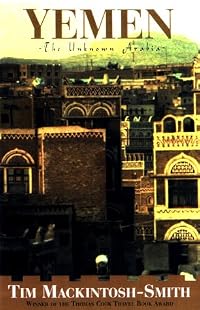
The author (Yemen: The Unknown Arabia), a British Arabist who has lived in Yemen for the past 17 years, traces the footsteps of an extraordinary, but relatively unknown, medieval explorer. He travels a wide swath from Tangiers to Constantinople via Egypt, Syria, Oman, Anatolia, and the Crimea. Ibn Battutah (1304-1368) grew up in Tangier within an educated family. At the age of 21, he embarked on a pilgrimage to Mecca and spent the next 30 years traveling throughout the Middle and Far East. When Mackintosh-Smith happened on a translated version of Battutah's travels, he was hooked and decided to make the same journey. This volume covers only the first part of Battutah's path, from Tangier to Constantinople, but has enough excitement, show more exotic details and information to satisfy the most exacting armchair traveler. The author brings his research skills, scholarship and respect for all cultures to bear on Battutah's adventures and his own. Written with humoor and style, he describes how Battutah "schmoozed with sultans" in Denizli, Turkey. In Damascus, the author enjoys a brain burger for breakfast before visiting the Umayyad Mosque, a structure Battutah detailed in 10 pages and referred to as "the greatest Mosque on earth." Throughout this narrative, Mackintosh-Smith provides enough anecdotes about Battutah's knowledge of aphrodisiacs, the foods he ate, the hardships he endured, the people he met and, most tellingly, the wonders he beheld to bring this unique daredevil and his times to life. show less
Travels with a Tangerine takes us back to the year 1325 when the "greatest Islamic traveler" Ibn Battutah departed from Tangier on a pilgrimage to Mecca when he was 21 years old. There is nothing astonishing about someone wanting to take a pilgrimage to Mecca. What is so remarkable is where Ibn Battutah ended up. The trip took him almost thirty years and 75,000 miles. He spent his life on the road. At the same age, author Mackintosh-Smith sets out to follow in IB's footsteps, admittedly taking short cuts because he doesn't want to spend his entire life on this journey. But the result of this fascination is an interesting look back at the Arabic fourteenth century with eye an toward the future. Mackintosh-Smith's humor makes it an easy read.
This was a great read for me. But I think the reader would need to be a bit of a Ibn Battuta fan to enjoy it.
I have been vaguely aware of IB for some years, but it was only after a recent trip to Morocco that I took the time to find more about him, and his amazing travels in the 1300s - from Tangier to China, and much more.
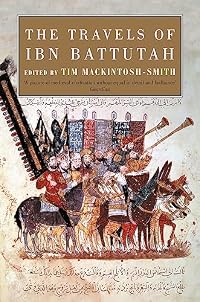
Tim Macintosh-Smith has edited the standard English translation of IBs travel diary, and I have read the first third, and will soon read the rest.
In Travels with a Tangerine, the author tries to follow in IBs footsteps, and searches for sites, tombs, mosques etc etc that IB himself would have seen. Remarkably, after 600+ years, there were many!
So, for the fan of IB,, or the fanatic, this book is a treasure.
I have been vaguely aware of IB for some years, but it was only after a recent trip to Morocco that I took the time to find more about him, and his amazing travels in the 1300s - from Tangier to China, and much more.
Tim Macintosh-Smith has edited the standard English translation of IBs travel diary, and I have read the first third, and will soon read the rest.
In Travels with a Tangerine, the author tries to follow in IBs footsteps, and searches for sites, tombs, mosques etc etc that IB himself would have seen. Remarkably, after 600+ years, there were many!
So, for the fan of IB,, or the fanatic, this book is a treasure.
To my mind, M-S looks rather like a secretary bird. In case you've forgotten what a secretary bird looks like, Google: " secretary bird image" and for comparison "M-S...". Unfortunately, I have not found an image of M-S showing his legs, which makes it difficult for you to form a judgement.
M-S is one of those English eccentrics whom we cherish partly because they are so seldom encountered and may be becoming even rarer, indeed extinct in many parts of the British Isles and former colonies.
Travels is subtitled: A Journey in the Footnotes of Ibn Battutah. Ibn Battutah (IB) henceforth, was a native of Morrocco who set out on the pilgrimage to Mecca in the early thirteen hundreds, and kept on travelling - as far North as the Volga river, show more as far South as Tanzania and Mali in Africa, and then West through India and on to China. IB was a lucky man. He had an eye for the ladies and got married in most of his longer stopping points. He had his mishaps too. Having charmed an Indian potentate he was given a grand present to convey to the emperor of China. He lost it together with all his own possessions in a storm while his boat was still moored at the quayside. He spent some time in the Maldives and pronounced them paradise.
Travels is not Tim's first book, but it is the first book to catch the public's attention. A three-part documentary-type programme was flighted on BBC4 in 2006, in which M-S was filmed following parts of IB's journey. It was while watching this that the long-legged questing bird comparison occurred to me.
IB eventually returned to Tangiers where he dictated his memoirs at length and at leisure in several volumes. These books became famous across the Arab World. Now his name is becoming more familiar in the West. show less
M-S is one of those English eccentrics whom we cherish partly because they are so seldom encountered and may be becoming even rarer, indeed extinct in many parts of the British Isles and former colonies.
Travels is subtitled: A Journey in the Footnotes of Ibn Battutah. Ibn Battutah (IB) henceforth, was a native of Morrocco who set out on the pilgrimage to Mecca in the early thirteen hundreds, and kept on travelling - as far North as the Volga river, show more as far South as Tanzania and Mali in Africa, and then West through India and on to China. IB was a lucky man. He had an eye for the ladies and got married in most of his longer stopping points. He had his mishaps too. Having charmed an Indian potentate he was given a grand present to convey to the emperor of China. He lost it together with all his own possessions in a storm while his boat was still moored at the quayside. He spent some time in the Maldives and pronounced them paradise.
Travels is not Tim's first book, but it is the first book to catch the public's attention. A three-part documentary-type programme was flighted on BBC4 in 2006, in which M-S was filmed following parts of IB's journey. It was while watching this that the long-legged questing bird comparison occurred to me.
IB eventually returned to Tangiers where he dictated his memoirs at length and at leisure in several volumes. These books became famous across the Arab World. Now his name is becoming more familiar in the West. show less
Travels with a Tangerine by Tim Macintosh-Smith is a slow read, but one that I savored. It is a travel book that describes the wonders of travel by following the footsteps of the fourteenth century pilgrim, Ibn Battutah who had “the specific sense of [the]mystical,[and]transcendental” (114). I like when an author introduces new ideas, images, places, and vocabulary in the rich context of history. The lush text reads with a sensual and conversational intimacy. Some of his expressions are new to me, just as they are when one travels. “The air from the Rosetta, or Bolbitine, branch of the Nile was fresh, but the teahouse was fuggy with gossip” (65). Fuggy, I would ask if I was there, but the dictionary is always available to the show more reader to help clarify-- musty and stale. Highlights: The description of Cairo in the 1300’s (83+), the vivid detail of architectural descriptions throughout, brief discussion on copromania (74), chewing tambul (betel) (234+) or qat, the description and experience of the whirling dervishes (277+). As I was reading about Smith’s experience in Crimea (401+), I coincidentally bumped into a fascinating discussion by Errol Morris on Susan Sontag’s comment about Roger Fenton’s photographs during the Crimean War (http://morris.blogs.nytimes.com/2007/09/25/which-came-first-the-chicken-or-the-egg-part-one/ )
Overall—Tim Macintosh-Smith provides a richly informative read. show less
Overall—Tim Macintosh-Smith provides a richly informative read. show less
Members
- Recently Added By
Author Information

10+ Works 1,637 Members
Tim Mackintosh-Smith was born in 1961 and educated at Oxford, where he studied Arabic. Seduced at an early age by images of Yemen, he has lived there since 1982, earning the unofficial title "Shaykh of the Nazarenes." Steeped in the language and customs of his adopted land, he is both guest at the feast and fly on the wall
Series

Work Relationships
Reference guide/companion to
Common Knowledge
- Canonical title
- Travels with a Tangerine : A Journey in the Footnotes of Ibn Battutah
- Original publication date
- 2001
- People/Characters
- Ibn Battutah
- Important places
- Tangier, Morocco; Egypt; Syria; Oman; Turkey; Feodosia, Crimea (show all 7); Istanbul, Turkey
- Epigraph
- If you are a son of this Maghrib of ours and wish for success, then head for the land of the east! --Ibn Jubayr of Valencia (d. 1217), Travels
I have milked the teats of Time, pair after pair/ Wandered the world around,/ And rivalled al-Khadir in my circumambulations.---Abu Dulaf (10th century), The Ode of the Banu Sasan - Dedication
- For Professor 'Abdullah Fadil Fari of Aden and Professor Alan Jones of Oxford, two outstanding teachers
- First words
- A letter has just arrived here in San'a from a Russian lady, Nina Suvorova.
- Last words
- (Click to show. Warning: May contain spoilers.)I would never raise IB's ghost; but there went his spirit, restless as ever.
- Disambiguation notice
- US Title: Travels with a Tangerine : From Morocco to Turkey in the Footsteps of Islam's Greatest Traveler
Classifications
- Genres
- Travel, Nonfiction, General Nonfiction, Religion & Spirituality, Biography & Memoir
- DDC/MDS
- 915.60453 — History & geography Geography & travel Geography of and travel in Asia Middle East Travel; guidebooks
- LCC
- G490 .M295 — Geography, Anthropology and Recreation Geography (General) Special voyages and travels
- BISAC
Statistics
- Members
- 628
- Popularity
- 46,142
- Reviews
- 10
- Rating
- (3.90)
- Languages
- 5 — Dutch, English, Italian, Norwegian (Bokmål), Spanish
- Media
- Paper, Ebook
- ISBNs
- 11
- ASINs
- 4