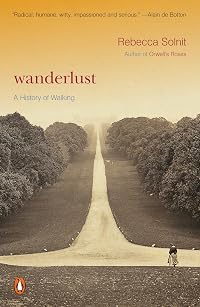
Wanderlust: A History of Walking
by Rebecca Solnit
On This Page
Description
Drawing together many histories-of anatomical evolution and city design, of treadmills and labyrinths, of walking clubs and sexual mores-Rebecca Solnit creates a fascinating portrait of the range of possibilities presented by walking. Arguing that the history of walking includes walking for pleasure as well as for political, aesthetic, and social meaning, Solnit focuses on the walkers whose everyday and extreme acts have shaped our culture, from philosophers to poets to mountaineers. She show more profiles some of the most significant walkers in history and fiction-from Wordsworth to Gary Snyder, from Jane Austen's Elizabeth Bennet to Andre Breton's Nadja-finding a profound relationship between walking and thinking and walking and culture. Solnit argues for the necessity of preserving the time and space in which to walk in our ever more car-dependent and accelerated world. show lessTags
Recommendations




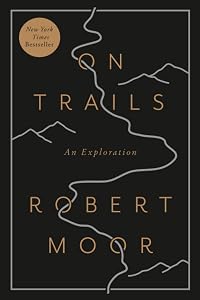

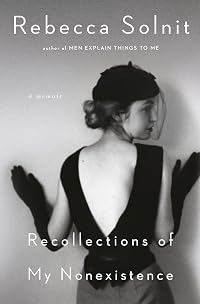
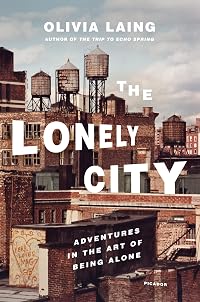


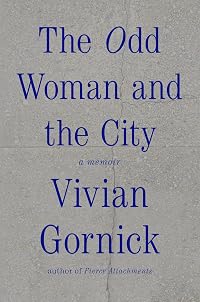





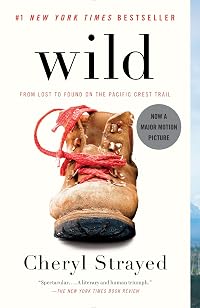

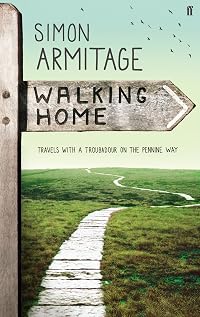

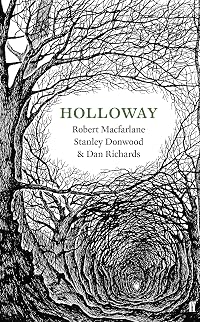
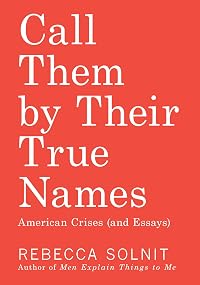





Member Recommendations
Member Reviews
I felt my heart swell with each step taken through its pages. This captivating book delves deep into the history of our most basic means of transportation, exploring its evolution through time, space, and culture. With each turn of the page, I was transported to new and exotic lands, and felt the rhythmic pulse of walking in my very soul. The author's poetic prose and insightful observations drew me in, and I was lost in a world where every step held infinite possibility. This book is a true love letter to the art of walking, and I am forever smitten.
This is one of the best books I’ve ever read. Maybe it’s my rediscovery of the joy of walking that coincided with my discovery of this book through [a:Craig Mod|65581|Craig Mod|https://images.gr-assets.com/authors/1437565930p2/65581.jpg]’s writing, but this is A Very Important Book. It traces the anthropological and cultural history of walking through the ages, interlacing personal anecdotes with historical observations, interviews, and sense impressions. It is at once poetry, scholarly writing, investigative journalism, and nonfiction. It changed my relationship with my legs and body, and with their relationship and the open world.
A rather thorough examination of 'walking for pleasure.' (Which is actually a fairly recent development for humans.) This covers some of the most famous writers who walked, along with some explorers and climbers, and ends with the present day incongruities of people driving in cars to walk miles on treadmills at a gym. A very thought-provoking work.
I might have given this an extra 1/2 of a star, but the narrator mispronounced words with just enough frequency for me to get a bit cranky. Look stuff up BEFORE you record it for gawd's sake. It's Northanger Abbey, not Northanjer Abbey. :oP
I might have given this an extra 1/2 of a star, but the narrator mispronounced words with just enough frequency for me to get a bit cranky. Look stuff up BEFORE you record it for gawd's sake. It's Northanger Abbey, not Northanjer Abbey. :oP
An interesting demonstration of how a publisher can create a ludicrously overblown subtitle without including a single adjective. You clearly don't need to assert that a story is "extraordinary", "incredible" or even "true" - the simple, unadorned word "history" is already enough to make an extraordinary, incredible (but not, alas, true) claim for the subject-matter of the book that lies behind it...
But that probably isn't the author's fault, and other than on its front cover, this book doesn't make any real claim to be anything other than what it is, an interesting and worthwhile collection of essays grouped around the cultural (mostly literary) significance of Anglo-American attitudes to getting about on foot over the last couple of show more centuries. Solnit looks at obvious topics like the relationship between recreational walking and garden design; the importance of walking in nature for the Wordsworths and Thoreau and how that led to the later development of access and conservation movements; walking as a political act in parades, pilgrimages and protest marches; and travel-writing and the rise of mountaineering and challenge-walking. And, as a dedicated subversive and feminist, she also looks at some less obvious socio-political aspects of walking - walking and prostitution, exclusion of women and minorities from public spaces in which walking is possible, US cities built without any no provision for getting around on foot, and so on. Most of the essays bring together material from literary sources with reflections from her own personal experiences, and very often lead her to non-obvious insights into the ideological framework within which very familiar texts on walking are actually operating.
I enjoyed sharing Solnit's insights, but I'd (unrealistically) been expecting more, and found it a bit disappointing that so many "obvious" topics didn't get a look in. Wordsworth's walk to Italy gets detailed coverage, but there's no mention of Thomas Coryat, who did much the same walk (and subsequently walked from England to India!) two centuries earlier. One of my favourite 19th century travellers, George Borrow (admittedly, a rider as much as a walker) is also overlooked. Nor is there anything about Heine, Novalis, and the rest of the German romantics with their core idea of the Wanderer - which is particularly odd, because the Naturfreunde and Wandervogel movements they inspired get discussed quite extensively. And given the amount of literature it's inspired, it's surprising how little attention she pays to refugee-walking. Primo Levi's walk home from Auschwitz is mentioned only in passing, and there's nothing much about all the many books about being forced to leave your home on foot in wartime.
A good start, but someone really should write "A history of walking" one day! show less
But that probably isn't the author's fault, and other than on its front cover, this book doesn't make any real claim to be anything other than what it is, an interesting and worthwhile collection of essays grouped around the cultural (mostly literary) significance of Anglo-American attitudes to getting about on foot over the last couple of show more centuries. Solnit looks at obvious topics like the relationship between recreational walking and garden design; the importance of walking in nature for the Wordsworths and Thoreau and how that led to the later development of access and conservation movements; walking as a political act in parades, pilgrimages and protest marches; and travel-writing and the rise of mountaineering and challenge-walking. And, as a dedicated subversive and feminist, she also looks at some less obvious socio-political aspects of walking - walking and prostitution, exclusion of women and minorities from public spaces in which walking is possible, US cities built without any no provision for getting around on foot, and so on. Most of the essays bring together material from literary sources with reflections from her own personal experiences, and very often lead her to non-obvious insights into the ideological framework within which very familiar texts on walking are actually operating.
I enjoyed sharing Solnit's insights, but I'd (unrealistically) been expecting more, and found it a bit disappointing that so many "obvious" topics didn't get a look in. Wordsworth's walk to Italy gets detailed coverage, but there's no mention of Thomas Coryat, who did much the same walk (and subsequently walked from England to India!) two centuries earlier. One of my favourite 19th century travellers, George Borrow (admittedly, a rider as much as a walker) is also overlooked. Nor is there anything about Heine, Novalis, and the rest of the German romantics with their core idea of the Wanderer - which is particularly odd, because the Naturfreunde and Wandervogel movements they inspired get discussed quite extensively. And given the amount of literature it's inspired, it's surprising how little attention she pays to refugee-walking. Primo Levi's walk home from Auschwitz is mentioned only in passing, and there's nothing much about all the many books about being forced to leave your home on foot in wartime.
A good start, but someone really should write "A history of walking" one day! show less
This was a pretty great read, an interesting take on the walking culture, geography, and social patterns. It was far more academic than I expected, which when I write it out like that sounds snobbish but really it is neither praise nor criticism, just something of note about my experience reading it. I took a class where spatial theory and psychogeography played a key role and I felt like this book could have been usefully applied there. That said, Solnit's approach is way more accessible than reading de Certeau or especially Lefebre, which is definitely a good thing about this book. It's interesting and readable and educational.
I started reading it before taking a trip to Cuba, and thinking so much about travelling really put me into show more my pedestrian mind because I'm very much a walker when I'm in cities and when I'm in travel mode. I'm most often walking to commute, but even that type of walking is also so much more than commuting, which is what Solnit points out especially in the first part of the book. Walking as protest and rebellion was also wonderfully detailed, although it kept making obvious for me the sides of the picture that are left out. Because the focus is walking there is always this presumption of able-ness, of an able-bodied reader, and practically nothing said about those for whom walking is not a clarifying, liberating, enriching experience. She says practically nothing about those who cannot walk, or cannot walk easily or painlessly.
And it's strange because she does talk about the geographical restrictions that inhibit walkers, such as suburbs or living in dangerous neighbourhoods. And she talks about walking as a female, a chapter I reached when I was in Cuba after two days of walking alone in Havana, where I was indeed reminded again and again by catcalls and comments that the streets were not for me. It was therefore disappointing not to have anything said about disability and travel, though I suspect, as she says about cycling, it would be a whole separate book. But the lack of commentary on it felt as if she hadn't found a way to make sense of her Walking = Enlightenment philosophy where disability is concerned. It felt as if she hadn't found a way to phrase things that didn't say, "sorry, but this Enlightenment is only accessible to the able-bodied." And I doubt Solnit believes that, but it's the cornerstone of this book, really.
Everything else about it made it such a good read, though, and it would've been five stars if the above were addressed. show less
I started reading it before taking a trip to Cuba, and thinking so much about travelling really put me into show more my pedestrian mind because I'm very much a walker when I'm in cities and when I'm in travel mode. I'm most often walking to commute, but even that type of walking is also so much more than commuting, which is what Solnit points out especially in the first part of the book. Walking as protest and rebellion was also wonderfully detailed, although it kept making obvious for me the sides of the picture that are left out. Because the focus is walking there is always this presumption of able-ness, of an able-bodied reader, and practically nothing said about those for whom walking is not a clarifying, liberating, enriching experience. She says practically nothing about those who cannot walk, or cannot walk easily or painlessly.
And it's strange because she does talk about the geographical restrictions that inhibit walkers, such as suburbs or living in dangerous neighbourhoods. And she talks about walking as a female, a chapter I reached when I was in Cuba after two days of walking alone in Havana, where I was indeed reminded again and again by catcalls and comments that the streets were not for me. It was therefore disappointing not to have anything said about disability and travel, though I suspect, as she says about cycling, it would be a whole separate book. But the lack of commentary on it felt as if she hadn't found a way to make sense of her Walking = Enlightenment philosophy where disability is concerned. It felt as if she hadn't found a way to phrase things that didn't say, "sorry, but this Enlightenment is only accessible to the able-bodied." And I doubt Solnit believes that, but it's the cornerstone of this book, really.
Everything else about it made it such a good read, though, and it would've been five stars if the above were addressed. show less
“The history of walking is an amateur history, just as walking is an amateur act.”
“Walking, ideally, is a state in which the mind, the body, and the world are aligned, as though they were three characters, finally in conversation together, three notes suddenly making a chord.”
“Exploring the world is one of the best ways of exploring the mind, and walking travels both terrains.”
“Walking is, after all, an activity essentially unimproved since the dawn of time.”
^Yes, I love these quotes, but these four all happen, in the first twenty pages. The rest of the narrative, is more hit or miss. I had to keep reminding myself, that this is a history of walking and all the events mentioned here do not fit snugly into, everything I show more like about this basic mode of transportation, (I am a mailman for crying out loud!). That said, I found much of this history of walking, a bit dry. Yes, I can be selfish. Sue me, but please, do not get me wrong- Solnit is a fine writer, super smart and has really done her homework here, with meticulous precision. She did leave out bird walking, which has really helped spark my interest in strolling through various meadows and woods but there I go again, being self-absorbed.
To her credit, she does close it out, beautifully:
“This constellation called walking has a history, the history trod out by all those poets and philosophers and insurrectionaries, by jaywalkers, streetwalkers, pilgrims, tourists, hikers, mountaineers, but whether it has a future depends on whether those connecting paths are traveled still.” show less
“Walking, ideally, is a state in which the mind, the body, and the world are aligned, as though they were three characters, finally in conversation together, three notes suddenly making a chord.”
“Exploring the world is one of the best ways of exploring the mind, and walking travels both terrains.”
“Walking is, after all, an activity essentially unimproved since the dawn of time.”
^Yes, I love these quotes, but these four all happen, in the first twenty pages. The rest of the narrative, is more hit or miss. I had to keep reminding myself, that this is a history of walking and all the events mentioned here do not fit snugly into, everything I show more like about this basic mode of transportation, (I am a mailman for crying out loud!). That said, I found much of this history of walking, a bit dry. Yes, I can be selfish. Sue me, but please, do not get me wrong- Solnit is a fine writer, super smart and has really done her homework here, with meticulous precision. She did leave out bird walking, which has really helped spark my interest in strolling through various meadows and woods but there I go again, being self-absorbed.
To her credit, she does close it out, beautifully:
“This constellation called walking has a history, the history trod out by all those poets and philosophers and insurrectionaries, by jaywalkers, streetwalkers, pilgrims, tourists, hikers, mountaineers, but whether it has a future depends on whether those connecting paths are traveled still.” show less
If there's one thing I enjoy as much as reading, it's walking, so a book about the history of walking is right up my street. Although, this is not so much a history (at least in chronological terms), more a gently meandering wander through both the highways and bye ways of the subject. And you are travelling with a very erudite enthusiast. So, we go by way of walking philosophers (Rousseau and Kierkegard), obviously Wordsworth and the romantics, a con side ration of the various theories of how, when and why Homo sapiens began to walk upright, walking in Jane Austen novels, a history of formal garden design, walking in cities like San Francisco, New York, London and Paris and so much more. Just like a really good walk, at almost every show more turn of the page, there's something new and interesting to experience. show less
Members
- Recently Added By
Lists

Top Five Books of 2020
982 works; 350 members

Lit Lattes Ep 006
12 works; 1 member

Best Literary Walks
35 works; 7 members

Books Read in 2020
4,379 works; 123 members
Author Information

48+ Works 17,197 Members
Rebecca Solnit writes extensively on photography and landscape. She is a contributing editor to Art Issues and Creative Camera and is the author of three books. She has contributed essays to several museum catalogues including Crimes and Splendors: The Desert Cantos of Richard Misrach and the Whitney Museum's Beat Culture and the New America. She show more was a 1993 recipient of a National Endowment for the Arts Fellowship. (Bowker Author Biography) show less
Some Editions
Awards and Honors
Notable Lists
Series
Belongs to Publisher Series
El fil d'Ariadna (118)
Work Relationships
Inspired
Common Knowledge
- Canonical title
- Wanderlust: A History of Walking
- Original title
- Wanderlust: A History of Walking
- Original publication date
- 2000
- First words
- Where does it start?
- Last words
- (Click to show. Warning: May contain spoilers.)This constellation called walking has a history, the history trod out by all those poets and philosophers and insurrectionaries, by jaywalkers, streetwalkers, pilgrims, tourists, hikers, mountaineers, but whether it has a future depends on whether those connecting paths are traveled still.
- Blurbers
- Botton, Alain de
- Original language
- English
Classifications
- Genres
- Nonfiction, Travel, General Nonfiction, Philosophy, Sports and Leisure
- DDC/MDS
- 796.5109 — Arts & recreation Recreation, sports, and performing arts Athletic and outdoor sports and games Outdoor leisure Hiking and Backpacking Standard subdivisions History, geographic treatment, biography {hiker guides to non-urban areas}
- LCC
- GV199.5 .S65 — Geography, Anthropology and Recreation Recreation. Leisure Recreation. Leisure Outdoor life. Outdoor recreation Hiking. Pedestrian tours
- BISAC
Statistics
- Members
- 1,851
- Popularity
- 11,721
- Reviews
- 44
- Rating
- (3.84)
- Languages
- 13 — Catalan, Dutch, English, French, German, Italian, Korean, Polish, Portuguese, Serbian, Spanish, Swedish, Turkish
- Media
- Paper, Audiobook, Ebook
- ISBNs
- 36
- ASINs
- 10