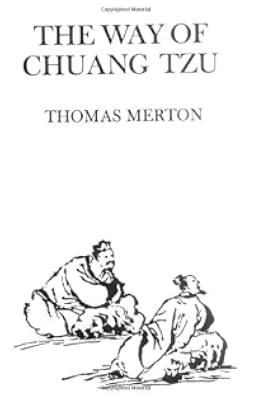
The Way of Chuang Tzu
by Thomas Merton
On This Page
Description
Working from existing translations, Father Merton composed a series of personal versions from his favorites among the classic sayings of Chuang Tzu, the most spiritual of the Chinese philosophers. Chuang Tzu, who wrote in the fourth and third centuries B.C., is the chief authentic historical spokesman for Taoism and its founder Lao Tzu (a legendary character known largely through Chuang Tzu's writings). Indeed it was because of Chuang Tzu and the other Taoist sages that Indian Buddhism was show more transformed, in China, into the unique vehicle we now call by its Japanese name -- Zen. The Chinese sage abounds in wit, paradox, satire, and shattering insight into the true ground of being. Father Merton, no stranger to Asian thought, brings a vivid, modern idiom to the timeless wisdom of Tao. Illustrated with early Chinese drawings. Book jacket. show lessTags
Recommendations

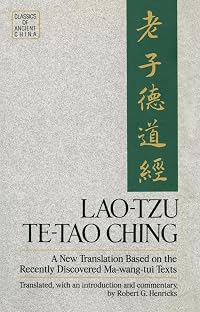
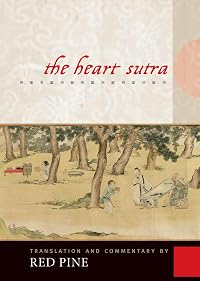
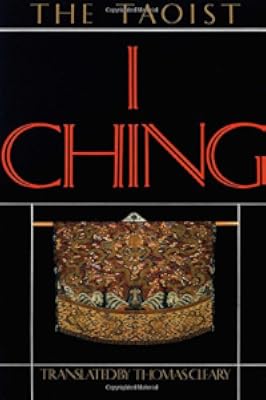




Member Recommendations

Member Reviews
The Way of Chuang Tzu, by Thomas Merton, is a difficult book to classify—is it a translation? An original work? Perhaps the phrase interpretive translation is best—a mid-twentieth-century American Trappist monk’s interpretive translation of the ancient Chinese Taoist philosopher Chuang Tzu. Working from four different translations of Chuang Tzu’s works, in three languages, Merton reworked passages in a way that made sense for him in his monastic tradition. This rewrite was done after Merton released that all of the translations he read had significant differences, and that essentially, all translators take quite a bit of interpretive and artistic license. The results of Merton’s rewrite are astounding, and considering the vast show more differences between ancient Chinese Taoism and 20th century Catholicism, shouldn’t exist at all. It is a testament to Thomas Merton’s intellectual curiosity and willingness to probe Eastern traditions for fundamental truths about human existence.
One of the beautiful things about this book is that Merton makes Chuang Tzu’s writing accessible to 20th century readers with a poetic flare that is unmatched. I had read the works of Chuang Tzu before—in a literature class at university, and finishing Merton’s version, I dusted off my old copy of Burton Watson’s translation for the sake of comparison. Here is a sample from each book.
First, Watson’s prose translation:
Hui Tzu said to Chuang Tzu, “I have a big tree called a shu. Its trunk is too gnarled and bumpy to apply a measuring line to, its branches too bent and twisty to match up a compass or square. You could stand it by the road and no carpenter would look at it twice. Your words, too, are big and useless, and so everyone alike spurns them!”
Chuang Tzu said, “Maybe you’ve never seen a wildcat or weasel. It crouches down and hides, watching for something to come along. It leaps and races east and west, not hesitating to go high or low—until it falls into the trap and dies in the net. Then again there’s the yak, big as a cloud covering the sky. It certainly knows how to be big, though it doesn’t know how to catch rats. Now you have this big tree and you’re distressed because it’s useless. Why don’t you plant it in Not-Even-Anything Village, or the field of Broad-and-Boundless, relax and do nothing by its side, or lie down for a free and easy sleep under it? Axes will never shorten its life, nothing can ever harm it. If there’s no use for it, how can it come to grief or pain?
Watson, Burton. Chuang Tzu: Basic Writings. Columbia University Press. 1964.
Now, the same passage in verse by Merton:
Hui Tzu said to Chuang:
I have a big tree,
The kind they call a “stinktree.”
The trunk is so distorted,
So full of knots,
No one can get a straight plank
Out of it. The branches are so crooked
You cannot cut them up
In any way that makes sense.
There it stands beside the road.
No carpenter will even look at it.
Such is your teaching—
Big and useless.
Chuang Tzu replied:
Have you ever watched the wildcat
Crouching, watching his prey—
This way it leaps, and that way,
High and low, and at last
Lands in the trap.
But have you seen the yak?
Great as a thundercloud
He stands in his might.
Big? Sure,
He can’t catch mice!
So for your big tree. No use?
Then plant it in the wasteland
In emptiness.
Walk idly around,
Rest under its shadow;
No axe or bill prepares its end.
No one will ever cut it down.
Useless? You should worry!
Merton, Thomas. The Way of Chuang Tzu. New Directions Press. 1965.
I assume, without being able to read ancient Chinese myself, that Watson’s translation is by far the more accurate of the two. After all, he is the famous Chinese scholar, whose works many a university student are assigned to read. But Merton’s works speak to my heart more. Putting Chuang Tzu’s words into verse seems fitting for the Taoist tradition, and Merton’s lines have a vibrancy that is missing in Watson’s. This vibrancy continued throughout the whole work, and I felt that I understood Taoism far better after reading Merton’s text. Therefore, while reading highly accurate texts is indisputably vital for the scholar, for the layman, dipping his or her toes into Taoist literature, Merton may be the better choice. show less
One of the beautiful things about this book is that Merton makes Chuang Tzu’s writing accessible to 20th century readers with a poetic flare that is unmatched. I had read the works of Chuang Tzu before—in a literature class at university, and finishing Merton’s version, I dusted off my old copy of Burton Watson’s translation for the sake of comparison. Here is a sample from each book.
First, Watson’s prose translation:
Hui Tzu said to Chuang Tzu, “I have a big tree called a shu. Its trunk is too gnarled and bumpy to apply a measuring line to, its branches too bent and twisty to match up a compass or square. You could stand it by the road and no carpenter would look at it twice. Your words, too, are big and useless, and so everyone alike spurns them!”
Chuang Tzu said, “Maybe you’ve never seen a wildcat or weasel. It crouches down and hides, watching for something to come along. It leaps and races east and west, not hesitating to go high or low—until it falls into the trap and dies in the net. Then again there’s the yak, big as a cloud covering the sky. It certainly knows how to be big, though it doesn’t know how to catch rats. Now you have this big tree and you’re distressed because it’s useless. Why don’t you plant it in Not-Even-Anything Village, or the field of Broad-and-Boundless, relax and do nothing by its side, or lie down for a free and easy sleep under it? Axes will never shorten its life, nothing can ever harm it. If there’s no use for it, how can it come to grief or pain?
Watson, Burton. Chuang Tzu: Basic Writings. Columbia University Press. 1964.
Now, the same passage in verse by Merton:
Hui Tzu said to Chuang:
I have a big tree,
The kind they call a “stinktree.”
The trunk is so distorted,
So full of knots,
No one can get a straight plank
Out of it. The branches are so crooked
You cannot cut them up
In any way that makes sense.
There it stands beside the road.
No carpenter will even look at it.
Such is your teaching—
Big and useless.
Chuang Tzu replied:
Have you ever watched the wildcat
Crouching, watching his prey—
This way it leaps, and that way,
High and low, and at last
Lands in the trap.
But have you seen the yak?
Great as a thundercloud
He stands in his might.
Big? Sure,
He can’t catch mice!
So for your big tree. No use?
Then plant it in the wasteland
In emptiness.
Walk idly around,
Rest under its shadow;
No axe or bill prepares its end.
No one will ever cut it down.
Useless? You should worry!
Merton, Thomas. The Way of Chuang Tzu. New Directions Press. 1965.
I assume, without being able to read ancient Chinese myself, that Watson’s translation is by far the more accurate of the two. After all, he is the famous Chinese scholar, whose works many a university student are assigned to read. But Merton’s works speak to my heart more. Putting Chuang Tzu’s words into verse seems fitting for the Taoist tradition, and Merton’s lines have a vibrancy that is missing in Watson’s. This vibrancy continued throughout the whole work, and I felt that I understood Taoism far better after reading Merton’s text. Therefore, while reading highly accurate texts is indisputably vital for the scholar, for the layman, dipping his or her toes into Taoist literature, Merton may be the better choice. show less
Let me start by saying that I admire Thomas Merton (1915-1968), a Catholic Priest who was open-minded enough to read about Taoism, the subject of this book, as well as other Asian philosophies and religions. Instead of being threatened by other paths to enlightenment, he found similarities to his own path, and embraced them.
As he says in the introduction, “the ‘way’ contained in these anecdotes, poems, and meditations, is characteristic of a certain mentality found everywhere in the world, a certain taste for simplicity, for humility, self-effacement, silence, and in general a refusal to take seriously the aggressivity, the ambition, the push, and the self-importance which one must display in order to get along in society. This show more other is a ‘way’ that prefers not to get anywhere in the world, or even in the field of some supposedly spiritual attainment.”
He was counter to what is wrong with so many religious figures, he was not dogmatic, and did not profess to have all the answers. Again, from his introduction: “In any event, the ‘way’ of Chuang Tzu is mysterious because it is so simple that it can get along without being a way at all. Least of all is it a ‘way out.’ Chuang Tzu would have agreed with St. John of the Cross, that you enter upon this kind of way when you leave all ways and, in some sense, get lost.”
What a refreshing outlook. The collection of passages here is quite nice, and with most of them fitting on one or two pages, it’s very easy to pick up and revisit my favorites, some of which I extract below.
Quotes:
On opinions:
“The wise man … sees that on both sides of every argument there is both right and wrong. He also sees that in the end they are reducible to the same thing, once they are related to the pivot of Tao.
When the wise man grasps this pivot, he is in the center of the circle, and there he stands while ‘Yes’ and ‘No’ pursue each other around the circumference.
The pivot of Tao passes through the center where all affirmations and denials converge. He who grasps the pivot is at the still-point from which all movements and oppositions can be seen in their right relationship. Hence he sees the limitless possibilities of both ‘Yes’ and ‘No’. Abandoning all thought of imposing a limit or taking sides, he rests in direct intuition.”
On sincerity:
“The greatest politeness
Is free of all formality.
Perfect conduct
Is free of concern.
Perfect wisdom
Is unplanned.
Perfect love
Is without demonstrations.
Perfect sincerity offers
No guarantee.”
On theft, calling to mind Dylan’s “steal a little and they throw you in jail, steal a lot and they make you king”:
“A poor man must swing
For stealing a belt buckle
But if a rich man steals a whole state
He is acclaimed
As statesman of the year.”
On the ‘true man’, or perhaps better put, on enlightenment:
“The true men of old were not afraid
When they stood alone in their views.
No great exploits. No plans.
If they failed, no sorrow.
No self-congratulations in success.
They scaled cliffs, never dizzy,
Plunged in water, never wet,
Walked through fire and were not burnt.
Thus their knowledge reached all the way
To Tao.
…
Minds free, thoughts gone
Brows clear, faces serene.
Were they cool? Only cool as autumn.
Were they hot? No hotter than spring.
All that came out of them
Came quiet, like the four seasons.”
And this one:
“The man in whom Tao
Acts without impediment
Harms no other being
By his actions
Yet he does not know himself
To be ‘kind,’ to be ‘gentle.’
The man in whom Tao
Acts without impediment
Does not bother with his own interests
And does not despise
Others who do.
He does not struggle to make money
And does not make a virtue of poverty.
He goes his way
Without relying on others
And does not pride himself
On walking alone.
While he does not follow the crowd
He won’t complain of those who do.
Rank and reward
Make no appeal to him;
Disgrace and shame
Do not deter him.
He is not always looking
For right and wrong
Always deciding ‘Yes’ or ‘No.’
The ancients said, therefore:
’The man of Tao
Remains unknown
Perfect virtue
Produces nothing
‘No-self’
Is ‘True-Self.’
And the greatest man
Is nobody.’”
Lastly, this parable:
“There was a man who was so disturbed by the sight of his own shadow and so displeased with his own footsteps that he determined to get rid of both. The method he hit upon was to run away from them.
So he got up and ran. But every time he put his foot down there was another step, while his shadow kept up with him without the slightest difficulty.
He attributed his failure to the fact that he was not running fast enough. So he ran faster and faster, without stopping, until he finally dropped dead.
He failed to realize that if he merely stepped into the shade, his shadow would vanish, and if he sat down and stayed still, there would be no more footsteps.” show less
As he says in the introduction, “the ‘way’ contained in these anecdotes, poems, and meditations, is characteristic of a certain mentality found everywhere in the world, a certain taste for simplicity, for humility, self-effacement, silence, and in general a refusal to take seriously the aggressivity, the ambition, the push, and the self-importance which one must display in order to get along in society. This show more other is a ‘way’ that prefers not to get anywhere in the world, or even in the field of some supposedly spiritual attainment.”
He was counter to what is wrong with so many religious figures, he was not dogmatic, and did not profess to have all the answers. Again, from his introduction: “In any event, the ‘way’ of Chuang Tzu is mysterious because it is so simple that it can get along without being a way at all. Least of all is it a ‘way out.’ Chuang Tzu would have agreed with St. John of the Cross, that you enter upon this kind of way when you leave all ways and, in some sense, get lost.”
What a refreshing outlook. The collection of passages here is quite nice, and with most of them fitting on one or two pages, it’s very easy to pick up and revisit my favorites, some of which I extract below.
Quotes:
On opinions:
“The wise man … sees that on both sides of every argument there is both right and wrong. He also sees that in the end they are reducible to the same thing, once they are related to the pivot of Tao.
When the wise man grasps this pivot, he is in the center of the circle, and there he stands while ‘Yes’ and ‘No’ pursue each other around the circumference.
The pivot of Tao passes through the center where all affirmations and denials converge. He who grasps the pivot is at the still-point from which all movements and oppositions can be seen in their right relationship. Hence he sees the limitless possibilities of both ‘Yes’ and ‘No’. Abandoning all thought of imposing a limit or taking sides, he rests in direct intuition.”
On sincerity:
“The greatest politeness
Is free of all formality.
Perfect conduct
Is free of concern.
Perfect wisdom
Is unplanned.
Perfect love
Is without demonstrations.
Perfect sincerity offers
No guarantee.”
On theft, calling to mind Dylan’s “steal a little and they throw you in jail, steal a lot and they make you king”:
“A poor man must swing
For stealing a belt buckle
But if a rich man steals a whole state
He is acclaimed
As statesman of the year.”
On the ‘true man’, or perhaps better put, on enlightenment:
“The true men of old were not afraid
When they stood alone in their views.
No great exploits. No plans.
If they failed, no sorrow.
No self-congratulations in success.
They scaled cliffs, never dizzy,
Plunged in water, never wet,
Walked through fire and were not burnt.
Thus their knowledge reached all the way
To Tao.
…
Minds free, thoughts gone
Brows clear, faces serene.
Were they cool? Only cool as autumn.
Were they hot? No hotter than spring.
All that came out of them
Came quiet, like the four seasons.”
And this one:
“The man in whom Tao
Acts without impediment
Harms no other being
By his actions
Yet he does not know himself
To be ‘kind,’ to be ‘gentle.’
The man in whom Tao
Acts without impediment
Does not bother with his own interests
And does not despise
Others who do.
He does not struggle to make money
And does not make a virtue of poverty.
He goes his way
Without relying on others
And does not pride himself
On walking alone.
While he does not follow the crowd
He won’t complain of those who do.
Rank and reward
Make no appeal to him;
Disgrace and shame
Do not deter him.
He is not always looking
For right and wrong
Always deciding ‘Yes’ or ‘No.’
The ancients said, therefore:
’The man of Tao
Remains unknown
Perfect virtue
Produces nothing
‘No-self’
Is ‘True-Self.’
And the greatest man
Is nobody.’”
Lastly, this parable:
“There was a man who was so disturbed by the sight of his own shadow and so displeased with his own footsteps that he determined to get rid of both. The method he hit upon was to run away from them.
So he got up and ran. But every time he put his foot down there was another step, while his shadow kept up with him without the slightest difficulty.
He attributed his failure to the fact that he was not running fast enough. So he ran faster and faster, without stopping, until he finally dropped dead.
He failed to realize that if he merely stepped into the shade, his shadow would vanish, and if he sat down and stayed still, there would be no more footsteps.” show less
I don't know if it's Merton or the original author, but this little pocket version of the Chuang Tzu simply delights. I suspect the fact that it is abridged allows for uneven or lackluster sections to be omitted, enhancing the overall impact of these Taoist tales and parables.
I’ve been reading Merton’s book about Chuang Tzu’s writings. Below I share a few of the stories, divided according to some themes that I picked out.
The first theme that stands out to me is the notion of wu wei, or non-action, or effortlessness. The first example appeared in a story about a butcher cutting up a cow. His work was so good that others would call attention to the excellence of his cuts of meat; when asked how he did this, he replied, “I see nothing with my eye. My whole being apprehends. My senses are idle. The spirit free to work without plan follows its own instinct” (46). Another aspect of effortlessness is settledness. One story sums it up this way: “All the fish needs is to get lost in water. All man needs show more is to get lost in Tao,” which involves sinking “into the deep shadow of non-action to forget aggression and concern,” lacking “nothing,” being “secure” (65).
In yet another story, a wheelwright tells a duke that his philosophy books contain nothing but “dirt.” The duke is furious and demands that the wheelwright explain himself. The wheelwright says, “If I go easy, [the wheels I make] fall apart; If I am too rough, they do not fit. If I am neither too easy nor too violent they come out right. The work is what I want it to be. You cannot put this into words: You just have to know how it is. I cannot even tell my own son exactly how it is done, and my own son cannot learn it from me. . . . The men of old took all they really knew with them to the grave.” Thus the philosophy books are “only the dirt they left behind them” (83).
Another story in Chuang Tzu discusses how “emptiness, stillness, tranquility, tastelessness, silence, and non-action are the root of all things” (81). Merton, in his contemplative cell, might make the very same statement. Indeed, seeking non-action seems to parallel Contemplative Prayer in the Christian tradition.
A second theme in Chuang Tzu involves freeing ourselves from pretentiousness, or from the drive to be something more (or less) than what we are. The clearest example of this comes from a story about monkeys. A prince climbed a mountain where monkeys were living. All the monkeys but one fled. The remaining monkey was eventually shot by the prince’s entourage because the monkey was being more clever than it should have been. The King sums up the situation: “[The monkey] trusted in his own skill. He thought no one could touch him. Remember that! Do not rely on distinction and talent when you deal with men!” The attendant to whom the King spoke “returned home” and “renounced every pleasure. He learned to hid every ‘distinction.'” The side effect, at least in this case, of casting off pretentiousness is that “no one in the Kingdom knew what to make of him. Thus they held hi in awe” (143).
In another story, Chuang Tzu explains how to attain perfect joy: “Perfect joy is to be without joy. Perfect praise is to be without praise.” Again, the idea is not to overextend oneself, to make a big deal of oneself. “Contentment and well-being at once become possible the moment you cease to act with them in view” (101). The model of this perfectly unpretentiousness is heaven and earth because “Heaven and earth do nothing, yet there is nothing they do not do” (102).
The notion of not being pretentious takes on a different nuance in the story called “The Need to Win.” Here Chuang Tzu notes how a skilled archer can shoot an arrow perfectly when shooting for nothing. However, when a prize is on the line, “He goes blind.” He adds that “the prize divides [the archer]. . . . And the need to win drains him of power” (107).
A third theme involves the notion of keeping to oneself, avoiding power and political games. The first story to look at here is called “The Active Life,” very overtly contrasting the non-active life. Chuang Tzu focuses on politicians (but could be speaking to anyone in the Twitterverse), saying “Those who are caught in the machinery of power take no joy except in activity and change—the whirring of the machine! Whenever an occasion for action presents itself, they are compelled to act; they cannot help themselves. . . . Prisoners in the world of objects, they have no choice but to submit to the demands of matter! They are pressed down and crushed by external forces, fashion, the market, events, public opinion. Never in a whole lifetime do they recover their right mind! The active life! What a pity!” (142).
Another story that’s worth mentioning is the one titled “Two Kings and No-Form.” These three characters are each rulers and friends. The two humans—the two kings from the title—decide that their friend no form needs eyes and ears and nostrils and a mouth. So they put holes in him, one a day for seven days. The end result was that No-Form died. Chuang Tzu concludes: “To organize is to destroy” (66), something folks like Tolstoy, Campbell, and Goode have also long told us.
The fourth theme I took away from this book is the notion of balance. The importance of balance can begin to be seen in the following paragraph:
"Too much happiness, too much unhappiness, out of due time, men are thrown off balance. What will they do next? Thought runs wild. No control. They start everything, finish nothing. Here competition begins, here the idea of excellence is born, and robbers appear in the world" (70).
Keeping balance depends on our keeping things in perspective, a sort of middle-of-the-road approach. Balance “stays far from wealth and honor. Long life is no ground for joy, nor early death for sorrow. Success is not for [a person] to be proud of, failure is no shame. . . . His glory is in knowing that all things come together in One and life and death are equal” (72). It harkens back to when there was “no history,” when “no one paid any special attention to worthy men, nor did they single out the man of ability. . . . They were honest and righeous without realizing that they were ‘doing their duty.’ . . . For this reason their deeds have not been narrated. They made no history” (76).
The fifth and final theme I noted during my read of Chuang Tzu is that of uselessness. In the very first story in the volume, a rival accuses Chuang Tzu’s teaching of being “big and useless.” Chuang Tzu replies that, like a yak, his teaching is big, yes, but also powerful. And, like a crooked tree, his teaching is useless, but, like a tree that will not be cut down, his teaching is also something to provide shade and to rest under. He concludes his defense by saying, “Useless? You should worry!” (36).
Likewise, in another story, Chuang Tzu uses the image of a tree to describe the value of uselessness. He says:
"The cinnamon tree is edible: so it is cut down!
The lacquer tree is profitable: they maim it.
Every man knows how useful it is to be useful.
"No one seems to know
How useful it is to be useless" (59).
The final story involving the notion of uselessness further expounds on the value of uselessness. Another critique says that his teaching “is centered on what has no use.” Chuang Tzu replies:
"If you have no appreciation for what has no use
You cannot begin to talk about what can be used.
The earth . . . is broad and vast
But of all this expanse a man uses only a few inches. . . .
Now suppose you suddenly take away
All that he is not actually using . . .
And he stands in the Void . . .
How long will he be able to use what he is using?"
His critique answers that it would soon “cease to serve a purpose.” Chuang Tzu, one imagines, gives a smile and states, “This shows the absolute necessity of what has ‘no use'” (153).
And it’s the notion of the “useless” which, I think, leads us nicely back to thinking about “non-action.” show less
The first theme that stands out to me is the notion of wu wei, or non-action, or effortlessness. The first example appeared in a story about a butcher cutting up a cow. His work was so good that others would call attention to the excellence of his cuts of meat; when asked how he did this, he replied, “I see nothing with my eye. My whole being apprehends. My senses are idle. The spirit free to work without plan follows its own instinct” (46). Another aspect of effortlessness is settledness. One story sums it up this way: “All the fish needs is to get lost in water. All man needs show more is to get lost in Tao,” which involves sinking “into the deep shadow of non-action to forget aggression and concern,” lacking “nothing,” being “secure” (65).
In yet another story, a wheelwright tells a duke that his philosophy books contain nothing but “dirt.” The duke is furious and demands that the wheelwright explain himself. The wheelwright says, “If I go easy, [the wheels I make] fall apart; If I am too rough, they do not fit. If I am neither too easy nor too violent they come out right. The work is what I want it to be. You cannot put this into words: You just have to know how it is. I cannot even tell my own son exactly how it is done, and my own son cannot learn it from me. . . . The men of old took all they really knew with them to the grave.” Thus the philosophy books are “only the dirt they left behind them” (83).
Another story in Chuang Tzu discusses how “emptiness, stillness, tranquility, tastelessness, silence, and non-action are the root of all things” (81). Merton, in his contemplative cell, might make the very same statement. Indeed, seeking non-action seems to parallel Contemplative Prayer in the Christian tradition.
A second theme in Chuang Tzu involves freeing ourselves from pretentiousness, or from the drive to be something more (or less) than what we are. The clearest example of this comes from a story about monkeys. A prince climbed a mountain where monkeys were living. All the monkeys but one fled. The remaining monkey was eventually shot by the prince’s entourage because the monkey was being more clever than it should have been. The King sums up the situation: “[The monkey] trusted in his own skill. He thought no one could touch him. Remember that! Do not rely on distinction and talent when you deal with men!” The attendant to whom the King spoke “returned home” and “renounced every pleasure. He learned to hid every ‘distinction.'” The side effect, at least in this case, of casting off pretentiousness is that “no one in the Kingdom knew what to make of him. Thus they held hi in awe” (143).
In another story, Chuang Tzu explains how to attain perfect joy: “Perfect joy is to be without joy. Perfect praise is to be without praise.” Again, the idea is not to overextend oneself, to make a big deal of oneself. “Contentment and well-being at once become possible the moment you cease to act with them in view” (101). The model of this perfectly unpretentiousness is heaven and earth because “Heaven and earth do nothing, yet there is nothing they do not do” (102).
The notion of not being pretentious takes on a different nuance in the story called “The Need to Win.” Here Chuang Tzu notes how a skilled archer can shoot an arrow perfectly when shooting for nothing. However, when a prize is on the line, “He goes blind.” He adds that “the prize divides [the archer]. . . . And the need to win drains him of power” (107).
A third theme involves the notion of keeping to oneself, avoiding power and political games. The first story to look at here is called “The Active Life,” very overtly contrasting the non-active life. Chuang Tzu focuses on politicians (but could be speaking to anyone in the Twitterverse), saying “Those who are caught in the machinery of power take no joy except in activity and change—the whirring of the machine! Whenever an occasion for action presents itself, they are compelled to act; they cannot help themselves. . . . Prisoners in the world of objects, they have no choice but to submit to the demands of matter! They are pressed down and crushed by external forces, fashion, the market, events, public opinion. Never in a whole lifetime do they recover their right mind! The active life! What a pity!” (142).
Another story that’s worth mentioning is the one titled “Two Kings and No-Form.” These three characters are each rulers and friends. The two humans—the two kings from the title—decide that their friend no form needs eyes and ears and nostrils and a mouth. So they put holes in him, one a day for seven days. The end result was that No-Form died. Chuang Tzu concludes: “To organize is to destroy” (66), something folks like Tolstoy, Campbell, and Goode have also long told us.
The fourth theme I took away from this book is the notion of balance. The importance of balance can begin to be seen in the following paragraph:
"Too much happiness, too much unhappiness, out of due time, men are thrown off balance. What will they do next? Thought runs wild. No control. They start everything, finish nothing. Here competition begins, here the idea of excellence is born, and robbers appear in the world" (70).
Keeping balance depends on our keeping things in perspective, a sort of middle-of-the-road approach. Balance “stays far from wealth and honor. Long life is no ground for joy, nor early death for sorrow. Success is not for [a person] to be proud of, failure is no shame. . . . His glory is in knowing that all things come together in One and life and death are equal” (72). It harkens back to when there was “no history,” when “no one paid any special attention to worthy men, nor did they single out the man of ability. . . . They were honest and righeous without realizing that they were ‘doing their duty.’ . . . For this reason their deeds have not been narrated. They made no history” (76).
The fifth and final theme I noted during my read of Chuang Tzu is that of uselessness. In the very first story in the volume, a rival accuses Chuang Tzu’s teaching of being “big and useless.” Chuang Tzu replies that, like a yak, his teaching is big, yes, but also powerful. And, like a crooked tree, his teaching is useless, but, like a tree that will not be cut down, his teaching is also something to provide shade and to rest under. He concludes his defense by saying, “Useless? You should worry!” (36).
Likewise, in another story, Chuang Tzu uses the image of a tree to describe the value of uselessness. He says:
"The cinnamon tree is edible: so it is cut down!
The lacquer tree is profitable: they maim it.
Every man knows how useful it is to be useful.
"No one seems to know
How useful it is to be useless" (59).
The final story involving the notion of uselessness further expounds on the value of uselessness. Another critique says that his teaching “is centered on what has no use.” Chuang Tzu replies:
"If you have no appreciation for what has no use
You cannot begin to talk about what can be used.
The earth . . . is broad and vast
But of all this expanse a man uses only a few inches. . . .
Now suppose you suddenly take away
All that he is not actually using . . .
And he stands in the Void . . .
How long will he be able to use what he is using?"
His critique answers that it would soon “cease to serve a purpose.” Chuang Tzu, one imagines, gives a smile and states, “This shows the absolute necessity of what has ‘no use'” (153).
And it’s the notion of the “useless” which, I think, leads us nicely back to thinking about “non-action.” show less
A giant of a classic, with the kind of confidence and self-deprecation that puts it in a class by itself. So much to learn here, about both Chuang Tzu and Merton.
Working from existing translations, Thomas Merton composed a series of his own versions of the classic sayings of Chuang Tzu, the most spiritual of Chinese philosophers. Chuang Tzu, who wrote in the fourth and third centuries B.C., is the chief authentic historical spokesperson for Taoism and its founder Lao Tzu (a legendary character known largely through Chuang Tzu’s writings). Indeed it was because of Chuang Tzu and the other Taoist sages that Indian Buddhism was transformed, in China, into the unique vehicle we now call by its Japanese name―Zen.
The Chinese sage abounds in wit and paradox and shattering insights into the true ground of being. Thomas Merton, no stranger to Asian thought, brings a vivid, modern idiom to the show more timeless wisdom of Tao. show less
The Chinese sage abounds in wit and paradox and shattering insights into the true ground of being. Thomas Merton, no stranger to Asian thought, brings a vivid, modern idiom to the show more timeless wisdom of Tao. show less
I'd read Lao Tzu's "Tao Te Ching" before but had never had the opportunity to read anything my Chuang Tzu. This was an excellent book that I read straight through, probably not the best way to read it, I think I'll get a physical copy so I can keep it on the nightstand to read the poetry section, again and again.
Members
- Recently Added By
Lists

TED 2013 Summer Reading List
190 works; 13 members
Author Information

397+ Works 38,241 Members
Born in France, Thomas Merton was the son of an American artist and poet and her New Zealander husband, a painter. Merton lost both parents before he had finished high school, and his younger brother was killed in World War II. Something of the ephemeral character of human endeavor marked all his works, deepening the pathos of his writings and show more drawing him close to Eastern, especially Buddhist, forms of monasticism. After an initial education in the United States, France, and England, he completed his undergraduate degree at Columbia University. His parents, nominally friends, had given him little religious guidance, and in 1938, he converted to Roman Catholicism. The following year he received an M.A. from Columbia University and in 1941, he entered Gethsemani Abbey in Kentucky, where he remained until a short time before his death. His working life was spent as a Trappist monk. At Gethsemani, he wrote his famous autobiography, "The Seven Storey Mountain" (1948); there he labored and prayed through the days and years of a constant regimen that began with daily prayer at 2:00 a.m. As his contemplative life developed, he still maintained contact with the outside world, his many books and articles increasing steadily as the years went by. Reading them, it is hard to think of him as only a "guilty bystander," to use the title of one of his many collections of essays. He was vehement in his opposition to the Vietnam War, to the nuclear arms race, to racial oppression. Having received permission to leave his monastery, he went on a journey to confer with mystics of the Hindu and Buddhist traditions. He was accidentally electrocuted in a hotel in Bangkok, Thailand, on December 10, 1968. (Bowker Author Biography) show less
All Editions
Series
Belongs to Publisher Series
New Directions Paperbook (276)
Common Knowledge
- Canonical title
- The Way of Chuang Tzu
- Original publication date
- 1969
- Dedication
- for John C.H. Wu without whose encouragement I would never have dared this.
- First words
- The classic period of Chinese philosophy covers about three hundred years, from 550 to 250 B.C.
Hui Tzu said to Chuang: I have a big tree, the kind they call a "stinktree." - Last words
- (Click to show. Warning: May contain spoilers.)Why are you so partial to birds?
Classifications
- Genres
- Religion & Spirituality, Nonfiction, Philosophy
- DDC/MDS
- 181.09514 — Philosophy & psychology Ancient, medieval & eastern philosophy Eastern philosophy -- Biography And History Asia China & Korea
- LCC
- BL1900 .C483 .M4 — Philosophy, Psychology and Religion Religions. Mythology. Rationalism Religions. Mythology. Rationalism History and principles of religions Asian. Oriental By region or country China Taoism
- BISAC
Statistics
- Members
- 1,250
- Popularity
- 19,681
- Reviews
- 14
- Rating
- (4.12)
- Languages
- 6 — Dutch, English, Italian, Polish, Portuguese, Spanish
- Media
- Paper, Audiobook, Ebook
- ISBNs
- 19
- ASINs
- 14