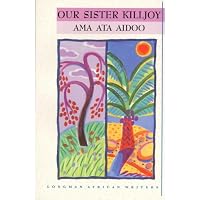
Our Sister Killjoy
by Ama Ata Aidoo
On This Page
Description
In this novel, the author explores the thoughts and experiences of a Ghanaian girl on her travels through Europe. It offers a running commentary on Sissie's feelings of alienation, her reflections on European culture and civilization and her return to the warmth of home in Africa. Ghost/Anowa and short stories No Sweetness Here. suitable for schools and universities.Tags
Recommendations



Member Reviews
This is a fiery book. The main character, “our sister” or Sissie for short, travels from Ghana to Europe, and comments on her life as “the african woman” amongst the white natives.
The portions set in Bavaria and London are the angriest: Sissie is deeply, intensely angered at the natives’ patronizing attitudes (intentional or otherwise), their cluelessness, their rationalizations, their happiness, the size of German food portions, the juicy plums that are so delicious. It’s an anger stemming from centuries of injustice that lashes out and that is confused in settling on targets but that is too wild and too real and too just to be anything else.
The final portion of the book, a letter to an ex-lover, I felt was the best part show more of the book. It’s where Sissie’s anger is turned on African immigrants whose post facto justifications for not helping the mother country is infuriating to her. This section, too, is confused and not always reasonable, but it provides more of an explanation for why Sissie feels the way she does, and that explicit insight into a deeply angry person’s motivations unlocks an appreciation for the character that wasn’t there for me in the earlier parts.
Dealing with centuries of systematic oppression is not an easy thing to do: no-one who proclaims a simple solution comes off looking good. Very nicely done! show less
The portions set in Bavaria and London are the angriest: Sissie is deeply, intensely angered at the natives’ patronizing attitudes (intentional or otherwise), their cluelessness, their rationalizations, their happiness, the size of German food portions, the juicy plums that are so delicious. It’s an anger stemming from centuries of injustice that lashes out and that is confused in settling on targets but that is too wild and too real and too just to be anything else.
The final portion of the book, a letter to an ex-lover, I felt was the best part show more of the book. It’s where Sissie’s anger is turned on African immigrants whose post facto justifications for not helping the mother country is infuriating to her. This section, too, is confused and not always reasonable, but it provides more of an explanation for why Sissie feels the way she does, and that explicit insight into a deeply angry person’s motivations unlocks an appreciation for the character that wasn’t there for me in the earlier parts.
Dealing with centuries of systematic oppression is not an easy thing to do: no-one who proclaims a simple solution comes off looking good. Very nicely done! show less
Ghana
A surprisingly complex and nuanced account of the narrator's travels from Ghana to Europe and other destinations. Don't let editorial reviews fool you with their domesticated descriptions--this is a much better book than they would lead yoo to believe. It addresses not only colonialism and overt, individual acts of racism, but also ingrained racist perspectives that are obvious when one is their object yet inexplicable and invisible when one is not. The book is written in a pastiche of styles, with the interwoven poetry and prose sections being most effective; sadly, the "letter" that closes the volume is, while interesting in its content, tedious stylistically. Read with Michelle Cliff's No Telephone to Heaven and Ntozake Shange's show more [b:For Colored Girls Who Have Considered Suicide When the Rainbow Is Enuf|58098|for colored girls who have considered suicide/when the rainbow is enuf|Ntozake Shange|http://d.gr-assets.com/books/1347933527s/58098.jpg|505856]. show less
A surprisingly complex and nuanced account of the narrator's travels from Ghana to Europe and other destinations. Don't let editorial reviews fool you with their domesticated descriptions--this is a much better book than they would lead yoo to believe. It addresses not only colonialism and overt, individual acts of racism, but also ingrained racist perspectives that are obvious when one is their object yet inexplicable and invisible when one is not. The book is written in a pastiche of styles, with the interwoven poetry and prose sections being most effective; sadly, the "letter" that closes the volume is, while interesting in its content, tedious stylistically. Read with Michelle Cliff's No Telephone to Heaven and Ntozake Shange's show more [b:For Colored Girls Who Have Considered Suicide When the Rainbow Is Enuf|58098|for colored girls who have considered suicide/when the rainbow is enuf|Ntozake Shange|http://d.gr-assets.com/books/1347933527s/58098.jpg|505856]. show less
Maudits soient tous les voleurs de continents !
(p. 194, “Une lettre d’amour”).
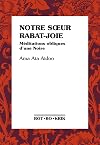
Un achat impulsif et une lecture dans la foulée pour ce livre. D’abord parce que le sujet m’intéresse, et puis parce que j’ai découvert il y a peu cette petite maison d’édition indépendante dont j’apprécie la démarche et le travail. Ama Ata Aidoo est une écrivaine ghanéenne dont ce livre est seulement le deuxième traduit en français.
Ce roman, le premier qu’elle publie (après avoir publié des pièces de théâtre et des nouvelles), date de 1977, alors qu’elle avait 35 ans. Un âge où les illusions de jeunesse commencent à s’envoler et qu’on s’aperçoit que l’on ne fera pas le quart de la moitié de ce que l’on show more pensait accomplir dans sa vie. Je dis cela parce que ce livre est un cri de colère contre le système néo-colonial, contre les inerties de la société, que ce soit le racisme ou la misogynie. Un immense cri de colère qu’Ama Ata Aidoo livre sans filtre, sans forcément le mettre en forme (du moins de façon apparente). Cela en fait un livre presque violent verbalement, ce qui lui donne toute sa force. Sissi, la narratrice, est plus jeune que l’autrice, et elle est à cet âge où l’on est plus d’espoirs et d’idéaux que l’on espère faire vivre, mais elle se heurte à une société qui ne lui fait pas la place qu’elle souhaite, elle voit les travers de ce monde et elle s’insurge. Contre le néo-colonialisme, contre ses compatriotes qui fuient leurs responsabilités, contre ceux qui confisquent les décisions, contre ceux qui usurpent le pouvoir. Tout cela est dit, écrit, vécu, et livré ici sans être poli, comme toute une rage qui sortirait d’un coup.
Un livre très intéressant à lire, qui certes n’apporte pas de solution, mais quelle solution existe-t-il ? Intéressant de noter qu’en 1982, elle est nommée Ministre de l’Education, mais qu’elle démissionne seulement 18 mois plus tard, empêchée qu’elle est de réaliser son ambition de rendre l’éducation accessible à tous dans le pays. J’imagine qu’elle aussi, à l’image de Sissi, a dû être pleine de cette même frustration rageuse. show less
Jun 14, 2026 (Edited)French
1
Ratings
Members
- Recently Added By
Lists

This is the Canon: Decolonize Your Bookshelf in 50 Books
51 works; 5 members

Canon de la narrativa universal del s. XX (cicutadry)
499 works; 3 members

Schomburg Centennial Reading List
100 works; 4 members
Author Information

16+ Works 1,060 Members
Born near Dominase, in central Ghana, Aidoo is today the leading Ghanaian writer. She was the daughter of a chief and grew p in a royal family. Educated at the University of Ghana at Legon, where she graduated in 1964 with a B.A. in English, Aidoo worked as a Research Fellow at the Institute of African Studies in Legon. Ghana's gaining its show more independence in 1965 greatly influenced Aidoo. Her writings reveal her interest in the historical events that have shaped her country. She believes that the status of women in Africa and the struggle for women's liberation cannot be distinct from the nation's struggles. She made her debut as writer with a short story, "No Sweetness Here" (1965). The story had previously won a prize in a short-story competition. This story provides the title of Aidoo's first collection of stories. Aidoo is better known as a playwright, and her two earliest plays, Anowa (first published in 1970) and The Dilemma of a Ghost (first published in 1965) remain popular. Aidoo has taught in several parts of Africa as well as the United States. She now lives and teaches in Harare, Zimbabwe. (Bowker Author Biography) show less
Awards and Honors
Series
Belongs to Publisher Series
Common Knowledge
- Canonical title
- Our Sister Killjoy
- Original title
- Our Sister Killjoy
- People/Characters
- Sissie; Marija
- Important places
- Ghana; Germany; England, UK; London, England, UK
- Original language
- English
Classifications
Statistics
- Members
- 263
- Popularity
- 123,176
- Reviews
- 3
- Rating
- (3.54)
- Languages
- English, French, Spanish
- Media
- Paper, Ebook
- ISBNs
- 9
- ASINs
- 2