
George Lamming (1927–2022)
Author of In the Castle of My Skin
About the Author
Born in Carrington Village, Barbados, Lamming taught in Trinidad and Venezuela before going to England in 1950. In England, he worked in a factory and also hosted a book program for the BBC West Indian Service while pursuing his writing. Lamming's works are a panorama of West Indian history with a show more strong sense of nationalism. In the Castle of My Skin (1953) is at least partially autobiographical in its presentation of the protagonist's growing sense of individuality and his consequent estrangement from the village and folk community. The subsequent exile of this protagonist is told in The Emigrants (1954), his return is the focus in Of Age and Innocence (1958), and the reclamation of his heritage is the major theme in Season of Adventure (1960). His novels focus on the social and economic changes taking place in the Caribbean, and he uses his protagonists as mouthpieces for his own ideas. (Bowker Author Biography) show less
Image credit: George Lamming, 1955. Photo by Carl Van Vechten. (Library of Congress Prints and Photographs Division LC-USZ62-114409)
Works by George Lamming
Associated Works
Tagged
Common Knowledge
- Birthdate
- 1927-06-08
- Date of death
- 2022-06-04
- Gender
- male
- Education
- Combermere High School
- Occupations
- teacher
novelist
essayist
short story writer - Awards and honors
- Anisfield-Wolf Book Award (Lifetime Achievement, 2014)
- Nationality
- Barbados
- Birthplace
- Carrington, Barbados
- Places of residence
- Carrington Village, Barbados (birth)
Port of Spain, Trinidad and Tobago
London, England, UK
Barbados - Map Location
- Barbados
Members
Reviews

Lamming's first, and best-known, novel is the essentially autobiographical story of a boy, G., growing up in a small village on Barbados before and during the Second World War. But it's also an account of the history of the Caribbean, of the peculiar social structures and confused loyalties and identities left behind by slavery and colonialism. Lamming uses an experimental narrative style that allows him to treat the village almost more as a collective organism than as a collection of show more individual characters. The villagers struggle to make sense of their place in the wider world through the limited information they have access to and the distortions in the Anglocentric, imperialist curriculum of the village school, where most of the teachers have had no education that goes beyond what they are supposed to be teaching.
The village has grown up as a quasi-feudal dependency of the landlord and employer, Mr Creighton, in the aftermath of the end of slavery. And although there are still one or two old people who grew up as children of slaves, the village as a whole has no capacity for grasping what that meant. And they are even less aware of the way their lives are locked into the feudal relationship with Creighton: the anti-colonial agitation in the island that persuades him to sell up to members of the rising black middle class also allows him to decide that he has been absolved of his responsibility for his former tenants, and they are suddenly left facing homelessness and the destruction of their community.
This is a political novel, but it's also a very poetic one: there are long, beautiful passages of observation of the island world in which nothing important seems to happen (the headmaster looking out over the silent school, three crabs walking up a beach, a boy being bathed by his mother in the back garden), but at the same time we learn an astonishing amount about what it must feel like to live in such a setting. The narrative viewpoint switches around disconcertingly between the "I"-narrator, G., and various other characters, and we are launched into unfinished storylines that may or may not be picked up later. It's a book you need time and leisure for, but a very rewarding one to invest them in. show less
The village has grown up as a quasi-feudal dependency of the landlord and employer, Mr Creighton, in the aftermath of the end of slavery. And although there are still one or two old people who grew up as children of slaves, the village as a whole has no capacity for grasping what that meant. And they are even less aware of the way their lives are locked into the feudal relationship with Creighton: the anti-colonial agitation in the island that persuades him to sell up to members of the rising black middle class also allows him to decide that he has been absolved of his responsibility for his former tenants, and they are suddenly left facing homelessness and the destruction of their community.
This is a political novel, but it's also a very poetic one: there are long, beautiful passages of observation of the island world in which nothing important seems to happen (the headmaster looking out over the silent school, three crabs walking up a beach, a boy being bathed by his mother in the back garden), but at the same time we learn an astonishing amount about what it must feel like to live in such a setting. The narrative viewpoint switches around disconcertingly between the "I"-narrator, G., and various other characters, and we are launched into unfinished storylines that may or may not be picked up later. It's a book you need time and leisure for, but a very rewarding one to invest them in. show less

I was drawn to this by my love for Shakespeare, as Lamming weaves into his professional memoir a classist and colonial interpretation of The Tempest. Also, reading autobiographical material from Colin Powell and Malcolm Gladwell made me interested in the West Indian experience. Lamming's jumble of recollections is poetic and strives to be honest and psychologically accurate as an interpretative over descriptive recollection. I found it eminently readable and enlightening.
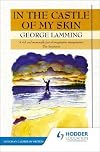
Reading this book made me realise how much has changed, both in literature and society, in the half century since it was written. First of all, the writing struck me as extremely old-fashioned. For the first few pages, we learn nothing except that it’s the narrator’s ninth birthday and it’s raining. There are long, detailed descriptions of the rain, the house, the village, and still nothing happens. I could feel my impatience building. I didn’t care what colour the shingles were – show more I wanted to know who the story was about, what issues they were grappling with.
And then I remembered: novels used to be written this way. Start with the weather, then the roof, then fill in the walls and the furniture, sketch the village and the surrounding countryside, and only then get around to telling the story. I suppose it’s a form of writing that made sense in a less hurried age. I also think that, before TV and film, there was an acceptance of the fact that people needed a visual picture before they could start to listen to a story. Movies convey the visual stuff instantly, so can go straight into the story without delay, and I suppose at some point we began to expect the same of books. But for a long time, this is how novels were written – slowly, methodically, painting the background in painstaking detail before allowing any characters to come into the foreground.
When I remembered that, I enjoyed the book much more. I stopped waiting for something to happen and just enjoyed the descriptive prose, much of it beautiful. Finally around page 50, something like a plot began to form, and by about page 150 I was really into it. The long build-up had played an important part. By telling me about a whole load of irrelevant minutiae, Lamming had set me up to care about and believe in the characters, so that when things did eventually begin to happen, I felt much more of an emotional attachment than I expected.
Now onto the social change, which is a major theme of the book. The small Barbadian village in which the book is set is like something from another era altogether. The set-up is feudal, with the white plantation owner Mr Creighton owning the village and a strange relationship of mutual resentment and dependency between him and the villagers. He helps them when things are bad – for example when the village is flooded he pays for repairs – and he has a kind of paternalistic attitude of caring for them which they reciprocate with respect for him. But they also join a strike against him for unfair wages, and one of them is tempted to kill him during a riot. And when he’s had enough, he sells up.
The villagers have mostly saved up to buy their own houses, but don’t own the land on which the houses sit. So when Mr Creighton sells, they have to move, and the village is destroyed. Some of them try to move the houses, but they are old wooden houses and crumble when they are moved from the foundation blocks. It’s quite a tragic ending, and mirrors the boy’s gradual development from a nine-year-old boy to the verge of adulthood. He, like his boyhood friend Trumper, is planning to abandon the village and go abroad. The old man, known only as Pa, has to go to the poor house. Worst of all, the land has been bought by the penny savings bank into which they have been putting their own savings. It’s run by Mr Slime, a former teacher in the village who promised them they would own the land one day. To get enough money to buy all the land, he has to attract investors from outside the village, and of course they don’t care about the people and their families having lived on the land for centuries – they just want their own space to build a house of their own.
It’s very well communicated – I felt real anger at the injustice of the villagers’ situation, but also could empathise with Mr Slime and the other investors, who were coming out of poverty themselves and just wanted a piece of land to build a house and a middle class life. It was a betrayal, but I could understand them and empathise. The landowner Mr Creighton is not evil, either. It’s a good, complex situation, and Lamming’s great care in describing it all in so much detail means that it all feels real and believable in the end, and is quite emotionally affecting. Definitely glad that I persevered through all those pages of rain. show less
And then I remembered: novels used to be written this way. Start with the weather, then the roof, then fill in the walls and the furniture, sketch the village and the surrounding countryside, and only then get around to telling the story. I suppose it’s a form of writing that made sense in a less hurried age. I also think that, before TV and film, there was an acceptance of the fact that people needed a visual picture before they could start to listen to a story. Movies convey the visual stuff instantly, so can go straight into the story without delay, and I suppose at some point we began to expect the same of books. But for a long time, this is how novels were written – slowly, methodically, painting the background in painstaking detail before allowing any characters to come into the foreground.
When I remembered that, I enjoyed the book much more. I stopped waiting for something to happen and just enjoyed the descriptive prose, much of it beautiful. Finally around page 50, something like a plot began to form, and by about page 150 I was really into it. The long build-up had played an important part. By telling me about a whole load of irrelevant minutiae, Lamming had set me up to care about and believe in the characters, so that when things did eventually begin to happen, I felt much more of an emotional attachment than I expected.
Now onto the social change, which is a major theme of the book. The small Barbadian village in which the book is set is like something from another era altogether. The set-up is feudal, with the white plantation owner Mr Creighton owning the village and a strange relationship of mutual resentment and dependency between him and the villagers. He helps them when things are bad – for example when the village is flooded he pays for repairs – and he has a kind of paternalistic attitude of caring for them which they reciprocate with respect for him. But they also join a strike against him for unfair wages, and one of them is tempted to kill him during a riot. And when he’s had enough, he sells up.
The villagers have mostly saved up to buy their own houses, but don’t own the land on which the houses sit. So when Mr Creighton sells, they have to move, and the village is destroyed. Some of them try to move the houses, but they are old wooden houses and crumble when they are moved from the foundation blocks. It’s quite a tragic ending, and mirrors the boy’s gradual development from a nine-year-old boy to the verge of adulthood. He, like his boyhood friend Trumper, is planning to abandon the village and go abroad. The old man, known only as Pa, has to go to the poor house. Worst of all, the land has been bought by the penny savings bank into which they have been putting their own savings. It’s run by Mr Slime, a former teacher in the village who promised them they would own the land one day. To get enough money to buy all the land, he has to attract investors from outside the village, and of course they don’t care about the people and their families having lived on the land for centuries – they just want their own space to build a house of their own.
It’s very well communicated – I felt real anger at the injustice of the villagers’ situation, but also could empathise with Mr Slime and the other investors, who were coming out of poverty themselves and just wanted a piece of land to build a house and a middle class life. It was a betrayal, but I could understand them and empathise. The landowner Mr Creighton is not evil, either. It’s a good, complex situation, and Lamming’s great care in describing it all in so much detail means that it all feels real and believable in the end, and is quite emotionally affecting. Definitely glad that I persevered through all those pages of rain. show less

'Everybody in the village sort of belong. Is like a tree...I don't ever get the feelin' ... that anythin' could change so',, September 7, 2014
This review is from: In the Castle of My Skin (Ann Arbor Paperbacks) (Paperback)
I didn't find this easy to get into: but once I did, I thought it was beautifully written. An autobiographical novel, covering Lamming's years between nine and eighteen on Barbados, before going out into the wider world.
The whole 'feel' of 1930s/ 40s Barbados is conveyed show more in various ways - conversations between the locals, interaction with the white landlord (to whom most of the villagers seem to feel a sort of ingrained respect), everyday incidents. Also the amateur philosophizing of the teenage boys, hanging out at the beach.
As life changes, quite drastically, for the village, Lamming portrays the great feeling of nostalgia for things he would never see again.
And a first realization that 'his people' are treated very differently in other countries... show less
This review is from: In the Castle of My Skin (Ann Arbor Paperbacks) (Paperback)
I didn't find this easy to get into: but once I did, I thought it was beautifully written. An autobiographical novel, covering Lamming's years between nine and eighteen on Barbados, before going out into the wider world.
The whole 'feel' of 1930s/ 40s Barbados is conveyed show more in various ways - conversations between the locals, interaction with the white landlord (to whom most of the villagers seem to feel a sort of ingrained respect), everyday incidents. Also the amateur philosophizing of the teenage boys, hanging out at the beach.
As life changes, quite drastically, for the village, Lamming portrays the great feeling of nostalgia for things he would never see again.
And a first realization that 'his people' are treated very differently in other countries... show less
Lists
Awards


You May Also Like


Associated Authors
Statistics
- Works
- 18
- Also by
- 4
- Members
- 730
- Popularity
- #34,782
- Rating
- 3.5
- Reviews
- 9
- ISBNs
- 49
- Favorited
- 2