
Derek Walcott (1930–2017)
Author of Omeros
About the Author
Derek Alton Walcott was born in Castries, St. Lucia on January 23, 1930. He received a bachelor's degree in French, Latin, and Spanish at the University of the West Indies in 1953. He also began writing plays. His first play, about the revolutionary Haitian leader Henri Christophe, was produced in show more St. Lucia in 1950. He taught at schools in St. Lucia, Grenada and Jamaica while continuing to write and stage plays. His plays included Lone, Sea at Dauphin, Ti-Jean and His Brothers, Malcochon, and Dream on Monkey Mountain. He later wrote the book and collaborated with the singer and songwriter Paul Simon on the lyrics for The Capeman, a musical about a Puerto Rican gang member who murdered three people in Manhattan in 1959. He was a professor at Boston University from 1981 until retiring in 2007. His metaphorical poetry captured the physical beauty of the Caribbean, the harsh legacy of colonialism, and the complexities of living and writing in two cultural worlds His collections of poetry included In a Green Night, Selected Poems, The Castaway, The Gulf, Sea Grapes, Another Life, Omeros, Tiepolo's Hound, and The Prodigal. He received the Queens Medal for Poetry, the Nobel Prize for Literature in 1992, and the T. S. Eliot Prize for his poetry collection, White Egrets, in 2011. He died on March 17, 2017 at the age of 87. (Bowker Author Biography) show less
Disambiguation Notice:
(yid) VIAF:39391959
(ger) VIAF:39391959
Image credit: From Owen Barfield Website
Works by Derek Walcott
The Haitian Trilogy: Plays: Henri Christophe, Drums and Colours, and The Haytian Earth (2002) 32 copies
Nelle vene del mare 4 copies
Nobel 1992. Mappa del nuovo mondo. Ti-Jean e i suoi fratelli. Sogno sul monte delle scimmie. (1999) 3 copies
Pantomime 2 copies
Le opere 1 copy
Francesco Clemente 1 copy
Love After Love 1 copy
Poemas 1 copy
Salsa 1 copy
Associated Works
The Making of a Poem: A Norton Anthology of Poetic Forms (2000) — Contributor — 1,474 copies, 9 reviews
Literature: An Introduction to Fiction, Poetry, and Drama (1995) — Contributor, some editions — 1,016 copies, 7 reviews
A World of Ideas : Conversations With Thoughtful Men and Women About American Life Today and the Ideas Shaping Our Future (1989) — Interviewee — 603 copies, 1 review
World Poetry: An Anthology of Verse from Antiquity to Our Time (1998) — Contributor — 499 copies, 2 reviews
African American Poetry: 250 Years of Struggle and Song (2020) — Contributor — 236 copies, 4 reviews
Teaching with Fire: Poetry That Sustains the Courage to Teach (2003) — Contributor — 224 copies, 1 review
The Poetry Pharmacy: Tried-and-True Prescriptions for the Heart, Mind, and Soul (2017) 197 copies, 5 reviews
Every Shut Eye Ain't Asleep: An Anthology of Poetry by African Americans Since 1945 (1994) — Contributor — 97 copies
So Much Things to Say: 100 Poets from the First Ten Years of the Calabash International Literary Festival (2010) — Contributor — 26 copies, 1 review
A Rock Against the Wind: African-American Poems and Letters of Love and Passion (1996) — Contributor — 24 copies
The Serpent and the Fire: Poetries of the Americas from Origins to Present (2024) — Contributor — 18 copies
Another English: Anglophone Poems from Around the World (Poets in the World) (2014) — Contributor — 11 copies
Edexcel Poetry Anthology for Advanced subsidiary and advanced GCE examinations in English Literature (2000) — Contributor, some editions — 6 copies
Tagged
Common Knowledge
- Canonical name
- Walcott, Derek
- Legal name
- Walcott, Derek Alton
- Birthdate
- 1930-01-23
- Date of death
- 2017-03-17
- Gender
- male
- Education
- St. Mary's College, Castries, St. Lucia
University College of the West Indies (BA|1953) - Occupations
- teacher
poet
playwright - Organizations
- Boston University
University of Alberta
University of Essex
Boston Playwrights' Theater
Trinidad Theater Workshop - Awards and honors
- Nobel Prize (Literature, 1992)
American Academy of Arts and Letters (Foreign Honorary ∙ Literature ∙ 1979)
Obie Award (1971)
Queen's Medal for Poetry (1988)
Royal Society of Literature Award
MacArthur Foundation Fellowship (1981) (show all 19)
Order of Saint Lucia (Knight Commander, 2016)
Order of the British Empire (Officer, 1972)
Order of Merit (2009)
Order of the Caribbean Community (1992)
Anisfield-Wolf Book Award (2004)
T. S. Eliot Prize (2011)
OCM Bocas Prize for Caribbean Literature (2011)
Cholmondeley Award (1969)
Arts Council of Wales International Writers Prize (1990)
W. H. Smith Literary Award (1990)
Griffin Trust For Excellence in Poetry (2015)
Guinness Award for Poetry
Pegasus Award for Poetry - Relationships
- Walcott, Roderick (twin brother)
- Nationality
- Saint Lucia
- Birthplace
- Castries, Santa Lucia
- Places of residence
- Castries, Saint Lucia (birth)
Grenada
Boston, Massachusetts, USA
New York, New York, USA - Place of death
- Gros Islet, St. Lucia
- Burial location
- Morne Fortuné, Saint Lucia
- Disambiguation notice
- VIAF:39391959
Members
Discussions
David Walcott in Fine Press Forum (February 2023)
Reviews
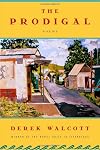
I was disappointed in this "last" book (did I read somewhere that he claimed this would be his last poetry collection?) if anything for its self-indulgence. Just when I couldn't handle another scene of light likened to some painter, he parenthetically breaks in and makes fun of himself for his knack for making such a move:"the light / out of pearl, out of Pierro della Francesca / (you could tell he would mention a painter)"Of course he continues to do it, and such self-poking didn't save the show more poem for me but deepened my sense of the project as the whimsical musings of a major poet at the end of his life, his twin brother dead, his romances failed, his former lovers and friends dead. It felt as if he were spinning his wheels.And there was something about his acknowledgment that he missed the 20th century that struck a chord with me:"In the middle of the nineteenth centurysomewhere between Balzac and Lautreamont,a little farther on than Baudelaire Stationwhere bead-eyed Verlaine sat, my train broke down,and has been stuck there since. When I got offI found that I had missed the Twentieth Century."I'm coming at this from an odd angle, but his love for formal English prosody does continue through from the 19th century, almost as if he missed the Modernist revolution. I mean on one hand that sense of tradition, of writing back to the empire having mastered their language better than they speak it lends him great formal power, which I've always admired in his work as the rhyme schemes never seem forced or sing-songy thanks to the power of enjambment. And I never find the poems archaic; he is Modern, just look at the brilliant reinterpretation of Homer's work in Omeros. That sort of re-interpretation and re-presenting of our cultural inheritance in contemporary terms appeals to my imagination and makes me think of books like Anne Carson's Autobiography of Red. But I think his sense of Art with a big A is definitely a Romantic notion, especially when he makes comments like this in an interview: "There is no history in art...the criticism of art is historical, but art itself does not contain history." Come again?His obsession with History vs. history has always intrigued me, and there's been a shift from addressing London and England as empire center to Paris and France in his last two books. It speaks to his mixed cultural legacy (St. Lucia, the Helen of the West Indies, exchanged hands between England and France again and again, so it makes sense he would write back to both). But where his preoccupation with England in his earlier work was to gain literary credibility, I find the shift to France an attempt to gain artistic credibility, especially with his identity as a painter. Just look at Tiepolo's Hound: it included 26 of his own paintings. I would have thought the Art history, painter, ekphrastic lover in me would have appreciated his musings on art in this book, but it's far from the investigative scrutiny and illuminating connections found in Tiepolo's Hound and operates on this level of exclusivity where if you know the style of the artist or painting in question you'll get his comparison and reference; if not, it has the power to distance the reader as it sounds like name-dropping and lofty elitism. I found it a cheap shortcut to really describe a scene in a fresh way.Maybe one of these days I'll return to that thesis I wrote on his work and flesh out some of those essay chapters. show less

Queen and Country was created by Steve McQueen in response to his 2003 commission by the Imperial War Museum's Art Commissions Committee to create a work in response to the war in Iraq. Inspired by the dedication and selflessness of the servicemen and women he met in Basra in 2003, McQueen devised the concept that each of the soldiers killed in the conflict be commemorated on official postage stamps. Using images selected by the families of the deceased, full sheets of stamps, one per show more soldier with their name and date of death, are displayed in vertical sliding drawers contained in an oak cabinet. Neither for nor against the war, Queen and Country, McQueen's dignified and moving response to his commission as war artist, is a work of personal tribute and commemoration. This commemorative book featuring 160 service men and women has been published on the occasion of the display of the work at the National Portrait Gallery, London, 20 March - 18 July 2010. show less
The Nobel Prize was awarded for this Homeric poem -- and the announcement was the discovery of gold in the Caribbean archipelago! "Omeros" is the title of this long and interconnected poem -- broken out in easily-read Danteian terza rima (for the most part). The title is from the way a beautiful woman pronounced the protagonist fisherman's name -- "Homer". And the "Om" invokes the revenant spirit of the conch, "mer" is a word for mother, and "os" is a word for bone. Just sayin'....
There are show more many--and I am one--who avoid long poems, or "poetry" of pointless tale-telling and irritating similes that avoid telling a good tale. Walcott provides a robust tale--this is an Odessian romp through the tree-falls and archipelago of the Caribbean. And it is filled with jewels, and joys and pains. Irony is the salvation in the struggle with colonials and slaves, all of whom are struggling with consciousness. Homer himself takes a turn in narrating this semi-autobiographical unveiling of a wounded Achilles. There are many allusions to historical events--the islands passed from one colonial power to another after various battles. There are many echoes and nods to mythology--the role of a beauty among tribes haunted by sex. But this is not knotted obscurity like trying to read a Pound-ed cant Canto. This poetry is vivid and accessible -- filled with moist surprises, just like a jungle. You don't have to read, or long for, footnotes to "explain" the meaning.
I laughed and wept, and felt enriched. And relieved that I was able to sail off with treasure and without the burden of having had to pillage the smoking village and slaughter any stinking pirates and naval pretenders. show less
There are show more many--and I am one--who avoid long poems, or "poetry" of pointless tale-telling and irritating similes that avoid telling a good tale. Walcott provides a robust tale--this is an Odessian romp through the tree-falls and archipelago of the Caribbean. And it is filled with jewels, and joys and pains. Irony is the salvation in the struggle with colonials and slaves, all of whom are struggling with consciousness. Homer himself takes a turn in narrating this semi-autobiographical unveiling of a wounded Achilles. There are many allusions to historical events--the islands passed from one colonial power to another after various battles. There are many echoes and nods to mythology--the role of a beauty among tribes haunted by sex. But this is not knotted obscurity like trying to read a Pound-ed cant Canto. This poetry is vivid and accessible -- filled with moist surprises, just like a jungle. You don't have to read, or long for, footnotes to "explain" the meaning.
I laughed and wept, and felt enriched. And relieved that I was able to sail off with treasure and without the burden of having had to pillage the smoking village and slaughter any stinking pirates and naval pretenders. show less
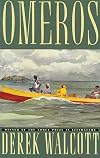
5. Omeros by Derek Walcott
published: 1990
format: 325 page Paperback
acquired: December
read: Jan 1-5, restarted Jan 8-18
rating: 5
From about 1667 to 1814, as the British and French fought for supremacy in the Caribbean and elsewhere, the strategically important island of St. Lucia was fought over numerous times and changed hands fourteen times. It became know as the "Helen of the West Indies". This is Walcott's pick-up point for his masterpiece.
It is, in its simplest sense, a story of the show more island of St. Lucia, one that brings in its history of conquest, extermination and slavery, and apparently the author's personal history, along with some selected context from around the world, and that focuses on the economic classes on the island, especially on the poverty. Walcott, in a magical touch, Homerizes everything. The poor islanders are given Homeric names, Achille, Hector, Philoctete, Helen and, of course, Omeros, who is blind. (Omeros is the phonetically correct spelling of the ancient Greek Author, Όμηρος.) Virgil's Sybil becomes Ma Kilman. The Englishman is named Denis Plunkett, and his Irish wife is Maud. The narrator never tells us his name, or that of his lost girlfriend he seeks to find or overcome, while neglecting his wife and children. Dante and Joyce leave their own traces, although I haven't read them couldn't appreciate this much.
Achille (pronounced A-sheel) and Hector do come to battle over Helen, Philoctete struggles with an infected and unhealing wound on his leg, and blind Omeros sees a great deal. And there is a vast finicky ocean to get lost in.
I've been shy to review this because I am not able to capture the impact of its language. The story is originally just context, an excuse for the expression Walcott makes of it. And it's astounding, even more so if you can apply Walcott's own voice, with its St. Lucian/Caribbean lilt. It's something to live in for a bit.
I found that I was ok following, and then about halfway through I was completely lost. (Achille is passed out on a boat, and winds his way to a river and then he's walking back across the ocean floor. I couldn't quite workout that he had gone backwards in time, to an African village along the banks of a large African river, even if I could get the generally hallucinatory feel.) So, I started using Shmoop, and then, as Walcott the narrator travels through the western major cities, bumping into James Joyce and whatnot, unnamed of course, I became completely dependent. I would read the Shmoop summary of a chapter first to get the story, then read the chapter itself for the language. Certainly a hackneyed way to read this. But it got me through with a degree of appreciation. If I was left with a sense it evolved for a time into something a little plot heavy, that probably says more about my reading style than the contents.
The overall impact for me was the sense of presence Walcott creates. Everything has a spiritual impact, or lives, in this language, in direct counter to that. Poverty, accidents, tourism, development all live as tragic counters to weakening divine spirits of these decedents of slavery. Parallels are brought in, heavily, with the extermination of the North American Indians, especially the well documented massacre at Wounded Knee, in 1890, in the midst of the ghost dance. Walcott, in interviews, says that he is angry. But his poem is not exactly, or not simply that. It's both more circumspect and, on the surface at least, pledging some variation of hope.
2018
https://www.librarything.com/topic/279863#6353501 show less
published: 1990
format: 325 page Paperback
acquired: December
read: Jan 1-5, restarted Jan 8-18
rating: 5
From about 1667 to 1814, as the British and French fought for supremacy in the Caribbean and elsewhere, the strategically important island of St. Lucia was fought over numerous times and changed hands fourteen times. It became know as the "Helen of the West Indies". This is Walcott's pick-up point for his masterpiece.
It is, in its simplest sense, a story of the show more island of St. Lucia, one that brings in its history of conquest, extermination and slavery, and apparently the author's personal history, along with some selected context from around the world, and that focuses on the economic classes on the island, especially on the poverty. Walcott, in a magical touch, Homerizes everything. The poor islanders are given Homeric names, Achille, Hector, Philoctete, Helen and, of course, Omeros, who is blind. (Omeros is the phonetically correct spelling of the ancient Greek Author, Όμηρος.) Virgil's Sybil becomes Ma Kilman. The Englishman is named Denis Plunkett, and his Irish wife is Maud. The narrator never tells us his name, or that of his lost girlfriend he seeks to find or overcome, while neglecting his wife and children. Dante and Joyce leave their own traces, although I haven't read them couldn't appreciate this much.
Achille (pronounced A-sheel) and Hector do come to battle over Helen, Philoctete struggles with an infected and unhealing wound on his leg, and blind Omeros sees a great deal. And there is a vast finicky ocean to get lost in.
I've been shy to review this because I am not able to capture the impact of its language. The story is originally just context, an excuse for the expression Walcott makes of it. And it's astounding, even more so if you can apply Walcott's own voice, with its St. Lucian/Caribbean lilt. It's something to live in for a bit.
I found that I was ok following, and then about halfway through I was completely lost. (Achille is passed out on a boat, and winds his way to a river and then he's walking back across the ocean floor. I couldn't quite workout that he had gone backwards in time, to an African village along the banks of a large African river, even if I could get the generally hallucinatory feel.) So, I started using Shmoop, and then, as Walcott the narrator travels through the western major cities, bumping into James Joyce and whatnot, unnamed of course, I became completely dependent. I would read the Shmoop summary of a chapter first to get the story, then read the chapter itself for the language. Certainly a hackneyed way to read this. But it got me through with a degree of appreciation. If I was left with a sense it evolved for a time into something a little plot heavy, that probably says more about my reading style than the contents.
The overall impact for me was the sense of presence Walcott creates. Everything has a spiritual impact, or lives, in this language, in direct counter to that. Poverty, accidents, tourism, development all live as tragic counters to weakening divine spirits of these decedents of slavery. Parallels are brought in, heavily, with the extermination of the North American Indians, especially the well documented massacre at Wounded Knee, in 1890, in the midst of the ghost dance. Walcott, in interviews, says that he is angry. But his poem is not exactly, or not simply that. It's both more circumspect and, on the surface at least, pledging some variation of hope.
2018
https://www.librarything.com/topic/279863#6353501 show less
Lists
Awards


You May Also Like


Associated Authors
Statistics
- Works
- 75
- Also by
- 41
- Members
- 4,323
- Popularity
- #5,805
- Rating
- 3.9
- Reviews
- 50
- ISBNs
- 189
- Languages
- 13
- Favorited
- 18
