On This Page
Description
To protect his ward Ciri, Geralt of Rivia sends her to train with the sorceress Yennefer. But all is not well within the Wizard's Guild in the second novel of the Witcher, Andrzej Sapkowski's groundbreaking epic fantasy series that inspired the hit Netflix show and the blockbuster video games.Geralt is a Witcher: guardian of the innocent; protector of those in need; a defender in dark times against some of the most frightening creatures of myth and legend.
His task now is to protect Ciri. show more A child of prophecy, she will have the power to change the world for good or for ill—but only if she lives to use it.
Witcher collections
The Last Wish
Sword of Destiny
Witcher novels
Blood of Elves
The Time of Contempt
Baptism of Fire
The Tower of Swallows
Lady of the Lake
Season of Storms
Hussite Trilogy
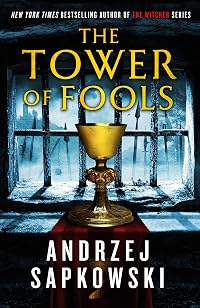
The Tower of Fools
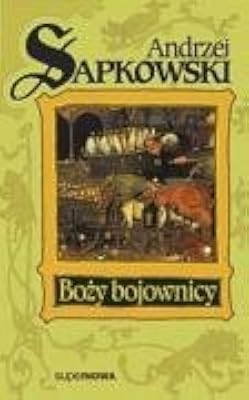
Warriors of God
Translated from original Polish by David French. show less
Tags
Recommendations






Member Reviews
What is the price for holding to a moral code when the world belongs to the immoral, when only the contemptible thrive and only the good die young? For Geralt of Rivia, the answer to that question doesn’t matter. He chose his path long ago. Let the Nilfgaardian Empire plot its revenge for the Battle of Sodden Hill. Let the northern kings fritter away their moment of unity. Let the sorcerers and sorceresses rot in their arrogance and corruption. None of that is worth a farthing to an avowed neutral, a Witcher, a bio-engineered freak crafted to kill monsters, and one who wants nothing to do with the machinations of a world that moved on from his kind. All that matters to Geralt and his frenemy-lover, Yennefer, is protecting Cirilla — show more orphaned heiress of a lost throne, the Lion Cub of Cintra, and the Child of the Elder Blood now the target of a continent-wide dragnet and the fulcrum for a destiny of universal chaos.
I like the Witcher series, but to get the most out of it you need to approach it in three ways. First, start your journey with the two original short story collections, which I failed to do. The novels, though they do contain some great action sequences, are lighter on action than the short stories. By the time the novels pick up the story, they assume you know the most important beats of the characters and the disintegrating world they inhabit. Second, download a map of the continent. The books—at least the English translations—inexplicably fail to provide this, and the action is disorienting without the geography.
Finally, understand that Andrzej Sapkowski’s fantasy world is a deeply Polish universe, so much so that he’s famously disengaged from the translation of his works for a global audience. Nilfgaard is a mashup of the Ottoman Turks and the Russian Empire, two expansionist superpowers that for centuries tried, with various measures of failure and success, to engulf the Polish state. The Witchers’ schools stand in for the Knights Templar: powerful, rich, militaristic, driven by its own code, and exterminated by a modernizing world of kings and merchants disinterested in or hostile to their holy credo.
Turning to Poland’s more recent past, Sapkowski has said that much of the political drama of his fantasy derives from his forty years of life under the heavy-handed bureaucratic corruption of a Communist state. Geralt is the iconic Polish everyman who isn’t willing to give up his integrity despite the moral disorientations of invasions from without and oppressions from within, not even when integrity leaves you broken and alone: “You were all right. Only I, the naive, anachronistic, and stupid witcher, was wrong.”
This is why Geralt speaks to us all, even those of us who don’t share the cultural DNA of the Polish people. You don’t need a legacy of high triumph followed by centuries of suffering and loss to feel the tug of contempt. The wicked are often ascendant and mock those who cling to the good: “You’re incorrigible. You are still incapable of assessing the situation correctly.” The hard times that hard men bring about favor hard hearts: “They were children of the time of contempt. And they had nothing but contempt for others. For them, only force mattered.”
In such a time, the personal cost of integrity is high; but its value is even higher. Holding a moral line may cost you all you hold dear, but you cannot calculate the ripple effect of your honor falling into a sea of dishonor: “Had it not been for the foolish scruples of the Witcher, and his impractical principles, many subsequent events would have run their course quite differently. Many events would probably have not taken place at all. And the history of the world would have unfolded in an alternative way. But the history of the world unfolded as it unfolded, the sole cause of which was that the Witcher had scruples.” show less
I like the Witcher series, but to get the most out of it you need to approach it in three ways. First, start your journey with the two original short story collections, which I failed to do. The novels, though they do contain some great action sequences, are lighter on action than the short stories. By the time the novels pick up the story, they assume you know the most important beats of the characters and the disintegrating world they inhabit. Second, download a map of the continent. The books—at least the English translations—inexplicably fail to provide this, and the action is disorienting without the geography.
Finally, understand that Andrzej Sapkowski’s fantasy world is a deeply Polish universe, so much so that he’s famously disengaged from the translation of his works for a global audience. Nilfgaard is a mashup of the Ottoman Turks and the Russian Empire, two expansionist superpowers that for centuries tried, with various measures of failure and success, to engulf the Polish state. The Witchers’ schools stand in for the Knights Templar: powerful, rich, militaristic, driven by its own code, and exterminated by a modernizing world of kings and merchants disinterested in or hostile to their holy credo.
Turning to Poland’s more recent past, Sapkowski has said that much of the political drama of his fantasy derives from his forty years of life under the heavy-handed bureaucratic corruption of a Communist state. Geralt is the iconic Polish everyman who isn’t willing to give up his integrity despite the moral disorientations of invasions from without and oppressions from within, not even when integrity leaves you broken and alone: “You were all right. Only I, the naive, anachronistic, and stupid witcher, was wrong.”
This is why Geralt speaks to us all, even those of us who don’t share the cultural DNA of the Polish people. You don’t need a legacy of high triumph followed by centuries of suffering and loss to feel the tug of contempt. The wicked are often ascendant and mock those who cling to the good: “You’re incorrigible. You are still incapable of assessing the situation correctly.” The hard times that hard men bring about favor hard hearts: “They were children of the time of contempt. And they had nothing but contempt for others. For them, only force mattered.”
In such a time, the personal cost of integrity is high; but its value is even higher. Holding a moral line may cost you all you hold dear, but you cannot calculate the ripple effect of your honor falling into a sea of dishonor: “Had it not been for the foolish scruples of the Witcher, and his impractical principles, many subsequent events would have run their course quite differently. Many events would probably have not taken place at all. And the history of the world would have unfolded in an alternative way. But the history of the world unfolded as it unfolded, the sole cause of which was that the Witcher had scruples.” show less
Do you want a miserable time? Then have I got the book for you! Sure, it should be obvious from the title, but maybe you've made the mistake of thinking you're interested in this story universe and just want to read all the official materials, titles be damned!
There is no particular topic this book tackles in a way that approaches enjoyment, poignancy, or something like "makes you think". It's just... grimness, a world filled with characters you don't care about probably getting into fights you don't care about, a lot of sexism, a lot of rape threats, descriptions of and allusions to rape... and that's it, really. Yes, it's a translation. Maybe the original Polish is a truly beautiful tale worthy of being retold by the heavens show more themselves. I don't know. This is the official English translation. It's not fun. In fact, it's rather terrible. I'd rate it lower if Goodreads let me.
I think this summarizes much of how Sapkowski writes women: “The first was a middle-aged but vigorous man in extremely modest woollen clothing. At his side strode a tall, sharp-featured woman with dark, smoothly combed hair.
‘That is Gerhart of Aelle, also known as Hen Gedymdeith, the oldest living sorcerer,’ Yennefer informed Geralt in hushed tones. ‘The woman walking beside him is Tissaia de Vries. She isn’t much younger than Hen, but is not afraid of using elixirs to hide it.”
For you see, even in fantasyland, men are allowed to age. Women are ridiculed whether or not they attempt to hide their age. If they do hide their age, and show off, they are ridiculed. If they don’t show off, they are ridiculed. Women ridicule each other. Men rape them or threaten to rape women. That is the way this world functions. I really doubt any of this was done with awareness. Maybe there's something to be had here about patriarchal structures in typical fantasy, but it just doesn't really say anything? The lot of women is shit in this universe. That's all. And it's hardly original. I mean if you like misery porn with a ton of sexism, sure, this is the book for you!
Shortly after this conversation, some women joke about raping someone, potentially multiple people. At one point, a rape survivor saves Victim from an in-progress rape, and then the first rape survivor rapes Victim. And Victim is... I don't even know. She kisses rape survivor while rape survivor is sleeping. I literally don't know what to do with any of these scenes.
I’m also quite certain this book contains some of the most embarrassingly bad descriptions of sex I’ve ever read. But it’s nice to know Geralt gives good head, I guess.
One thing this series has made me realize is that I am so tired of men and their obsession with infertility. In this series, there’s a strong theme of “people who try to become/do magic become infertile” just… because. You could argue that part of it is the theme that humans weren’t meant to do magic, so by trying to become/do magic they are defying nature’s apparent rule that they do magic, and so a sacrifice is made.
Which is strange when you consider one plot point in this book: that a magical parent is required to become a sorcerer. I forget if this infertility thing only applies to women or not. It probably does. Because you see, only men can be trusted in the procreation process in magical fuck-off land, I mean, the world of the Witcher.
But anyway, Ciri gives herself a magical orgasm somehow and it's implied maybe she's infertile now? I don't know.
I don't care about any of the characters in this story. Well actually, Rayla's cool, I guess. She's a bit character who shows up in two scenes. Again, there are a couple cute moments between Geralt and Dandelion, of all things, and Geralt has some nice quips, although any of his monster hunting is done from afar... And a lot of familiar names die or get injured and it's just all very yawn-worthy honestly. The story opens with a sexist messenger we don't care about and only gets worse from there. Four books in and I still do not care about this story universe. I'd really, really like to care, but I don't.
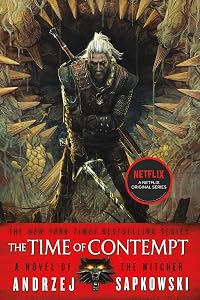
Also, the cover art is hideous. As far as I can tell this is art from the second game, apparently depicting Geralt standing in front of a monster. It is one of the uglier pieces in a series of ugly art.
Overall, miserable story. Skip it. Watch the 2019 show, which has a lot of issues with how it depicts women and dialogue and all that, but it's still somehow better than this. If you want a story about magical adults teaching magical minors, read Tamora Pierce's "Circle of Magic" series. That series touches on surviving in poverty, plagues, invasions, cross-cultural sharing, lots of different kind of magic, trauma, how a child deals with committing murder, confronting systemic sexism, and heck, "Battle Magic" features a child ruler. You want a decent story about a unicorn? Read "The Last Unicorn", or watch the movie. Or do both. You want grimdark (with humor) fantasy? Watch seasons 1-2 of the "Castlevania" anime. You want political intrigue fantasy that's grimdark and deals with child prostitution, trauma, angry mobs, magic, and skullduggery? Read Sarah Monette's "Doctrine of Labyrinths". Skip this. show less
There is no particular topic this book tackles in a way that approaches enjoyment, poignancy, or something like "makes you think". It's just... grimness, a world filled with characters you don't care about probably getting into fights you don't care about, a lot of sexism, a lot of rape threats, descriptions of and allusions to rape... and that's it, really. Yes, it's a translation. Maybe the original Polish is a truly beautiful tale worthy of being retold by the heavens show more themselves. I don't know. This is the official English translation. It's not fun. In fact, it's rather terrible. I'd rate it lower if Goodreads let me.
I think this summarizes much of how Sapkowski writes women: “The first was a middle-aged but vigorous man in extremely modest woollen clothing. At his side strode a tall, sharp-featured woman with dark, smoothly combed hair.
‘That is Gerhart of Aelle, also known as Hen Gedymdeith, the oldest living sorcerer,’ Yennefer informed Geralt in hushed tones. ‘The woman walking beside him is Tissaia de Vries. She isn’t much younger than Hen, but is not afraid of using elixirs to hide it.”
For you see, even in fantasyland, men are allowed to age. Women are ridiculed whether or not they attempt to hide their age. If they do hide their age, and show off, they are ridiculed. If they don’t show off, they are ridiculed. Women ridicule each other. Men rape them or threaten to rape women. That is the way this world functions. I really doubt any of this was done with awareness. Maybe there's something to be had here about patriarchal structures in typical fantasy, but it just doesn't really say anything? The lot of women is shit in this universe. That's all. And it's hardly original. I mean if you like misery porn with a ton of sexism, sure, this is the book for you!
Shortly after this conversation, some women joke about raping someone, potentially multiple people. At one point, a rape survivor saves Victim from an in-progress rape, and then the first rape survivor rapes Victim. And Victim is... I don't even know. She kisses rape survivor while rape survivor is sleeping. I literally don't know what to do with any of these scenes.
I’m also quite certain this book contains some of the most embarrassingly bad descriptions of sex I’ve ever read. But it’s nice to know Geralt gives good head, I guess.
One thing this series has made me realize is that I am so tired of men and their obsession with infertility. In this series, there’s a strong theme of “people who try to become/do magic become infertile” just… because. You could argue that part of it is the theme that humans weren’t meant to do magic, so by trying to become/do magic they are defying nature’s apparent rule that they do magic, and so a sacrifice is made.
Which is strange when you consider one plot point in this book: that a magical parent is required to become a sorcerer. I forget if this infertility thing only applies to women or not. It probably does. Because you see, only men can be trusted in the procreation process in magical fuck-off land, I mean, the world of the Witcher.
But anyway, Ciri gives herself a magical orgasm somehow and it's implied maybe she's infertile now? I don't know.
I don't care about any of the characters in this story. Well actually, Rayla's cool, I guess. She's a bit character who shows up in two scenes. Again, there are a couple cute moments between Geralt and Dandelion, of all things, and Geralt has some nice quips, although any of his monster hunting is done from afar... And a lot of familiar names die or get injured and it's just all very yawn-worthy honestly. The story opens with a sexist messenger we don't care about and only gets worse from there. Four books in and I still do not care about this story universe. I'd really, really like to care, but I don't.
Also, the cover art is hideous. As far as I can tell this is art from the second game, apparently depicting Geralt standing in front of a monster. It is one of the uglier pieces in a series of ugly art.
Overall, miserable story. Skip it. Watch the 2019 show, which has a lot of issues with how it depicts women and dialogue and all that, but it's still somehow better than this. If you want a story about magical adults teaching magical minors, read Tamora Pierce's "Circle of Magic" series. That series touches on surviving in poverty, plagues, invasions, cross-cultural sharing, lots of different kind of magic, trauma, how a child deals with committing murder, confronting systemic sexism, and heck, "Battle Magic" features a child ruler. You want a decent story about a unicorn? Read "The Last Unicorn", or watch the movie. Or do both. You want grimdark (with humor) fantasy? Watch seasons 1-2 of the "Castlevania" anime. You want political intrigue fantasy that's grimdark and deals with child prostitution, trauma, angry mobs, magic, and skullduggery? Read Sarah Monette's "Doctrine of Labyrinths". Skip this. show less
Andrzej has a very unique style of story telling. I, myself ,am from a country which is very close to Poland. I cannot help but find all of the descriptions of villages, people and manners familiar and imagine them a bit ,as they are in my country. Which boosts the enjoyability of the book immensely. Not to mention the plot that is thick and varied, which makes you think "AHA, i KNOW what will happen in this story arc!" ,but luckily it is NOT what I have imagined. Most of the time the twist is far more satisfying or not even present at all. In fact some of the best moments of the books for me are when characters act like normal people. It is a very satisfying blend of action , character building and just plain casual things. I love it show more and I recommend it ! show less
You know, when I come right down to this series, like any other epic fantasy I've read, it all hangs on how much I get into the characters.
No matter what kind of action sequences come around or how much cool magic gets thrown in our faces or what kind of war blows up, I'm still tied up in my love of Geralt, Yennifer, and Ciri. When things get dark and the contempt surrounds everyone, I'm rooting for them. And the bard, too. :) And little miss unrequited. :)
After that point, I'm honestly amazed at how well I received this novel inside my head. Its structure and the way it flits from several different storytelling styles, its truly surprising (and awesome) jabs in the plot, and the wicked turns that come about later make me rather want show more to scream. But that's only because this book DOES NOT FOLLOW NORMAL STRUCTURE. Then again, neither did Blood of Elves. Or the two story collections. The way the tale comes out always keeps me on my toes, keeps everything feeling fresh, and there's no way I can't compare this against so many other epic fantasies, but one thing I CAN say is that it tells stories around corners. You may KNOW something is coming, but Sapkowski truly lulls you into believing that THIS cool scene here is the pinnacle of THIS section, and then he comes right around and slams your head against the table and you're either stunned or you get really pissed or it jerks tears out of you because the SCENE IS JUST TOO FREAKING GORGEOUS.
I'm sure some of you know what I mean. Yennifer and Ciri? As a mirror to a certain queen? OMG that just cut through all my defenses. And then the hits just kept coming and coming.
And coming.
Yes, this series has a hard world to live in. It's not just hard for the elves, but it's hard for women. But damn, if there aren't a lot of hard women in here hitting back!
The love story. I'm sorry, but I started blubbering like a little baby. I thought it was great in The Last Wish, but this just made me an ugly little mess.
I can't not give a book that affects me the way anything less than a full five stars. It not only holds up well against all these modern epic fantasies, but I see precisely where it blows the previous generation of fantasies out of the water, ushering in everything we now know and love. :) show less
No matter what kind of action sequences come around or how much cool magic gets thrown in our faces or what kind of war blows up, I'm still tied up in my love of Geralt, Yennifer, and Ciri. When things get dark and the contempt surrounds everyone, I'm rooting for them. And the bard, too. :) And little miss unrequited. :)
After that point, I'm honestly amazed at how well I received this novel inside my head. Its structure and the way it flits from several different storytelling styles, its truly surprising (and awesome) jabs in the plot, and the wicked turns that come about later make me rather want show more to scream. But that's only because this book DOES NOT FOLLOW NORMAL STRUCTURE. Then again, neither did Blood of Elves. Or the two story collections. The way the tale comes out always keeps me on my toes, keeps everything feeling fresh, and there's no way I can't compare this against so many other epic fantasies, but one thing I CAN say is that it tells stories around corners. You may KNOW something is coming, but Sapkowski truly lulls you into believing that THIS cool scene here is the pinnacle of THIS section, and then he comes right around and slams your head against the table and you're either stunned or you get really pissed or it jerks tears out of you because the SCENE IS JUST TOO FREAKING GORGEOUS.
I'm sure some of you know what I mean. Yennifer and Ciri? As a mirror to a certain queen? OMG that just cut through all my defenses. And then the hits just kept coming and coming.
And coming.
Yes, this series has a hard world to live in. It's not just hard for the elves, but it's hard for women. But damn, if there aren't a lot of hard women in here hitting back!
The love story. I'm sorry, but I started blubbering like a little baby. I thought it was great in The Last Wish, but this just made me an ugly little mess.
I can't not give a book that affects me the way anything less than a full five stars. It not only holds up well against all these modern epic fantasies, but I see precisely where it blows the previous generation of fantasies out of the water, ushering in everything we now know and love. :) show less
I really enjoyed the first two books in this series. Sapkowski plays from strength to strength when he's focused on THE ACTUAL WITCHER in this Witcher series.
I understand now that, from book three on, I believe the author is just treating this entire thing as a bunch of pages in one long (very long) story. But I'm sadly becoming less and less interested in the outcome.
Yes, I understand that some of the moving pieces have to come into play, and to be honest, I kind of learned to live with the plotlessness of the previous book, but this one simply seemed to throw plot to the wind and the author just kind of picked a scene, then put in some dialogue. Then more dialogue. Then, just in case there wasn't enough, he added dialogue. And to wrap show more it up, he finished it off with some dialogue. People talked. A lot.
And when they weren't talking, women were walking around like they were Kanye West's partner du jour so they, of course, basically had to appear naked. That's before we get to all the parts where men inflicted themselves on women. Or threatened to. Or started to, then were chased away by a woman only for her to inflict herself on the woman.
This one was not enjoyable, not interesting, virtually impossible to really follow, and also the last Witcher book I'm going to read. I was excited when I started this. It felt fresh and fun.
Now? Despite some really cool characters, all the fun is gone and dialogue and misogny and more dialogue rule the day.
I'm out. show less
I understand now that, from book three on, I believe the author is just treating this entire thing as a bunch of pages in one long (very long) story. But I'm sadly becoming less and less interested in the outcome.
Yes, I understand that some of the moving pieces have to come into play, and to be honest, I kind of learned to live with the plotlessness of the previous book, but this one simply seemed to throw plot to the wind and the author just kind of picked a scene, then put in some dialogue. Then more dialogue. Then, just in case there wasn't enough, he added dialogue. And to wrap show more it up, he finished it off with some dialogue. People talked. A lot.
And when they weren't talking, women were walking around like they were Kanye West's partner du jour so they, of course, basically had to appear naked. That's before we get to all the parts where men inflicted themselves on women. Or threatened to. Or started to, then were chased away by a woman only for her to inflict herself on the woman.
This one was not enjoyable, not interesting, virtually impossible to really follow, and also the last Witcher book I'm going to read. I was excited when I started this. It felt fresh and fun.
Now? Despite some really cool characters, all the fun is gone and dialogue and misogny and more dialogue rule the day.
I'm out. show less
Listened to audio narrated by well by David French. I really liked the narrator but the story itself jumps around and there are a lot of names and places making it difficult to follow especially while listening in audio format.
To protect Ciri, Geralt leaves Ciri with Yennefer for her protection and they travel to the conclave of mages, where things don't go as planned.
The world is in a state of unrest, with political plots and maneuverings not only with the humans but the elves and the mages as well. This installment comes across as a chaotic mess, with our heroes coming together and being separated and facing life altering changes. There's attempted rape and then the rescuer rapes her, There are very few likeable characters and the show more things I loved about the previous stories are in short supply in this one.
While there are important events that happen in this book making it a necessary read in the overall series, as in individual book it was just okay for me.
If you like my reviews I hope you will follow my blog. https://wyldheartreads.wordpress.com/ show less
To protect Ciri, Geralt leaves Ciri with Yennefer for her protection and they travel to the conclave of mages, where things don't go as planned.
The world is in a state of unrest, with political plots and maneuverings not only with the humans but the elves and the mages as well. This installment comes across as a chaotic mess, with our heroes coming together and being separated and facing life altering changes. There's attempted rape and then the rescuer rapes her, There are very few likeable characters and the show more things I loved about the previous stories are in short supply in this one.
While there are important events that happen in this book making it a necessary read in the overall series, as in individual book it was just okay for me.
If you like my reviews I hope you will follow my blog. https://wyldheartreads.wordpress.com/ show less
The first half lagged like book one, withtoo much conversation and shifting perspectives of the various various kingdoms' rulers. However, once the poltical sh!tstorm struck, the story kicked into high gear.
Everyone is looking for Ciri, child of the Elder Blood and prophesy. The Emperor of Nilfgaard wants her because of her royal blood and claim (via a son) to the throne of Cintra. The various other kings are looking to kill her for the same reason. Geralt, skilled warrior and fighter, is wholly indequate with political intrigue and Yennefer is too arrogant in belief of her own skills of manipulation. When a coup erupts at Aretuza amongst the sorcerers, Geralt finally learns that neutrality is a delusion he must relinquish and Yennefer show more once again vanishes. Ciri is thrown into the world without either to protect her.
I really enjoyed the novel because the character flaws in our protagonists, Geralt and Yennefer, are fully revealed and the plot began to unfold. The second half is action-packed, and the book concludes with Ciri finally on her own and forced to take her own fate in hand. I'm excited to see where this goes. show less
Everyone is looking for Ciri, child of the Elder Blood and prophesy. The Emperor of Nilfgaard wants her because of her royal blood and claim (via a son) to the throne of Cintra. The various other kings are looking to kill her for the same reason. Geralt, skilled warrior and fighter, is wholly indequate with political intrigue and Yennefer is too arrogant in belief of her own skills of manipulation. When a coup erupts at Aretuza amongst the sorcerers, Geralt finally learns that neutrality is a delusion he must relinquish and Yennefer show more once again vanishes. Ciri is thrown into the world without either to protect her.
I really enjoyed the novel because the character flaws in our protagonists, Geralt and Yennefer, are fully revealed and the plot began to unfold. The second half is action-packed, and the book concludes with Ciri finally on her own and forced to take her own fate in hand. I'm excited to see where this goes. show less
Members
- Recently Added By
Lists

Books Read in 2023
5,547 works; 145 members

Speculative Fiction from around the World
610 works; 18 members

Books Read in 2019
4,052 works; 110 members

Mind Expanding Books by hackerkid
581 works; 8 members

Ranking
66 works; 1 member

Witchy Fiction
253 works; 126 members
Author Information

121+ Works 43,543 Members
Andrzej Sapkowski is a fantasy writer, economist, and translator, he wrote the best-selling book series The Witcher and recently wrote the best-selling book, Lady of the Lake. In 2018 his title, Season of Storms, made the bestseller list. (Bowker Author Biography)
Some Editions
Series

Work Relationships
Is contained in
Has the adaptation
Common Knowledge
- Canonical title
- Time of Contempt
- Original title
- Czas pogardy
- Alternate titles
- The Time of Contempt
- Original publication date
- 1995
- People/Characters
- Geralt of Rivia; Yennefer of Vengerberg; Ciri; Ranuncolo; Margarita Laux–Antille; Tessaia de Vries (show all 19); Codringher; Fenn; Vilgefortz; Giselher; Scintilla; Mistle; Kayleigh; Filippa Eilhart; Uggiolo; Aplegatt; Emhyr var Emreis; Sigismund Dijkstra; Francesca Findabair
- Epigraph*
- Sangue sulle tue mani, Falka,
sangue sulle tue vesti.
Brucia, Falka, brucia tra i tormenti,
ardi, muori per i tuoi crimini funesti!
«Stryxy, o strighi presso i Nordling (v.), casta segreta ed elitaria di sacerdoti-guerrieri, verosimilmente frazione dei druidi (v.). Dotati, nell'immaginazione popolare, di poteri magici, nonché di facoltà sovruman... (show all)e, gli s. dovevano combattere contro spiriti malvagi, mostri e ogni genere di forze oscure. In realtà, essendo maestri nel maneggiare le armi, gli s. venivano utilizzati nelle guerre tribali che avevano luogo tra i regni del Nord. Durante il combattimento, gli s. cadevano in una sorta di trance, che si ritiene provocata da autoipnosi o da sostanze stupefacenti, e lottavano con un'energia cieca, essendo del tutto insensibili al dolore e perfino alle ferite gravi, il che rafforzava le fantasie sui loro poteri sovrannaturali. La teoria secondo cui gli s. sarebbero il risultato di mutazioni o di operazioni d'ingegneria genetica non ha trovato conferma. Gli s. sono gli eroi di numerose leggende dei Nordling (cfr. F. Delannoy, Miti e leggende dei popoli del Nord).»
Effenberg e Talbot, Encyclopaedia Maxima Mundi, vol. XV - First words
- Brujeros, a. brujos entre norteños (V.).
Para poder ganarse la vida como mensajero a caballo, solía decir Aplegatt a los chavales que entraban al servicio, hacen falta dos cosas: una cabeza de oro y un culo de hierro.
When talking to young ones entering the service, Aplegatt usually told them that in order to make their living as mounted messengers two things would be necessary: a head of gold and an arse of iron. - Last words
- (Click to show. Warning: May contain spoilers.)- No - le interrumpió Antillo, teniendo cuidado de que la voz no le delatara-. Ninguna excepción, colgad a todos. A los siete. No queremos escuchar ni una palabra más sobre ellos. No queremos escuchar ni una palabra más.
- Original language
- Polish
*Some information comes from Common Knowledge in other languages. Click "Edit" for more information.
Classifications
- Genres
- Fantasy, Fiction and Literature
- DDC/MDS
- 891.8538 — Literature & rhetoric Literatures of other languages East Indo-European and Celtic literatures West and South Slavic languages (Bulgarian, Slovene, Polish, Czech, Slovak, Serbo-Croatian, and Macedonian) Polish Polish fiction 1989–
- LCC
- PG7178 .A65 .C97 — Language and Literature Slavic languages and literatures. Baltic languages. Albanian language Slavic. Baltic. Albanian Slavic Polish
- BISAC
Statistics
- Members
- 4,604
- Popularity
- 3,150
- Reviews
- 62
- Rating
- (3.96)
- Languages
- 29 — Bulgarian, Czech, Dutch, English, Estonian, Finnish, French, German, Greek, Hungarian, Italian, Japanese, Lithuanian, Norwegian, Farsi/Persian, Polish, Romanian, Russian, Serbian, Croatian, Slovak, Spanish, Swedish, Turkish, Ukrainian, Portuguese (Portugal), Portuguese (Brazil), Chinese, traditional, Chinese, simplified
- Media
- Paper, Audiobook, Ebook
- ISBNs
- 81
- ASINs
- 22