On This Page
Description
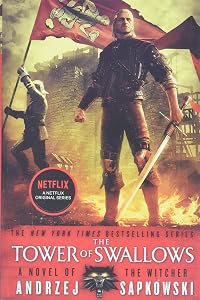
The world has fallen into war. Ciri, the child of prophecy, has vanished. Hunted by friends and foes alike, she has taken on the guise of a petty bandit and lives free for the first time in her life. But the net around her is closing. Geralt, the Witcher, has assembled a group of allies determined to rescue her. Both sides of the war have sent brutal mercenaries to hunt her down. Her crimes have made her famous. There is only one place left to run. The tower of the swallow is waiting...Tags
Recommendations









Member Reviews
“Things fall apart; the centre cannot hold,” wrote Irish poet William Butler Yeats in 1919 amidst the ashes and aftershocks of the Great War. “The blood-dimmed tide is loosed, and everywhere / The ceremony of innocence is drowned; The best lack all conviction, while the worst / Are full of passionate intensity.”
As I read the fourth book in Andrzej Sapkowski’s Witcher saga, my mind often recurred to Yeats’s classic poem of existential dread. The Witcher’s continent is still engulfed in its baptism of fire, though Geralt of Rivia and his mismatched band have threaded their way through the frontlines and are now probing into the frontiers of the Nilfgaardian Empire in their quest to find and save Ciri. As the empire works to show more roll up the remnant kingdoms still clinging to life north of the Yaruga, as Nilfgaardian settlers rush to push southern roots into northern soil, and as the kings scrabble for survival, the falcon is turning in the widening gyre and some rough beast is slouching toward Bethlehem to be born.
What astonishes me about this world is how true it is. So skilled is Sapkowski that each kingdom, city, village, tribe, race, tradition, and creed seems to spring from a deep and organic history no less real than my own. Less good is the fact that much of this world’s truth is grounded in the cruelty we unleash on each other with cyclical regularity. “‘Mamma, are they demons,’” children whisper as hoofbeats thunder through their village in the night. “‘Is it the Wild Hunt? Phantoms from hell? Mamma, mamma!’ ‘Quiet, quiet, children. They are not demons, not devils. Worse than that. They are people.’”
People may not be among the Wild Hunt, but this spectral cavalry of the sky hungers for Ciri just as surely as the vile men tracking her across a war-torn land. In “The Tower of Swallows,” we finally get some clarity on why Ciri is so special, why her blood flows with unearthly power toward a cataclysmic destiny, and why every faction is determined to have her; from the burgeoning secret network of sorceresses to the renegade sorcerer Vilgefortz to the Nilfgaardian Emperor Emhyr var Emreis. As Crach an Craite of the Skellige Isles remarks sarcastically, “Everyone is concerned about Ciri. Lucky girl.”
She is many things, but lucky is not one of them. Ciri’s story becomes unspeakably tragic as the consequences of her choices rain down upon her. Those choices might well have sprung from traumas she didn’t choose; but seed sown in pain yields a painful fruit. Her nemesis throughout the book, the bounty hunter Bonhart, is memorably chilling in his ability to break a person, body and soul, with efficient totality: an apotheosis of that unblinking sadism that festers on the underside of human nature. Kenna, a psionic member of a Nilfgaardian squad hunting Ciri for its own reasons, recalls Bonhart with all the horror of someone brushing against true evil: “And I looked into his thoughts…For a moment. And it was like sticking my head into a dug-up grave.”
The cry wrung from the heart of “The Tower of Swallows” is Ciri’s rage that “it isn’t the evil and indecent who are flung down into the depths, no! Oh, no! The evil and decisive fling down those who are moral, honest and noble but maladroit, hesitant, and full of scruples.” The question of how to meet ascendant evil has two answers. The first is that given both by Ciri and, to the north, by Prefect Fulko: blood for blood. In Ciri’s words, “I know what Evil fears. Not your ethics, Vysogota, not sermons, not moral treatises about a worthy life. Evil fears pain, impairment, suffering, death, the end!” The Nilfgaardian prefect, determined to impose order in an insurgent border zone, asserts that law is not tidy platitudes of justice and morality, but safe streets and undisturbed sleep; and “for those who break the law; the noose, the axe, the stake and the red-hot iron! Punishments which deter others.”
The second answer is that which the hermit-exile Vysogota shoots back at Ciri: “And so it’s an eye for an eye, a tooth for a tooth? Blood for blood? And for that blood, more blood? A sea of blood? Do you want to drown the world in blood? O naive, damaged girl! Is that how you mean to fight evil, little witcher?” Geralt counter-punches Fulko’s brutal ethos by observing that it will birth a world perfect for a witcher trained to kill: “Your vision is a world where people are afraid to venture out after dark; not for fear of cut-throats, but of the guardians of public order. For, after all, the result of all great crackdowns on miscreants is always that the miscreants enter the ranks of the guardians en masse…And inevitably the day will come in your world when the flesh of the wrong person will be torn with pincers, when an innocent person is hanged or impaled. And then it will be a world of crime. In short, a world where a witcher would be in his element.”
The problem of evil will never be solved because humans can’t be solved. Every time we think we’ve outgrown our brutish instincts, we discover that age is just a number. The head of Nilfgaardian military intelligence meditates on an ancient carp in a fishpond, “That beast must be very wise. But why does it need that wisdom? It’s still the same sludge and the same water lilies.” Our race grows older and wiser, but our wisdom can’t extend further than our own sludge. We only learn more efficient methods of breaking each other, inviting an ever-widening gyre of retaliation and a blood-dimmed tide. At some point, the centre will fail to hold.
Must we lose hope? Sapkowski’s answer is no. He lived through the entire arc of Communist Poland, watching as its heavy-handed corruption collapsed in on itself. Sometimes things fall apart because they must. Cruelty eats through systems until they cannot support their own weight; and though the fall can be hard, what comes after can be better. The swordsmith Esterhazy speaks directly to this fact when he deciphers Ciri’s identity as the Child of the Elder Blood: “Examine the marks etched in the blade. You didn’t understand them, naturally. But I shall explain them to you. Look. The line delineated by destiny is unwinding, but leads to this tower. Toward annihilation, towards the destruction of established values, of the established order. But there, above the tower, do you see? A swallow. A symbol of hope. Take this sword. And may what is to come about, come about.”
What remains when things fall apart is not a choice between chaos and order. Chaos will come when the logic of systemic cruelty demands it. Order will fall when it becomes too hollow to bear its load. No one can stop this. The only choice we have is how to endure, whether to give in to the retribution that consumes the worst of us or to defend the “noble, but senseless” scruples (to quote Yennefer’s assessment of Geralt) that animate the best of us. The world to come will bear the shape of those who endure the baptism of fire, even if that world forgets their names. “No one wants to suffer,” says the goddess. “But yet it is our lot. And some suffer more. Not necessarily by choice. The point is not the bearing of the suffering. The point is how it is borne.” show less
As I read the fourth book in Andrzej Sapkowski’s Witcher saga, my mind often recurred to Yeats’s classic poem of existential dread. The Witcher’s continent is still engulfed in its baptism of fire, though Geralt of Rivia and his mismatched band have threaded their way through the frontlines and are now probing into the frontiers of the Nilfgaardian Empire in their quest to find and save Ciri. As the empire works to show more roll up the remnant kingdoms still clinging to life north of the Yaruga, as Nilfgaardian settlers rush to push southern roots into northern soil, and as the kings scrabble for survival, the falcon is turning in the widening gyre and some rough beast is slouching toward Bethlehem to be born.
What astonishes me about this world is how true it is. So skilled is Sapkowski that each kingdom, city, village, tribe, race, tradition, and creed seems to spring from a deep and organic history no less real than my own. Less good is the fact that much of this world’s truth is grounded in the cruelty we unleash on each other with cyclical regularity. “‘Mamma, are they demons,’” children whisper as hoofbeats thunder through their village in the night. “‘Is it the Wild Hunt? Phantoms from hell? Mamma, mamma!’ ‘Quiet, quiet, children. They are not demons, not devils. Worse than that. They are people.’”
People may not be among the Wild Hunt, but this spectral cavalry of the sky hungers for Ciri just as surely as the vile men tracking her across a war-torn land. In “The Tower of Swallows,” we finally get some clarity on why Ciri is so special, why her blood flows with unearthly power toward a cataclysmic destiny, and why every faction is determined to have her; from the burgeoning secret network of sorceresses to the renegade sorcerer Vilgefortz to the Nilfgaardian Emperor Emhyr var Emreis. As Crach an Craite of the Skellige Isles remarks sarcastically, “Everyone is concerned about Ciri. Lucky girl.”
She is many things, but lucky is not one of them. Ciri’s story becomes unspeakably tragic as the consequences of her choices rain down upon her. Those choices might well have sprung from traumas she didn’t choose; but seed sown in pain yields a painful fruit. Her nemesis throughout the book, the bounty hunter Bonhart, is memorably chilling in his ability to break a person, body and soul, with efficient totality: an apotheosis of that unblinking sadism that festers on the underside of human nature. Kenna, a psionic member of a Nilfgaardian squad hunting Ciri for its own reasons, recalls Bonhart with all the horror of someone brushing against true evil: “And I looked into his thoughts…For a moment. And it was like sticking my head into a dug-up grave.”
The cry wrung from the heart of “The Tower of Swallows” is Ciri’s rage that “it isn’t the evil and indecent who are flung down into the depths, no! Oh, no! The evil and decisive fling down those who are moral, honest and noble but maladroit, hesitant, and full of scruples.” The question of how to meet ascendant evil has two answers. The first is that given both by Ciri and, to the north, by Prefect Fulko: blood for blood. In Ciri’s words, “I know what Evil fears. Not your ethics, Vysogota, not sermons, not moral treatises about a worthy life. Evil fears pain, impairment, suffering, death, the end!” The Nilfgaardian prefect, determined to impose order in an insurgent border zone, asserts that law is not tidy platitudes of justice and morality, but safe streets and undisturbed sleep; and “for those who break the law; the noose, the axe, the stake and the red-hot iron! Punishments which deter others.”
The second answer is that which the hermit-exile Vysogota shoots back at Ciri: “And so it’s an eye for an eye, a tooth for a tooth? Blood for blood? And for that blood, more blood? A sea of blood? Do you want to drown the world in blood? O naive, damaged girl! Is that how you mean to fight evil, little witcher?” Geralt counter-punches Fulko’s brutal ethos by observing that it will birth a world perfect for a witcher trained to kill: “Your vision is a world where people are afraid to venture out after dark; not for fear of cut-throats, but of the guardians of public order. For, after all, the result of all great crackdowns on miscreants is always that the miscreants enter the ranks of the guardians en masse…And inevitably the day will come in your world when the flesh of the wrong person will be torn with pincers, when an innocent person is hanged or impaled. And then it will be a world of crime. In short, a world where a witcher would be in his element.”
The problem of evil will never be solved because humans can’t be solved. Every time we think we’ve outgrown our brutish instincts, we discover that age is just a number. The head of Nilfgaardian military intelligence meditates on an ancient carp in a fishpond, “That beast must be very wise. But why does it need that wisdom? It’s still the same sludge and the same water lilies.” Our race grows older and wiser, but our wisdom can’t extend further than our own sludge. We only learn more efficient methods of breaking each other, inviting an ever-widening gyre of retaliation and a blood-dimmed tide. At some point, the centre will fail to hold.
Must we lose hope? Sapkowski’s answer is no. He lived through the entire arc of Communist Poland, watching as its heavy-handed corruption collapsed in on itself. Sometimes things fall apart because they must. Cruelty eats through systems until they cannot support their own weight; and though the fall can be hard, what comes after can be better. The swordsmith Esterhazy speaks directly to this fact when he deciphers Ciri’s identity as the Child of the Elder Blood: “Examine the marks etched in the blade. You didn’t understand them, naturally. But I shall explain them to you. Look. The line delineated by destiny is unwinding, but leads to this tower. Toward annihilation, towards the destruction of established values, of the established order. But there, above the tower, do you see? A swallow. A symbol of hope. Take this sword. And may what is to come about, come about.”
What remains when things fall apart is not a choice between chaos and order. Chaos will come when the logic of systemic cruelty demands it. Order will fall when it becomes too hollow to bear its load. No one can stop this. The only choice we have is how to endure, whether to give in to the retribution that consumes the worst of us or to defend the “noble, but senseless” scruples (to quote Yennefer’s assessment of Geralt) that animate the best of us. The world to come will bear the shape of those who endure the baptism of fire, even if that world forgets their names. “No one wants to suffer,” says the goddess. “But yet it is our lot. And some suffer more. Not necessarily by choice. The point is not the bearing of the suffering. The point is how it is borne.” show less
This review is also featured on Behind the Pages: The Tower of Swallows
Ciri has taken up a life of banditry, earning a name for herself and her gang. But being notorious criminals comes with a price. Ciri’s carefree life comes to a violent end as she is captured and forced to fight for her life. Meanwhile, Geralt still searches for Ciri, plagued by nightmares and guilt. He journeys to find the Druids, believing they will lead him to Ciri. But along the way, he will find there is a price on his head and those that seek to collect the reward will carve a bloody path to receive their coin.
Now that all the political maneuvering has taken place in Baptism of Fire, we’re finally able to focus on the characters once more. Immediately you show more are thrown into Ciri’s storyline and all she has been through since the events of the previous book. The Tower of Swallows will show you some of the darkest parts of Ciri’s journey, and her ultimate breaking point. But from that low dark place, she will rise to take up the sword and carve out the path to her destiny.
Now there were parts of this book I found hard to read, and not due to politics this time. Some of the ideologies and focus on sexualization turned my stomach. At the same time, I recognize that these elements were used to show the darker sides of history and certain characters, but I still felt it was unnecessary.
The storytelling itself was a bit disjointed, but I did like the idea of viewing Ciri’s story from a mix of primary and secondary characters. Listening to it on audiobook was a bit hard. There is no clear distinction between the alternating viewpoints until suddenly you find another character making comments on the situation. But I have a feeling that was done on purpose and I would have felt the same reading the physical book.
The Tower of Swallows returned The Witcher series back to its roots of action and adventure. Despite its downfalls, I enjoyed once again seeing the characters struggle towards their goals and the comedic relief of Dandelion. I hope the final book, Lady of the Lake, does this series justice. show less
Ciri has taken up a life of banditry, earning a name for herself and her gang. But being notorious criminals comes with a price. Ciri’s carefree life comes to a violent end as she is captured and forced to fight for her life. Meanwhile, Geralt still searches for Ciri, plagued by nightmares and guilt. He journeys to find the Druids, believing they will lead him to Ciri. But along the way, he will find there is a price on his head and those that seek to collect the reward will carve a bloody path to receive their coin.
Now that all the political maneuvering has taken place in Baptism of Fire, we’re finally able to focus on the characters once more. Immediately you show more are thrown into Ciri’s storyline and all she has been through since the events of the previous book. The Tower of Swallows will show you some of the darkest parts of Ciri’s journey, and her ultimate breaking point. But from that low dark place, she will rise to take up the sword and carve out the path to her destiny.
Now there were parts of this book I found hard to read, and not due to politics this time. Some of the ideologies and focus on sexualization turned my stomach. At the same time, I recognize that these elements were used to show the darker sides of history and certain characters, but I still felt it was unnecessary.
The storytelling itself was a bit disjointed, but I did like the idea of viewing Ciri’s story from a mix of primary and secondary characters. Listening to it on audiobook was a bit hard. There is no clear distinction between the alternating viewpoints until suddenly you find another character making comments on the situation. But I have a feeling that was done on purpose and I would have felt the same reading the physical book.
The Tower of Swallows returned The Witcher series back to its roots of action and adventure. Despite its downfalls, I enjoyed once again seeing the characters struggle towards their goals and the comedic relief of Dandelion. I hope the final book, Lady of the Lake, does this series justice. show less
A confusing, boring mess of a book that is almost entirely absent the series title character or what the name of the book is about. I mean if you want more of the last two books, I guess you have it here, just more confusing because of all the flashbacks and flashforwards. The one good thing I can say is that I liked Estarad Thyssen. And perhaps that speaks volumes, as well.
I have a theory that the reason the flashbacks and flashforwards are so bad in this book in particular is because Sapkwoski is far more comfortable with short stories, like how the series started, and writing one long novel for the same small group of characters is far more challenging. I can't actually say the short stories were necessarily better, but that's show more honestly the only reason I can fathom every book since the first novel got to bad with this set-up of constant flashbacks and flashforwards between characters we don't know, somewhere, doing something we probably don't understand and that doesn't actually matter to the plot other than very badly written foreshadowing.
There is more rape, more boring political maneuvering, more corruption, more sexism, even more brutality, and more of a question of why people tell me this is one of their favorite series. Is it because it's complex and therefore people take that as it being good? It is so boring. The flashbacks and forwards are confusing and uninteresting, and make an already nonsensical timeline harder to understand. Almost all the new characters are terrible. There is so much awful and so little joy, all because... why? Life is suffering, I guess?
Sapkowski has always had a weird obsession with using language about pogroms in these books. Pogroms are more than just things that were done to Jewish people, that I understand. What I do not understand is the inclusion of the line "The final solution to the witcher problem", which admittedly might be a translation fumble of some kind, but it's in line with other language and questionably themes in the series. Context-wise, it doesn't really work, and it just... At best, it's in very poor taste. Sometimes/most of the time, I am very tired of Sapkowski and/or his translator.
If you want a fantasy story about characters with destinies who fight them and time travel and portals and political maneuvering and corruption, read Steven Brust's "Dragaera" books. It'll take you a fraction of the time and it's actually funny and understandable. Don't read this. show less
I have a theory that the reason the flashbacks and flashforwards are so bad in this book in particular is because Sapkwoski is far more comfortable with short stories, like how the series started, and writing one long novel for the same small group of characters is far more challenging. I can't actually say the short stories were necessarily better, but that's show more honestly the only reason I can fathom every book since the first novel got to bad with this set-up of constant flashbacks and flashforwards between characters we don't know, somewhere, doing something we probably don't understand and that doesn't actually matter to the plot other than very badly written foreshadowing.
There is more rape, more boring political maneuvering, more corruption, more sexism, even more brutality, and more of a question of why people tell me this is one of their favorite series. Is it because it's complex and therefore people take that as it being good? It is so boring. The flashbacks and forwards are confusing and uninteresting, and make an already nonsensical timeline harder to understand. Almost all the new characters are terrible. There is so much awful and so little joy, all because... why? Life is suffering, I guess?
Sapkowski has always had a weird obsession with using language about pogroms in these books. Pogroms are more than just things that were done to Jewish people, that I understand. What I do not understand is the inclusion of the line "The final solution to the witcher problem", which admittedly might be a translation fumble of some kind, but it's in line with other language and questionably themes in the series. Context-wise, it doesn't really work, and it just... At best, it's in very poor taste. Sometimes/most of the time, I am very tired of Sapkowski and/or his translator.
If you want a fantasy story about characters with destinies who fight them and time travel and portals and political maneuvering and corruption, read Steven Brust's "Dragaera" books. It'll take you a fraction of the time and it's actually funny and understandable. Don't read this. show less
Whoa! What a wonderful book by a wonderful author.
From time to time Sapkowski gets very cheeky in this Witcher instalment, and is always very witty and so funny. I literally laughed out loud several times with the subtextual humour and the cunning devices he applies to speak directly to the reader.
The part where he tells us the biggest part of the chase after Ciri comes from no less than three different narrators in different settings, points of view and times in the future, which allows him to keep the pace extremely high while allowing you to revel in many details at the same time.
I also enjoyed that he didn't shun to dip his toes into some Dostoyevskian philosophy on the effects of the absence of a higher moral authority (like show more deities) on concepts like revenge, ethics, good and evil.
Overall, I devoured this part of the Witcher saga and where the [b:previous book|18656031|Baptism of Fire (The Witcher #5)|Andrzej Sapkowski|https://images.gr-assets.com/books/1443279182s/18656031.jpg|1877750] didn't please me so much, this one completely made up for it. I considered five stars for a while, but that would be unfair I guess towards giants like [a:Martin|346732|George R.R. Martin|https://images.gr-assets.com/authors/1351944410p2/346732.jpg] or [a:Tolkien|18190113|Tolkien JRR|https://s.gr-assets.com/assets/nophoto/user/u_50x66-632230dc9882b4352d753eedf9396530.png] I guess. For all his merit, Sapkowski doesn't tower that high for me with The Witcher. show less
From time to time Sapkowski gets very cheeky in this Witcher instalment, and is always very witty and so funny. I literally laughed out loud several times with the subtextual humour and the cunning devices he applies to speak directly to the reader.
The part where he tells us the biggest part of the chase after Ciri comes from no less than three different narrators in different settings, points of view and times in the future, which allows him to keep the pace extremely high while allowing you to revel in many details at the same time.
I also enjoyed that he didn't shun to dip his toes into some Dostoyevskian philosophy on the effects of the absence of a higher moral authority (like show more deities) on concepts like revenge, ethics, good and evil.
Overall, I devoured this part of the Witcher saga and where the [b:previous book|18656031|Baptism of Fire (The Witcher #5)|Andrzej Sapkowski|https://images.gr-assets.com/books/1443279182s/18656031.jpg|1877750] didn't please me so much, this one completely made up for it. I considered five stars for a while, but that would be unfair I guess towards giants like [a:Martin|346732|George R.R. Martin|https://images.gr-assets.com/authors/1351944410p2/346732.jpg] or [a:Tolkien|18190113|Tolkien JRR|https://s.gr-assets.com/assets/nophoto/user/u_50x66-632230dc9882b4352d753eedf9396530.png] I guess. For all his merit, Sapkowski doesn't tower that high for me with The Witcher. show less
In this installment of the Witcher saga, Ciri is recovering from a near fatal wound in a remote shack in a swamp. She was rescued, half dead by a hermit. As she gains strength, she recounts her story. Her entire adventuring group was slaughtered by a terrifying bounty hunter. When Ciri fights him, he becomes interested in her abilities and identity. He decides to spare her life and takes her as a slave to be fought in various arenas for money.
Meanwhile, Geralt is traveling with his own group desperate to find Ciri. He and Dandelion are seeking druids who might be able to tell them where Ciri has ended up. As they go along, they keep collecting various people who need their help. Despite Geralt's reluctance to trust, he cannot help but show more take on new people. In the end, he begins to wonder if he can even call himself a Witcher anymore. It seems that he has stopped fighting monsters and is now fighting a war. Meanwhile, Yennifer is also searching for Ciri on her own, trying to use every political advantage she has to rescue her child.
Although this is yet another book that is entirely taken up with people trying to find Ciri, I was pleased to be to see Ciri taking a more active role. She really comes into her own in this book and begins to turn the tables on those who would use her. The movement of prophecy and destiny are beginning shape the arch of the plot which was very interesting. Some of these books drag a bit for me but for whatever reason, this one really had me on the edge of my seat. show less
Meanwhile, Geralt is traveling with his own group desperate to find Ciri. He and Dandelion are seeking druids who might be able to tell them where Ciri has ended up. As they go along, they keep collecting various people who need their help. Despite Geralt's reluctance to trust, he cannot help but show more take on new people. In the end, he begins to wonder if he can even call himself a Witcher anymore. It seems that he has stopped fighting monsters and is now fighting a war. Meanwhile, Yennifer is also searching for Ciri on her own, trying to use every political advantage she has to rescue her child.
Although this is yet another book that is entirely taken up with people trying to find Ciri, I was pleased to be to see Ciri taking a more active role. She really comes into her own in this book and begins to turn the tables on those who would use her. The movement of prophecy and destiny are beginning shape the arch of the plot which was very interesting. Some of these books drag a bit for me but for whatever reason, this one really had me on the edge of my seat. show less
«Non voglio la ricchezza o la gloria, e neppure il potere o uno scettro», rispose la striga. «Voglio un cavallo, che sia nero e inafferrabile come l’impetuoso vento notturno. Voglio una spada, che sia lucente e affilata come un raggio di luna. Voglio percorrere il mondo nella nera notte in sella al mio cavallo nero, voglio colpire le forze del Male e dell’Oscurità con la mia spada luminosa. Questo è ciò che desidero.»
(pagina 6)
Zitti, zitti, bambini. Non sono demoni, non sono diavoli...
Peggio.
Sono uomini.
(pagina 36)
Una torre colpita da un fulmine, presso le Razze Antiche simbolo di caos e distruzione... E sopra la torre...»
«Una rondine», terminò Ciri. «Zireael. Il mio nome.
(pagina 144)
Ma qui, sopra la torre, vedi? Una show more rondine. Il simbolo della speranza. Prendi questa spada. Che si compia ciò che deve compiersi.
(pagina 145)
Non c’è verso di distruggere completamente né gli umani né gli scarafaggi, ne rimarrà sempre almeno una coppia. Quanto a noi elfi, Itlina è più categorica: si salveranno solo coloro che seguiranno la Rondine. La Rondine, simbolo della primavera, è la salvatrice, colei che aprirà le Porte Proibite e indicherà la strada della liberazione. E renderà possibile la rinascita del mondo. La Rondine, la Figlia del Sangue Antico.
(pagina 251) show less
(pagina 6)
Zitti, zitti, bambini. Non sono demoni, non sono diavoli...
Peggio.
Sono uomini.
(pagina 36)
Una torre colpita da un fulmine, presso le Razze Antiche simbolo di caos e distruzione... E sopra la torre...»
«Una rondine», terminò Ciri. «Zireael. Il mio nome.
(pagina 144)
Ma qui, sopra la torre, vedi? Una show more rondine. Il simbolo della speranza. Prendi questa spada. Che si compia ciò che deve compiersi.
(pagina 145)
Non c’è verso di distruggere completamente né gli umani né gli scarafaggi, ne rimarrà sempre almeno una coppia. Quanto a noi elfi, Itlina è più categorica: si salveranno solo coloro che seguiranno la Rondine. La Rondine, simbolo della primavera, è la salvatrice, colei che aprirà le Porte Proibite e indicherà la strada della liberazione. E renderà possibile la rinascita del mondo. La Rondine, la Figlia del Sangue Antico.
(pagina 251) show less
Once again elegantly crafted story. If you take only the story beats , the story it's not so original or that mind blowing. What is mind blowing however, is the way the story is delivered. The story telling types keep changing making it always different and always different. And I cannot stop loving the little stuff the attention to everyday details. The world just feels real and alive. The author also does not overdo with the mythical creatures and the monsters, they are there and they are mentioned, but just like trees they are part of the world and not the center of the story. The books despite their age seem to be modern and still very much relevant. I just love love love this series!
Members
- Recently Added By
Lists

Books Read in 2023
5,638 works; 147 members

Books Read in 2013
1,630 works; 51 members

Mind Expanding Books by hackerkid
581 works; 8 members

Ranking
66 works; 1 member

Witchy Fiction
253 works; 126 members

Books Read in 2024
4,727 works; 128 members
Author Information

126+ Works 43,696 Members
Andrzej Sapkowski is a fantasy writer, economist, and translator, he wrote the best-selling book series The Witcher and recently wrote the best-selling book, Lady of the Lake. In 2018 his title, Season of Storms, made the bestseller list. (Bowker Author Biography)
Some Editions
Awards and Honors
Awards
Series

Work Relationships
Is contained in
Has the adaptation
Common Knowledge
- Canonical title
- The Tower of Swallows
- Original title
- Wieża jaskółki
- Alternate titles
- The Tower of the Swallow
- Original publication date
- 1997
- People/Characters
- Geralt of Rivia; Ciri; Yennefer of Vengerberg; Vysogota di Corvo; Stefan "Allocco" Skellen; Leo Bonhart (show all 23); Angoulême; Ranuncolo; Sigismund Dijkstra; Esterad Thyssen; Cahir Mawr Dyffryn aep Ceallach; Emiel Regis Rohellec Terzieff-Godefroy; Milva; Giselher; Kayleigh; Mistle; Iskra; Triss Merigold; Vilgefortz; Rience; Crach an Craite; Schirrú; Joanna "Kenna" Selborne
- Important places*
- Theodula Pass; Mil Trachta; Tarn Mira; Dun Dȃre
- Epigraph*
- In una notte nera come il lutto giunsero a Dun Dâre,
dove la giovane striga aveva il suo rifugio,
e affinché non potesse sfuggir loro
circondarono il borgo senza indugio.
In una notte nera come il lutto volle... (show all)ro prenderla
con l'inganno, impresa disperata.
Prima che il pallido sole sorgesse, trenta cadaveri
giacevano sulla strada maestra gelata.
Canzone da cantastorie sullo spaventoso massacro avvenuto a Dun Dâre nella notte di Saovine
«Posso darti tutto ciò che desideri», disse la fata. «La ricchezza, il potere e uno scettro, la gloria, una vita lunga e felice. Scegli.»
«Non voglio la ricchezza o la gloria, e neppure il potere o uno scettro», ris... (show all)pose la striga. «Voglio un cavallo, che sia nero e inafferrabile come l'impetuoso vento notturno. Voglio una spada, che sia lucente e affilata come un raggio di luna. Voglio percorrere il mondo nella nera notte in sella al mio cavallo nero, voglio colpire le forze del Male e dell'Oscurità con la mia spada luminosa. Questo è ciò che desidero.»
«Ti darò un cavallo più nero della notte e più veloce dell'impetuoso vento notturno», promise la fata. «Ti darò una spada più lucente e affilata di un raggio di luna. Ma chiedi molto, striga, dunque dovrai pagarmi profumatamente.»
«E con cosa? Non posseggo nulla.»
«Col tuo sangue.»
Flourens Delannoy, Favole e leggende - First words
- Wie allgemein bekannt, dreht sich das Weltall - wie auch das Leben - im Kreis.
As is generally known, the Universe - like life - describes a wheel. - Last words*
- (Click to show. Warning: May contain spoilers.)«Perché ci hai messo tanto?» chiese con un sorriso. «Che cosa ti ha trattenuta?»
- Publisher's editor*
- Bibliópolis
- Original language
- Polish
- Canonical DDC/MDS
- 891.8538
*Some information comes from Common Knowledge in other languages. Click "Edit" for more information.
Classifications
- Genres
- Fantasy, Fiction and Literature
- DDC/MDS
- 891.8538 — Literature & rhetoric Literatures of other languages East Indo-European and Celtic literatures West and South Slavic languages (Bulgarian, Slovene, Polish, Czech, Slovak, Serbo-Croatian, and Macedonian) Polish Polish fiction 1989–
- LCC
- PG7178 .A65 .W5413 — Language and Literature Slavic languages and literatures. Baltic languages. Albanian language Slavic. Baltic. Albanian Slavic Polish
- BISAC
Statistics
- Members
- 3,526
- Popularity
- 4,688
- Reviews
- 41
- Rating
- (4.00)
- Languages
- 25 — Bulgarian, Czech, Dutch, English, Finnish, French, German, Hungarian, Italian, Japanese, Lithuanian, Farsi/Persian, Polish, Romanian, Russian, Serbian, Croatian, Slovak, Spanish, Swedish, Turkish, Portuguese (Portugal), Portuguese (Brazil), Chinese, traditional, Chinese, simplified
- Media
- Paper, Audiobook, Ebook
- ISBNs
- 73
- ASINs
- 23