On This Page
Description
Stories of ghosts and witches, "jump" stories, scary songs, and modern-day scary stories.Tags
Recommendations

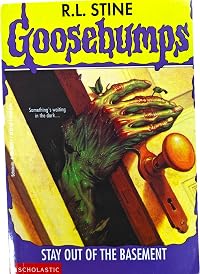
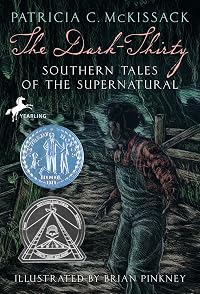
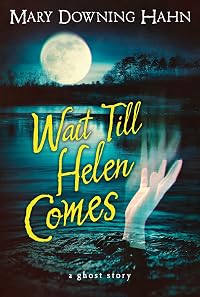
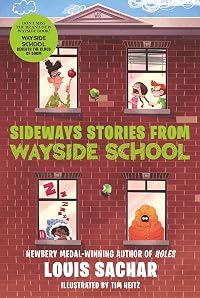
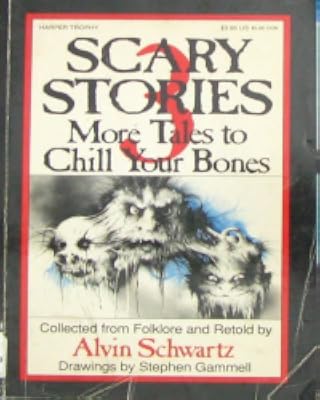

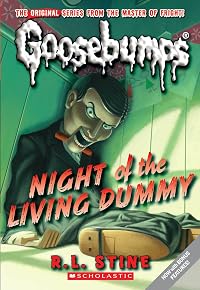


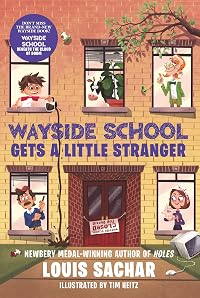
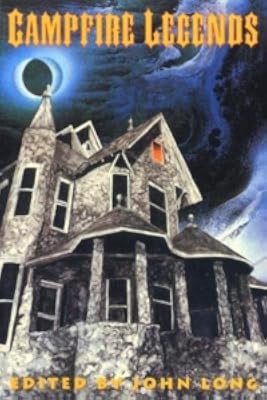

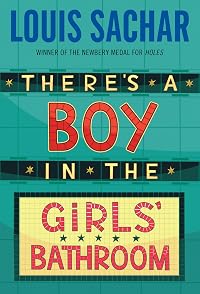

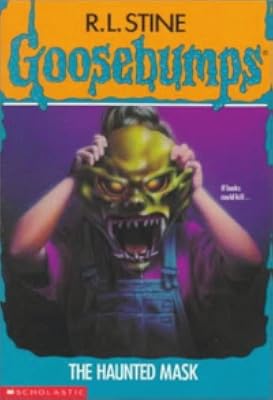
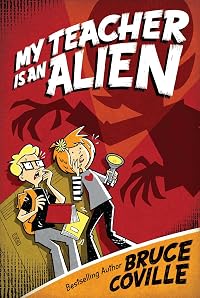
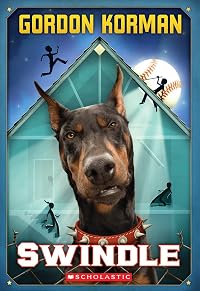
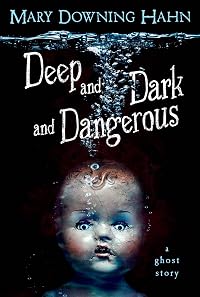

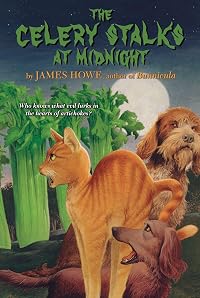
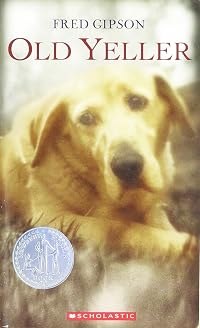
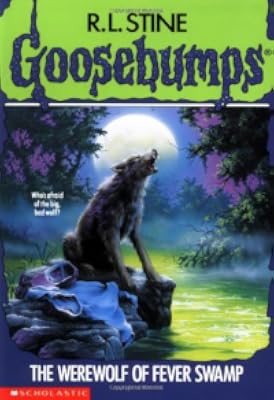
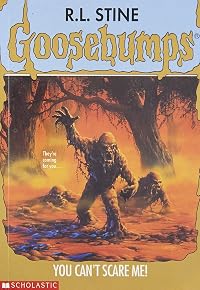
Member Recommendations
Member Reviews
Scary Stories to Tell in the Dark, illustrated by Stephen Gammell
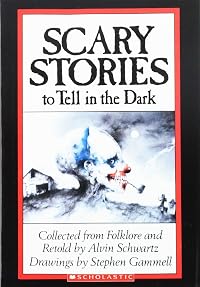
Thirty scary stories, all culled from the riches of American folklore, are presented in this classic collection, first published in 1981, and a perennial favorite with young readers every since. The selections are divided into five sections by editor and reteller Alvin Schwartz, and are accompanied by Stephen Gammell's deliciously creepy illustrations.
The first section - "Aaaaaaaaaaah!" - is devoted to "jump stories," or stories meant to be told aloud to great effect, with surprising conclusions (usually a shriek or the grabbing of an arm) that will frighten the listener into jumping. Here we find tales like the Virginian story of The Big Toe, in which a human toe is used show more in soup by those who find it, only for its original owner to come looking for it. Also included in this section is Old Woman All Skin and Bone, a traditional poem/song found in both England and America. The musical notation for the song appears on the accompanying page with Gammell's spooky illustration.
The second section - "He Heard Footsteps Coming Up the Cellar Stairs..." - includes ghost stories and tales of other strange happenings. Here we have The Thing, a Nova Scotian tale in which two friends are followed home by a skeleton, in an apparent foreshadowing of the death of one of them. Here too is the Virginian story of The Haunted House, in which the ghost of a young woman murdered by her lover leads the local pastor to her corpse, and to her killer.
The third section - They Eat Your Eyes, They Eat Your Nose - includes all kinds of spooky stories, about witches, graves, and worms eating your corpse. Included is the Kentucky mountain tale of A New Horse, in which a farm hand is ridden like a horse every night by a witch, only for the farm hand to turn the tables on his tormentor in a gruesome way. This selection appears to be Euro-American, but celebrated African-American children's author Virginia Hamilton tells a very similar story in her Wee Winnie Witch's Skinny, so perhaps there were many variants of it. Also included in this section is the "Indian" story of The Wendigo, in which a Euro-American hunter's Indian guide is slain by that fearsome monster of the north. Although utilizing a figure from Native American lore, this seems more of a story from the Euro-American perspective, as indicated by both the narrator and the sources provided.
The fourth section - Other Dangers - includes stories that, at the time of telling in 1981, were more recent in their origin. Here are urban legends like the Midwestern tale of The White Satin Evening Gown, about a young woman poisoned by the embalming fluid found on the dress she wore to a dance. Here too is The Babysitter, collected in Pennsylvania, in which a babysitter and her charges are badly frightened by a series of phone calls, that are eventually revealed to be coming from the same house in which they are staying.
The fifth and final section - also entitled "Aaaaaaaaaaah!" - presents another round of "jump stories," although this time they are meant to provoke laughter, as much as fright. Here we have selections like The Viper, also collected in Pennsylvania, in which a man's accent causes misunderstanding and fear. Also included is Wait Till Martin Comes, a traditional African-American folktale from the American South, in which a man flees from a group of cats, who presumably mean to harm him once the eponymous Martin arrives.
I read this book numerous times as a young girl, always with a delightfully shivery appreciation of both the stories and the nightmarish illustrations, and have been meaning to reread it and its sequels every Halloween season for years. Having finally managed to accomplish this goal, I discovered two surprising things. The first is that the publisher recently reprinted the books (in 2010, I believe?) with new artwork done by Brett Helquist, and that this has largely outraged fans. While I have no problem with looking at new illustrations, I can definitely say that Stephen Gammel's original artwork is a masterpiece of creepiness, and is part of what made this book so memorable. I'm glad the Helquist exists, for more sensitive young readers, but I stand by the Gammell, which I prefer. It's worth noting, moreover, that the Gammell illustrations have frequently been challenged by book banners, here in the states, so I'm glad that HarperCollins have made them available again! The second thing I discovered, which I somehow missed in my youthful reading, was that this was really a folktale collection! It's not that this is at all hidden information - it's in the sub-title of the original edition, and there are copious notes regarding origin and source material for each tale, but I seem to have breezed by all of that when a girl. However that may be, it was a welcome discovery, and I appreciated those notes, and the extensive bibliography, which contains many books familiar to me, and some unfamiliar. Most of the stories appear to be Euro-American in origin, but there are a few African-American ones, as well as a single selection from Canada.
I enjoyed my rereading of this greatly, and look forward to picking up the two sequels, and to tracking down some of the books mentioned in the source notes. Recommended to readers who enjoy scary stories, as well as to folklore enthusiasts with a particular interest in ghost stories and other tales of terror. show less
Thirty scary stories, all culled from the riches of American folklore, are presented in this classic collection, first published in 1981, and a perennial favorite with young readers every since. The selections are divided into five sections by editor and reteller Alvin Schwartz, and are accompanied by Stephen Gammell's deliciously creepy illustrations.
The first section - "Aaaaaaaaaaah!" - is devoted to "jump stories," or stories meant to be told aloud to great effect, with surprising conclusions (usually a shriek or the grabbing of an arm) that will frighten the listener into jumping. Here we find tales like the Virginian story of The Big Toe, in which a human toe is used show more in soup by those who find it, only for its original owner to come looking for it. Also included in this section is Old Woman All Skin and Bone, a traditional poem/song found in both England and America. The musical notation for the song appears on the accompanying page with Gammell's spooky illustration.
The second section - "He Heard Footsteps Coming Up the Cellar Stairs..." - includes ghost stories and tales of other strange happenings. Here we have The Thing, a Nova Scotian tale in which two friends are followed home by a skeleton, in an apparent foreshadowing of the death of one of them. Here too is the Virginian story of The Haunted House, in which the ghost of a young woman murdered by her lover leads the local pastor to her corpse, and to her killer.
The third section - They Eat Your Eyes, They Eat Your Nose - includes all kinds of spooky stories, about witches, graves, and worms eating your corpse. Included is the Kentucky mountain tale of A New Horse, in which a farm hand is ridden like a horse every night by a witch, only for the farm hand to turn the tables on his tormentor in a gruesome way. This selection appears to be Euro-American, but celebrated African-American children's author Virginia Hamilton tells a very similar story in her Wee Winnie Witch's Skinny, so perhaps there were many variants of it. Also included in this section is the "Indian" story of The Wendigo, in which a Euro-American hunter's Indian guide is slain by that fearsome monster of the north. Although utilizing a figure from Native American lore, this seems more of a story from the Euro-American perspective, as indicated by both the narrator and the sources provided.
The fourth section - Other Dangers - includes stories that, at the time of telling in 1981, were more recent in their origin. Here are urban legends like the Midwestern tale of The White Satin Evening Gown, about a young woman poisoned by the embalming fluid found on the dress she wore to a dance. Here too is The Babysitter, collected in Pennsylvania, in which a babysitter and her charges are badly frightened by a series of phone calls, that are eventually revealed to be coming from the same house in which they are staying.
The fifth and final section - also entitled "Aaaaaaaaaaah!" - presents another round of "jump stories," although this time they are meant to provoke laughter, as much as fright. Here we have selections like The Viper, also collected in Pennsylvania, in which a man's accent causes misunderstanding and fear. Also included is Wait Till Martin Comes, a traditional African-American folktale from the American South, in which a man flees from a group of cats, who presumably mean to harm him once the eponymous Martin arrives.
I read this book numerous times as a young girl, always with a delightfully shivery appreciation of both the stories and the nightmarish illustrations, and have been meaning to reread it and its sequels every Halloween season for years. Having finally managed to accomplish this goal, I discovered two surprising things. The first is that the publisher recently reprinted the books (in 2010, I believe?) with new artwork done by Brett Helquist, and that this has largely outraged fans. While I have no problem with looking at new illustrations, I can definitely say that Stephen Gammel's original artwork is a masterpiece of creepiness, and is part of what made this book so memorable. I'm glad the Helquist exists, for more sensitive young readers, but I stand by the Gammell, which I prefer. It's worth noting, moreover, that the Gammell illustrations have frequently been challenged by book banners, here in the states, so I'm glad that HarperCollins have made them available again! The second thing I discovered, which I somehow missed in my youthful reading, was that this was really a folktale collection! It's not that this is at all hidden information - it's in the sub-title of the original edition, and there are copious notes regarding origin and source material for each tale, but I seem to have breezed by all of that when a girl. However that may be, it was a welcome discovery, and I appreciated those notes, and the extensive bibliography, which contains many books familiar to me, and some unfamiliar. Most of the stories appear to be Euro-American in origin, but there are a few African-American ones, as well as a single selection from Canada.
I enjoyed my rereading of this greatly, and look forward to picking up the two sequels, and to tracking down some of the books mentioned in the source notes. Recommended to readers who enjoy scary stories, as well as to folklore enthusiasts with a particular interest in ghost stories and other tales of terror. show less
Can a book be carried solely by illustrations? I found myself asking this whilst revisiting [b:Scary Stories to Tell in the Dark|1325218|Scary Stories to Tell in the Dark (Scary Stories, #1)|Alvin Schwartz|https://i.gr-assets.com/images/S/compressed.photo.goodreads.com/books/1440189576l/1325218._SX50_.jpg|145600], an anthology of ghost stories and tales about ghosts, disappearances, death, loss, and spooky scary skeletons. As far as I can tell, this book and its sequels are far more famed for their potentially traumatic artwork by Stephen Gammell than literary merit. "Malcolm, you easily startled candy-ass, how bad can it be?" I can hear the unwashed inquire. "The cover's subtly disgusting in a surreal sort of way, but it's only the show more cover, how does the rest of the book top that?" Well, it has been several years since I last read it, perhaps you're right, and-
Fucking shit!
Jesus tap-dancing Christ!
The hell is this shit?!
These were all in books. For fucking children, I might add. If you couldn't tell already, all of these illustrations look like cut animations by Gerald Scarfe for Pink Floyd's The Wall that were too horrific even for The Wall. Failing that, they look more fit to adorn the covers of black metal albums than they do children's books. They still work for me on some level, if only because of how well drawn they are; for the most part, basic human features are often subtracted, leaving characters with fractured lips, oddly sized eyes, no noses except for the occasional intimation, and other deformities. Hell, even when faces are intact proportions can be greatly exaggerated, so either way the results are always something that kind of sort of looks human, and should be human, but isn't. Some illustrations also come worryingly close to photorealism, which only serves to enhance the already tense atmosphere. At this rate, this series should be called Scary Illustrations to Traumatize Your Children.
There's a similar effect applied to the physical world, as well. Architecture's often warped, and backgrounds often have a sort of inky look to them; the outermost features usually seem to fade, which gives the art a sort of impressionistic and subjective feel. Sometimes it can be too subjective, though; for example, "Oh, Susannah" in the next book is a straightforward story about some poor woman waking up to find that her roommate's been decapitated, though the accompanying illustration doesn't complement the story's simplicity at all. It looks more like a deleted scene from Eraserhead than anything else, really.
If I were to rate these books solely on the basis of their artwork, then they'd easily get the highest possible score, but alas, this is also a written text, so that must be evaluated forthwith. It's not very good. Quite anticlimactic, I know, but it really isn't very good, even for its intended audience. Check out the opening sentences of "The Thing", for example:
"Ted Martin and Sam Miller were good friends. They spent a lot of time together."
Wow, what a great work of literature. Truly worthy of the Nobel Prize for Literature.
To be honest, I find most of the other stories similarly lacking, as well. They all have a more or less similar format, too; characters venture forth to do a thing, then something supernatural and/or inexplicable happens, and the story either tries to scare you to an arbitrary degree by throwing all subtlety out the window or leans so hard into ambiguity that whatever payoff might have been promised becomes utterly unsatisfying. All of the stories in the first chapter also encourage you to scare whoever you might be reading to, but I've never made the attempt because I don't feel like getting cold-cocked by any potential audiences I might accrue. I can't help but feel like these books might be underrating the intelligence of their target demographic, which is kind of ironic for a book which presents taboo subject matter that children either might not know exist or are terrified of in rather direct terms.
Really, it's the art that's doing all the work, which I didn't mind during my childhood, but nowadays I find that most of the stories fail to stand on their own terms. It's not really economic, so much as clipped to the point of being... anaemic, for lack of better words. I don't ask for it to be as lurid and intricate as [b:Gormenghast|39058|The Gormenghast Novels (Gormenghast, #1-3)|Mervyn Peake|https://i.gr-assets.com/images/S/compressed.photo.goodreads.com/books/1362402890l/39058._SX50_.jpg|38776] or [b:Perdido Street Station|68494|Perdido Street Station (New Crobuzon, #1)|China Miéville|https://i.gr-assets.com/images/S/compressed.photo.goodreads.com/books/1393537963l/68494._SY75_.jpg|3221410], but more detail would be nice. There's probably an argument to be made that this is an acceptable price to be paid because the illustrations can present the stories with a sort of frankness that the writing can't capture without risking losing the children's lit classification, but I fail to see why this should excuse what I perceive to be lazy writing.
While it might make your children feel like something horrible or surreal will happen to them at any moment (it certainly had that effect on me), adults or anyone revisiting this book or its sequels later in life might find its prose underdeveloped and trying too hard to scare the reader when the art's already doing that in a far more understated fashion. I still remember it kind of fondly for stimulating my imagination in a way that few other books did at the time, but otherwise, these books would probably be better if they were graphic novels instead. Basically, what I'm trying to say is that you should probably read [b:Through the Woods|18659623|Through the Woods|Emily Carroll|https://i.gr-assets.com/images/S/compressed.photo.goodreads.com/books/1414845473l/18659623._SX50_.jpg|26477611] by Emily Carroll instead. show less
Fucking shit!
Jesus tap-dancing Christ!
The hell is this shit?!
These were all in books. For fucking children, I might add. If you couldn't tell already, all of these illustrations look like cut animations by Gerald Scarfe for Pink Floyd's The Wall that were too horrific even for The Wall. Failing that, they look more fit to adorn the covers of black metal albums than they do children's books. They still work for me on some level, if only because of how well drawn they are; for the most part, basic human features are often subtracted, leaving characters with fractured lips, oddly sized eyes, no noses except for the occasional intimation, and other deformities. Hell, even when faces are intact proportions can be greatly exaggerated, so either way the results are always something that kind of sort of looks human, and should be human, but isn't. Some illustrations also come worryingly close to photorealism, which only serves to enhance the already tense atmosphere. At this rate, this series should be called Scary Illustrations to Traumatize Your Children.
There's a similar effect applied to the physical world, as well. Architecture's often warped, and backgrounds often have a sort of inky look to them; the outermost features usually seem to fade, which gives the art a sort of impressionistic and subjective feel. Sometimes it can be too subjective, though; for example, "Oh, Susannah" in the next book is a straightforward story about some poor woman waking up to find that her roommate's been decapitated, though the accompanying illustration doesn't complement the story's simplicity at all. It looks more like a deleted scene from Eraserhead than anything else, really.
If I were to rate these books solely on the basis of their artwork, then they'd easily get the highest possible score, but alas, this is also a written text, so that must be evaluated forthwith. It's not very good. Quite anticlimactic, I know, but it really isn't very good, even for its intended audience. Check out the opening sentences of "The Thing", for example:
"Ted Martin and Sam Miller were good friends. They spent a lot of time together."
Wow, what a great work of literature. Truly worthy of the Nobel Prize for Literature.
To be honest, I find most of the other stories similarly lacking, as well. They all have a more or less similar format, too; characters venture forth to do a thing, then something supernatural and/or inexplicable happens, and the story either tries to scare you to an arbitrary degree by throwing all subtlety out the window or leans so hard into ambiguity that whatever payoff might have been promised becomes utterly unsatisfying. All of the stories in the first chapter also encourage you to scare whoever you might be reading to, but I've never made the attempt because I don't feel like getting cold-cocked by any potential audiences I might accrue. I can't help but feel like these books might be underrating the intelligence of their target demographic, which is kind of ironic for a book which presents taboo subject matter that children either might not know exist or are terrified of in rather direct terms.
Really, it's the art that's doing all the work, which I didn't mind during my childhood, but nowadays I find that most of the stories fail to stand on their own terms. It's not really economic, so much as clipped to the point of being... anaemic, for lack of better words. I don't ask for it to be as lurid and intricate as [b:Gormenghast|39058|The Gormenghast Novels (Gormenghast, #1-3)|Mervyn Peake|https://i.gr-assets.com/images/S/compressed.photo.goodreads.com/books/1362402890l/39058._SX50_.jpg|38776] or [b:Perdido Street Station|68494|Perdido Street Station (New Crobuzon, #1)|China Miéville|https://i.gr-assets.com/images/S/compressed.photo.goodreads.com/books/1393537963l/68494._SY75_.jpg|3221410], but more detail would be nice. There's probably an argument to be made that this is an acceptable price to be paid because the illustrations can present the stories with a sort of frankness that the writing can't capture without risking losing the children's lit classification, but I fail to see why this should excuse what I perceive to be lazy writing.
While it might make your children feel like something horrible or surreal will happen to them at any moment (it certainly had that effect on me), adults or anyone revisiting this book or its sequels later in life might find its prose underdeveloped and trying too hard to scare the reader when the art's already doing that in a far more understated fashion. I still remember it kind of fondly for stimulating my imagination in a way that few other books did at the time, but otherwise, these books would probably be better if they were graphic novels instead. Basically, what I'm trying to say is that you should probably read [b:Through the Woods|18659623|Through the Woods|Emily Carroll|https://i.gr-assets.com/images/S/compressed.photo.goodreads.com/books/1414845473l/18659623._SX50_.jpg|26477611] by Emily Carroll instead. show less
Fall is in the air, and it's Banned Book week - how could I NOT reread this classic?
This was a library find when I was around seven or eight or maybe nine years old. Even at that age, I was a spooky little kid (not much has changed, except that I'm taller now) and I absolutely loved anything that could frighten me - and it wasn't easy to scare me, even back then! I mean, I was watching Freddy Krueger when I was like four years old without even sweating. But this book always gave me the chills.
It's not so much the stories, although some of them are quite memorable. As a kid, I think they were probably a touch scarier than they are for me as an adult, but I never really remember being terrified of the stories themselves.
Oh no, it was the show more illustrations. *makes googly eyes* The illustrations by Stephen Gammell are top notch! They're black and white and absolutely TERRIFYING to this day, even though I am thirty-seven years old. I remember reading this book before bedtime and just pouring over the illustrations and having the most delicious nightmares.
And this is why, I feel, why these books keep popping up on banned books lists - not necessarily because of the stories, but because of the A+ illustrations.
If you're picking up a newer copy, please be aware that they changed illustrators at some point (perhaps in a bid to get off the banned books list year after year). Those illustrations are not nearly as good as the originals. Go Gammell or go home! show less
This was a library find when I was around seven or eight or maybe nine years old. Even at that age, I was a spooky little kid (not much has changed, except that I'm taller now) and I absolutely loved anything that could frighten me - and it wasn't easy to scare me, even back then! I mean, I was watching Freddy Krueger when I was like four years old without even sweating. But this book always gave me the chills.
It's not so much the stories, although some of them are quite memorable. As a kid, I think they were probably a touch scarier than they are for me as an adult, but I never really remember being terrified of the stories themselves.
Oh no, it was the show more illustrations. *makes googly eyes* The illustrations by Stephen Gammell are top notch! They're black and white and absolutely TERRIFYING to this day, even though I am thirty-seven years old. I remember reading this book before bedtime and just pouring over the illustrations and having the most delicious nightmares.
And this is why, I feel, why these books keep popping up on banned books lists - not necessarily because of the stories, but because of the A+ illustrations.
If you're picking up a newer copy, please be aware that they changed illustrators at some point (perhaps in a bid to get off the banned books list year after year). Those illustrations are not nearly as good as the originals. Go Gammell or go home! show less
What a delightful series!
I have never read books quite like these: they are collections of stories, but they're also celebrations of stories and of storytelling. Some of them include notes on how to tell them, orally, to a group of friends. Some of them include instructions for necessary props. This is folklore at its finest: memorable, spooky, silly, atmospheric. Poems and songs—complete with musical notation—help paint a more complete picture of these folkloric traditions. Creepy illustrations are icing on the cake.
Best of all, Schwartz includes excellent notes on the tales, their histories, and their variants. He cites the books from which he adapted them, and overall, he does a fantastic job of making a potentially dry show more explanation interesting for children.
Please note:
I enjoyed these books as a kid and binge-read the whole trilogy as a grownup. Consequently, I'm not confident in my ability to review the three volumes separately. Schwartz maintained such a high standard of quality throughout the series, and the tone of each book closely matches the others. Please consider this review as covering all three books. show less
I have never read books quite like these: they are collections of stories, but they're also celebrations of stories and of storytelling. Some of them include notes on how to tell them, orally, to a group of friends. Some of them include instructions for necessary props. This is folklore at its finest: memorable, spooky, silly, atmospheric. Poems and songs—complete with musical notation—help paint a more complete picture of these folkloric traditions. Creepy illustrations are icing on the cake.
Best of all, Schwartz includes excellent notes on the tales, their histories, and their variants. He cites the books from which he adapted them, and overall, he does a fantastic job of making a potentially dry show more explanation interesting for children.
Please note:
I enjoyed these books as a kid and binge-read the whole trilogy as a grownup. Consequently, I'm not confident in my ability to review the three volumes separately. Schwartz maintained such a high standard of quality throughout the series, and the tone of each book closely matches the others. Please consider this review as covering all three books. show less
I'm likely a blasphemer for shelving this book under 'Children's Book' but what can I do. I grew up on this series, as I'm sure many did, and I turned out reasonably all right. Sure, I was scared stiff by the contents and illustrations in the third book in this series, but that never permanently hurt anyone, right? These books had a special place in my childhood, as they did for many. If anyone is new coming into these books MAKE SURE YOU GET THE FIRST EDITION COPIES. The reprinted editions do not have Stephen Gammell's illustrations, which takes away most of the uneasy allure of these books. Gammell is a must.
While originally these books contained for me unspeakable terrors, now I'm more interested in the notes at the back of the show more book. I admire [a: Alvin Schwartz|13728|Alvin Schwartz|https://s.gr-assets.com/assets/nophoto/user/m_50x66-82093808bca726cb3249a493fbd3bd0f.png] for the work that he's done. Intentionally, very intentionally, he taught multiple generations of children classic folktales, well-sourced and well remembered, and created in us an unbroken chain of children growing up with stories from the 1920s, the 1800s, and sometimes even older. He gave us a taste of the past that, thanks to Stephen Gammell's haunting illustrations, was every bit as haunting as it likely was when first spoken around a fire or in the cool of the night.
This first collection is split into thirds. Stories to be told aloud as they contain jump-scares (great for telling, not so interesting for reading), ghost stories (many classics), stories involving the many faces of death, urban legends, and finally... funny stories. The funny stories were the ones I remembered best from this collection - in particular The Viper, which I shamelessly retold throughout my childhood to fits of laughter.
Five stars for the illustration, a very nice three for the contents. These books age well and I dearly hope are now terrifying a new generation as they should be. show less
While originally these books contained for me unspeakable terrors, now I'm more interested in the notes at the back of the show more book. I admire [a: Alvin Schwartz|13728|Alvin Schwartz|https://s.gr-assets.com/assets/nophoto/user/m_50x66-82093808bca726cb3249a493fbd3bd0f.png] for the work that he's done. Intentionally, very intentionally, he taught multiple generations of children classic folktales, well-sourced and well remembered, and created in us an unbroken chain of children growing up with stories from the 1920s, the 1800s, and sometimes even older. He gave us a taste of the past that, thanks to Stephen Gammell's haunting illustrations, was every bit as haunting as it likely was when first spoken around a fire or in the cool of the night.
This first collection is split into thirds. Stories to be told aloud as they contain jump-scares (great for telling, not so interesting for reading), ghost stories (many classics), stories involving the many faces of death, urban legends, and finally... funny stories. The funny stories were the ones I remembered best from this collection - in particular The Viper, which I shamelessly retold throughout my childhood to fits of laughter.
Five stars for the illustration, a very nice three for the contents. These books age well and I dearly hope are now terrifying a new generation as they should be. show less
Read it as an audiobook and saw the illustrations later.
A collection of really short urban legends and campfire stories.
The audiobook is hilarious, unintentionally I think. The narrator gets really into it and you can tell he was delighted to be a part of this production. He does all the different voices and sound effects. Best imitation of blowing wind ever, that's all I'm gonna say.
It also has this campy music that reminds me all those hammer horror vampire flicks of the 70s and 80s. It was a fun read but definitely more funny than scary. I think children up to 9 years old would be creeped out though.
The illustrations were WONDERFUL. I wonder how I'd have felt if instead of the audiobook I'd gotten the classic edition first.
Kinda show more made me wish I had children of my own. I got a thrill imagining having them around me, reading them these stories in the dark and showing them those wonderfully creepy pictures. I kinda can't wait for this to happen one day.
Thanks for waking up my motherly instincts mr Alvin. show less
A collection of really short urban legends and campfire stories.
The audiobook is hilarious, unintentionally I think. The narrator gets really into it and you can tell he was delighted to be a part of this production. He does all the different voices and sound effects. Best imitation of blowing wind ever, that's all I'm gonna say.
It also has this campy music that reminds me all those hammer horror vampire flicks of the 70s and 80s. It was a fun read but definitely more funny than scary. I think children up to 9 years old would be creeped out though.
The illustrations were WONDERFUL. I wonder how I'd have felt if instead of the audiobook I'd gotten the classic edition first.
Kinda show more made me wish I had children of my own. I got a thrill imagining having them around me, reading them these stories in the dark and showing them those wonderfully creepy pictures. I kinda can't wait for this to happen one day.
Thanks for waking up my motherly instincts mr Alvin. show less
I loved this book as a kid. When my parents bought it for me, one of the things I would do is tell some of the jump-scare and other stories in this book to my brothers and the neighborhood kids. One summer we played Commando by moonlight and then told scary stories. I was always asked to read though since I would change up the voices and speak softer and lure people in. I did like the re-read of these, but as an adult don't think that they are that scary. As a kid though, I would be up all summer long freaked. And forget it when there was a full moon. I would always think there was something in the trees/bushes in our backyard at night. I always equate summer with horror books, not really fall or even winter. And I can remember how show more things smelled and how my friends and I would sit so close to each other freaking out and shrieking as we read these stories. I think the first part of the book with the jump-scares is my favorite. Other Dangers stories freaked me out as a kid, but didn't do much for me as an adult. And the Wendigo story still freaks me out. I have no idea why. Maybe the idea of something grabbing you and dragging you along so your feet burn off and then the rest of you just messes with my imagination too much.
I also have to say that the set-up of the book from jump scares to later on urban legend stories was great. The illustrations are wonderful too and I recall as a kid hiding this book away so I didn't have to stare at it too long.
Here are my ratings of the stories.
Jump Scare Stories:
The Big Toe (3 stars)-This was weird. I know this was a favorite of my friends and I as kids, but who eats a toe?
The Walk (4 stars)-A great story because of the jump scare at the end.
What Do You Come For (3.5 stars)-A little bit short and not enough to set up the jump scare in my opinion.
Me Tie Dough-Ty Walker! (3 stars)-I never liked to read this one. It would tangle in my mouth. My friends loved it though.
A Man Who Lived in Leeds (4.5 stars)-This one does a better set up so the jump scare really works.
Old Woman All Skin and Bone (5 stars)- Once again, better set up so the jump scare works.
Ghost Stories:
The Thing (4.5 star)-I remember thinking this was creepy as a kid and shivering as I read it. There is just a feeling of dread as you start the story.
Cold as Clay (5 stars)-Great story about a young girl and the boy who loved her.
The White Wolf (4 stars)-I think I would have liked this one better if we had a story about what the white wolf looked like and what it did in the moment instead of the aftermath.
The Haunted House (5 stars)-Honestly the illustration alone gives it 5 stars.
The Guests (4.5 stars)-I feel like I have read this version of this story through the years.
Scary Stories:
The Hearse Song (5 stars)-We used to just chant this song all summer long. Why our parents didn't lose it on us I will never know.
The Girl Who Stood on a Grave (4 stars)-Being so scared you die was definitely something for a lot of us 80s kids. See A Nightmare on Elm Street.
A New Horse (4 stars)-I recall thinking this was such a weird story as a kid.
Alligators (4 stars)-Another weird story.
Room for One More (5 stars)-This story freaked me out as a kid.
The Wendigo (5 stars)-I think because of my imagination and thinking of winter during the hot summers in PA made this story much worse in my head.
The Dead Man's Brains (5 stars)-I loathed this during the Halloween parties we did at my school.
May I Carry Your Basket (4.5 stars)-This one seemed pretty silly to me.
Other Dangers:
The Hook (5 stars)-A classic horror story.
The White Satin Evening Gown (5 stars)-Before I even read this book, I heard some kid tell a story that had these same elements about some girl his sister knew.
High Beams (5 stars)-Still creepy and I always look in my backseat now.
The Babysitter (5 stars)-The babysitter illustration still creeps me out.
Ahhhh Stories to Make you Laugh:
The Viper (3.5 stars)-Not bad, not great.
The Scream (5 stars)-A favorite at night with my friends because we would think of reasons why he screamed.
The Slithery-Dee (4 stars)- A funny little rhyme with a surprise ending.
Aaron Kelly's Bones (4 stars)-Just vaguely disturbing.
Wait Til Martin Comes (4 stars)-This one always freaked me out a bit.
The Ghost With the Bloody Fingers (3 stars)-Definitely not scary and it will make you laugh. show less
I also have to say that the set-up of the book from jump scares to later on urban legend stories was great. The illustrations are wonderful too and I recall as a kid hiding this book away so I didn't have to stare at it too long.
Here are my ratings of the stories.
Jump Scare Stories:
The Big Toe (3 stars)-This was weird. I know this was a favorite of my friends and I as kids, but who eats a toe?
The Walk (4 stars)-A great story because of the jump scare at the end.
What Do You Come For (3.5 stars)-A little bit short and not enough to set up the jump scare in my opinion.
Me Tie Dough-Ty Walker! (3 stars)-I never liked to read this one. It would tangle in my mouth. My friends loved it though.
A Man Who Lived in Leeds (4.5 stars)-This one does a better set up so the jump scare really works.
Old Woman All Skin and Bone (5 stars)- Once again, better set up so the jump scare works.
Ghost Stories:
The Thing (4.5 star)-I remember thinking this was creepy as a kid and shivering as I read it. There is just a feeling of dread as you start the story.
Cold as Clay (5 stars)-Great story about a young girl and the boy who loved her.
The White Wolf (4 stars)-I think I would have liked this one better if we had a story about what the white wolf looked like and what it did in the moment instead of the aftermath.
The Haunted House (5 stars)-Honestly the illustration alone gives it 5 stars.
The Guests (4.5 stars)-I feel like I have read this version of this story through the years.
Scary Stories:
The Hearse Song (5 stars)-We used to just chant this song all summer long. Why our parents didn't lose it on us I will never know.
The Girl Who Stood on a Grave (4 stars)-Being so scared you die was definitely something for a lot of us 80s kids. See A Nightmare on Elm Street.
A New Horse (4 stars)-I recall thinking this was such a weird story as a kid.
Alligators (4 stars)-Another weird story.
Room for One More (5 stars)-This story freaked me out as a kid.
The Wendigo (5 stars)-I think because of my imagination and thinking of winter during the hot summers in PA made this story much worse in my head.
The Dead Man's Brains (5 stars)-I loathed this during the Halloween parties we did at my school.
May I Carry Your Basket (4.5 stars)-This one seemed pretty silly to me.
Other Dangers:
The Hook (5 stars)-A classic horror story.
The White Satin Evening Gown (5 stars)-Before I even read this book, I heard some kid tell a story that had these same elements about some girl his sister knew.
High Beams (5 stars)-Still creepy and I always look in my backseat now.
The Babysitter (5 stars)-The babysitter illustration still creeps me out.
Ahhhh Stories to Make you Laugh:
The Viper (3.5 stars)-Not bad, not great.
The Scream (5 stars)-A favorite at night with my friends because we would think of reasons why he screamed.
The Slithery-Dee (4 stars)- A funny little rhyme with a surprise ending.
Aaron Kelly's Bones (4 stars)-Just vaguely disturbing.
Wait Til Martin Comes (4 stars)-This one always freaked me out a bit.
The Ghost With the Bloody Fingers (3 stars)-Definitely not scary and it will make you laugh. show less
Members
- Recently Added By
Lists

Banned Books Week 2014
268 works; 63 members

Favorite Childhood Books
1,646 works; 513 members

Elevenses
316 works; 87 members

Books for Fans of Stranger Things
84 works; 7 members

NPR Reader Poll: 100 Best Horror Novels and Stories
100 works; 20 members

The Worst Bestsellers Podcast
293 works; 5 members

Banned or Challenged Books
400 works; 41 members

Best Horror Mega-List
342 works; 6 members

Scary Stories for the Season
160 works; 94 members

Ghosts
278 works; 18 members

Gateway Horror
496 works; 3 members

Nightmares Not Included
175 works; 3 members


Books We Loved As Children
603 works; 252 members

Ghost Stories That Thrill Us
256 works; 115 members
Author Information

42+ Works 17,876 Members
Alvin Schwartz was born April 25, 1927.Schwartz began his career as a journalist, but, after the publication of his bestselling book A Twister of Twists, a Tangler of Tongues, he devoted himself to becoming a collector and arranger of folk wisdom, rhyme, and silliness. Schwartz is known for a body of work of more than two dozen books of folklore show more for young readers that explore everything from wordplay and humor to tales and legends of all kinds. Schwatz is best known for the Scary Stories to Tell in the Dark series, which featured gruesome, nightmarish illustrations by Stephen Gammell. The series was America's most frequently challenged book (or book series) for library inclusion of 1990-1999. Alvin Schwartz died in Princeton, New Jersey on March 14, 1992. (Bowker Author Biography) show less
Some Editions
Awards and Honors
Awards
Notable Lists
Series

Work Relationships
Is contained in
Has the adaptation
Common Knowledge
- Canonical title
- Scary Stories to Tell in the Dark
- Original publication date
- 1981
- Related movies
- Scary Stories to Tell in the Dark (2019 | IMDb)
- Dedication
- To Dinah
- First words
- Pioneers used to entertain themselves by telling scary stories.
- Last words
- (Click to show. Warning: May contain spoilers.)Get yourself a Band-Aid!
- Original language
- English
Classifications
- Genres
- Fiction and Literature, Tween
- DDC/MDS
- 398.25 — Society, government, & culture Customs, etiquette & folklore Folklore & Folktales Folk literature Ghost stories
- LCC
- PZ8.1 .S399 .S — Language and Literature Fiction and juvenile belles lettres Fiction and juvenile belles lettres Juvenile belles lettres
- BISAC
Statistics
- Members
- 4,938
- Popularity
- 2,834
- Reviews
- 96
- Rating
- (3.92)
- Languages
- 7 — English, French, Italian, Polish, Spanish, Turkish, Portuguese (Portugal)
- Media
- Paper, Audiobook, Ebook
- ISBNs
- 47
- UPCs
- 1
- ASINs
- 16