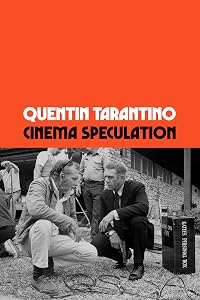
Cinema Speculation
by Quentin Tarantino
On This Page
Description
"In addition to being among the most celebrated of contemporary filmmakers, Quentin Tarantino is possibly the most joyously infectious movie lover alive. For years he has touted in interviews his eventual turn to writing books about films. Now, with Cinema Speculation, the time has come, and the results are everything his passionate fans--and all movie lovers--could have hoped for. Organized around key American films from the 1970s, all of which he first saw as a young moviegoer at the time, show more this book is as intellectually rigorous and insightful as it is rollicking and entertaining. At once film criticism, film theory, a feat of reporting, and wonderful personal history, it is all written in the singular voice recognizable immediately as QT's and with the rare perspective about cinema possible only from one of the greatest practitioners of the artform ever"-- show lessTags
Recommendations





Member Reviews
After being surprised by the originality and literary quality of Quentin Tarantino's novelization of Once Upon a Time in Hollywood last year, I had strange expectations heading into Cinema Speculation. On the one hand, I was excited about what Tarantino – who in the Once novelization had proved he could replicate his talent in a different medium – could do with a non-fiction book. On the other hand, a book of Tarantino jawing about film seemed to have limited potential for pleasant surprises.
So what is Cinema Speculation? It is as expected, but all the more impressive for that. It's Tarantino writing in a freewheelin' style about some of his favourite movies, mostly those of the late Sixties and the Seventies which were a formative show more influence on him. His passion is infectious and his insights, as one would expect from one of the most dynamic filmmakers of our time, are astute.
The reason it's an impressive book is because it does this well. Tarantino's book is a loose but disciplined series of commentaries, blending film criticism with personal memoir with such a good balance that the reader is never bored, even when the films discussed are obscure. His personal history is interesting, he has a passion for movie lore and gossip, and his insights into the technical side of cinema and the behind-the-scenes horse-trading of film production are comprehensive. When he discusses the decisions and techniques of various filmmakers, he can often draw on personal conversations he has had with them.
It might sound like the sort of book Tarantino could write with his eyes closed, but it must be quite hard to actually pull off. Just last week, I read Bob Dylan's disappointing new book The Philosophy of Modern Song, and Dylan failed to do just about everything which Tarantino succeeds in doing: a master providing a conversational and insightful look into his craft and his personal influences, that both informs and entertains.
Cinema Speculation can sometimes feel redundant, and if Tarantino had written it about modern movies it might well have become an influential swing at the current state of the industry. Aside from one very brief (and diplomatic) jab at the current glut of superhero movies (pg. 160) – I'm one of those who, as Tarantino writes, can't wait for the day – he doesn't really try to make a footprint in the zeitgeist of 2022, the way a genuine critic would aspire to.
In a recent podcast with Tom Segura, Tarantino explained why he doesn't want to talk about current movies – it wouldn't be right to criticise his peers, and he doesn't just want to cheerlead those he likes – which is fair enough. But such talk of contemporary titles and trends would be zestier than any discussion, however informative, of Bullitt and Taxi Driver. At one point, Tarantino talks about Magnum Force, the first Dirty Harry sequel, and how it makes completely different arguments on vigilantism and crime to the first movie. It is, Tarantino writes, "a rather rare Hollywood occurrence. The counterpoint argument sequel" (pg. 60). This would have been a great opportunity to note how this is in fact becoming much less rare: that many modern sequels and remakes are indeed becoming counterpoint arguments which seek to undermine the originals, by recasting, "deconstructing" or side-lining their beloved lead characters in a gormless examination of their purported misogyny, colonialism, or "cis-het white privilege". One cannot blame Tarantino for wanting to stay out of this culture war, for all the damage it is doing to the magic of the movies, but when Cinema Speculation doesn't take such obvious opportunities to engage with the zeitgeist, it can feel like the book is stuck in time.
Nevertheless, taking the book for what it is rather than what it could have been, Cinema Speculation is a charming read. It is never alienating, even in the moments it delves into obscure Seventies flicks, and Tarantino takes a good line between spontaneity and authority, between freewheeling entertainment and obsessive movie-geek seriousness. If Tarantino is serious about pivoting away from movie-making and towards writing, I have growing confidence that it will be worthwhile. While losing Tarantino the filmmaker will be an incalculable loss, the emergence of Tarantino the writer has so far been a pleasant surprise. show less
So what is Cinema Speculation? It is as expected, but all the more impressive for that. It's Tarantino writing in a freewheelin' style about some of his favourite movies, mostly those of the late Sixties and the Seventies which were a formative show more influence on him. His passion is infectious and his insights, as one would expect from one of the most dynamic filmmakers of our time, are astute.
The reason it's an impressive book is because it does this well. Tarantino's book is a loose but disciplined series of commentaries, blending film criticism with personal memoir with such a good balance that the reader is never bored, even when the films discussed are obscure. His personal history is interesting, he has a passion for movie lore and gossip, and his insights into the technical side of cinema and the behind-the-scenes horse-trading of film production are comprehensive. When he discusses the decisions and techniques of various filmmakers, he can often draw on personal conversations he has had with them.
It might sound like the sort of book Tarantino could write with his eyes closed, but it must be quite hard to actually pull off. Just last week, I read Bob Dylan's disappointing new book The Philosophy of Modern Song, and Dylan failed to do just about everything which Tarantino succeeds in doing: a master providing a conversational and insightful look into his craft and his personal influences, that both informs and entertains.
Cinema Speculation can sometimes feel redundant, and if Tarantino had written it about modern movies it might well have become an influential swing at the current state of the industry. Aside from one very brief (and diplomatic) jab at the current glut of superhero movies (pg. 160) – I'm one of those who, as Tarantino writes, can't wait for the day – he doesn't really try to make a footprint in the zeitgeist of 2022, the way a genuine critic would aspire to.
In a recent podcast with Tom Segura, Tarantino explained why he doesn't want to talk about current movies – it wouldn't be right to criticise his peers, and he doesn't just want to cheerlead those he likes – which is fair enough. But such talk of contemporary titles and trends would be zestier than any discussion, however informative, of Bullitt and Taxi Driver. At one point, Tarantino talks about Magnum Force, the first Dirty Harry sequel, and how it makes completely different arguments on vigilantism and crime to the first movie. It is, Tarantino writes, "a rather rare Hollywood occurrence. The counterpoint argument sequel" (pg. 60). This would have been a great opportunity to note how this is in fact becoming much less rare: that many modern sequels and remakes are indeed becoming counterpoint arguments which seek to undermine the originals, by recasting, "deconstructing" or side-lining their beloved lead characters in a gormless examination of their purported misogyny, colonialism, or "cis-het white privilege". One cannot blame Tarantino for wanting to stay out of this culture war, for all the damage it is doing to the magic of the movies, but when Cinema Speculation doesn't take such obvious opportunities to engage with the zeitgeist, it can feel like the book is stuck in time.
Nevertheless, taking the book for what it is rather than what it could have been, Cinema Speculation is a charming read. It is never alienating, even in the moments it delves into obscure Seventies flicks, and Tarantino takes a good line between spontaneity and authority, between freewheeling entertainment and obsessive movie-geek seriousness. If Tarantino is serious about pivoting away from movie-making and towards writing, I have growing confidence that it will be worthwhile. While losing Tarantino the filmmaker will be an incalculable loss, the emergence of Tarantino the writer has so far been a pleasant surprise. show less
Here in his distinct voice, we have Quentin Tarantino crushing on 13 films mostly from the 70’s. I will state this up front—I AM the target audience for this commentary. I sprang from the 70’s, love movies, love Tarantino movies, love pulp in any form (even orange juice) and am not easily offended. And similar to Tarantino, how I fell in love with movies has a lot to do with the family I grew up in. If that sums you up, immediately knock anyone and anything out of your way and grab this book. This was pure fun for me. Avoiding the usual best of/worst of format, Tarantino makes it personal by choosing movies that impacted his ‘70’s childhood. The book begins and ends with largely autobiographical chapters—Tarantino reads show more these himself for the audiobook. The final chapter is very touching and one of my favorite book endings ever (certain not something I expected here). Reinforcing what a personal experience movies can be, he remains autobiographical in every chapter. He spends almost as much time on how and where he saw the film as he does discussing the actual movie. This could be a distraction, but it made the movies pop for me. His enthusiasm then and now is the juice that runs the projector. Potentially dry commentary is transformed into a living experience. To paraphrase Maya Angelou, I will remember the movies but I will remember more how Tarantino made me feel about the movies. show less
Quentin Tarantino is a strange one with a unique mind, honed (as this book demonstrates) on an intense childhood and teenage engagement with popular American cinema and a close awareness of what cinema actually is in the hands of its audiences at the point of first reception.
This last point is an important one. The young Quentin is observing audiences as much as films at a time when urban theatres and rural drive-ins could still compete with television and before home watching, first on video, then on DVD and then as streaming.
In working class Los Angeles, young male audiences would respond viscerally to films and make their opinions known in heckling or laughter or silences and attention. If a film was a studio cop-out, they would get show more that. It had to please them, not the critics.
Tarantino is not offering us an exercise in nostalgia here but rather is giving personal testimony concerning a specific point in history for cinema at the heart of its market in the immediate vicinity of the dream factory under conditions unlikely to occur again, at least in the West.
From this testimony which is expressed in highly discursive essays built around particular 1970s films, the reader gets insights into the sources of Tarantinto's own but also into Hollywood creativity from a unique set of perspectives - those of audience member, film nerd, actor, writer and director.
All five of these aspects of Tarantino merge seamlessly as he dips into American cinema as an experience. It enables him to help us understand that the simplistic Directorial 'auteur' approach is not enough - actors and writers (and audiences) all have distinct roles to play in the creation of a film.
He is also capable of rising well above film critic snobbery to make two fundamental points. First, as an art form, film is not reality. It should be taken on its own terms. Like all other arts, as something contextual, something that relates to what went before within its own frame of reference.
This is important when looking at one of the central aspects of 1970s Hollywood - its violence - which was of its time and appealed to a male psyche whose catharsis is clearly artistically very important to Tarantino but which implies nothing about the future exercise of violence in reality.
The second fundamental point is that even hackneyed commercial cinema has its place in the sea in which genius can swim (much as every masterpiece of other arts in the past swam in a similar sea of relatively enjoyable mediocrity). The superior art work can evolve even out of exploitation cinema.
The nerd in him is invaluable. The riches in the book are those derived from the realisation of exactly why nothing can come of nothing. For example we get a renewed respect for Sylvester Stallone as he reworks the cinema of the Dead End Kids in his early films.
But it is the relationship with the audience that interests as much as anything, much as an understanding of the relationship of much early modern art to court life allows us to comprehend shifts and changes in creativity in a more informed light.
If there is an insight here, it is that a detached clinical and academic approach to cinema is all very well but it misses the impact of a film at its time to its audience which would have no knowledge of all the subsequent rip-offs and plundering of its innovations.
Perhaps Tarantino's highly eclectic and plundering post-modern style is expressly designed to make it difficult to plunder it in turn - making Tarantino's cinematic style only ever copyable in an obviously weakened form as (say) Brian de Palma might sometimes copy Hitchcock.
This is not to dismiss De Palma (Tarantino makes a good case for him) only to say that Tarantino and Hitchcock manage to maintain their 'bite' in the long run and long after (say) 'Jaws' (still a great film) starts to suffer from an excess of big fish attack films and music that sounds now familial.
The curious nature of Tarantino's five aspects (the hybridisation of which makes the man where others specialise in just one skill) means that, as actor, although I have never been able to rate him in that role, he can get under the skin of the way 'stars' build their relationship with audiences.
'Stars' and actors in general are both unreal and real. The unreal is manufactured by the real with deliberation in the best cases and in complicity with directors and scriptwriters. The top end of the 'profession' is 'driven'. There are insights here into Steve McQueen, Clint Eastwood and others.
He moves easily and with understanding to the New York School of film-making and he contextualises the importance of Taxi Driver (1976) and (in Hollywood) Rolling Thunder (1977) as the highest creative output within that sea of 'revengeamatics' triggered in part by 'Death Wish' (1974).
He revives the reputation of many lost actors (some of whom I will be looking out for), is not afraid to be tough on wooden ones and reminds us that Burt Reynolds once actually mattered a great deal and for good reason (a point long missed outside the US).
There is so much meat and detail in this book that one leaves it eventually with something more than knowledge (because the knowledge can only be partial, of course, about a complex industry and time) - with a certain wisdom about the cinematic art and its relationship to society.
His perspective adds value precisely because it is demotic and comes up from below, from experience. His comments on critics and film theoreticians are rare but to the point and his attitude to the French Nouvelle Vague and their sanctification of Hitchcock implicitly dismissive.
There is a refreshing common sense and easy-going almost 'working class' tolerance throughout. The book should be read with an open mind by any middle class wally becoming posturingly anxious about violence in video games let alone cinema.
Tarantino, for example, was half brought up in Los Angeles black culture. His account of 'Floyd', a black cinema co-conspirator in his adolescence, in his final essay is a lesson in listening to what black people actually say and mean and not what they are made to say and mean by liberal activists.
The adult entertainment industry, too, is presented as a legitimate part of cinema alongside all other forms of popular exploitation cinema designed to entertain and meet a need. His assessment of the mainstream 'Hardcore' (1979) is one of his few 'moral judgements' on the film's 'mauvais foi'.
This is not a sustained narrative but more like a network of connected highly personal essays digging deep into moments of Hollywood history and contextualising them with what appears to be a high level of personal integrity. It is highly recommended for cineastes.
One cannot help thinking about what next for Tarantino since, to be blunt, after (in my view) reaching a peak in 'The Hateful Eight', there is a danger of him having exhausted his inspiration and personality as some might say Hitchcock did.
You sense a new or revived interest in writing - the novelisation of 'Once Upon a Time in Hollywood' and this book - and in the role of the critic (said to be the subject of his next film). He has said himself apparently that he is coming to the end of his film directing career by choice.
Maybe it is good to go out at the top and plan the shift to a new mode of creativity if that is what he plans. On the basis of this book, he has a lot to contribute to understanding and he is clearly sensing that a cinema of streaming without benefit of live audiences and physical film is not for him.
And that is the final point, a sociological one that fits in with our new hyper-real existence. We cannot capture again what it was like to listen to Monteverdi's 'Orfeo' at its first performance and much of the grounded theatre-based cinema of the past is as lost to us now.
The new popular art may be like the superb animated series 'Arcane' or 'Iron Man'. Tarantino's only sign of old foginess is dismissal of the super hero movie. Film is now watched at home in small family or friend groups, more rarely in cinemas with seats more distanced and in respectful silence and awe.
The tightly drawn boxed set has replaced even the film as popular preference. Called TV by the marketing men, in fact, many of these series are really extended cinema, Even Scorsese's 'The Irishman' was extended to over three hours to feed the demand for the epic and detailed.
There is still the instinct to laugh or to shudder. There is still the huge amount of necessary dross required to create the sea in which art can swim. But the experience is increasingly personal, intense and drawn out - very different from the theatre double feature of Tarantino's youth. show less
This last point is an important one. The young Quentin is observing audiences as much as films at a time when urban theatres and rural drive-ins could still compete with television and before home watching, first on video, then on DVD and then as streaming.
In working class Los Angeles, young male audiences would respond viscerally to films and make their opinions known in heckling or laughter or silences and attention. If a film was a studio cop-out, they would get show more that. It had to please them, not the critics.
Tarantino is not offering us an exercise in nostalgia here but rather is giving personal testimony concerning a specific point in history for cinema at the heart of its market in the immediate vicinity of the dream factory under conditions unlikely to occur again, at least in the West.
From this testimony which is expressed in highly discursive essays built around particular 1970s films, the reader gets insights into the sources of Tarantinto's own but also into Hollywood creativity from a unique set of perspectives - those of audience member, film nerd, actor, writer and director.
All five of these aspects of Tarantino merge seamlessly as he dips into American cinema as an experience. It enables him to help us understand that the simplistic Directorial 'auteur' approach is not enough - actors and writers (and audiences) all have distinct roles to play in the creation of a film.
He is also capable of rising well above film critic snobbery to make two fundamental points. First, as an art form, film is not reality. It should be taken on its own terms. Like all other arts, as something contextual, something that relates to what went before within its own frame of reference.
This is important when looking at one of the central aspects of 1970s Hollywood - its violence - which was of its time and appealed to a male psyche whose catharsis is clearly artistically very important to Tarantino but which implies nothing about the future exercise of violence in reality.
The second fundamental point is that even hackneyed commercial cinema has its place in the sea in which genius can swim (much as every masterpiece of other arts in the past swam in a similar sea of relatively enjoyable mediocrity). The superior art work can evolve even out of exploitation cinema.
The nerd in him is invaluable. The riches in the book are those derived from the realisation of exactly why nothing can come of nothing. For example we get a renewed respect for Sylvester Stallone as he reworks the cinema of the Dead End Kids in his early films.
But it is the relationship with the audience that interests as much as anything, much as an understanding of the relationship of much early modern art to court life allows us to comprehend shifts and changes in creativity in a more informed light.
If there is an insight here, it is that a detached clinical and academic approach to cinema is all very well but it misses the impact of a film at its time to its audience which would have no knowledge of all the subsequent rip-offs and plundering of its innovations.
Perhaps Tarantino's highly eclectic and plundering post-modern style is expressly designed to make it difficult to plunder it in turn - making Tarantino's cinematic style only ever copyable in an obviously weakened form as (say) Brian de Palma might sometimes copy Hitchcock.
This is not to dismiss De Palma (Tarantino makes a good case for him) only to say that Tarantino and Hitchcock manage to maintain their 'bite' in the long run and long after (say) 'Jaws' (still a great film) starts to suffer from an excess of big fish attack films and music that sounds now familial.
The curious nature of Tarantino's five aspects (the hybridisation of which makes the man where others specialise in just one skill) means that, as actor, although I have never been able to rate him in that role, he can get under the skin of the way 'stars' build their relationship with audiences.
'Stars' and actors in general are both unreal and real. The unreal is manufactured by the real with deliberation in the best cases and in complicity with directors and scriptwriters. The top end of the 'profession' is 'driven'. There are insights here into Steve McQueen, Clint Eastwood and others.
He moves easily and with understanding to the New York School of film-making and he contextualises the importance of Taxi Driver (1976) and (in Hollywood) Rolling Thunder (1977) as the highest creative output within that sea of 'revengeamatics' triggered in part by 'Death Wish' (1974).
He revives the reputation of many lost actors (some of whom I will be looking out for), is not afraid to be tough on wooden ones and reminds us that Burt Reynolds once actually mattered a great deal and for good reason (a point long missed outside the US).
There is so much meat and detail in this book that one leaves it eventually with something more than knowledge (because the knowledge can only be partial, of course, about a complex industry and time) - with a certain wisdom about the cinematic art and its relationship to society.
His perspective adds value precisely because it is demotic and comes up from below, from experience. His comments on critics and film theoreticians are rare but to the point and his attitude to the French Nouvelle Vague and their sanctification of Hitchcock implicitly dismissive.
There is a refreshing common sense and easy-going almost 'working class' tolerance throughout. The book should be read with an open mind by any middle class wally becoming posturingly anxious about violence in video games let alone cinema.
Tarantino, for example, was half brought up in Los Angeles black culture. His account of 'Floyd', a black cinema co-conspirator in his adolescence, in his final essay is a lesson in listening to what black people actually say and mean and not what they are made to say and mean by liberal activists.
The adult entertainment industry, too, is presented as a legitimate part of cinema alongside all other forms of popular exploitation cinema designed to entertain and meet a need. His assessment of the mainstream 'Hardcore' (1979) is one of his few 'moral judgements' on the film's 'mauvais foi'.
This is not a sustained narrative but more like a network of connected highly personal essays digging deep into moments of Hollywood history and contextualising them with what appears to be a high level of personal integrity. It is highly recommended for cineastes.
One cannot help thinking about what next for Tarantino since, to be blunt, after (in my view) reaching a peak in 'The Hateful Eight', there is a danger of him having exhausted his inspiration and personality as some might say Hitchcock did.
You sense a new or revived interest in writing - the novelisation of 'Once Upon a Time in Hollywood' and this book - and in the role of the critic (said to be the subject of his next film). He has said himself apparently that he is coming to the end of his film directing career by choice.
Maybe it is good to go out at the top and plan the shift to a new mode of creativity if that is what he plans. On the basis of this book, he has a lot to contribute to understanding and he is clearly sensing that a cinema of streaming without benefit of live audiences and physical film is not for him.
And that is the final point, a sociological one that fits in with our new hyper-real existence. We cannot capture again what it was like to listen to Monteverdi's 'Orfeo' at its first performance and much of the grounded theatre-based cinema of the past is as lost to us now.
The new popular art may be like the superb animated series 'Arcane' or 'Iron Man'. Tarantino's only sign of old foginess is dismissal of the super hero movie. Film is now watched at home in small family or friend groups, more rarely in cinemas with seats more distanced and in respectful silence and awe.
The tightly drawn boxed set has replaced even the film as popular preference. Called TV by the marketing men, in fact, many of these series are really extended cinema, Even Scorsese's 'The Irishman' was extended to over three hours to feed the demand for the epic and detailed.
There is still the instinct to laugh or to shudder. There is still the huge amount of necessary dross required to create the sea in which art can swim. But the experience is increasingly personal, intense and drawn out - very different from the theatre double feature of Tarantino's youth. show less
Meditaciones de cine es innegablemente un libro muy esperado. Tras el éxito de Érase una vez en Hollywood, el universo expandido del filme homónimo, Quentin Tarantino sigue su sendero como escritor insolente describiendo anécdotas y analizando películas que resultaron medulares en su formación como cineasta. Quien se acerque a la obra pensando que Tarantino le dirá dónde poner la cámara o cómo escribe sus tremendos diálogos, se llevará una decepción. Meditaciones de cine es mucho más que eso: son atisbos de un Tarantino escribiendo crítica, retazos de teoría cinematográfica y breves clases de historia del cine de los setenta, desde el comprobado conocimiento enciclopédico de su autor. No hay historias sobre los rodajes show more de Pulp fiction (1994) o Kill Bill (2003), en cambio, Quentin Tarantino se dedica a analizar películas como Deliverance (1972), Taxi Driver (1975) y Rolling Thunder (1977), contagiando al lector con su efervescente prosa el amor por el cine violento, las salas inmundas de Los Ángeles y una infancia bombardeada por una pasión cinéfila que fue despertando de forma paulatina, hasta reventar como una de las mentes más creativas del cine actual. Tarantino apenas habla de su Palma de Oro y sus dos premios de la academia, lo que le interesa es desmenuzar los filmes de Don Siegel, Tobe Hooper y Sam Peckinpah; explicarse él mismo, para con eso exponerle al lector, los elementos que fue tomando y aprendiendo de cada cinta que veía, cada cómic que leía y cada soundtrack que escuchaba, para delinear su propia obra artística. Meditaciones de cine es además un libro muy divertido, torrente de ocurrencias del humor negro del director, sin guardarse nada para quien en algún momento lo atacó desde las trincheras de la crítica. Pero también es una obra emotiva. Rumbo a sus ultimas páginas, Quentin se confiesa y nos platica sobre un hombre llamado Floyd Ray Wilson, una especie de vagabundo afroamericano que resultó ser un mentor inesperado, detonante además, del Tarantino guionista. Cuando el texto termina, lo que queda es nostalgia por una época setentera que no volverá, además de una enorme lista de imperativas películas por descubrir. show less
i didn't expect tarantino to be such a good essayist. after mel brooks' "memoir" (which i loved despite its obvious flaws) earlier this year, i thought tarantino's essays on films that influenced him growing up were much more inspired bits of writing. other director memoirs fall into the trap of just wading through their own films and telling everyone what they already knew, but this was a director (love him or hate him) flexing his cinephile knowledge and thusly adding a great depth to his existing body of work without going into detail about any of them. i don't think i'm entirely convinced by tarantino as a character still (he obviously likes to have his cake and eat it too to this day), but i do understand him better.
Tarantino's cinephilia is the stuff of legends. When he does late-night TV and daytime interviews for his latest film, it's easy to see the passion and knowledge practically gushing out of him, and it's almost disappointing knowing that you don't have hours and hours to hear him chat about the films he grew up loving.
Cinema Speculation works both as an insight into Tarantino's influences and as a piece of film analysis. In it, he explores a number of different films -- from revered masterpieces like Taxi Driver to lesser-known efforts like Stallone's Paradise Alley. -- and gives his take. Some of it I agree with, and some of it I don't, but you can tell Tarantino isn't just talking for the sound of his own voice. He knows his stuff, and show more it's refreshingly accessible when compared to other film criticism. show less
Cinema Speculation works both as an insight into Tarantino's influences and as a piece of film analysis. In it, he explores a number of different films -- from revered masterpieces like Taxi Driver to lesser-known efforts like Stallone's Paradise Alley. -- and gives his take. Some of it I agree with, and some of it I don't, but you can tell Tarantino isn't just talking for the sound of his own voice. He knows his stuff, and show more it's refreshingly accessible when compared to other film criticism. show less
Oddball book is a good guide to Tarantino's favorite movies, ranging from well-known action classics like Bullitt to lesser known films bordering on exploitation. And there are those he just loves to write about, even if he doesn't love the film--only parts of it, like Hardcore. Mostly, Tarantino just loves giving his opinions about everything, and inserting long quotes from others whom he agrees with or wants to bring attention to. This ranges from excerpts from Kevin Thomas, the second string Los Angeles Times film critic Tarantino admired, to an actor who committed suicide and whose article on Bela Lugosi from a horror magazine Tarantino reprints. Some of the best parts of the book are Tarantino's remininiscences of attending films show more with his mother and father or, later with her various boyfriends, some of whom were black, which helped Tarantino solidify his love and knowledge of blaxploitation pictures. If you watch the pictures Tarantino singles out here, you are sure to be entertained. I was introduced to Truck Turner (with Isaac Hayes), for instance, and watched Bullitt for the first time in decades--if I ever did really see it before. Another great recommendation was Rolling Thunder and another John Flynn Film, The Outfit. If you haven't seen these two, do so ASAP. On the other hand, the sheer length, randomness, and tone of the book can get wearisome at times. But it's easy to understand after listening to this why Tarantino makes the kind of films he does! (The audiobook is well read.) show less
Members
- Recently Added By
Lists

Favourite Books
1,817 works; 309 members

Film
114 works; 1 member
Author Information

80+ Works 10,742 Members
Quentin Tarantino wrote and directed the internationally acclaimed films Django Unchained and Pulp Fiction-for both of which he received an Academy Award for Best Original Screenplay-Reservoir Dogs, Death Proof, Jackie Brown, Inglourious Basterds, and Kill Bill: Volumes 7 2. His other screenplays include True Romance, Natural Born Killers, and show more From Dusk Till Dawn. show less
Awards and Honors
Distinctions
Common Knowledge
- Original title
- Cinema Speculation
- Original publication date
- 2022
- Original language*
- Anglès
*Some information comes from Common Knowledge in other languages. Click "Edit" for more information.
Classifications
- Genres
- General Nonfiction, Biography & Memoir, Nonfiction
- DDC/MDS
- 791.430973 — Arts & recreation Recreation, sports, and performing arts Movies, TV, Video Motion pictures, radio, television, podcasting Motion pictures Standard subdivisions History, geographic treatment, biography; description, critical appraisal of specific companies and studios {for specific films see 791.437} North America
- LCC
- PN1993.5 .U6 — Language and Literature Literature (General) Literature (General) Drama Motion pictures
- BISAC
Statistics
- Members
- 721
- Popularity
- 39,256
- Reviews
- 17
- Rating
- (3.96)
- Languages
- 8 — Catalan, Dutch, English, French, German, Hungarian, Italian, Spanish
- Media
- Paper, Audiobook, Ebook
- ISBNs
- 26
- ASINs
- 6