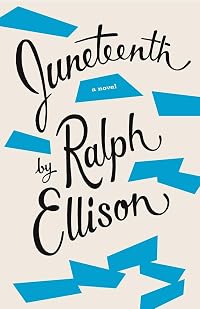
Juneteenth: A Novel
by Ralph Ellison 
On This Page
Description
The story of a black man who passes for white and becomes a race-baiting U.S. senator. When he is shot on the Senate floor, the first visitor in hospital is a black musician-turned-preacher who raised him. As the two men talk, their respective stories come out. An unfinished novel by the author of Invisible Man.Tags
Recommendations


Member Reviews
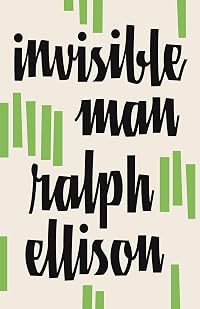
Sometimes the story about the story is much more interesting than the tale itself. Take for example the story of Ralph Ellison's second novel. Following his award-winning debut, Invisible Man, there was undoubtedly intense pressure on Ellison to triumph. Before he'd even finished Invisible Man in 1952, Ellison was working on his second novel. He hoped to create an intense and epic story, one he imagined would be a thousand pages, possibly split into three volumes. He worked on this second novel throughout much of the next decade. The contract with his publisher stipulated a completion date in 1967. Though he was behind, Ellison had much of the novel completed, but his manuscript was the victim of a house fire that same year. Some of the show more manuscript survived (perhaps Ellison had a copy or it was at a different location), but nearly four hundred pages had been destroyed. Immediately, Ellison set to work, trying to put the broken pieces back together. Decade after decade, he worked on his second novel, but he never finished the task. For whatever reason, Ellison was unable to recreate the work he'd once nearly finished.
By the time of his death in 1994, Ellison had amassed thousands of pages of the manuscript, notes, and various scraps of paper. Though a heavily daunting task, it was only a matter of time before someone tried to put these pieces together and posthumously publish Ellison's much anticipated second novel. The first attempt came in 1999, just five years after Ellison's death, with Juneteenth. Juneteenth encompasses the few hundred pages of Ellison's novel that were most intact. The second attempt, published in 2010, entitled Three Days Before the Shooting..., was intended to be a more complete work, borrowing from Ellison's notes, trying to build the novel that he'd intended to create.
As with any posthumous work, it's difficult to have an opinion about Juneteenth. In part, I did not want to read it as I hated to tarnish my strong feelings for Ellison's literary reputation. Yet, I was curious. Curious enough that I promised myself I would read both adaptations before the year's end.
Juneteenth is a meandering mess of stream of conciousness. While Ellison certainly dabbled with the form in Invisible Man, the influence of Faulkner and company saturate the pages of Juneteenth. It's difficult to follow. And yet, there's the possibility of so much brilliance beneath the confusing string of words. With a complete novel as Ellison intended, or tougher editing, perhaps the poetry and inventiveness of thought would've been abundantly clear. Unfortunately, as presented here, it's not. There are so many layers in this selection, and without the full picture, these layers add to the mess. It's never quite clear where Ellison intended to go with his creature and how it might have been orchestrated.
It's unfortunate that fire destroyed Ellison's novel, yet one has to wonder if Ellison wasn't privately struggling before the disastrous event. Surely, one can imagine a world where fire did not destroy the original manuscript, but the author still combated with self in his attempt to create perfection. Invisible Man may have been impossible to follow. Though I offer no rating for this posthumous work by an author I greatly admire, let it be known that I struggled greatly with this novel. It is not a pleasant or memorable read. Even so, I still intend to follow through with my promise to read Three Days Before the Shooting.... Given the extra time and resources, it's possible a hint of Ellison's intentions will be evident. show less
By the time of his death in 1994, Ellison had amassed thousands of pages of the manuscript, notes, and various scraps of paper. Though a heavily daunting task, it was only a matter of time before someone tried to put these pieces together and posthumously publish Ellison's much anticipated second novel. The first attempt came in 1999, just five years after Ellison's death, with Juneteenth. Juneteenth encompasses the few hundred pages of Ellison's novel that were most intact. The second attempt, published in 2010, entitled Three Days Before the Shooting..., was intended to be a more complete work, borrowing from Ellison's notes, trying to build the novel that he'd intended to create.
As with any posthumous work, it's difficult to have an opinion about Juneteenth. In part, I did not want to read it as I hated to tarnish my strong feelings for Ellison's literary reputation. Yet, I was curious. Curious enough that I promised myself I would read both adaptations before the year's end.
Juneteenth is a meandering mess of stream of conciousness. While Ellison certainly dabbled with the form in Invisible Man, the influence of Faulkner and company saturate the pages of Juneteenth. It's difficult to follow. And yet, there's the possibility of so much brilliance beneath the confusing string of words. With a complete novel as Ellison intended, or tougher editing, perhaps the poetry and inventiveness of thought would've been abundantly clear. Unfortunately, as presented here, it's not. There are so many layers in this selection, and without the full picture, these layers add to the mess. It's never quite clear where Ellison intended to go with his creature and how it might have been orchestrated.
It's unfortunate that fire destroyed Ellison's novel, yet one has to wonder if Ellison wasn't privately struggling before the disastrous event. Surely, one can imagine a world where fire did not destroy the original manuscript, but the author still combated with self in his attempt to create perfection. Invisible Man may have been impossible to follow. Though I offer no rating for this posthumous work by an author I greatly admire, let it be known that I struggled greatly with this novel. It is not a pleasant or memorable read. Even so, I still intend to follow through with my promise to read Three Days Before the Shooting.... Given the extra time and resources, it's possible a hint of Ellison's intentions will be evident. show less
This is an unfinished novel published posthumously that Ralph Ellison was working on for decades.
The formatting of my Kindle book is not great but it didn’t stop me enjoying it (and it helped that I read screenplays; I pretty much kept up when there was a sudden scene change). So, as I read, the writing flies off the page where meaning is transitory; just when it feels tangible it becomes vague but in ways that it leaves an impression. What kept me turning the page was the mystery that was wrapped up in the tension as the story went back and forth and switched points of view. There were a few times I had to go back and reread paragraphs or pages to be sure of whose story I was seeing.
The story that emerges is poignant and show more heart-breaking with its pain from misunderstanding, expectations and broken dreams. And yet, I wasn’t sure what was real or what was not, but in the end it didn’t matter, this is a beautiful read. show less
The formatting of my Kindle book is not great but it didn’t stop me enjoying it (and it helped that I read screenplays; I pretty much kept up when there was a sudden scene change). So, as I read, the writing flies off the page where meaning is transitory; just when it feels tangible it becomes vague but in ways that it leaves an impression. What kept me turning the page was the mystery that was wrapped up in the tension as the story went back and forth and switched points of view. There were a few times I had to go back and reread paragraphs or pages to be sure of whose story I was seeing.
The story that emerges is poignant and show more heart-breaking with its pain from misunderstanding, expectations and broken dreams. And yet, I wasn’t sure what was real or what was not, but in the end it didn’t matter, this is a beautiful read. show less
Juneteenth, of course, is the day that word of Abraham Lincoln’s Emancipation Proclamation reached the depths of Texas and marks the day when freedom was finally brought to all American slaves. Ralph Ellison, an African-American author of the outstanding and renowned Invisible Man, spent forty years compiling notes for this book. Eventually, death overtook him before a final version could be reached. Nonetheless, scholar John F. Callahan compiled this edition a few years after Ellison’s death to provide to the reading public. While this book understandably lacks some finishing polish, it delivers an insightful, intriguing, and moving account of the legacy of American slavery and racism.
The book starts with a U.S. Senator Bliss show more delivering a speech on the floor of Congress that seems to portray racist stereotypes. A black pastor named Rev. A.Z. Hickman sits in the audience when, to everyone’s surprise, a gunman enters the floor and shoots Sen. Bliss. Bliss is then delivered to a hospital room. For then-unknown reasons, Hickman joins him in his room. The rest of the book is filled with intrigue-filled memories of their life together that explain how they arrived at this point.
Hickman, a bachelor, raised Bliss, an orphan, to be a white pastoral representative of the black race who understood its nuances and represented its heart (as portrayed through the Christian religion, at least). However, that direction obviously became corrupted at some point, and understanding why and how becomes the central, unfolding dilemma of this book. Intrigue and contradictions are the main literary devices used to propel the reader forward through a confusing yet fascinating narrative.
Within that framework, each chapter is a reminiscence on some aspect of Bliss’s life and can function as an independent piece in and of itself. (In fact, some pieces were independently published.) These chapters can take a while to get into and understand, but their larger meanings always come through by the end. Ellison shines through as a great communicator of complex themes. The book as a whole, while unpacking America’s “original sin,” meanders through many aspects of American life. Its lack of focus and polish, due to Ellison’s death, is perhaps the only shortcoming in this edited version.
Literary scholars and scholars of African-American literature will of course love this book. Posthumously published works (like Blaise Pascal’s Pensees or Franz Kafka’s The Castle) as their own genre present a common set of interpretative challenges. Such is certainly present here. As edited, I’m not sure this book will ever receive the popular reception that it would have in finished form. Nonetheless, for its use of persistent intrigue and its insight into social problems, this book deserves to be studied for generations. show less
The book starts with a U.S. Senator Bliss show more delivering a speech on the floor of Congress that seems to portray racist stereotypes. A black pastor named Rev. A.Z. Hickman sits in the audience when, to everyone’s surprise, a gunman enters the floor and shoots Sen. Bliss. Bliss is then delivered to a hospital room. For then-unknown reasons, Hickman joins him in his room. The rest of the book is filled with intrigue-filled memories of their life together that explain how they arrived at this point.
Hickman, a bachelor, raised Bliss, an orphan, to be a white pastoral representative of the black race who understood its nuances and represented its heart (as portrayed through the Christian religion, at least). However, that direction obviously became corrupted at some point, and understanding why and how becomes the central, unfolding dilemma of this book. Intrigue and contradictions are the main literary devices used to propel the reader forward through a confusing yet fascinating narrative.
Within that framework, each chapter is a reminiscence on some aspect of Bliss’s life and can function as an independent piece in and of itself. (In fact, some pieces were independently published.) These chapters can take a while to get into and understand, but their larger meanings always come through by the end. Ellison shines through as a great communicator of complex themes. The book as a whole, while unpacking America’s “original sin,” meanders through many aspects of American life. Its lack of focus and polish, due to Ellison’s death, is perhaps the only shortcoming in this edited version.
Literary scholars and scholars of African-American literature will of course love this book. Posthumously published works (like Blaise Pascal’s Pensees or Franz Kafka’s The Castle) as their own genre present a common set of interpretative challenges. Such is certainly present here. As edited, I’m not sure this book will ever receive the popular reception that it would have in finished form. Nonetheless, for its use of persistent intrigue and its insight into social problems, this book deserves to be studied for generations. show less
The title might lead you to believe that the narrative will cover the happenings and consequences of Juneteenth, the day, but Ellison focuses on something that happens to just one small group of people on that day many years later, a more personal or community narrative, to get at the underlying state of racial politics in the country. The book opens with a bang, an assassination attempt on a race-baiting United States Senator. But that same Senator grew up with a group of traveling preachers, grew up thinking he was a black boy. Much is written about the novel's publication in different forms, as it was rendered posthumously from a much larger text and heavily edited for cohesiveness. This shorter version does suffer some from a show more slightly meandering through-line, but Ellison folds such beautiful and powerful passages throughout that this reader didn't mind meandering a bit.
3 1/2 bones!!!! show less
3 1/2 bones!!!! show less
Juneteenth is Ralph Ellison's posthumous follow-up to Invisible Man. It's about a senator, Bliss, who is shot on the senate floor, and the African-American man, Hickman, who raised him. It's also about identity and how the way we identify ourselves affects our actions and how we treat others. Despite having been raised by African-Americans, Bliss grows up to become a racist, white senator. Once he decides to be white, this influences the future actions of his life, which leads to the assassination attempt.
The book alternates between first person from Bliss's point of view, to first person from Hickman's point of view, to third person. It also alternates from detailing the present relationship between Bliss and Hickman by his hospital show more bed to the past as told by Hickman and remembered by Bliss. This enables Ellison to tell the story from all sides and give the reader greater insight as to how the characters developed to become who they were. This aspect of the novel potentially could have made for a frustrating and incomprehensible read, but Ellison does a wonderful job of sequencing and pacing the story so that it is easy for the reader to understand the story as Ellison intended it.
The book also has resonance in the twenty-first century despite the fact that Ellison began writing it in the late 1950s. We can all relate to how our sense of identity and our circumstance can influence who we are and who we could become. Sure, the twenty-first century American reader may take civil rights for granted nearly fifty years after the Civil Rights Act of 1964; however, this doesn't make the overarching themes of identity and circumstance any less relevant. This is still and enjoyable and enlightening read regardless of the many changes since it was written. show less
The book alternates between first person from Bliss's point of view, to first person from Hickman's point of view, to third person. It also alternates from detailing the present relationship between Bliss and Hickman by his hospital show more bed to the past as told by Hickman and remembered by Bliss. This enables Ellison to tell the story from all sides and give the reader greater insight as to how the characters developed to become who they were. This aspect of the novel potentially could have made for a frustrating and incomprehensible read, but Ellison does a wonderful job of sequencing and pacing the story so that it is easy for the reader to understand the story as Ellison intended it.
The book also has resonance in the twenty-first century despite the fact that Ellison began writing it in the late 1950s. We can all relate to how our sense of identity and our circumstance can influence who we are and who we could become. Sure, the twenty-first century American reader may take civil rights for granted nearly fifty years after the Civil Rights Act of 1964; however, this doesn't make the overarching themes of identity and circumstance any less relevant. This is still and enjoyable and enlightening read regardless of the many changes since it was written. show less
A very strange book -- I found sections of it very interesting, for example the first experience of watching a movie in the 1910s or 20s, the connection between religion and theatre. The plot itself is almost non-existent but strange. The one big minus point for me was the heavy focus on lengthy sermons -- I sort of get why they are, but it is just not my cup of tea.
Still a book that hasn't found me, nor have I found it. It's not that I don't enjoy and respect RE's writing or legacy, I just can't connect YET with this book. It's time will come and I will devour it...to be sure.
Members
- Recently Added By
Lists

Books Read in 2022
5,168 works; 114 members

Fiction: BLM
60 works; 1 member
Author Information

22+ Works 21,367 Members
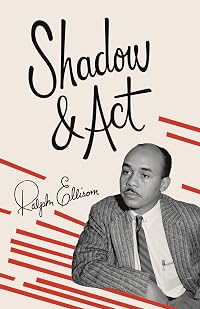
Ralph Ellison (March 1, 1914 - April 16, 1994) has the distinction of being one of the few writers who has established a firm literary reputation on the strength of a single work of long fiction. Writer and teacher, Ralph Ellison was born in Oklahoma City, studied at Tuskegee Institute, and has lectured at New York, Columbia, and Fisk universities show more and at Bard College. He received the Prix de Rome from the Academy of Arts and Letters in 1955, and in 1964 he was elected a member of the National Institute of Arts and Letters. He has contributed short stories and essays to various publications. Invisible Man (1952), his first novel, won the National Book Award for 1953 and is considered an impressive work. It is a vision of the underground man who is also the invisible African American, and its possessor has employed this subterranean view and viewer to so extraordinary an advantage that the impression of the novel is that of a pioneer work. A book of essays, Shadow and Act, which discusses the African American in America and Ellison's Oklahoma boyhood, among other topics, appeared in 1964. Ralph Ellison died on April 16, 1994 of pancreatic cancer and was interred in a crypt at Trinity Church Cemetery in the Washington Heights neighborhood of Upper Manhattan. (Bowker Author Biography) show less
Ralph Ellison has a Legacy Library. Legacy libraries are the personal libraries of famous readers, entered by LibraryThing members from the Legacy Libraries group.
Some Editions
Awards and Honors
Distinctions
Series
Belongs to Publisher Series
rororo (22850)
Work Relationships
Is contained in
Has as a student's study guide
Common Knowledge
- Original title
- Juneteenth
- Original publication date
- 1999
- Dedication
- To That Vanished Tribe into Which I Was Born: The American Negroes
- First words
- In his later years, after hours, if he had put in a good day at his desk, Ralph Ellison was known to chuckle at the parallel between the 'crazy country' he loved and contended with and what in 1969 he called his 'novel in pro... (show all)gress' (very long in progress).
Two days before the shooting a chartered planeload of Southern Negroes swooped down upon the District of Columbia and attempted to see the Senator. - Last words
- (Click to show. Warning: May contain spoilers.)And as a dark hand reached down, he seemed to hear the sound of Hickman's consoling voice, calling from somewhere above.
- Blurbers
- Morrison, Toni
- Original language
- English
- Canonical DDC/MDS
- PS3555.L625J86 1999
- Canonical LCC
- 813'.54-dc21
Classifications
Statistics
- Members
- 1,018
- Popularity
- 25,561
- Reviews
- 9
- Rating
- (3.49)
- Languages
- English, German
- Media
- Paper, Audiobook, Ebook
- ISBNs
- 18
- ASINs
- 6