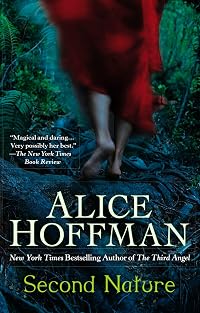
Second Nature
by Alice Hoffman
On This Page
Description
From the New York Times best-selling author of The Dovekeepers, Second Nature tells the story of a suburban woman, Robin Moore, who discovers her own free spirit through a stranger she brings home to her perfectly ordered neighborhood. As Robin impulsively draws this beautiful, uncivilized man into her world-meanwhile coping with divorce and a troubled teenage son-she begins to question her wisdom and doubt her own heart, and ultimately she changes her ideas about love and humanity.Tags
Recommendations





Member Reviews
This is the second Alice Hoffman book I have read and definitely not the last.
I'll preface this by saying that the other book that I read was Practical Magic. The film adaptation brought me to it, and even though I actually preferred the film to the book, it was still alright. There were things that I liked about the book but there were also things that just didn't fulfill my expectations. But, over-all I enjoyed Alice Hoffman's writing style and I found this at a second hand book store, so I was ready to give her creations another shot.
This review might be biased in that I love the concept of feral children, and general "wolfiness" in my reading material. There's a reason that werewolves are my favorite supernatural creatures. I also show more have an undying fondness for fairy tales and re-imaginings of them. This seemed like the perfect pick to try her work again.
My favorite thing from both books so far, is not just the atmosphere and foundation for development that Hoffman provides, but how it's supplied. Her writing style feels very lyrical to me, and almost meanders. I don't recall feeling any immediacy reading through the book, more like a slow sinking into the setting with every read. Not to say that there weren't moments of tension that had me biting my nails, but the writing was so under stated while it's effect was so heightened. The best example of this is Connor's girlfriend Lydia walking home alone and being followed. As I was reading the book I was waiting for Matthew to attack, waiting for the murder to occur. I was literally on the edge of my seat. But then Matthew killed her younger sister instead, and while I was expecting that possibility, it was almost lulled into the story. I love the way she'll start with a character, just going about their business while showing us who they are instead of slamming us over the head with it. I feel like alot of writers take that direct approach. I prefer this. As the character is going along, they will interact with or acknowledge a character and the focus will meander over to them and what they are doing. It provides a wonderful connection between characters and really provides a detailed setting. The flow was just amazing and helped everything to feel fully formed.
The writing was also so intricate, lines and concepts being built on and drawn together flawlessly and smoothly. Again, the subtlety was appreciated. In fact, one of my favorite moments and one that sticks out so much in my mind is the use of weather.There is a scene towards the end of the book where Robin is interacting with her brother. The two siblings aren't physically affectionate, but they often use talking about the weather as a coded way to show their concern for each other. A few pages later (if I'm not mistaken) Stephen is having his final interaction with Matthew, and as he begins to realize the true nature of the situation, mentions of harsh and deadly weather abound. Weather is once again code for emotion, and the metaphorical wind is shifting emotions to dark and deadly. It was just wonderful, how much was tied into it.
I often find that I can see exactly where a narrative is going. Everyone else is enjoying the twist, while I'm bummed out because I've seen it coming and hoped that it was misdirection. But this story was so rich, and so many complex (and realistic human emotions) were brought in that I saw so many potential directions for the events. There were mainstays that I picked up that would be certain to happen, and all of them did, but there were definitely things that were not the outcome that I guessed. I felt that the events were masterfully crafted and wonderfully executed.
I can see why some reviewers might find that the story was unrealistic. I usually dislike (a weak word for it) when things are unrealistic. But knowing that this was a fairy tale re-telling really softened it. While the situation seemed implausible, the characters and their actions/reactions felt very realistic to me. I'm personally bad about disliking (ok, hating) when characters do something I don't approve of. Things that I find unforgivable or awful in real people. But that's also unrealistic and unreasonable of me (trust me I know), because everyone has both good and bad. To me, this story was great about showing both the good and bad in everybody, in ways that are believable. Enough nuance and balance was provided that I felt myself disliking what characters were doing but still understanding the root of it. I feel that Hoffman succeeded in doing an excellent exploration of human nature in this novel.
It was also a fresh twist. Fairy tale re-tellings are very common, and while on the surface this seems like something that has been done before but to me felt entirely new. There seems to be so much negativity put on wolf-like characters, because so much negativity is put on real wolves. Or animals in general really. Shark week is full of specials on "murderous" and "serial killer" sharks, when really sharks are just doing what they do. We are the ones assigning human emotions to instincts.That's what the townspeople in this book do. My favorite point of the book is: There's a beast in the neighborhood and it's not the man raised by wolves. It's a perfectly valid criticism of human nature and how we as a species kill for fun or sport.
We've all heard of the original Beauty and the Beast, and how the beastly outsider is just misunderstood (critically sound claims of Stockholm syndrome aside). But in this, that was subverted.He was technically a murderer, but not of the young girl like the townspeople suspected. It's an animal doing what it does. As opposed to Matthew, a human, doing truly beastly things. Is it morally grey that Stephen snapped his neck? Yes. Our legal system posits that everyone has a right to trial. But Stephen did what an animal would do, take out a threat. This wasn't handled lightly, or glossed over. I never felt that Stephen was portrayed as being a hero for doing this, or that it was for gratuitous shock value, but that it made sense in the context of his character and would be the natural outcome. I also felt that the death of Lydia's sister was handled tastefully. It had all of the impact without being gratuitous. The descriptions of grief were also felt so spot on, and were definitely relatable. It was like Alice Hoffman put into words exactly what mourning feels like.
Finally, I found the romance well handled and plausible given the circumstances. While Stephen and Robin made a bit of an odd couple on the surface they made sense as well. She was at a transitional time in her life where her "pack" had changed and loyalty hadn't been there before. One would say that he needed a new pack so there could have been an instinctual draw.
My only complaint is that it does fall into some really problematic territory. There's this tendancy for feral children to be seen as "pure", unsullied by human nature. Stephen is a "Noble Savage" character. These characters are usually put forth to try and argue that humanity has an innate goodness. I don't take this view, so I don't really agree with it. Yet this is the view that the characters seemed to take of Stephen. Even if Hoffman were trying to argue for wolf nurture winning out, Stephen was still a human. But again this was a re-imagined fairy tale, so I wasn't going in expecting anything too critical on human nature, just an emotional exploration. Alice Hoffman delivered that in spades. show less
I'll preface this by saying that the other book that I read was Practical Magic. The film adaptation brought me to it, and even though I actually preferred the film to the book, it was still alright. There were things that I liked about the book but there were also things that just didn't fulfill my expectations. But, over-all I enjoyed Alice Hoffman's writing style and I found this at a second hand book store, so I was ready to give her creations another shot.
This review might be biased in that I love the concept of feral children, and general "wolfiness" in my reading material. There's a reason that werewolves are my favorite supernatural creatures. I also show more have an undying fondness for fairy tales and re-imaginings of them. This seemed like the perfect pick to try her work again.
My favorite thing from both books so far, is not just the atmosphere and foundation for development that Hoffman provides, but how it's supplied. Her writing style feels very lyrical to me, and almost meanders. I don't recall feeling any immediacy reading through the book, more like a slow sinking into the setting with every read. Not to say that there weren't moments of tension that had me biting my nails, but the writing was so under stated while it's effect was so heightened.
The writing was also so intricate, lines and concepts being built on and drawn together flawlessly and smoothly. Again, the subtlety was appreciated. In fact, one of my favorite moments and one that sticks out so much in my mind is the use of weather.
I often find that I can see exactly where a narrative is going. Everyone else is enjoying the twist, while I'm bummed out because I've seen it coming and hoped that it was misdirection. But this story was so rich, and so many complex (and realistic human emotions) were brought in that I saw so many potential directions for the events. There were mainstays that I picked up that would be certain to happen, and all of them did, but there were definitely things that were not the outcome that I guessed. I felt that the events were masterfully crafted and wonderfully executed.
I can see why some reviewers might find that the story was unrealistic. I usually dislike (a weak word for it) when things are unrealistic. But knowing that this was a fairy tale re-telling really softened it. While the situation seemed implausible, the characters and their actions/reactions felt very realistic to me. I'm personally bad about disliking (ok, hating) when characters do something I don't approve of. Things that I find unforgivable or awful in real people. But that's also unrealistic and unreasonable of me (trust me I know), because everyone has both good and bad. To me, this story was great about showing both the good and bad in everybody, in ways that are believable. Enough nuance and balance was provided that I felt myself disliking what characters were doing but still understanding the root of it. I feel that Hoffman succeeded in doing an excellent exploration of human nature in this novel.
It was also a fresh twist. Fairy tale re-tellings are very common, and while on the surface this seems like something that has been done before but to me felt entirely new. There seems to be so much negativity put on wolf-like characters, because so much negativity is put on real wolves. Or animals in general really. Shark week is full of specials on "murderous" and "serial killer" sharks, when really sharks are just doing what they do. We are the ones assigning human emotions to instincts.
We've all heard of the original Beauty and the Beast, and how the beastly outsider is just misunderstood (critically sound claims of Stockholm syndrome aside). But in this, that was subverted.
Finally, I found the romance well handled and plausible given the circumstances. While Stephen and Robin made a bit of an odd couple on the surface they made sense as well. She was at a transitional time in her life where her "pack" had changed and loyalty hadn't been there before. One would say that he needed a new pack so there could have been an instinctual draw.
My only complaint is that it does fall into some really problematic territory. There's this tendancy for feral children to be seen as "pure", unsullied by human nature. Stephen is a "Noble Savage" character. These characters are usually put forth to try and argue that humanity has an innate goodness. I don't take this view, so I don't really agree with it. Yet this is the view that the characters seemed to take of Stephen. Even if Hoffman were trying to argue for wolf nurture winning out, Stephen was still a human. But again this was a re-imagined fairy tale, so I wasn't going in expecting anything too critical on human nature, just an emotional exploration. Alice Hoffman delivered that in spades. show less
Robin Moore is a divorced woman living on an island with her 16-year-old son Connor. Nothing is going right in her job as a landscape artist. Everything she touches seems to die.
Then one day while visiting her brother Stuart, a psychiatrist in New York City, she sees a man shivering on a bench. Hearing his plea, 'don't let them take me noplace,' Robin impulsively snatches him out of the jaws of danger and takes him home with her. Stephen, called the Wolf Man in the hospital, was three-and-one-half years old when his parents died in a plane crash in the Michigan wilderness. He was raised by a pack of wolves. Although this former feral child still recalls running free with his four-footed brothers, he is intrigued by his new life with show more Robin and her son. They tell neighbors he is a foreign exchange student studying horticulture.
In the spirit of Alice Hoffman's other novels, Second Nature has the vivid textures of a mesmerizing dream. This fairy tale draws us into the moist magic of mystery, passion, fear, and dread. Here we encounter the wild as something more than dark, ferocious, and dangerous. Stephen is capable of romantic feeling and caring for others. In addition, the Wolf Man helps Robin and Connor get in touch with unopened rooms inside themselves. show less
Then one day while visiting her brother Stuart, a psychiatrist in New York City, she sees a man shivering on a bench. Hearing his plea, 'don't let them take me noplace,' Robin impulsively snatches him out of the jaws of danger and takes him home with her. Stephen, called the Wolf Man in the hospital, was three-and-one-half years old when his parents died in a plane crash in the Michigan wilderness. He was raised by a pack of wolves. Although this former feral child still recalls running free with his four-footed brothers, he is intrigued by his new life with show more Robin and her son. They tell neighbors he is a foreign exchange student studying horticulture.
In the spirit of Alice Hoffman's other novels, Second Nature has the vivid textures of a mesmerizing dream. This fairy tale draws us into the moist magic of mystery, passion, fear, and dread. Here we encounter the wild as something more than dark, ferocious, and dangerous. Stephen is capable of romantic feeling and caring for others. In addition, the Wolf Man helps Robin and Connor get in touch with unopened rooms inside themselves. show less
One of Alice Hoffman's Best
Five stars! The book is a love story and thriller. Set on a small island off Long Island, the story confronts small town attitudes about people who are different. It also made me think about how lives can be upended and set on different trajectories. I was left pondering...what might have been?
Five stars! The book is a love story and thriller. Set on a small island off Long Island, the story confronts small town attitudes about people who are different. It also made me think about how lives can be upended and set on different trajectories. I was left pondering...what might have been?
One of Alice Hoffman's Best
Five stars! The book is a love story and thriller. Set on a small island off Long Island, the story confronts small town attitudes about people who are different. It also made me think about how lives can be upended and set on different trajectories. I was left pondering...what might have been?
Five stars! The book is a love story and thriller. Set on a small island off Long Island, the story confronts small town attitudes about people who are different. It also made me think about how lives can be upended and set on different trajectories. I was left pondering...what might have been?
I hope that eventually I'll be able to read all the books written by Alice Hoffman. I certainly have a long way to go but managed to quickly read Second Nature. I liked the well-developed characters, the concept, and of course, the writing style. She usually writes with more mysticism than she did in this novel, but she has written a novel that I enjoyed very much. It has depth, emotion, suspense, realistic settings, and a secret, sad romance.
Alice Hoffman knows how to write about human nature. This novel has several story lines among its characters and they all deal with how we react to various situations in our lives. Thought-provoking book.
Alice Hoffman knows how to write about human nature. This novel has several story lines among its characters and they all deal with how we react to various situations in our lives. Thought-provoking book.
A man who was raised by wolves after he is in a plane crash when he is 3 1/2 is taken in by a woman, who teaches him how to live among humans. Stephen must choose between his love for her and his desire to return to simpler way of life among animals.
Stinging from a fresh divorce, Robin impulsively rescues a man from a mental hospital and takes him home with her. The attractive young man, hospitalized because he was raised by wolves and has no social skills, takes Robin's heart captive. The events that follow make an unusual love story and an interesting story of life on a small island. As usual with Hoffman novels, Second Nature is peppered with eccentric, interesting and lovable characters. I devoured this book quickly. Note to self: Read all of Hoffman's books. Further notes: At least two of Hoffman's novels have been made into movies-Practical Magic and The River King. Both movies were good
Members
- Recently Added By
Author Information

74+ Works 61,429 Members
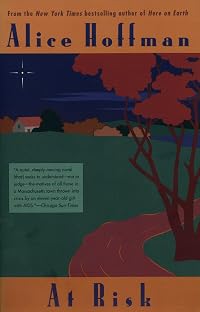
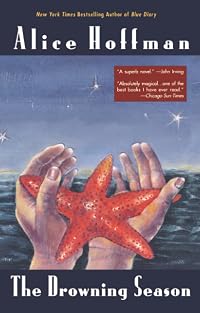
Alice Hoffman, an American novelist and screenwriter, was born in New York City on March 16, 1952. She earned a B.A. from Adelphi University in 1973 and an M.A. in creative writing from Stanford University in 1975 before publishing her first novel, Property Of, in 1977. Known for blending realism and fantasy in her fiction, she often creates show more richly detailed characters who live on society's margins and places them in extraordinary situations as she did with At Risk, her 1988 novel about the AIDS crisis. Her other works include The Drowning Season, Seventh Heaven, The River King, Blue Diary, The Probable Future, The Ice Queen, and The Dovekeepers. Her book, The Third Angel, won the 2008 New England Booksellers' Award for fiction. Two of her novels, Practical Magic and Aquamarine, were made into films. She has also written numerous screenplays, including adaptations of her own novels and the original screenplay, Independence Day. Her title's The Museum of Exteaordinary Things, The Marriage of Opposites, Seventh Heaven, and The Rules of Magic made The New York Times Best Seller List. (Bowker Author Biography) show less
Awards and Honors
Distinctions
Series
Belongs to Publisher Series
Goldmann (43832)
Work Relationships
Is contained in
Common Knowledge
- Canonical title*
- Wolfsnacht
- Original title
- Second nature
- Original publication date
- 1994
- People/Characters
- Robin Moore; Connor Moore; Richard Aaron (Old Dick); Stephen
- Epigraph
- Nature never deceives us, it is always we who deceive ourselves.
--Jean-Jacques Rousseau - Dedication
- To Tom
- First words
- By April most people had already forgotten about him, except for some of the nurses on the floor, who crossed themselves when they walked past his room.
- Last words
- (Click to show. Warning: May contain spoilers.)In no time the sky would be growing dark, and it was a long way back home.
- Original language*
- Amerikanisch
*Some information comes from Common Knowledge in other languages. Click "Edit" for more information.
Classifications
Statistics
- Members
- 1,071
- Popularity
- 24,076
- Reviews
- 23
- Rating
- (3.65)
- Languages
- 9 — Danish, Dutch, English, French, German, Italian, Norwegian (Bokmål), Norwegian, Swedish
- Media
- Paper, Audiobook, Ebook
- ISBNs
- 30
- ASINs
- 6