On This Page
Description
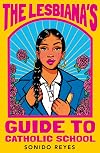
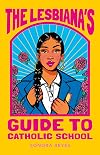
National Book Award Finalist * William C. Morris YA Debut Award Finalist * Goodreads Finalist for Best Teen Book of the Year * Walter Honor Award Winner * Pura Belpré Honor Book * Lambda Literary Award Winner for LGBTQ+ Young AdultA sharply funny and moving debut novel about a queer Mexican American girl navigating Catholic school, while falling in love and learning to celebrate her true self. Perfect for fans of Erika L. Sánchez, Leah Johnson, and Gabby Rivera.
Sixteen-year-old Yamilet show more Flores prefers to be known for her killer eyeliner, not for being one of the only Mexican kids at her new, mostly white, very rich Catholic school. But at least here no one knows she's gay, and Yami intends to keep it that way.
After being outed by her crush and ex-best friend before transferring to Slayton Catholic, Yami has new priorities: keep her brother out of trouble, make her mom proud, and, most importantly, don't fall in love. Granted, she's never been great at any of those things, but that's a problem for Future Yami.
The thing is, it's hard to fake being straight when Bo, the only openly queer girl at school, is so annoyingly perfect. And smart. And talented. And cute. So cute. Either way, Yami isn't going to make the same mistake again. If word got back to her mom, she could face a lot worse than rejection. So she'll have to start asking, WWSGD: What would a straight girl do?
Told in a captivating voice that is by turns hilarious, vulnerable, and searingly honest, The Lesbiana's Guide to Catholic School explores the joys and heartaches of living your full truth out loud. show less
Tags
Recommendations






Member Reviews
I think when my issues with a book are about tapping too hard into my emotions, it's a pretty powerful read, and that's definitely the case here. In a lot of ways, this just felt entirely too real -- from the fears that surround the possible rejections of coming out, the ways it can impact your survival as a young person, the ways siblings being you both joy and pain, and the agony of crushes, this book just doesn't stop. Love that Yami's cultural identity is such an important part of her life and relationships. Love that she gets to support Bo on her own journey. Love the ballsy kids standing up and being smart and furious in school. Love that mental health is a big scary theme. Love that family comes through in the end.
Yamilet is a gay, Mexican American 16-year-old who’s about to start Catholic school.
She tells herself it has more to do with being there for Cesar, her genius brother one year her junior who skipped a grade and earned a scholarship, but there’s more to it. She’s also glad to start over away from ex–best friend Bianca, who outed her to their social circle. It’s not easy for Yami to lose someone she trusted as much as Bianca, especially when she feels alone and is still nursing the heartbreak of her dad’s being deported to Mexico 6 years ago. She loves her busy, hardworking, very Catholic mom, but that doesn’t mean Mami would accept her sexuality if she knew the truth. In her new, wealthy, and mostly White school, Yami show more immediately faces casual racism, but it’s not all bad. She also meets Bo, a Chinese American girl who has chosen the school uniform’s trousers over skirts—paired with rainbow Vans, no less—and they immediately get along. Yami likes how outspoken and confident Bo is, but she’s also intimidated by her new friend’s being an out lesbian. As their friendship blossoms into more, so do the problems with keeping who she is a secret from the world. The portrayal of found family and the threads of love and acceptance woven into this story make it a satisfying read with a hopeful ending.
A textured and gratifying novel. (author’s note) (Fiction. 13-18)
(Kirkus Reviews) show less
She tells herself it has more to do with being there for Cesar, her genius brother one year her junior who skipped a grade and earned a scholarship, but there’s more to it. She’s also glad to start over away from ex–best friend Bianca, who outed her to their social circle. It’s not easy for Yami to lose someone she trusted as much as Bianca, especially when she feels alone and is still nursing the heartbreak of her dad’s being deported to Mexico 6 years ago. She loves her busy, hardworking, very Catholic mom, but that doesn’t mean Mami would accept her sexuality if she knew the truth. In her new, wealthy, and mostly White school, Yami show more immediately faces casual racism, but it’s not all bad. She also meets Bo, a Chinese American girl who has chosen the school uniform’s trousers over skirts—paired with rainbow Vans, no less—and they immediately get along. Yami likes how outspoken and confident Bo is, but she’s also intimidated by her new friend’s being an out lesbian. As their friendship blossoms into more, so do the problems with keeping who she is a secret from the world. The portrayal of found family and the threads of love and acceptance woven into this story make it a satisfying read with a hopeful ending.
A textured and gratifying novel. (author’s note) (Fiction. 13-18)
(Kirkus Reviews) show less
Mexican closeted lesbian Yami goes to a catholic school full of white people. What could go wrong? A lot, clearly.
The author hit the nail on the head with the microaggressions disguised as friendliness, and the way they are brushed off. From mispronouncing her name and the way teachers treat these things as non-serious dumb jokes.
But these characters are one-dimensional bully stereotypes. I think it would have been more impactful if the catholic school people are not all awful despite their racism and homophobia. That way, it would show how these things are casual and prevalent, and even scarier because they are perpetrated by people who are not cartoon villains.
I also think some things went a little too easily. The parents’ subplot show more was tidied up in a way that felt a little too smooth. Is mom immediately forgiven? Is Bo just the perfect girlfriend?
And one chapter has Bo share her struggles with her ethnicity and the fact that she cannot explain it to her adoptive white parents. The next has Yamilet think about how people with loving parents get to explore college without money issues and fear of being kicked out. One type of problem does not negate the other, but I wish this was explored more.
Then again, it’s a teen high school story with all the familiar tropes and I know this isn’t my genre.
In the end I loved the sibling relationship between Yami and Cesar the most. There’s something about how they are supportive, but also try not to bother the other out of love that reflects in all of their actions.
I also liked that there were no excuses for Bianca and the stereotypical bullies. Nobody wants them or their apologies. show less
The author hit the nail on the head with the microaggressions disguised as friendliness, and the way they are brushed off. From mispronouncing her name and the way teachers treat these things as non-serious dumb jokes.
But these characters are one-dimensional bully stereotypes. I think it would have been more impactful if the catholic school people are not all awful despite their racism and homophobia. That way, it would show how these things are casual and prevalent, and even scarier because they are perpetrated by people who are not cartoon villains.
I also think some things went a little too easily. The parents’ subplot show more was tidied up in a way that felt a little too smooth. Is mom immediately forgiven? Is Bo just the perfect girlfriend?
And one chapter has Bo share her struggles with her ethnicity and the fact that she cannot explain it to her adoptive white parents. The next has Yamilet think about how people with loving parents get to explore college without money issues and fear of being kicked out. One type of problem does not negate the other, but I wish this was explored more.
Then again, it’s a teen high school story with all the familiar tropes and I know this isn’t my genre.
In the end I loved the sibling relationship between Yami and Cesar the most. There’s something about how they are supportive, but also try not to bother the other out of love that reflects in all of their actions.
I also liked that there were no excuses for Bianca and the stereotypical bullies. Nobody wants them or their apologies. show less
The Lesbiana’s Guide to Catholic School is a novel about a 16 year old girl named Yamilet (Yami) Flores. She and her brother are about to transfer from their public school to a private Catholic school. She is still reeling from the fallout of coming out to her best friend since kindergarten who outed her and treated her like an enemy. She is determined to keep anyone else from finding out that she is gay; all while looking out for her brother, living up to her mom’s expectations, and earning money to pay for her tuition at the new school. Her plan to keep up a facade of straightness hits a wall when she begins to fall for the only openly queer student in school, her classmate Bo. I absolutely loved this book. The characters are well show more rounded and the story is engaging. The entire narrative is told from Yami’s perspective, which helps the reader feel the uncertainty and trepidation that Yami experiences in trying to keep her identity secret. The author does a great job using humor throughout the novel. I think high school students would enjoy this book. It’s a bit long at nearly 400 pages, but it kept me engaged. What I found most striking was the way the story conveys the ubiquity of the stress and fear that queer people experience in having to constantly consider when and if they are safe to let people know who they are. show less
About a million years ago (somewhere around 1988) I maintained a bibliography of LGBTQI+ books for children and young adults. Of course we didn't have the term LGBTQI+ back then, at first it was just lesbian and gay, then lesbian/gay/bisexual, then the term of choice became queer, and so on. I'm positing that there must be some sort of feedback loop that operates on the principle of the more we're represented in literature, the more clearly we can see and name ourselves, which leads to more books, which leads to a better understanding of who we are in all our diversity, which leads to, etc.
In 1988 the literature available was limited. We had the ubiquitous Heather Has Two Mommies. Then we had a demi-passel of teen problem novels. At the show more time, this body of literature was wonderful simply in existing, but it was also limited. Too many of the stories involved young people coming out and then being a) jumped by homophobes, b) rejected by their families, c) being expelled from school, or d) losing friends and becoming loners. The implication was that young LGBTQI+ people couldn't hope to be happy when they were young: they just had to grit their teeth, put up with the cruelties and losses, and hope to be able to run away to somewhere more "cosmopolitan" once they reached adulthood. Not really uplifting reading if you're thinking your life is headed this way.
Another limitation was the very narrow set of people actually represented in these books. I knew of exactly two titles that had any characters who weren't white. About 80% of the teen novels involving girls took place in private boarding schools, as if it was only in such wealthy and privileged settings that a young woman could allow her thoughts to wander over to the possibility of Not. Being. Straight.
Today the body of children's and young adults' LGBTQI+ literature is much more apt to include BIPOC characters from a variety of rungs on the economic ladder, which means that a young LGBTQI+ person has a much better chance of finding themselves in the books they read. All of which leads up to...
Sonora Reyes' The Lesbiana's Guide to Catholic School, a young adult title that crosses a host of identity and economic boundaries without being irritatingly smug in that I-am-keeping-a-checklist-and-ticking-off-one-person-of-every-kind-from-a-variety-of-neighborhoods-and-family-structures way. The Lesbiana's Guide to Catholic School is a fun, reasonably non-didactic title that gives LGBTQI+ youth a sense that hope is for Now, and not just something to dream of a few decades down the road.
Yamilet Flores, the novel's central character and first-person narrator is quirky, observant, and determined not to let anyone find out she's a lesbian. Her inner dialogues are full of the kind of conflicting impulses and sudden drops and leaps in self-acceptance that most of us will remember from our own high school years. Yamilet and her friends drive the action of the novel, learning to stand up for themselves and finding clever ways to respond to their heteronormative surroundings.
This is a wonderful title for anyone who grew up LGBTQI+. Or straight. It's a wonderful title for anyone in the process of growing up LGBTQI+. Or straight. It's just a wonderful title. Buy it, read it, then pass your copy along to someone else who will enjoy it every bit as much as you will have found you did.
I received a free electronic review copy of this title from the publisher via NetGalley; the opinions are my own. show less
In 1988 the literature available was limited. We had the ubiquitous Heather Has Two Mommies. Then we had a demi-passel of teen problem novels. At the show more time, this body of literature was wonderful simply in existing, but it was also limited. Too many of the stories involved young people coming out and then being a) jumped by homophobes, b) rejected by their families, c) being expelled from school, or d) losing friends and becoming loners. The implication was that young LGBTQI+ people couldn't hope to be happy when they were young: they just had to grit their teeth, put up with the cruelties and losses, and hope to be able to run away to somewhere more "cosmopolitan" once they reached adulthood. Not really uplifting reading if you're thinking your life is headed this way.
Another limitation was the very narrow set of people actually represented in these books. I knew of exactly two titles that had any characters who weren't white. About 80% of the teen novels involving girls took place in private boarding schools, as if it was only in such wealthy and privileged settings that a young woman could allow her thoughts to wander over to the possibility of Not. Being. Straight.
Today the body of children's and young adults' LGBTQI+ literature is much more apt to include BIPOC characters from a variety of rungs on the economic ladder, which means that a young LGBTQI+ person has a much better chance of finding themselves in the books they read. All of which leads up to...
Sonora Reyes' The Lesbiana's Guide to Catholic School, a young adult title that crosses a host of identity and economic boundaries without being irritatingly smug in that I-am-keeping-a-checklist-and-ticking-off-one-person-of-every-kind-from-a-variety-of-neighborhoods-and-family-structures way. The Lesbiana's Guide to Catholic School is a fun, reasonably non-didactic title that gives LGBTQI+ youth a sense that hope is for Now, and not just something to dream of a few decades down the road.
Yamilet Flores, the novel's central character and first-person narrator is quirky, observant, and determined not to let anyone find out she's a lesbian. Her inner dialogues are full of the kind of conflicting impulses and sudden drops and leaps in self-acceptance that most of us will remember from our own high school years. Yamilet and her friends drive the action of the novel, learning to stand up for themselves and finding clever ways to respond to their heteronormative surroundings.
This is a wonderful title for anyone who grew up LGBTQI+. Or straight. It's a wonderful title for anyone in the process of growing up LGBTQI+. Or straight. It's just a wonderful title. Buy it, read it, then pass your copy along to someone else who will enjoy it every bit as much as you will have found you did.
I received a free electronic review copy of this title from the publisher via NetGalley; the opinions are my own. show less
I have never related more to a character in my entire life. I went through a lot of the things both Yami and Cesar went through in this book and it was comforting to be able to see myself in these characters. Sonora Reyes deals with a lot of very difficult topics very well and from the first page I knew it was going to be good. I'm so glad it has a happy ending because I really needed to find some semblance of acceptance in a chaotic world where I don't know who to trust (Yami's words and mine). Highly recommend if you are in a similar situation where you're not sure if you are safe to be your authentic queer self
Spice level: Rated G
Warnings:
- mentions of suicide, racism, homophobia, and religious trauma
- foul language used
Spice level: Rated G
Warnings:
- mentions of suicide, racism, homophobia, and religious trauma
- foul language used
A beautiful story about a sister and a brother struggling through upheavals and revelations and finding strength in each other. While featuring a romance for the main character (and some nice secondary character romances, as well), the central relationship of this novel is the one between the Flores siblings, and their love for each other is so powerful. Though they're at the brink of disaster in many ways, these kids are tenacious in the face of levels of adversity that no children should have to deal with—but lots of LGBTQIA children, in fact, do.
Members
- Recently Added By
Lists

Books Mentioned in the A+ Autostraddle Pop Up Discords Nov 2022 & Dec 2022
223 works; 3 members

National Book Awards 2022 Longlist
50 works; 1 member

Goodreads YA Choice Awards
14 works; 1 member

Queer Fiction (Owned TBR)
142 works; 1 member
Author Information

5+ Works 948 Members
Awards and Honors
Awards
Distinctions
Notable Lists
Series

Common Knowledge
- Original publication date
- 2022
- Dedication
- To my mom. Mi otto yo.
Classifications
- Genres
- LGBTQ+, Teen, Fiction and Literature, Young Adult
- DDC/MDS
- 813.6 — Literature & rhetoric American literature in English American fiction in English 2000-
- LCC
- PZ7.1 .R483 .L — Language and Literature Fiction and juvenile belles lettres Fiction and juvenile belles lettres Juvenile belles lettres
- BISAC
Statistics
- Members
- 681
- Popularity
- 42,058
- Reviews
- 24
- Rating
- (4.25)
- Languages
- 7 — Catalan, English, German, Italian, Polish, Portuguese, Spanish
- Media
- Paper, Audiobook, Ebook
- ISBNs
- 19
- ASINs
- 5