On This Page
Description
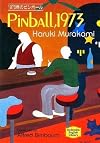
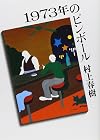
Three years after Hear the Wind Sing, in 1973, the narrator has moved to Tokyo to work as a translator and live with indistinguishable twin girls, but the Rat has remained behind, despite his efforts to leave both the town and his girlfriend. The narrator finds himself haunted by memories of his own doomed relationship but also, more bizarrely, by his short-lived obsession with playing pinball in J's Bar. This sends him on a quest to find the exact model of pinball machine he had enjoyed show more playing years earlier: the three-flipper Spaceship. show lessTags
Recommendations

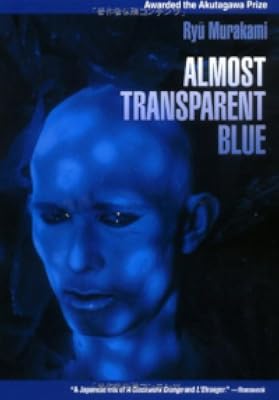

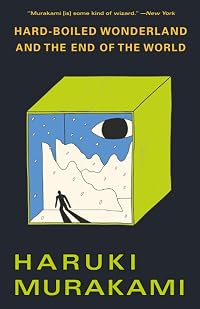
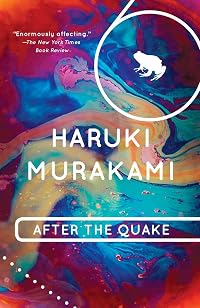
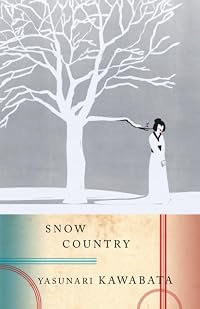

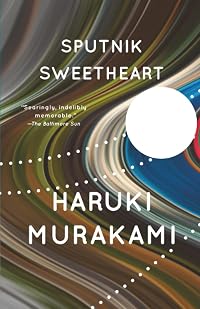
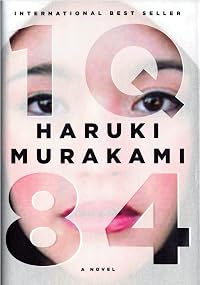
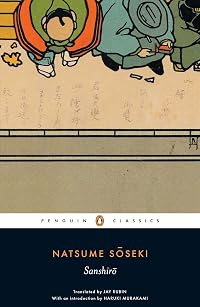
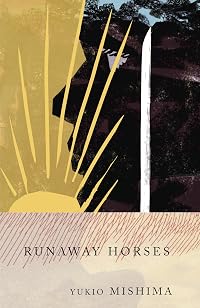
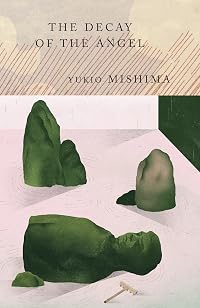
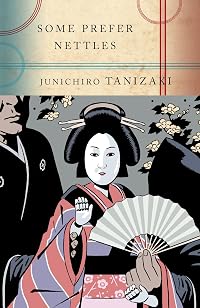
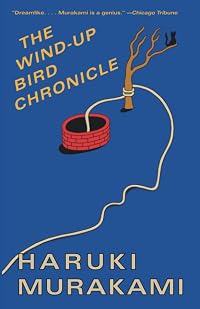
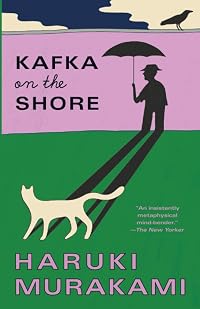

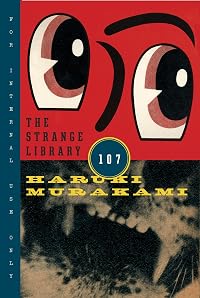
Member Recommendations
cpav55 Pinball 1973, Dans Dans Dans en De jacht op het verloren schaap vormen min of meer een serie, maar zijn wel losstaande verhalen.
Member Reviews
As this is one of Haruki Murakami's first books (over 30 years ago!), I didn't expect something so good. But I can see why I'm such a fan of Murakami's and I will definitely continue to be. I've heard he has another book coming out within the next few months! Yes, the many Murakami cats, cigarettes and wells were present even in the first books. But he has such a wonderful way with words. I'm also surprised that even in his earliest books Murakami almost knew he would be an internationally famous writer (he is now the most famous Japanese writer) --it seems like his writing itself tries to encompass world culture and not just Japanese culture. But maybe this is one of the reasons he IS the most famous Japanese writer -- he is universal.
show more Here, the Rat (in three other books) and another nameless main character are now a bit lonely after their lives converge after their obsessions with pinball. There are other people in their lives, but it still doesn't seem the same. I would almost think that both of these characters are the same person, but they live in different places and have different girlfriends (one of them is dating twins.) Or maybe it's the same person from different times in their life? I have no idea! It's short and quirky and excellent. I'm looking forward to reading all of Murakami's other books I haven't read yet, since his earlier writing is so amazing. show less
show more Here, the Rat (in three other books) and another nameless main character are now a bit lonely after their lives converge after their obsessions with pinball. There are other people in their lives, but it still doesn't seem the same. I would almost think that both of these characters are the same person, but they live in different places and have different girlfriends (one of them is dating twins.) Or maybe it's the same person from different times in their life? I have no idea! It's short and quirky and excellent. I'm looking forward to reading all of Murakami's other books I haven't read yet, since his earlier writing is so amazing. show less
Second of Murakami's novellas of The Rat series. Our nameless narrator waxes poetic over the transcendent quasi-hypnotic trance qualities of a particular pinball machine. When the machine disappears, he embarks on a quixotic search. Mysterious twins show up for a lengthy stay in a deliciously surreal bit of writing. Can already see hints of the mature Murakami in this early work. Glad I read it.
Murakami's Second
Review of the Kodansha English Library paperback (198?) translation of the Japanese original 1973年のピンボール (1980)
Sometime in the throes of my Murakami discovery enthusiasm (probably around the time of the Jay Rubin translation of Norwegian Wood (2000)) I actually chased down the initial English language translations of his first books, Hear the Wind Sing (1979) and this present one, but after reading only a few pages of each, I found them rather uninteresting and put them aside.
After reading my GR friend JimZ's review of the new translations in Wind/Pinball: Two Novels (2015) I decided to give them another shot, not expecting to necessarily enjoy them but to at least investigate them further. Also, in the show more current world situation, it is a good time to catch up on the unread books in your home library.
I did actually enjoy Pinball, 1973 quite a bit more than Hear the Wind Sing, the latter being seemingly stitched together from disconnected musings and stories. Pinball, 1973 toggles between two existentialist story lines. The narrator is feeling a gap in his otherwise seemingly successful life which he seeks to fill by hunting down a possible scrapped pinball machine of which he was once a master player. His friend, nicknamed The Rat, is lamenting a lost love and is planning to move away from town to travel. I'm not going to say these stories were completely engrossing, but at least they had more of a through plot than the earlier book. The chapters centring on the discovery of the missing "Spaceship" pinball machine did have a dramatic suspense to them as the narrator makes a surreal trip to an abandoned chicken farm in search of his lost mechanical fantasy. That definitely had the stirrings of the mysterious worlds of the future Murakami. show less
Review of the Kodansha English Library paperback (198?) translation of the Japanese original 1973年のピンボール (1980)
Sometime in the throes of my Murakami discovery enthusiasm (probably around the time of the Jay Rubin translation of Norwegian Wood (2000)) I actually chased down the initial English language translations of his first books, Hear the Wind Sing (1979) and this present one, but after reading only a few pages of each, I found them rather uninteresting and put them aside.
After reading my GR friend JimZ's review of the new translations in Wind/Pinball: Two Novels (2015) I decided to give them another shot, not expecting to necessarily enjoy them but to at least investigate them further. Also, in the show more current world situation, it is a good time to catch up on the unread books in your home library.
I did actually enjoy Pinball, 1973 quite a bit more than Hear the Wind Sing, the latter being seemingly stitched together from disconnected musings and stories. Pinball, 1973 toggles between two existentialist story lines. The narrator is feeling a gap in his otherwise seemingly successful life which he seeks to fill by hunting down a possible scrapped pinball machine of which he was once a master player. His friend, nicknamed The Rat, is lamenting a lost love and is planning to move away from town to travel. I'm not going to say these stories were completely engrossing, but at least they had more of a through plot than the earlier book. The chapters centring on the discovery of the missing "Spaceship" pinball machine did have a dramatic suspense to them as the narrator makes a surreal trip to an abandoned chicken farm in search of his lost mechanical fantasy. That definitely had the stirrings of the mysterious worlds of the future Murakami. show less
This novella has brought to mind everything I don't like about Murakami's writing. The shallow, disaffected characters. The directionless narrative, where every day is much the same until something slightly different happens, causing the novel to end. The sense that there is no past nor is there a future, just a vague sort of present. These things are fine for a writer to employ once in awhile, to make a point as it were, but doing them every single time makes for rather uninteresting novels.
Pinball has a lot of that. The narrator lucks into an easy job, and just as easily lucks into fuckbuddy relationship with a pair of twins. Seriously, he just wakes up and they are there. Which would be fine, in a rock-n-rolla "I get so wasted each show more night I never know what I am going to wake up to" way, except the guy has an office job and just goes home alone each night. Claims that "this sort of thing happens to me all the time" smell highly suspicious. The job is handled just as neatly -- my friend had the idea, my friend's dad paid for everything, my friend does most of the work. Why did your friend cut you a slice of the pie, then? Maybe he saved him from a bullet, has some blackmail photos, or they shared a bed back in the dorms. The reader will never know.
The character known as The Rat makes an appearance. Mostly just reminisces about a girl, drinks beer at a bar. Engages in butterfly philosophy, flitting between not-very-profound observations about life or people or society, without any of the actual hard work of philosophy: questioning premises, constructing chains of logic, refuting claims. It all more or less goes like this: "You know, maybe people are born with a void, and maybe that void can only be filled with pinball." "You may be right."
Oh right, pinball. At about 2/3 of the way through the novel, the author remembers a pinball game he was playing in college, and then playing again a couple of years ago, and now he must must must find it. Many pages describing the video game and its history (which is, actually, pretty interesting), and maybe three pages covering his quest to find another. Feels kinda tacked-on, doesn't it? show less
Pinball has a lot of that. The narrator lucks into an easy job, and just as easily lucks into fuckbuddy relationship with a pair of twins. Seriously, he just wakes up and they are there. Which would be fine, in a rock-n-rolla "I get so wasted each show more night I never know what I am going to wake up to" way, except the guy has an office job and just goes home alone each night. Claims that "this sort of thing happens to me all the time" smell highly suspicious. The job is handled just as neatly -- my friend had the idea, my friend's dad paid for everything, my friend does most of the work. Why did your friend cut you a slice of the pie, then? Maybe he saved him from a bullet, has some blackmail photos, or they shared a bed back in the dorms. The reader will never know.
The character known as The Rat makes an appearance. Mostly just reminisces about a girl, drinks beer at a bar. Engages in butterfly philosophy, flitting between not-very-profound observations about life or people or society, without any of the actual hard work of philosophy: questioning premises, constructing chains of logic, refuting claims. It all more or less goes like this: "You know, maybe people are born with a void, and maybe that void can only be filled with pinball." "You may be right."
Oh right, pinball. At about 2/3 of the way through the novel, the author remembers a pinball game he was playing in college, and then playing again a couple of years ago, and now he must must must find it. Many pages describing the video game and its history (which is, actually, pretty interesting), and maybe three pages covering his quest to find another. Feels kinda tacked-on, doesn't it? show less
3.5 / 5
It's cool to read 'Pinball, 1973' if you enjoy Murakami, but not because it's great writing, but more because you can see the evolution of his craft.
Some of Murakami's later work has these marvelous frame stories and surrealistic touches all wrapped up and dovetailed together in these wondrous masterpieces.
His first book, 'Hear the Wind Sing' is all of the narrative flow, with more or less none of the surrealism, whereas 'Pinball, 1973' has the surrealistic touches, but it's missing the binding agent, so it feels more like a series of disjointed stories. No narrative cohesion. Fun, but there's at least a few times where I found myself asking, "Haruki, buddy? Where the hell are you taking me with this story?"
So read if you're a show more fan of Haruki, but if you aren't, probably stick to his better known, in my opinion better, works like 'Kafka on the Shore', 'Norwegian Wood', or 'The Wind-Up Bird Chronicles'. show less
It's cool to read 'Pinball, 1973' if you enjoy Murakami, but not because it's great writing, but more because you can see the evolution of his craft.
Some of Murakami's later work has these marvelous frame stories and surrealistic touches all wrapped up and dovetailed together in these wondrous masterpieces.
His first book, 'Hear the Wind Sing' is all of the narrative flow, with more or less none of the surrealism, whereas 'Pinball, 1973' has the surrealistic touches, but it's missing the binding agent, so it feels more like a series of disjointed stories. No narrative cohesion. Fun, but there's at least a few times where I found myself asking, "Haruki, buddy? Where the hell are you taking me with this story?"
So read if you're a show more fan of Haruki, but if you aren't, probably stick to his better known, in my opinion better, works like 'Kafka on the Shore', 'Norwegian Wood', or 'The Wind-Up Bird Chronicles'. show less
Second of the Rat... almost a real novel, but not quite. Much more defined than Hear the wind sing, but this is still almost entirely episodic. There is an element in the 2nd half that reminds of me of the End of the World book in its back and forth stark stories of the Rat and the Narrator. But they are not moving toward each other but away. The Rat rather tediously becomes disenchanted with everything / the world. Even the Bar and the beer and Jay. He breaks with his pleasant but undescribed girlfriend. He was happy with her, but still must leave (why????). It is a cold phone separation. His harder task to is to tell Jay, the bartender. Hmmm... as unsatisfying as this is, I suppose it does setup the Wild sheep chase pretty well. The show more narrator ambles along with the Twins (such good coffee), the telephone switch board (and its funeral at the lake), the picking up lost golf balls at the course until he comes to his climax: the long trek to converse with the space pinball machine (with 3 flippers). He finds this with the help of the Spanish teacher in an empty field, in a big barn like place which is suffused with chicken deaths. The conversation (with the pinball machine) is pretty unsatisfying as well. The rat: I have to leave this place where everyone seems to accept the world as it is without even questioning it. show less
Pinball, 1973 is unarguably a better book than its predecessor, Hear the Wind Sing. Primarily, the prose shows a marked improvement over that previous volume — the exception being the 3rd person sections, as far as I can recall a narrative perspective unique among Murakami's bibliography, which are some of the weakest points of the novel.
On the other hand, what hasn't improved is the plotting, which remains as listless and aimless as before. Now, a point could be made that this directionlessness is the entire point of the book; pinball, the book's overarching theme, is described in the first chapter as not having a greater goal and always ending in the Retry light blinking on. Still, while it's harder to see why Murakami keeps this show more unavailable internationally, one is left wanting something more.
In the end, I'd still probably only recommend this to people who are already fans of Murakami, but I'd certainly have far fewer reservations doing than with the previous volume. show less
On the other hand, what hasn't improved is the plotting, which remains as listless and aimless as before. Now, a point could be made that this directionlessness is the entire point of the book; pinball, the book's overarching theme, is described in the first chapter as not having a greater goal and always ending in the Retry light blinking on. Still, while it's harder to see why Murakami keeps this show more unavailable internationally, one is left wanting something more.
In the end, I'd still probably only recommend this to people who are already fans of Murakami, but I'd certainly have far fewer reservations doing than with the previous volume. show less
Members
- Recently Added By
Lists

1980 great books
63 works; 1 member
Author Information

292+ Works 174,488 Members
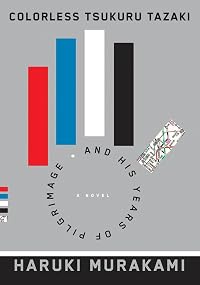
Haruki Murakami was born on January 12, 1949 in Kyoto, Japan and studied at Tokyo's Waseda University. He opened a coffeehouse/jazz bar in the capital called Peter Cat with his wife. He became a full-time author following the publication of his first novel, Hear the Wind Sing, in 1979. He writes both fiction and non-fiction works. His fiction show more works include Norwegian Wood, Colorless Tsukuru Tazaki and His Years of Pilgrimage, The Strange Library, and Men Without Women. Several of his stories have been adapted for the stage and as films. His nonfiction works include What I Talk About When I Talk About Running. He has received numerous literary awards including the Franz Kafka Prize for Kafka on the Shore, the Yomiuri Prize for The Wind-Up Bird Chronicle, and the Jerusalem Prize. He has translated into Japanese literature written by F. Scott Fitzgerald, Raymond Carver, Truman Capote, John Irving, and Paul Theroux. (Bowker Author Biography) show less
Series

Belongs to Publisher Series
Work Relationships
Is contained in
Common Knowledge
- Canonical title
- Pinball, 1973
- Original title
- 1973年のピンボール
- Original publication date
- 1980-06
- People/Characters
- The Rat
- Important places
- Japan; Tokyo, Japan
- First words
- I used to love listening to stories about faraway places.
- Last words
- (Click to show. Warning: May contain spoilers.)A tranquil November Sunday of rare clarity shining through each and every thing.
- Original language*
- Japanese
*Some information comes from Common Knowledge in other languages. Click "Edit" for more information.
Classifications
- Genres
- General Fiction, Fiction and Literature
- DDC/MDS
- 895.635 — Literature & rhetoric Literatures of other languages Literatures of East and Southeast Asia Japanese Japanese fiction 1945–2000
- LCC
- PL856 .U673 .S4513 — Language and Literature Languages and literatures of Eastern Asia, Africa, Oceania Languages of Eastern Asia, Africa, Oceania Japanese language and literature Japanese literature Individual authors and works
Statistics
- Members
- 580
- Popularity
- 50,640
- Reviews
- 17
- Rating
- (3.45)
- Languages
- 6 — English, German, Japanese, Russian, Thai, Turkish
- Media
- Paper, Audiobook, Ebook
- ISBNs
- 16
- ASINs
- 8