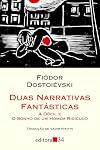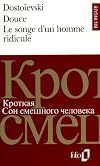
The Gentle Spirit / The Dream of a Ridiculous Man
by Fedor Mikhaïlovitch Dostoïevski
On This Page
Tags
Recommendations


































Member Reviews
Quanto mais leio Dostoievski, mais entendo porque Freud gostava tanto dele. Em termos de insights psicológicos mesmo. Aqui em Duas Narrativas Fantásticas temos dois contos que se não são brilhantes, pelo menos são um tour de force com os meandros da psicanálise, especialmente O Sonho do Homem Ridículo, cujo único defeito é acabar descambando para uma iluminação mística, especialmente porque a visão que o próprio Dostoievski tinha das atividades oníricas era de ordem mística, felizmente Freud chegou e só não digo que acabou com a palhaçada porque acho que o austríaco também pesa a mão nas interpretações, mesmo assim é uma evolução em relação ao Dostoievski.
Dois monólogos que têm grande afinidade com as Memórias do Subsolo.
A Dócil é a reflexão de um homem sobre os motivos que levaram sua jovem mulher ao suicídio. Dostoiévski o considerou uma narrativa fantástica por pensar que um homem nessa situação pensaria de forma fragmentada e inconsistente, e o único modo como esse livro poderia existir é se houvesse alguém para tomar notas dos pensamentos que o personagem não seria capaz nem mesmo de expressar. A novela é uma notável precursora do fluxo de consciência.
O Sonho de um Homem Ridículo é sobre um homem que adormece com o revólver na mão, e sonha com uma sociedade utópica que ele mesmo perverte, contamina com a autoconsciência.
A Dócil é a reflexão de um homem sobre os motivos que levaram sua jovem mulher ao suicídio. Dostoiévski o considerou uma narrativa fantástica por pensar que um homem nessa situação pensaria de forma fragmentada e inconsistente, e o único modo como esse livro poderia existir é se houvesse alguém para tomar notas dos pensamentos que o personagem não seria capaz nem mesmo de expressar. A novela é uma notável precursora do fluxo de consciência.
O Sonho de um Homem Ridículo é sobre um homem que adormece com o revólver na mão, e sonha com uma sociedade utópica que ele mesmo perverte, contamina com a autoconsciência.
Ratings
Members
- Recently Added By
Author Information

One of the most powerful and significant authors in all modern fiction, Fyodor Dostoevsky was the son of a harsh and domineering army surgeon who was murdered by his own serfs (slaves), an event that was extremely important in shaping Dostoevsky's view of social and economic issues. He studied to be an engineer and began work as a draftsman. show more However, his first novel, Poor Folk (1846), was so well received that he abandoned engineering for writing. In 1849, Dostoevsky was arrested for being a part of a revolutionary group that owned an illegal printing press. He was sentenced to be executed, but the sentence was changed at the last minute, and he was sent to a prison camp in Siberia instead. By the time he was released in 1854, he had become a devout believer in both Christianity and Russia - although not in its ruler, the Czar. During the 1860's, Dostoevsky's personal life was in constant turmoil as the result of financial problems, a gambling addiction, and the deaths of his wife and brother. His second marriage in 1887 provided him with a stable home life and personal contentment, and during the years that followed he produced his great novels: Crime and Punishment (1886), the story of Rodya Raskolnikov, who kills two old women in the belief that he is beyond the bounds of good and evil; The Idiots (1868), the story of an epileptic who tragically affects the lives of those around him; The Possessed (1872), the story of the effect of revolutionary thought on the members of one Russian community; A Raw Youth (1875), which focuses on the disintegration and decay of family relationships and life; and The Brothers Karamazov (1880), which centers on the murder of Fyodor Karamazov and the effect the murder has on each of his four sons. These works have placed Dostoevsky in the front rank of the world's great novelists. Dostoevsky was an innovator, bringing new depth and meaning to the psychological novel and combining realism and philosophical speculation in his complex studies of the human condition. (Bowker Author Biography) show less

Fyodor Dostoyevsky has a Legacy Library. Legacy libraries are the personal libraries of famous readers, entered by LibraryThing members from the Legacy Libraries group.
Series
Belongs to Publisher Series
Common Knowledge
- Canonical title
- The Gentle Spirit / The Dream of a Ridiculous Man
Classifications
Statistics
- Members
- 120
- Popularity
- 270,647
- Reviews
- 2
- Rating
- (3.82)
- Languages
- 5 — English, French, Italian, Multiple languages, Portuguese
- Media
- Paper
- ISBNs
- 4
- ASINs
- 1