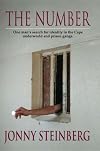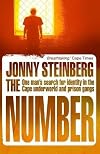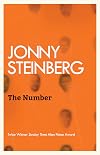
The Number: One Man's Search for Identity in the Cape Underworld and Prison Gangs
by Jonny Steinberg
On This Page
Description
In front of him lay the prospect of a law-abiding future, and life in a household of ten adults and eight children, none of whom earned a living. Author Jonny Steinberg met Wentzel in prison in 2002. By the time of Wentzel's release, he and Steinberg had spent more than 50 hours discussing his life experiences. The number is an account of their conversations and of SteinbergAs journeys to the places and people of Wentzel's past. He had lived a bewilderingly schizophrenic life, wandering to show more and fro between three worlds: the arcane universe of prison gangs, steeped in a mythology of banditry and retribution, where he was known as JR; the margins of South Africa's criminal economy, where he lived by a string of stolen names and learnt the arts of commercial fraud; and his scattered family, which eked out a living in the coloured ghettos of the Cape Flats. The number visits each of those worlds in turn. It is a tale of modern South Africa's historic events seen through the eyes of the country's most marginal citizens. Surprisingly, perhaps, it is neither a story of passivity nor despair, but of beguiling ingenuity and cool cynicism. show lessTags
Recommendations






















Member Reviews
The Number tells the story of both Magadien Wentzel, a lifelong criminal and prison gang leader of the 28s and the history of the South African prison gangs.
Wentzel grew up as an identity-less colored boy in the cape townships. He didn’t know who his mother was until he was nearly a teen, never knew who his father was and despised his foster mother’s boyfriends. He doesn’t know his true name, age or religion. Lacking structure and guidance (granted this is an overgeneralization), he turned to crime. When he is in prison he finally finds something that gives his life structure and meaning: The Number.
The book gives a great description of the numbers gangs, the 26s, 27s and 28s. It explains their history and the relationships show more between the three gangs as well as their relationships with the warders of the prisons throughout South Africa. Also, it gives a great description of Wentzel’s role in the 28s.
Long story short, Wentzel eventually grows disenchanted in the gang lifestyle and the vicious cycle of perpetration of a crime incarceration, release and recidivism.
The Number is a great look into what it is like to live as a criminal and prisoner in the Cape, and the challenges that a prison gang member would face when attempting to get his life, not back together, but together for the first time.
Further, it is also a great piece for anyone who is interested in authorship or journalism. Throughout the book, Steinberg and Wentzel have an uneven relationship. One is an affluent Rhodes Scholar, the other an old penniless ndota. One gets to come in go from the others life, the other must sit and wait for their meetings. One tells the story, the other has the potential to mold the story. It is a very interesting relationship that many authors must face when writing a books about the fringes of society. Steinberg does it with amazing finesse and does a great job conveying the challenges to the reader. show less
Wentzel grew up as an identity-less colored boy in the cape townships. He didn’t know who his mother was until he was nearly a teen, never knew who his father was and despised his foster mother’s boyfriends. He doesn’t know his true name, age or religion. Lacking structure and guidance (granted this is an overgeneralization), he turned to crime. When he is in prison he finally finds something that gives his life structure and meaning: The Number.
The book gives a great description of the numbers gangs, the 26s, 27s and 28s. It explains their history and the relationships show more between the three gangs as well as their relationships with the warders of the prisons throughout South Africa. Also, it gives a great description of Wentzel’s role in the 28s.
Long story short, Wentzel eventually grows disenchanted in the gang lifestyle and the vicious cycle of perpetration of a crime incarceration, release and recidivism.
The Number is a great look into what it is like to live as a criminal and prisoner in the Cape, and the challenges that a prison gang member would face when attempting to get his life, not back together, but together for the first time.
Further, it is also a great piece for anyone who is interested in authorship or journalism. Throughout the book, Steinberg and Wentzel have an uneven relationship. One is an affluent Rhodes Scholar, the other an old penniless ndota. One gets to come in go from the others life, the other must sit and wait for their meetings. One tells the story, the other has the potential to mold the story. It is a very interesting relationship that many authors must face when writing a books about the fringes of society. Steinberg does it with amazing finesse and does a great job conveying the challenges to the reader. show less
0171
Sep 5, 2012 (Edited)Spanish
Ratings
Members
- Recently Added By
Author Information

13 Works 456 Members
Jonny Steinberg was educated at the University of the Witwatersrand in Johannesburg, and at Oxford University, where he was a Rhodes Scholar. He is the only South African author to have won the Sunday Times Alan Paton award for literary non-fiction twice for his previous two books, Midlands (2002) and The Number (2004). He has worked as a show more journalist for Business Day and a collection of the best of his columns, Notes from a Fractured Country, was published in 2007. His latest work, Three-Letter Plague, was published in 2008. show less
Awards and Honors
Awards
Common Knowledge
- Important places
- South Africa
Classifications
- Genres
- Nonfiction, Politics and Government, General Nonfiction, History, Biography & Memoir
- DDC/MDS
- 364.1092 — Society, government, & culture Social problems and social services Crime Criminal offenses
- LCC
- HV9850.5 .S84 — Social sciences Social pathology. Social and public welfare. Criminology Social pathology. Social and public welfare. Criminal justice administration Penology. Prisons. Corrections By region or country
- BISAC
Statistics
- Members
- 43
- Popularity
- 689,233
- Reviews
- 2
- Rating
- (4.29)
- Languages
- English
- Media
- Paper, Ebook
- ISBNs
- 3
- ASINs
- 2