On This Page
Description
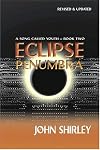
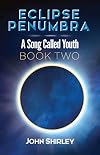
"A complex, bizarre, and unique vision of the near future." - Bruce Sterling. The second volume in Shirley's cyberpunk trilogy A Song Called Youth, this thrilling chapter returns to the World War III era, in which the New Resistance, a gang of technologically adept guerilla fighters, face off against the Second Alliance, a neofascist army of mercenaries. The opposing forces struggle for control of FirStep, an orbiting space colony that could extend the alliance's domination to all of show more humanity. AUTHOR: John Shirley is primarily a writer of fantasy and science fiction as well as song lyrics. He has written novels, short stories, television scripts, and screenplays, publishing more than 40 books. Shirley has fronted his own bands, and his songs have been performed by other groups, including Blue Oyster Cult. show lessTags
Recommendations


















Member Reviews
The worldbuilding in this trilogy is really something else. It is near future. The best parts of it isn't what kind of tech is in it, although some are pretty cool like prolonged lifespans up to 140 if you have the riches or a specifically targeted reprogramming of memories for all the best propagandists.
No. It's pretty much our world. A space colony near the Earth notwithstanding. :)
No, the worldbuilding shines in the details and the direction everything is twisted. The first is obviously a Fascist mockup driven by the Religious Right blown up into an outright racial pogrom of a scope similar to those of the Nazis. But this time, war broke out sooner and the tools on both sides of the war are a bit more interestingly divided. Suffice show more to say, civilization has gone into an eclipse. And by the end of the first book, the SA, or the bad guys, HAVE WON.
Everything else is about resistance fighters, degrading situations for everyone, and getting to love a few new MCs with an expectation of getting punched in the gut. Hard. Again. Along the same lines as the first novel.
I wasn't disappointed, either.
So much racism is put on highlight here. So much truly horrible crap goes on. But let's be clear about this. My intuition says we're on the side of the angels. This is just a dark, dark time. And it's pretty epic. World War spreading out into space, nations turning on each other, exploring media, new nasty laws, injustice, and of course, misery and grief.
There are some cyberpunk elements here and the text is updated to have newer tech and more recent historical events that tie directly into the events here, but what really stands out is just how similar this world is to what we could fall into yet again. show less
No. It's pretty much our world. A space colony near the Earth notwithstanding. :)
No, the worldbuilding shines in the details and the direction everything is twisted. The first is obviously a Fascist mockup driven by the Religious Right blown up into an outright racial pogrom of a scope similar to those of the Nazis. But this time, war broke out sooner and the tools on both sides of the war are a bit more interestingly divided. Suffice show more to say, civilization has gone into an eclipse. And by the end of the first book, the SA, or the bad guys, HAVE WON.
Everything else is about resistance fighters, degrading situations for everyone, and getting to love a few new MCs with an expectation of getting punched in the gut. Hard. Again. Along the same lines as the first novel.
I wasn't disappointed, either.
So much racism is put on highlight here. So much truly horrible crap goes on. But let's be clear about this. My intuition says we're on the side of the angels. This is just a dark, dark time. And it's pretty epic. World War spreading out into space, nations turning on each other, exploring media, new nasty laws, injustice, and of course, misery and grief.
There are some cyberpunk elements here and the text is updated to have newer tech and more recent historical events that tie directly into the events here, but what really stands out is just how similar this world is to what we could fall into yet again. show less
My reactions to reading this novel in 2002. Spoilers follow.
Reading this novel the second time around the aspect I found most dated, even though it was published after William Gibson's Neuromancer which anticipated some aspects of the Internet, was its lack of vision of distributed media, specifically distributed media made possible by the Internet. Shirely makes references to bulletin board services, but the efforts of Smoke and Witcher and Kessler and others center on going through the established, centralized media outlets and exposing SA propaganda and getting their own aired.
I also noticed quite a few examples of pairs of characters developing certain themes: Colony Security Chief Russ Parker has to ally himself against Marxists show more and anarchists to defeat SA fascism. CIA agent Stoner has to ally himself with similar undesirable leftists when he, in the course of his work, comes across SA's grand plan for post World War Three Europe -- and the efforts to purge the CIA of blacks and other minorities. (Stoner is the sole exception to a pretty stereotypical leftist's complaint and suspicion of CIA murder and torture.) Senator Spector realizes, to atone for helping to railroad, via demagogic legislation (others have argued his moral point that it would be ok to execute innocents to make sure you execute all the guilty), innocent people, he must not allow himself to be rescued.
Horror writer Shirley can put out some evocative prose. That was particularly true of the Hollow Head (a building that -- via electromagnetic radiation, injected drugs, and pheromones, engulfs -- is the drug, a whole building as drug paraphernalia). Shirley also uses the horror theme of possession in two characters. Chesterton is shot up, and possessed, by the brain extract of his dead friend Angelo -- which leads Chesterton into committing an impulsive murder. The brain of the dead Professor Rimpler, Claire's father, possesses the control system of the FirStep Colony. (Why brain tissue was better than integrated circuits for the cybernetic control system was inadequately rationalized though, interestingly, Shirley could probably use scientific developments since 1988 to present a better rationale.) show less
Reading this novel the second time around the aspect I found most dated, even though it was published after William Gibson's Neuromancer which anticipated some aspects of the Internet, was its lack of vision of distributed media, specifically distributed media made possible by the Internet. Shirely makes references to bulletin board services, but the efforts of Smoke and Witcher and Kessler and others center on going through the established, centralized media outlets and exposing SA propaganda and getting their own aired.
I also noticed quite a few examples of pairs of characters developing certain themes: Colony Security Chief Russ Parker has to ally himself against Marxists show more and anarchists to defeat SA fascism. CIA agent Stoner has to ally himself with similar undesirable leftists when he, in the course of his work, comes across SA's grand plan for post World War Three Europe -- and the efforts to purge the CIA of blacks and other minorities. (Stoner is the sole exception to a pretty stereotypical leftist's complaint and suspicion of CIA murder and torture.) Senator Spector realizes, to atone for helping to railroad, via demagogic legislation (others have argued his moral point that it would be ok to execute innocents to make sure you execute all the guilty), innocent people, he must not allow himself to be rescued.
Horror writer Shirley can put out some evocative prose. That was particularly true of the Hollow Head (a building that -- via electromagnetic radiation, injected drugs, and pheromones, engulfs -- is the drug, a whole building as drug paraphernalia). Shirley also uses the horror theme of possession in two characters. Chesterton is shot up, and possessed, by the brain extract of his dead friend Angelo -- which leads Chesterton into committing an impulsive murder. The brain of the dead Professor Rimpler, Claire's father, possesses the control system of the FirStep Colony. (Why brain tissue was better than integrated circuits for the cybernetic control system was inadequately rationalized though, interestingly, Shirley could probably use scientific developments since 1988 to present a better rationale.) show less
Ratings
Members
- Recently Added By
Author Information

120+ Works 5,071 Members
John Shirley is the author of numerous novels and books of stories. He was co-screenwriter of The Crow, and has written scripts for television series and cable movies. He lives in California
Some Editions
Series

Belongs to Publisher Series
Ariadne Social Fantasies (5008)
Work Relationships
Is contained in
Common Knowledge
- Canonical title
- Eclipse Penumbra
- Original title
- Eclipse Penumbra
- Alternate titles*
- Eclipse Penumbra
- Original publication date
- 1988-05-01
- Dedication
- For Stephen P. Brown,
in gratitude for much help and much friendship. - First words
- A man and a little girl were strolling down a white beach, in hazy sunshine.
- Last words
- (Click to show. Warning: May contain spoilers.)"Yes please. I've lost the remote." He closed his eyes and lay back. "Turn it off."
- Original language*
- Englisch
*Some information comes from Common Knowledge in other languages. Click "Edit" for more information.
Classifications
Statistics
- Members
- 184
- Popularity
- 177,308
- Reviews
- 2
- Rating
- (3.86)
- Languages
- English, German
- Media
- Paper, Ebook
- ISBNs
- 7