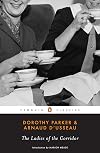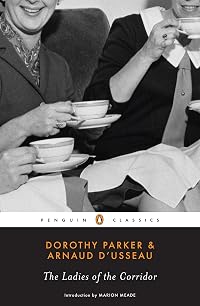
The Ladies of the Corridor
by Dorothy Parker, Arnaud d'Usseau
On This Page
Description
The blackly comic play about the oppressed lives of women in 1950s New York One of literature's leading humorists, Dorothy Parker drew from the dark side of her imagination to pen The Ladies of the Corridor, a searing drama about women living on their own in a New York residence hotel. Loosely based on Parker's life, and co-written with famed Hollywood playwright Arnaud d'Usseau, The Ladies of the Corridor exposes the limitations of a woman's life in a drama teeming with Parker's signature show more wit. For more than seventy years, Penguin has been the leading publisher of classic literature in the English-speaking world. With more than 1,700 titles, Penguin Classics represents a global bookshelf of the best works throughout history and across genres and disciplines. Readers trust the series to provide authoritative texts enhanced by introductions and notes by distinguished scholars and contemporary authors, as well as up-to-date translations by award-winning translators. show lessTags
Recommendations























Member Reviews
I’m glad Marion Meade got Penguin to republish this before she died. The play clearly meant a lot to Parker. It displays the wit and empathy she had in abundance. Too bad there’s no video of the original performance; it would be great to see Walter Matthau play Lulu’s younger boyfriend.
Ratings
Members
- Recently Added By
Lists

Boarding House and Hotel Fiction
73 works; 25 members
Author Information

147+ Works 10,284 Members
Poet and short story writer Dorothy Parker was born in New Jersey on August 22, 1893. When she was 5, her mother died and her father, a clothes salesman, remarried. Parker had a great antipathy toward her stepmother and refused to speak to her. She attended parochial school and Miss Dana's school in Morristown, New Jersey, for a brief time before show more dropping out at age 14. A voracious reader, she decided to pursue a career in literature. She began her career by writing verse as well as captions for a fashion magazine. During the years of her greatest fame, Dorothy Parker was known primarily as a writer of light verse, an essential member of the Algonquin Round Table, and a caustic and witty critic of literature and society. She is remembered now as an almost legendary figure of the 1920s and 1930s. Her reviews and staff contributions to three of the most sophisticated magazines of this century, Vanity Fair, the New Yorker, and Esquire, were notable for their put-downs. For all her highbrow wit, however, Dorothy Parker was liberal, even radical, in her political views, and the hard veneer of brittle toughness that she showed to the world was often a shield for frustrated idealism and soft sensibilities. The best of her fiction is marked by a balance of ironic detachment and sympathetic compassion, as in "Big Blonde," which won the O. Henry Award for 1929 and is still her best-remembered and most frequently anthologized story. The best of Dorothy Parker is readily and compactly accessible in The Portable Dorothy Parker. Her own selection of stories and verse for the original edition of that compilation, published in 1944, remains intact in the revised edition, but included also are additional stories, reviews, and articles. Parker died of a heart attack at the age of 73 in 1967. In her will, she bequeathed her estate to the Dr. Martin Luther King, Jr. foundation. Following King's death, her estate was passed on to the NAACP. (Bowker Author Biography) show less
7+ Works 92 Members
Some Editions
Series
Belongs to Publisher Series
Common Knowledge
- Canonical title
- The Ladies of the Corridor
- Original title
- The Ladies of the Corridor
Classifications
Statistics
- Members
- 58
- Popularity
- 529,902
- Reviews
- 2
- Rating
- (3.79)
- Languages
- English, German
- Media
- Paper
- ISBNs
- 5
- ASINs
- 5