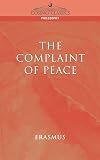
The Complaint of Peace
by Desiderius Erasmus
On This Page
Description
The Complaint of Peace grew from his reaction to his warlike times. His desire for peace permeates his work. The Complaint of Peace presents an oration by Lady Peace, who observes with sadness how unwelcome she is in all corners of Christendom, and builds to an appeal: “I appeal to all who call themselves Christians! I urge them, as they would manifest their sincerity, and preserve their consistency, to unite with one heart and one soul, in the abolition of war, and the establishment of show more perpetual and universal peace.” Now, 500 years later, Peace’s words still retain their relevance. show lessTags
Recommendations






















Member Reviews
Una pietra miliare nella storia del pacifismo europeo. Esiste un luogo in cui la pace sia, permanentemente, riuscita a perdurare? Ed esiste un tempo che non sia stato
funestato da guerre? Erasmo, padre dell’Europa moderna, è, per il suo impegno etico-civile, anche padre del pacifismo
moderno e post-moderno. È singolare come questo profondo conoscitore dell’animo umano resti, paradossalmente,
famoso ai più solo per l’Elogio della Follia.
Nel testo che qui si propone, la Querela Pacis, assimilabile all’Elogio per la personificazione della Pace, raminga e reietta
dai singoli e dalle nazioni, l’autore denuncia (e qui sta l’ambiguità anche di querela: lamento o querela?) l’iniquità dell’agire
umano, l’aberrazione rispetto a show more ogni legge, naturale e positiva, rispetto addirittura a una religione – quella cristiana – che
nella visione del mondo erasmiana dovrebbe perfezionare, con un ritorno filologico alle fonti sacre e pagane, l’uomo.
Parole forti e vere, quelle che Erasmo stampa nel 1517: una realtà purtroppo ancora attualissima.
Testo decisivo per il pacifismo contemporaneo, il Lamento della Pace (1517) fu steso nel contesto di un'Europa insanguinata da violenti conflitti armati tra gli Stati – compreso lo Stato della Chiesa –, ma divenne ben presto un vero e proprio manifesto etico-politico. Secondo il "principe degli umanisti", l'uomo potrà raggiungere una pace autentica e completa soltanto se mediterà e praticherà l'amore nei confronti del Creatore e di ogni creatura. Con vigore espressivo e nobiltà di pensiero non comuni, Erasmo parla anche al nostro tempo confuso e dilaniato da troppe guerre assurde: esule e violata forse come non mai, la sua Pace personificata continua a invocare una fratellanza universale che l'uomo postmoderno non pare tuttavia ancora in grado di vivere. show less
funestato da guerre? Erasmo, padre dell’Europa moderna, è, per il suo impegno etico-civile, anche padre del pacifismo
moderno e post-moderno. È singolare come questo profondo conoscitore dell’animo umano resti, paradossalmente,
famoso ai più solo per l’Elogio della Follia.
Nel testo che qui si propone, la Querela Pacis, assimilabile all’Elogio per la personificazione della Pace, raminga e reietta
dai singoli e dalle nazioni, l’autore denuncia (e qui sta l’ambiguità anche di querela: lamento o querela?) l’iniquità dell’agire
umano, l’aberrazione rispetto a show more ogni legge, naturale e positiva, rispetto addirittura a una religione – quella cristiana – che
nella visione del mondo erasmiana dovrebbe perfezionare, con un ritorno filologico alle fonti sacre e pagane, l’uomo.
Parole forti e vere, quelle che Erasmo stampa nel 1517: una realtà purtroppo ancora attualissima.
Testo decisivo per il pacifismo contemporaneo, il Lamento della Pace (1517) fu steso nel contesto di un'Europa insanguinata da violenti conflitti armati tra gli Stati – compreso lo Stato della Chiesa –, ma divenne ben presto un vero e proprio manifesto etico-politico. Secondo il "principe degli umanisti", l'uomo potrà raggiungere una pace autentica e completa soltanto se mediterà e praticherà l'amore nei confronti del Creatore e di ogni creatura. Con vigore espressivo e nobiltà di pensiero non comuni, Erasmo parla anche al nostro tempo confuso e dilaniato da troppe guerre assurde: esule e violata forse come non mai, la sua Pace personificata continua a invocare una fratellanza universale che l'uomo postmoderno non pare tuttavia ancora in grado di vivere. show less
Mar 27, 2012 (Edited)Italian
Ratings
Members
- Recently Added By
Author Information

610+ Works 10,311 Members
Desiderius Erasmus was born, probably in 1469, in Rotterdam, Holland. He studied in Paris, traveled in England, Germany, and Italy, and wrote in Latin. Living at the time of the Renaissance when most intellectual concepts were being examined, Erasmus was a great admirer of the ancient writers and edited many of their works. Erasmus remained a show more Roman Catholic, but believed that many of the priests and theologians had distorted the simple teachings of Jesus. He published an edition of the New Testament-the first edition in the original Greek-in order to make clear the essential teachings of Christianity. Erasmus liked above all things clear and honest thinking; he despised intolerance and persecution. He was the greatest of the humanists because his books, more effectively than any others, propagated a humane philosophy of life, teaching that one's chief duties are to be intelligent, open-minded, and charitable. The most famous and the most influential of Erasumus' books were The Praise of Folly (1509) and Colloquies (1518). These works, written in lively, colloquial, and witty Latin, expressed his ideas on the manners and customs of his time. Erasmus exerted a powerful influence not only through his books, but also through the private letters that he wrote to a great number of humanist scholars in all parts of Western Europe. He carried on extensive correspondences with Thomas More of England. More than 1500 of his letters survive today. Erasmus died in Basel, Switzerland, on July 12, 1536. (Bowker Author Biography) show less
Work Relationships
Common Knowledge
- Canonical title
- The Complaint of Peace
- Original title
- Querela pacis undique gentium eiectae profligataeque - Frobenius
- Alternate titles*
- Een christelycke noodtvendige clage des vreedts. - 1567
- Original publication date
- 1518
*Some information comes from Common Knowledge in other languages. Click "Edit" for more information.
Classifications
- Genres
- Nonfiction, Philosophy, Religion & Spirituality, History
- DDC/MDS
- 172.4 — Philosophy & psychology Ethics Political ethics International ethics - Peace and war
- LCC
- JX1942 .E78 — Political Science International law, see JZ and KZ (obsolete) International law, see JZ and KZ International arbitration, organization, etc.
- BISAC
Statistics
- Members
- 114
- Popularity
- 286,038
- Reviews
- 1
- Rating
- (3.89)
- Languages
- 10 — Dutch, English, Finnish, French, German, Hungarian, Italian, Latin, Spanish, Turkish
- Media
- Paper, Ebook
- ISBNs
- 27
- ASINs
- 4