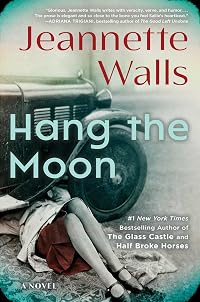
Hang the Moon
by Jeannette Walls
On This Page
Description
Sallie Kincaid is the daughter of the biggest man in a small town, the charismatic Duke Kincaid. Born at the turn of the 20th century into a life of comfort and privilege, Sallie remembers little about her mother who died in a violent argument with the Duke. By the time she is just eight years old, the Duke has remarried and had a son, Eddie. While Sallie is her father's daughter, sharp-witted and resourceful, Eddie is his mother's son, timid and cerebral. When Sallie tries to teach young show more Eddie to be more like their father, her daredevil coaching leads to an accident, and Sallie is cast out. Nine years later, she returns, determined to reclaim her place in the family. That's a lot more complicated than Sallie expected, and she enters a world of conflict and lawlessness. Sallie confronts the secrets and scandals that hide in the shadows of the Big House, navigates the factions in the family and town, and finally comes into her own as a bold, sometimes reckless bootlegger. show lessTags
Recommendations



Member Reviews
I was worried, going in, that moonshining was going to be glamorized in this book. It wouldn't be the first time; our distance from it, historically, has let a lot of people become ignorant of the bloody history of it all, and when movies and TV portray bootleggers, they often strip away most of the violence. (I have firsthand stories from my own grandfather that pulled no such punches, and hearing them gave me chills.) Happily, while the moonshiners in this book were not demonized, the violent lengths to which they were willing to go were also clearly depicted. I very much appreciated that, along with the skill the writer used to tread that line.
There was much left up in the air at the end, and many questions were left unanswered, but show more I still felt the ending was satisfying without being unrealistically neat. Did Sally eventually marry? Did the fighting between factions settle? I don't know, but the book concluded at a good place in the timeline, allowing for the future to be spun out in the reader's head. I left the book feeling happy to have read it (not synonymous with being made happy by the story itself, but in this case both were true), and I hope it receives wide readership. show less
There was much left up in the air at the end, and many questions were left unanswered, but show more I still felt the ending was satisfying without being unrealistically neat. Did Sally eventually marry? Did the fighting between factions settle? I don't know, but the book concluded at a good place in the timeline, allowing for the future to be spun out in the reader's head. I left the book feeling happy to have read it (not synonymous with being made happy by the story itself, but in this case both were true), and I hope it receives wide readership. show less
In Hang The Moon, Jeanette Walls tells the story of Sallie Mae Kincaid, daughter of the Duke, the head of the clan and the unofficial ruler of Claiborne County, Virginia. Set in 1930s in the western mountains, Walls paints a compelling portrait of life in this hardscrabble world. Sent away to live with an impoverished relative and relegated to washing sheets when her father marries for the third time, Sallie Mae longs to return to her small town. Despite her exile, Sallie Mae loves and respects her father, and when she does return, follows his leadership style as events push her to the forefront of the town. She is indomitable and vulnerable all at the same time and I was cheering her on as she found ways to support and protect her show more community in the face of outside attacks.
Walls has created a world for the reader and I was drawn in to the place, time and people. We learn about the politics of a small town even as Sallie Mae is learning a new way to navigate her world. We ride along with moonshiners on winding mountain roads. And, we grieve for those who are lost for there is much sadness and grief in this book often caused by family pride and resentment. At the heart it is a story of Sallie Mae and the strong women who do the best they can despite all the poverty and heartache they encounter.
I was provided an advance copy of this book via Net Galley in exchange for an honest review. show less
Walls has created a world for the reader and I was drawn in to the place, time and people. We learn about the politics of a small town even as Sallie Mae is learning a new way to navigate her world. We ride along with moonshiners on winding mountain roads. And, we grieve for those who are lost for there is much sadness and grief in this book often caused by family pride and resentment. At the heart it is a story of Sallie Mae and the strong women who do the best they can despite all the poverty and heartache they encounter.
I was provided an advance copy of this book via Net Galley in exchange for an honest review. show less
Hang the Moon by Jeanette Walls
Sallie Kincaid is born into privilege, growing up as the daughter of the richest man in town, and dreaming of becoming the fastest girl in the world each time she drives. But after an accident where Sallie is indirectly at fault for injuring her brother, she is sent away and must learn to work for all she has. Returning to her ancestral home nine years later, Sallie relies on her inner strength as death hounds her family. In a slice of country where the citizens make the laws, she proves herself to be a leader. A fiery and fierce woman who is unafraid to break conventions and happier to embrace a gun than a groom, Sallie is a heroine who feels more suited to modern times than the early twentieth century. show more
The biggest problem with this book is that it never settles into being one clear thing: one moment it feels like a Western, with significant standoffs and shootouts, and the next second it’s a family drama, hinging on affairs, marriages, and wills. An enormous amount of action is contained within each chapter, at times with circumstances becoming curiously coincidental and undoubtedly dubious. The laws of realism are bent so far that they begin to break. Still, it’s assuredly well researched, with Walls being inspired by real life bootleggers like Willie Carter Sharpe, and drawing on the dramas of the Tudor family for parallel theatrics between her central characters. Hang the Moon is ultimately an American epic, offering spectacle, spirit, and passion. show less
Sallie Kincaid is born into privilege, growing up as the daughter of the richest man in town, and dreaming of becoming the fastest girl in the world each time she drives. But after an accident where Sallie is indirectly at fault for injuring her brother, she is sent away and must learn to work for all she has. Returning to her ancestral home nine years later, Sallie relies on her inner strength as death hounds her family. In a slice of country where the citizens make the laws, she proves herself to be a leader. A fiery and fierce woman who is unafraid to break conventions and happier to embrace a gun than a groom, Sallie is a heroine who feels more suited to modern times than the early twentieth century. show more
The biggest problem with this book is that it never settles into being one clear thing: one moment it feels like a Western, with significant standoffs and shootouts, and the next second it’s a family drama, hinging on affairs, marriages, and wills. An enormous amount of action is contained within each chapter, at times with circumstances becoming curiously coincidental and undoubtedly dubious. The laws of realism are bent so far that they begin to break. Still, it’s assuredly well researched, with Walls being inspired by real life bootleggers like Willie Carter Sharpe, and drawing on the dramas of the Tudor family for parallel theatrics between her central characters. Hang the Moon is ultimately an American epic, offering spectacle, spirit, and passion. show less
Hang the Moon by Jeannette Walls is a very highly recommended historical fiction and family drama which follows a young woman in Virginia during Prohibition.
Sallie Kincaid is the daughter Duke Kincaid, a wealthy man who owns or runs most of Claiborne County, Virginia. At the Emporium general store he owes, the Duke also sells bootleg whiskey he has received in lieu of rent. Sallie is the daughter of his second wife, who is deceased. She adores her father and his bigger than life personality. His third wife, Jane has a son, Eddie. When she is eight-years-old an accident involving three-year-old Eddie results in, at the behest of Jane, the Duke banishing Sallie to go live with her Aunt Faye.
Nine years later, Jane has died and Sallie is show more immediately brought back into the family by Duke, ostensibly to teach Eddie. Now, however, Sallie understands more of the world full of secrets, conflicts, and scandals around her and her family. She is determined to never marry and make her own way into the family rental property and bootlegging empire, while navigating the conflicts. Duke quickly marries his fourth wife and life becomes much more complicated following this decision.
The writing is wonderful and the plot is compelling. I was fully engaged in this family drama and the many surprising turns and the surprising revelations within the narrative. There is a tangle of family intrigue, complications, questionable morals, and hidden secrets in Hang the Moon. Even when the many complexities seem to be over the top, the fact that the plot was inspired by the life of Elizabeth I of England, daughter of Henry VIII makes it even better. History buffs will be able to pick up on the similarities to Tudor England.
Sallie is a great fully realized, intelligent, and complex character. Walls portrays both her strengths and weaknesses. She can be fearless, reckless, stubborn, and outspoken, but she is also damaged. Due to the many characters, not all of them are as developed as Sallie, but they all still resemble real people with very different personalities and proclivities.
Disclosure: My review copy was courtesy of Scribner via NetGalley.
http://www.shetreadssoftly.com/2023/03/hang-moon.html show less
Sallie Kincaid is the daughter Duke Kincaid, a wealthy man who owns or runs most of Claiborne County, Virginia. At the Emporium general store he owes, the Duke also sells bootleg whiskey he has received in lieu of rent. Sallie is the daughter of his second wife, who is deceased. She adores her father and his bigger than life personality. His third wife, Jane has a son, Eddie. When she is eight-years-old an accident involving three-year-old Eddie results in, at the behest of Jane, the Duke banishing Sallie to go live with her Aunt Faye.
Nine years later, Jane has died and Sallie is show more immediately brought back into the family by Duke, ostensibly to teach Eddie. Now, however, Sallie understands more of the world full of secrets, conflicts, and scandals around her and her family. She is determined to never marry and make her own way into the family rental property and bootlegging empire, while navigating the conflicts. Duke quickly marries his fourth wife and life becomes much more complicated following this decision.
The writing is wonderful and the plot is compelling. I was fully engaged in this family drama and the many surprising turns and the surprising revelations within the narrative. There is a tangle of family intrigue, complications, questionable morals, and hidden secrets in Hang the Moon. Even when the many complexities seem to be over the top, the fact that the plot was inspired by the life of Elizabeth I of England, daughter of Henry VIII makes it even better. History buffs will be able to pick up on the similarities to Tudor England.
Sallie is a great fully realized, intelligent, and complex character. Walls portrays both her strengths and weaknesses. She can be fearless, reckless, stubborn, and outspoken, but she is also damaged. Due to the many characters, not all of them are as developed as Sallie, but they all still resemble real people with very different personalities and proclivities.
Disclosure: My review copy was courtesy of Scribner via NetGalley.
http://www.shetreadssoftly.com/2023/03/hang-moon.html show less
What a wild ride! Sallie Kincaid’s colorful family offers one surprise after another. Her daddy, the Duke, was married three times, and was a ladies man. Sallie adored her father. She thought he had ‘hung the moon and scattered the stars.’ Her daddy taught her to be the “fastest woman on earth,” riding her wagon down the steep hill. When she takes her step-brother on a ride and he is hurt, her step-mom insisted that Sallie be sent away. Sallie spent nine years with her aunt in poverty, barely making ends meet. With the step-mom’s death, the Duke takes Sallie back, tasked with caring for his motherless son.
The Duke runs the county. He owns the land and rents to farmers, taking the rent in trade, the products sold in his show more store. Mostly, that trade is moonshine whiskey, which is in great demand during Prohibition. The Duke is also into politics. His brother-in-law is sheriff. The Duke is coldly ruthless when he needs to be, and dispenses justice as he sees fit. After all, the federal government is a long way away. On the good side, he is fair, and helps those in need.
The book is a hoot, a page-turner, with a strong young woman at the center, learning her way in the world, taking it on headlong. As tragedy after tragedy rends the family, Sallie takes on her father’s work, standing up to a rival family with a long memory. She is fearless, a survivor, her daddy’s true heir. Doing what needs to be done takes her into a dark place, and she realizes that she must find a better path.
Sallie learns about love and the unreliability of men, both from the woman around her and through personal experience. She has a big heart, and incorporates abandoned women and children into her household.
There are two kinds of family, those you’re born into and those you put together from the pieces that don’t go anywhere else, and this is one of those families.
from Hang the Moon by Jeanette Walls
Walls’s story was inspired by actual people and events.
I previously read Jeanette Wall’s memoir The Glass Castle and her “true life novel” Half Broke Horses.
Thanks for the publisher for a free book through NetGalley in exchange for a fair and unbiased review show less
The Duke runs the county. He owns the land and rents to farmers, taking the rent in trade, the products sold in his show more store. Mostly, that trade is moonshine whiskey, which is in great demand during Prohibition. The Duke is also into politics. His brother-in-law is sheriff. The Duke is coldly ruthless when he needs to be, and dispenses justice as he sees fit. After all, the federal government is a long way away. On the good side, he is fair, and helps those in need.
The book is a hoot, a page-turner, with a strong young woman at the center, learning her way in the world, taking it on headlong. As tragedy after tragedy rends the family, Sallie takes on her father’s work, standing up to a rival family with a long memory. She is fearless, a survivor, her daddy’s true heir. Doing what needs to be done takes her into a dark place, and she realizes that she must find a better path.
Sallie learns about love and the unreliability of men, both from the woman around her and through personal experience. She has a big heart, and incorporates abandoned women and children into her household.
There are two kinds of family, those you’re born into and those you put together from the pieces that don’t go anywhere else, and this is one of those families.
from Hang the Moon by Jeanette Walls
Walls’s story was inspired by actual people and events.
I previously read Jeanette Wall’s memoir The Glass Castle and her “true life novel” Half Broke Horses.
Thanks for the publisher for a free book through NetGalley in exchange for a fair and unbiased review show less
Walls revisits a recurring theme here, with a young woman, essentially motherless, who is thrust by circumstance into a culturally unexpected role, and meets it with grit and determination.
Sallie Kincaid’s mother dies (under circumstances no one is allowed to discuss) when Sallie is little more than a toddler. She’s then banished to live with an aunt a few years later when a childish adventure inadvertently injures her young stepbrother, summoned back only on her stepmother’s death, years later. But the anticipated joyous homecoming with the father she worships is soured when his only welcome is to instruct her to “make a Kincaid” out of the timid, music-loving teen.
Things never really slow down in this tale, as death, family show more feuds, and unexpected pregnancies erupt, and the passage of the 18th Amendment upends the economy of the rural southern county Duke Kincaide had treated as his personal fiefdom. By this time, Sallie is the de facto, if not the legally-empowered heir to the Kincaid business empire, and she finds herself backed into corner after corner in a time and place when women were not expected – and frequently not allowed – to do what was considered “a man’s job”.
Walls has drawn on a number of historical incidents from the region during the Prohibition era, and she has also underlaid her story with a far older saga. Some readers will quickly pick it up; others may never see it. For this reader, once seen, it couldn’t be unseen, and it wavered between being a distraction and being a spoiler.
Sallie’s adventures at time border on the unbelievable, particularly given her youth and inexperience when she is thrust into a role she thought she wanted. How she comes, first, to assume it and, ultimately, to question its value, are the most emotionally complex of the many threads running through the work show less
Sallie Kincaid’s mother dies (under circumstances no one is allowed to discuss) when Sallie is little more than a toddler. She’s then banished to live with an aunt a few years later when a childish adventure inadvertently injures her young stepbrother, summoned back only on her stepmother’s death, years later. But the anticipated joyous homecoming with the father she worships is soured when his only welcome is to instruct her to “make a Kincaid” out of the timid, music-loving teen.
Things never really slow down in this tale, as death, family show more feuds, and unexpected pregnancies erupt, and the passage of the 18th Amendment upends the economy of the rural southern county Duke Kincaide had treated as his personal fiefdom. By this time, Sallie is the de facto, if not the legally-empowered heir to the Kincaid business empire, and she finds herself backed into corner after corner in a time and place when women were not expected – and frequently not allowed – to do what was considered “a man’s job”.
Walls has drawn on a number of historical incidents from the region during the Prohibition era, and she has also underlaid her story with a far older saga. Some readers will quickly pick it up; others may never see it. For this reader, once seen, it couldn’t be unseen, and it wavered between being a distraction and being a spoiler.
Sallie’s adventures at time border on the unbelievable, particularly given her youth and inexperience when she is thrust into a role she thought she wanted. How she comes, first, to assume it and, ultimately, to question its value, are the most emotionally complex of the many threads running through the work show less
Hang the Moon, Jeanette Walls, author and narrator
This is a story that is taken from pieces of American history, but it didn’t always feel quite realistic enough or authentic to me. Still, it did capture my interest, even though, at times, it felt like a fairytale. Every tragedy seemed to turn into a teaching moment for the main character, Sallie Kincaid, and ultimately, as she examined the ramifications of each event affecting her, she pulled victory from the jaws of defeat and provided a positive result. That theme required the suspension of disbelief, since a grown man or woman would have had a hard time accomplishing what this untried and unprepared teenager did, when faced with her family trials and the conflicts of the troubled show more times.
The novel takes place in the hills of Virginia, in Claiborne County, shortly after WWI. In the 1920’s, the Kincaid family has a little fiefdom currently ruled by Sallie’s father who was known as The Duke. Although it is a time of Prohibition, there are “stills” operating with abandon. They support the hill people who live there. The Kincaid family, and their appointed sheriff, turn a blind eye to the criminal activity. Their excuse is that they are doing what they have to do to take care of the people in their community, and those people are doing what they have to do to provide for their families. The Kincaids are the most influential and wealthy people in the county. Through them, the novel highlights the lack of women’s rights and civil rights, and the elitism of the times that separates the classes from each other. The Kincaid family is a conglomeration of relatives, husband and wives, children and servants that are all related in some fashion to each other, some directly, some by a thread, some secretly and some openly. It seems the patriarch’s fidelity to his women left a lot to be desired.
In these times, about a century in the past, men held dominion over women. Women could not inherit, vote or engage in business. They were beholden to a man for their survival. Often, the men were disloyal, demanding and abusive. Sallie Kincaid was never going to be able to stand for that. As a teenager, she defined herself as a Kincaid, like her father, the leader of the Kincaids, the man they called The Duke. He did not back down, and so neither does she. He did what was necessary, but often listened to the advice of his counsel. However, he always had to win. She wanted to be just like him. Sallie wanted to work, not to marry. She wanted to be independent, not reliant on a husband who did as he pleased, leaving her helpless.
The family secrets are kept hidden, the illicit behavior is secret, and the offspring often did not even know each other. As death comes to the family, from all corners of the imagination, from unnecessary risks, from murder, suicide, disease and other circumstances, several hidden ancestors are revealed, and as heir after heir assumes control of the family dynasty, different rules are put into place according to the individual beliefs of the current property owner and manager of the family businesses. Sometimes, slights that were real or imagined, motivated these people. These folk, often called hillbillies, have their own way of dealing with life and the laws made by politicians who have no knowledge of how they survive. There is US law and there is Kincaid law. In Claiborne County, it is Kincaid law.
Sallie’s father ruled with an iron hand. What he said was the only law. His brother-in-law was the sheriff and he upheld the Kincaid rule of law. The Duke did what he had to do to keep his family and community safe. He bent the rules. The Kincaids and the Bonds had a family feud that had gone on for decades over what was perceived as a land grab. The Bonds felt the land was stolen and the Kincaids felt they had paid a fair price for it. These differences of opinion often fuel violence and unrest. Eventually Claiborne County catches the national interest, and Sallie becomes known as the Queen of the Rumrunners. The likelihood of a teenage girl running an elicit family business at a time when females have no power, simply felt out of the realm of possibility to me, even if some of the circumstances described were based on historic events.
Although I read it until the end, something about the novel did not draw me in completely. There was a lot of romance, coupled with the violence and many civil rights issues in the story, but often, the lighter romantic issues overcame the history and the lawlessness of the times. No one theme was stressed enough to truly invite me to explore it further. At the end, I felt that the author’s main theme was the idea that women were far more capable than men believed they were, and they were, as a matter of fact, able and ready to perform similar duties. The men were toxic, disloyal, greedy and dishonest. Regardless of how the women behaved, however, it was deemed to be alright because they were doing what they had to do, while the men were always doing the wrong thing to prevent women from having their own voice, and they used them at will.
Sometimes overtly, and sometimes subtly, the author has included all of her ideas about all of society’s ills. Homosexuality, infidelity, poverty, racism, religious fanaticism, class and elitism, toxic masculinity, wanton women, crime, violence, law and order, and political corruption are just some of the ideas presented in a tangential way, but have a great influence on the direction of the narrative.
The author read the audio book well, but it seemed geared to a young adult audience, from her tone and expression, which often sounded like that of a child. Also, its concentration on romantic interludes, betrayal and its consequences, led the story to be less about the important rights issues and more about trifling flings that had devastating consequences. Sally Kincaid, a woman who was strong minded, makes for an interesting character, but I found her strength was actually a weakness. Although she carried herself with this air of bravado, she seemed to lack the moral courage, most of the time, to do what was right, and instead, she did what was necessary and defined her behavior as the model of the Duke’s.
Most of the characters seemed to be of poor character. I didn’t really have any favorite, and I disliked most. Sallie adored her father and conducted her business and herself using him as her example. She soon discovered, however, that her idol had clay feet. He was a selfish man who took what he wanted out of life regardless of those he left behind. Finally, she fears that she is just like him, just like the people she does not respect and condemns. She discovers that making decisions based on necessity and loyalty, often means making a selfish decision, or an amoral one. Sallie needed to learn who she was in order to move forward with her life after many traumatic experiences and tragedies. I was left with many questions. How will Sallie’s life turn out in the future? Will she be able to rebuild it, restore the dynasty, and continue to protect her community? In what direction will her life take her? Will she marry one day and raise a family? Perhaps there will be a sequel to this book.
At its core, this seems to be a novel about issues of what is right and wrong, seeking revenge or forgiveness, granting freedom or continuing oppression, providing equal rights and equal justice or perpetuating a system of injustice and political corruption. In the end, the big question for me was this: have we moved forward or is society still involved in deciding those issues and still failing to improve itself? show less
This is a story that is taken from pieces of American history, but it didn’t always feel quite realistic enough or authentic to me. Still, it did capture my interest, even though, at times, it felt like a fairytale. Every tragedy seemed to turn into a teaching moment for the main character, Sallie Kincaid, and ultimately, as she examined the ramifications of each event affecting her, she pulled victory from the jaws of defeat and provided a positive result. That theme required the suspension of disbelief, since a grown man or woman would have had a hard time accomplishing what this untried and unprepared teenager did, when faced with her family trials and the conflicts of the troubled show more times.
The novel takes place in the hills of Virginia, in Claiborne County, shortly after WWI. In the 1920’s, the Kincaid family has a little fiefdom currently ruled by Sallie’s father who was known as The Duke. Although it is a time of Prohibition, there are “stills” operating with abandon. They support the hill people who live there. The Kincaid family, and their appointed sheriff, turn a blind eye to the criminal activity. Their excuse is that they are doing what they have to do to take care of the people in their community, and those people are doing what they have to do to provide for their families. The Kincaids are the most influential and wealthy people in the county. Through them, the novel highlights the lack of women’s rights and civil rights, and the elitism of the times that separates the classes from each other. The Kincaid family is a conglomeration of relatives, husband and wives, children and servants that are all related in some fashion to each other, some directly, some by a thread, some secretly and some openly. It seems the patriarch’s fidelity to his women left a lot to be desired.
In these times, about a century in the past, men held dominion over women. Women could not inherit, vote or engage in business. They were beholden to a man for their survival. Often, the men were disloyal, demanding and abusive. Sallie Kincaid was never going to be able to stand for that. As a teenager, she defined herself as a Kincaid, like her father, the leader of the Kincaids, the man they called The Duke. He did not back down, and so neither does she. He did what was necessary, but often listened to the advice of his counsel. However, he always had to win. She wanted to be just like him. Sallie wanted to work, not to marry. She wanted to be independent, not reliant on a husband who did as he pleased, leaving her helpless.
The family secrets are kept hidden, the illicit behavior is secret, and the offspring often did not even know each other. As death comes to the family, from all corners of the imagination, from unnecessary risks, from murder, suicide, disease and other circumstances, several hidden ancestors are revealed, and as heir after heir assumes control of the family dynasty, different rules are put into place according to the individual beliefs of the current property owner and manager of the family businesses. Sometimes, slights that were real or imagined, motivated these people. These folk, often called hillbillies, have their own way of dealing with life and the laws made by politicians who have no knowledge of how they survive. There is US law and there is Kincaid law. In Claiborne County, it is Kincaid law.
Sallie’s father ruled with an iron hand. What he said was the only law. His brother-in-law was the sheriff and he upheld the Kincaid rule of law. The Duke did what he had to do to keep his family and community safe. He bent the rules. The Kincaids and the Bonds had a family feud that had gone on for decades over what was perceived as a land grab. The Bonds felt the land was stolen and the Kincaids felt they had paid a fair price for it. These differences of opinion often fuel violence and unrest. Eventually Claiborne County catches the national interest, and Sallie becomes known as the Queen of the Rumrunners. The likelihood of a teenage girl running an elicit family business at a time when females have no power, simply felt out of the realm of possibility to me, even if some of the circumstances described were based on historic events.
Although I read it until the end, something about the novel did not draw me in completely. There was a lot of romance, coupled with the violence and many civil rights issues in the story, but often, the lighter romantic issues overcame the history and the lawlessness of the times. No one theme was stressed enough to truly invite me to explore it further. At the end, I felt that the author’s main theme was the idea that women were far more capable than men believed they were, and they were, as a matter of fact, able and ready to perform similar duties. The men were toxic, disloyal, greedy and dishonest. Regardless of how the women behaved, however, it was deemed to be alright because they were doing what they had to do, while the men were always doing the wrong thing to prevent women from having their own voice, and they used them at will.
Sometimes overtly, and sometimes subtly, the author has included all of her ideas about all of society’s ills. Homosexuality, infidelity, poverty, racism, religious fanaticism, class and elitism, toxic masculinity, wanton women, crime, violence, law and order, and political corruption are just some of the ideas presented in a tangential way, but have a great influence on the direction of the narrative.
The author read the audio book well, but it seemed geared to a young adult audience, from her tone and expression, which often sounded like that of a child. Also, its concentration on romantic interludes, betrayal and its consequences, led the story to be less about the important rights issues and more about trifling flings that had devastating consequences. Sally Kincaid, a woman who was strong minded, makes for an interesting character, but I found her strength was actually a weakness. Although she carried herself with this air of bravado, she seemed to lack the moral courage, most of the time, to do what was right, and instead, she did what was necessary and defined her behavior as the model of the Duke’s.
Most of the characters seemed to be of poor character. I didn’t really have any favorite, and I disliked most. Sallie adored her father and conducted her business and herself using him as her example. She soon discovered, however, that her idol had clay feet. He was a selfish man who took what he wanted out of life regardless of those he left behind. Finally, she fears that she is just like him, just like the people she does not respect and condemns. She discovers that making decisions based on necessity and loyalty, often means making a selfish decision, or an amoral one. Sallie needed to learn who she was in order to move forward with her life after many traumatic experiences and tragedies. I was left with many questions. How will Sallie’s life turn out in the future? Will she be able to rebuild it, restore the dynasty, and continue to protect her community? In what direction will her life take her? Will she marry one day and raise a family? Perhaps there will be a sequel to this book.
At its core, this seems to be a novel about issues of what is right and wrong, seeking revenge or forgiveness, granting freedom or continuing oppression, providing equal rights and equal justice or perpetuating a system of injustice and political corruption. In the end, the big question for me was this: have we moved forward or is society still involved in deciding those issues and still failing to improve itself? show less
Members
- Recently Added By
Lists

In and About the 1920s
181 works; 31 members

ALA Reading List: Historical Fiction 2021-2026
30 works; 4 members

Family Drama
56 works; 14 members

Books Read in 2023
5,547 works; 145 members

Dysfunctional Families
133 works; 7 members

Books I have Recommended
207 works; 1 member

Books Read in 2024
4,623 works; 126 members

Family Dynamics
12 works; 1 member
Author Information

12+ Works 31,873 Members
Jeannette Walls was born in Phoenix, Arizona on April 21, 1960. She graduated from Barnard College and was a journalist in New York City for twenty years. Her books include a memoir entitled The Glass Castle and several novels including Half Broke Horses and The Silver Star. (Bowker Author Biography)
Awards and Honors
Awards
Distinctions
Notable Lists
Common Knowledge
- Canonical title
- Hang the Moon
- Original title
- Hang the Moon: A Novel
- Original publication date
- 2023-03-28
- People/Characters
- Sallie Kincaid; Henry “Hank” Edward Kincaid aka the Duke; Ann Powell Kincaid; Jane Kincaid; Eddie Kincaid; Faye Powell (show all 25); Tom Dunbar; Matilda “Mattie” Kincaid Johnson; Katherine “Kat” Howard Kincaid; Seymour Johnson; Earl Johnson; Cecil Dunbar; Mary Montgomery Kincaid Canon; Phillip Canon; Nell Porter; Grace; Abraham Crockett; Gloria Crockett; Glen Lowe; Clara Lowe; Douglas Rawley; Billy Bond; Georgette Rheims; Gustav Rheims; Jake
- Important places
- Caywood, Virginia, USA; Hatfield, Virginia, USA; Roanoke, Virginia, USA; Claiborne County, Virginia
- Epigraph
- I know I have the body of a weak and feeble woman,
but I have the heart and stomach of a king.
Queen Elizabeth I, 1588, rallying her troops for the arrival of the Spanish Armada
Quality? Hell, the only time our whiskey aged was when we got a flat tire.
Rex Walls, the author's father, who ran bootleg liquor in the late 1940s and early 1950s - Dedication
- To John. When I was lost, he helped me find the way.
- First words
- The fastest girl in the world. That' what I'm going to be.
- Quotations
- So most things you can't see in the dark, but other things —like stars—you can only see in the dark. That's what I've been doing since the Duke died, sitting in the darkness waiting for whatever has its own light to show ... (show all)itself.
“When you can't solve a problem and you can't run from it and you can't hide from it, you got to make it the other man's problem.” - Last words
- (Click to show. Warning: May contain spoilers.)And sometimes—-when you're standing in the right place and your heart's willing and a little baby comes hurling down at you from out of the sky—-sometimes you even save the things you love.
- Blurbers
- Trigiani, Adriana; McCurdy, Jeannette; Richardson, Kim Michele
Classifications
Statistics
- Members
- 1,229
- Popularity
- 20,108
- Reviews
- 45
- Rating
- (3.72)
- Languages
- English, German
- Media
- Paper, Audiobook, Ebook
- ISBNs
- 18
- ASINs
- 5