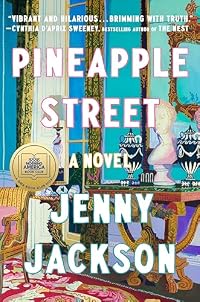
Pineapple Street
by Jenny Jackson
On This Page
Description
"A deliciously funny, sharply observed novel of family, wealth, love and tennis, this zeitgeisty debut follows three women in an old Brooklyn Heights clan: one who was born with money, one who married into it, and one, the millennial conscience of the family, who wants to give it all away. Darley, the eldest daughter in the Stockton family, has never worried about money. The product of generational wealth and capitalist success, Darley renounced her inheritance when she married Malcolm, a show more first generation Korean American with a lucrative job in banking. Sasha, Darley's new sister-in-law, has come from more humble origins, and her hesitancy about signing a pre-nup has everyone worried about her intentions. Georgiana, newly graduated from Brown and proud to think of herself as a "do-gooder," has enough money from her trust that she's able to work for a pittance at a not-for-profit, where she has started a secret love affair with a senior colleague. But when a scandal derails Malcolm's career, leaving Darley financially in the lurch, when Sasha glimpses the less-than-attractive attributes beneath the Stockton brood's carefully-guarded façade, and when Georgiana discovers her boyfriend is married and still in love with his wife, they must all come to terms with what money can't buy--the bonds of love that can make and unmake a family. Rife with the indulgent pleasures of affluent WASPS in New York and full of recognizable if fallible characters (and a couple of appalling ones!), it's about the peculiar unknowability of someone else's family, about the haves and have-nots and the nuances in between, and the insanity of first love--Pineapple Street is a scintillating, wryly comic novel of race, class, wealth and privilege in an age that disdains all of it"-- show lessTags
Recommendations
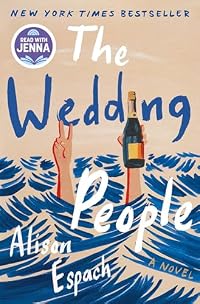
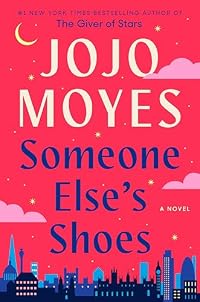
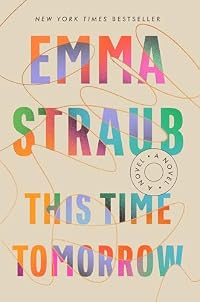
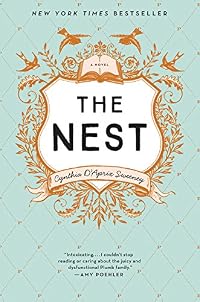



Member Reviews
This was a very skillfully written novel that was addictive, laugh out loud funny, poignant, and (to middle class me) a fascinating peek into the world of the uber-wealthy.
It rang true throughout and I loved her excellent renderings of each character. I was grateful that, while it would have been so easy (and probably popular) to turn some of them into clichés, she never did.
And thank you, also, Ms. Jackson, for dividing up the chapters by character without ricocheting us through multiple first person accounts.
In fact, I am pretty sick of modern fiction's overuse (imho) of the first person. This novel proves you DON'T have to do that in order to make characters vibrant, sympathetic, and believable.
I found myself going back after I'd show more finally gobbled down the last page, just to randomly open the pages and savor again some of her wonderful turns of phrase, vigorous use of language and description, and her compact and powerful imagery.
Not life-changing for me, hence not 5 stars, but a breath of fresh air in the current, often dreary contemporary fiction landscape. show less
It rang true throughout and I loved her excellent renderings of each character. I was grateful that, while it would have been so easy (and probably popular) to turn some of them into clichés, she never did.
And thank you, also, Ms. Jackson, for dividing up the chapters by character without ricocheting us through multiple first person accounts.
In fact, I am pretty sick of modern fiction's overuse (imho) of the first person. This novel proves you DON'T have to do that in order to make characters vibrant, sympathetic, and believable.
I found myself going back after I'd show more finally gobbled down the last page, just to randomly open the pages and savor again some of her wonderful turns of phrase, vigorous use of language and description, and her compact and powerful imagery.
Not life-changing for me, hence not 5 stars, but a breath of fresh air in the current, often dreary contemporary fiction landscape. show less
Maybe 3.5? Fast moving, entertaining, and impressive debut. We are talking about 1-percenters here - I often have trouble understanding and really conceptualizing that kind of wealth. Funny thing - if this book and others like it (The Nest, e.g.) are accurate, they have just as much trouble understanding all of 'us.' This is old family money in the Stockton situation: parents Tilda and Chip have inherited from their parents and will pass on to their children: Darley, Cord, and Georgiana who is a good deal younger than her older sibs. Darley is happily married to Malcolm and they have two kids. Rather than ask him to sign a pre-nup, she put her family money in a trust that bypasses her and goes straight to her children. Cord married show more Sasha, who is 'middle class' and was not happy about signing the pre-nup. She is also not happy about living in her in-laws old family home with all their crap. Tilda and Chip 'downsized' and offered the place to Cord, who was thrilled. But all the old musty heirlooms dominate the space and though they don't live there any more, they don't want anything changed. (this is also their M.O. for life). Georgiana is an immature 20-something who works for a not-for-profit that tries to set up self-sustaining medical care in developing countries. She is in charge of social media, and the newsletter and has a crush on her co-worker Brady. Each character gets their own chapters, so we get a lot of their inner thoughts about their lives and each other. Sasha is the most likeable, because she is the most relatable - baffled by the wealth and unspoken customs that go with it. Darley and Georgiana become likeable as the story progresses because of what happens to them in the course of the story. None of them are truly bad people - just so clueless about how the world works when it is not cushioned by cash. To be fair, the younger generation is better than the Tilda and Chip generation. The author was inspired by an NYT piece that featured a millennial 1-percenter giving up his family wealth and that theme appears here too. Slowly the idea is dawning (on the young characters at least) that no one should have a billion dollars to their name. Overall, well done in the way wealth is examined and in many instances satirized. show less
Pineapple Street is a witty, sharply observed, and surprisingly relatable novel about life, privilege, and identity among New York’s ultra-wealthy. Told through the perspectives of three women connected by one wealthy Brooklyn Heights family, the story offers a fresh, layered look at what it really means to belong—and what it costs to stay comfortable.
Two of the women, Darley and Georgiana, are daughters of old money, raised in the rarefied world of generational wealth. The third, Sasha, is the daughter-in-law—married to the only son, and perpetually feeling like an outsider. For me, Sasha was an absolute standout. She’s smart, grounded, and refreshingly self-aware. Honestly? She’s my spirit animal.
The novel is both funny and show more emotionally sharp, filled with ironic moments that feel incredibly true, even in the midst of extravagant wealth. Jenny Jackson nails the tension between family loyalty and personal growth, and she does it with warmth, humor, and pitch-perfect prose.
I adored this book and have already recommended it to all of my book-loving friends. If you’re into character-driven fiction with heart, humor, and social commentary, Pineapple Street is a must-read. show less
Two of the women, Darley and Georgiana, are daughters of old money, raised in the rarefied world of generational wealth. The third, Sasha, is the daughter-in-law—married to the only son, and perpetually feeling like an outsider. For me, Sasha was an absolute standout. She’s smart, grounded, and refreshingly self-aware. Honestly? She’s my spirit animal.
The novel is both funny and show more emotionally sharp, filled with ironic moments that feel incredibly true, even in the midst of extravagant wealth. Jenny Jackson nails the tension between family loyalty and personal growth, and she does it with warmth, humor, and pitch-perfect prose.
I adored this book and have already recommended it to all of my book-loving friends. If you’re into character-driven fiction with heart, humor, and social commentary, Pineapple Street is a must-read. show less
Pineapple Street is a witty, sharply observed, and surprisingly relatable novel about life, privilege, and identity among New York’s ultra-wealthy. Told through the perspectives of three women connected by one wealthy Brooklyn Heights family, the story offers a fresh, layered look at what it really means to belong—and what it costs to stay comfortable.
Two of the women, Darley and Georgiana, are daughters of old money, raised in the rarefied world of generational wealth. The third, Sasha, is the daughter-in-law—married to the only son, and perpetually feeling like an outsider. For me, Sasha was an absolute standout. She’s smart, grounded, and refreshingly self-aware. Honestly? She’s my spirit animal.
The novel is both funny and show more emotionally sharp, filled with ironic moments that feel incredibly true, even in the midst of extravagant wealth. Jenny Jackson nails the tension between family loyalty and personal growth, and she does it with warmth, humor, and pitch-perfect prose.
I adored this book and have already recommended it to all of my book-loving friends. If you’re into character-driven fiction with heart, humor, and social commentary, Pineapple Street is a must-read. show less
Two of the women, Darley and Georgiana, are daughters of old money, raised in the rarefied world of generational wealth. The third, Sasha, is the daughter-in-law—married to the only son, and perpetually feeling like an outsider. For me, Sasha was an absolute standout. She’s smart, grounded, and refreshingly self-aware. Honestly? She’s my spirit animal.
The novel is both funny and show more emotionally sharp, filled with ironic moments that feel incredibly true, even in the midst of extravagant wealth. Jenny Jackson nails the tension between family loyalty and personal growth, and she does it with warmth, humor, and pitch-perfect prose.
I adored this book and have already recommended it to all of my book-loving friends. If you’re into character-driven fiction with heart, humor, and social commentary, Pineapple Street is a must-read. show less
Pineapple Street is a fascinating look at the upper-crust Stockton family. Their money is old money. They are self-pronounced typical WASPs and are not quite ready for their millennial children to question their values and long-proven lifestyle choices.
Tilda and Chip Stockton are the parents of Darley, Cord, and Georgiana. Cord and his wife Sasha live in the family home in Brooklyn Heights in the prestigious fruit streets on Pineapple Street. Since Sasha is of middle-class roots and has far less status than the Stocktons, she is supposed to feel honored to keep everything decorated in the old classic way and maintain the childhood rooms of Cord's siblings precisely as they left them.
Darley is married to Malcolm, an Asian. Darley is show more confident in her husband's ability to provide for her and has therefore chosen to forego a career and her family inheritance since she didn't want to require Malcolm to sign a prenuptial agreement, which is commonplace and routine when someone marries into the Stockton family. She seems surprised that her children are targets of subtle Asian discrimination, even from her family.
Georgiana is the youngest and much younger than her siblings. She works at a nonprofit and realizes her values do not mesh with her family's. She is also uniquely sensitive to the subtle and overt biases inherent in many wealthy one-percenters. Georgiana grows influenced by some other millennials unwilling to perpetuate some cultural systems that have allowed families such as hers to enjoy their wealth.
The author masterfully creates an easy-to-read story that delves into American social classes, the politics of MONEY, and family secrets. Contemporary societal issues are addressed through the novel's events and dialog. It is thought-provoking, and its contents are many-layered. Even the title, although seemingly innocuously referring to an established fruit street in Brooklyn Heights, should give us pause. The book's text is, "Did you know that the pineapple symbolizes welcome and hospitality?" This follows: "We think of pineapples as this whimsical fruit, but they're actually a symbol of colonialism and imperialism." show less
Tilda and Chip Stockton are the parents of Darley, Cord, and Georgiana. Cord and his wife Sasha live in the family home in Brooklyn Heights in the prestigious fruit streets on Pineapple Street. Since Sasha is of middle-class roots and has far less status than the Stocktons, she is supposed to feel honored to keep everything decorated in the old classic way and maintain the childhood rooms of Cord's siblings precisely as they left them.
Darley is married to Malcolm, an Asian. Darley is show more confident in her husband's ability to provide for her and has therefore chosen to forego a career and her family inheritance since she didn't want to require Malcolm to sign a prenuptial agreement, which is commonplace and routine when someone marries into the Stockton family. She seems surprised that her children are targets of subtle Asian discrimination, even from her family.
Georgiana is the youngest and much younger than her siblings. She works at a nonprofit and realizes her values do not mesh with her family's. She is also uniquely sensitive to the subtle and overt biases inherent in many wealthy one-percenters. Georgiana grows influenced by some other millennials unwilling to perpetuate some cultural systems that have allowed families such as hers to enjoy their wealth.
The author masterfully creates an easy-to-read story that delves into American social classes, the politics of MONEY, and family secrets. Contemporary societal issues are addressed through the novel's events and dialog. It is thought-provoking, and its contents are many-layered. Even the title, although seemingly innocuously referring to an established fruit street in Brooklyn Heights, should give us pause. The book's text is, "Did you know that the pineapple symbolizes welcome and hospitality?" This follows: "We think of pineapples as this whimsical fruit, but they're actually a symbol of colonialism and imperialism." show less
Welcome to the extravagant life on Pineapple Street, a novel that takes us into the ridiculous life of a wealthy and privileged dysfunctional family.
It examines family, class, and the power money has. At the same time, it is sharp and witty and it reveals little truths about life along the way. I didn't really like any of these snobby, pretentious people at first, but they grow on you. They all seem to go through some sort of self-examination and realization to redeem themselves by the end of the book.
"Have you ever paused and wondered 'Am I actually a good person? Or am I moving through this world making things a little worse instead of better?" "Have you ever felt like you just couldn't keep going down the same path, and that you show more needed to stop and really evaluate what it meant to be a part of this planet? What it meant to be a good human?"
"You couldn't seek to fight inequality in the world while preserving it in your own family."
"She wanted for the first time in her life, to peel back her bitter rind and open up to the sweetness within."
"It's a big mistake we've been making as a family, only talking about things that make us comfortable. We need to talk about what life is actually like for most people." show less
It examines family, class, and the power money has. At the same time, it is sharp and witty and it reveals little truths about life along the way. I didn't really like any of these snobby, pretentious people at first, but they grow on you. They all seem to go through some sort of self-examination and realization to redeem themselves by the end of the book.
"Have you ever paused and wondered 'Am I actually a good person? Or am I moving through this world making things a little worse instead of better?" "Have you ever felt like you just couldn't keep going down the same path, and that you show more needed to stop and really evaluate what it meant to be a part of this planet? What it meant to be a good human?"
"You couldn't seek to fight inequality in the world while preserving it in your own family."
"She wanted for the first time in her life, to peel back her bitter rind and open up to the sweetness within."
"It's a big mistake we've been making as a family, only talking about things that make us comfortable. We need to talk about what life is actually like for most people." show less
There’s really only one thing a reader needs to ask themselves before picking up Pineapple Street by Jenny Jackson — do you want to read about rich New Yorkers? Yes, Jackson’s writing is tight and witty and she manages to weave some social justice themes in with the brunches, country clubs, and trust funds, but at its heart, Pineapple Street is well-executed “chick-lit.” The Stockton family represents old New York money with their club memberships, trust funds, and the family house on Pineapple Street. Jackson follows the Stockton daughters and the daughter-in-law as they struggle with marriage, motherhood, family drama, and careers with the added burden of wealth. The plot stumbles a bit with predictability and some timeline show more issues, but it moves quickly to make Pineapple Street an engaging beach or airplane read. show less
Members
- Recently Added By
Lists

Netgalley Reads
455 works; 3 members

Books Read in 2022
5,164 works; 113 members

Top Five Books of 2023
767 works; 317 members
Author Information

2 Works 1,348 Members
Some Editions
Awards and Honors
Awards
Distinctions
Notable Lists
Common Knowledge
- Canonical title
- Pineapple Street
- Original publication date
- 2023 (US): 2023-04-13 (UK) (US | UK)
- People/Characters
- Charles “Chip” Edward Colt Stockton; Matilda “Tilda” Baylies Moore Stockton; Cord Stockton; Sasha Rossi Stockton; Georgianna Stockton; Brady (show all 14); Darley Colt Moore Stockton Kim; Malcolm Kim; Lena; Kristin; Poppy Kim; Hatcher Kim; Jake Mullin; Curtis McCoy
- Important places
- Pineapple Street, Brooklyn Heights, Brooklyn New York, USA
- Epigraph
- Millennials will be the recipients of the largest generational shift of assets in American history—-the Great Wealth Transfer, as finance types call it. Tens of trillions of dollars are expected to pass between generations ... (show all)in just the next decade.
—ZOË BERRY, The New York Times
I live in Brooklyn.
By choice.
—TRUMAN CAPOTE - First words
- Curtis McCoy was early for his ten o'clock meeting so he carried his coffee to a table by the window, where he could feel the watery April sun.
- Quotations
- Competition was their family love language.
Her own family was a restaurant booth—-you could always scoot in and make space for more. Cord's family was was a table with chairs, and those chairs were bolted to the floor.
She swore to herself that the day she tied a cable-knit sweater around her shoulders would be the day she died.
She had been trying so hard to fit in with a family that didn't want her that she'd forgotten all about her own. - Last words
- (Click to show. Warning: May contain spoilers.)Hey babe, Don't think you're getting out of the goodbye dinner, Mom has already ordered you a helmet. Xx
- Blurbers
- Sweeney, Cynthia D'Aprix; Audrain, Ashley; Yang, Susie; Kwan, Kevin; Sullivan, J. Courtney; Fielding, Helen (show all 12); Heller, Miranda Cowley; Hornby, Nick; Brodeur, Adrienne; Prose, Nita; Ward, Amanda Eyre; Bohjalian, Chris
Classifications
Statistics
- Members
- 1,358
- Popularity
- 17,479
- Reviews
- 63
- Rating
- (3.40)
- Languages
- 6 — Dutch, English, German, Polish, Portuguese, Spanish
- Media
- Paper, Audiobook, Ebook
- ISBNs
- 29
- ASINs
- 6