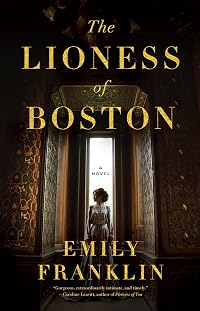
The Lioness of Boston
by Emily Franklin
On This Page
Description
"A deeply evocative portrait of Isabella Stewart Gardner, a daring visionary who created an inimitable legacy in American art and transformed the city of Boston itself. By the time Isabella Stewart Gardner opened her Italian palazzo-style home as a museum in 1903 to showcase her collection of old masters, antiques, and objects d'art, she was already well-known for scandalizing Boston's polite society. But when Isabella first arrives in Boston in 1861, she is twenty years old, newly married show more to a wealthy trader, and unsure of herself. Puzzled by the frosty reception she receives from stuffy bluebloods, she strives to fit in. After two devastating tragedies and rejection from upper-society, Isabella discovers her spirit and casts off expectations. Freed by travel, Isabella explores the world of art, ideas, and letters, meeting such kindred spirits as Henry James and Oscar Wilde. From London and Paris to Egypt and Asia, she develops a keen eye for paintings and objects, and meets feminists ready to transform nineteenth century thinking in the twentieth century. Isabella becomes an eccentric trailblazer, painted by John Singer Sargent in a portrait of daring décolletage, and fond of such stunts as walking a pair of lions in the Boston Public Garden. The Lioness of Boston is a portrait of what society expected a woman's life to be, shattered by a courageous soul who rebelled and determined to live on her own terms"-- show lessTags
Recommendations









Member Recommendations

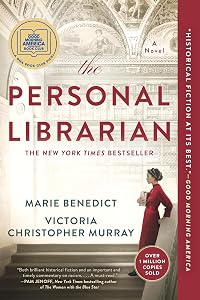
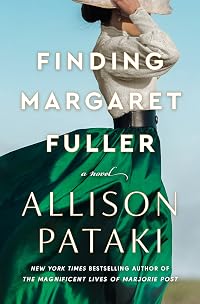
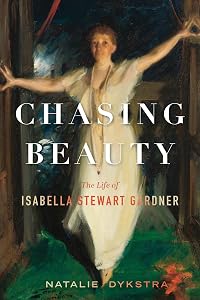
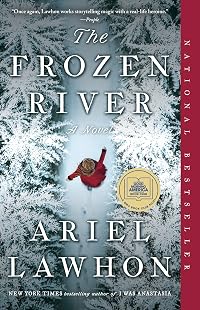
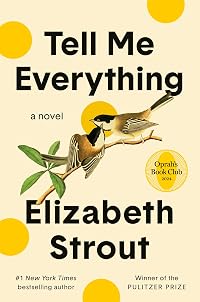
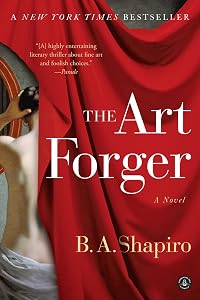
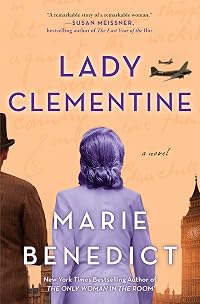
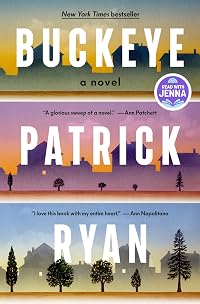
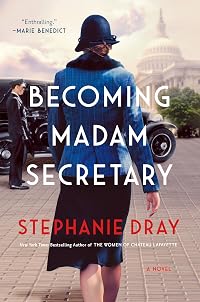
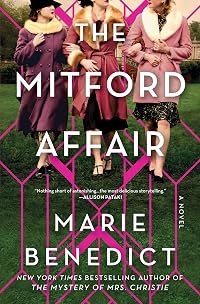
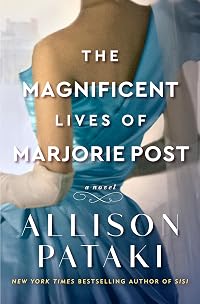
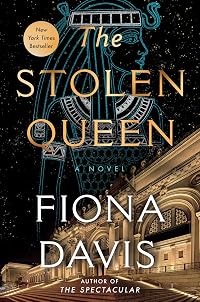
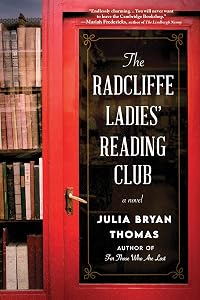
Caramellunacy Both are historical fiction about strong-willed women in the Gilded Age who don't fit into society, but find purpose in the acquisition of rare books and art.
Member Reviews
Isabella Stewart Gardener was a New Yorker who lived in Boston after her marriage to a local Brahmin. Ostracized by the society matrons for her brash ways, Isabella sought to find and make her own path. Slowly she began a life of collecting—plants, books, art, and always men&mdashculminating in the creation of the Isabella Stewart Gardener Museum.
The epigraph to this novel is a quote by ISG herself: "Don't spoil a good story by telling the truth", and in the author's notes, Franklin admits to having followed that maxim much more faithfully than history itself. The author fabricated all of the many letters included in the novel, as well as attendance at events, meetings with famed literati, etc. in the spirit of telling a good story. show more Perhaps she succeeded, but I was too busy trying to suss out fact from fiction to care. I prefer my historical fiction to embellish history but not fabricate it. Others love the "spirit" of the book and are willing to overlook historical errors that I am not. Your mileage may vary. show less
The epigraph to this novel is a quote by ISG herself: "Don't spoil a good story by telling the truth", and in the author's notes, Franklin admits to having followed that maxim much more faithfully than history itself. The author fabricated all of the many letters included in the novel, as well as attendance at events, meetings with famed literati, etc. in the spirit of telling a good story. show more Perhaps she succeeded, but I was too busy trying to suss out fact from fiction to care. I prefer my historical fiction to embellish history but not fabricate it. Others love the "spirit" of the book and are willing to overlook historical errors that I am not. Your mileage may vary. show less
Isabella Stewart Gardner moves to Boston as a young wife with her husband, Jack, and attempts to make her way in the social milieu. She is a opinionated woman who doesn't always fit in, and as written by Franklin, struggles with feeling left out and less than quite a bit before she begins to make her own group of friends and find her way of making her mark through collecting.
This biographical fiction covers the years 1861 to 1903 when the now-famous Isabella Stewart Gardner Museum was open to the public. Interspersed is the Prologue and "Intermezzos" written by Isabella in 1924 to an unnamed friend with instructions to burn letters and leave everything in the museum untouched, as well as reflecting on events from a more mature show more perspective. The beginning chapters, focusing on only four years, are the most detailed and cohesive; after that, I began to feel like I was just reading vignettes in each chapter, glimpses of a life and imagined letters rather than a whole, complete story. I suppose that's part of the difficulty in writing about Isabella herself - she did indeed burn letters, but left the museum as she had curated it to the city of Boston as her legacy.
Franklin chooses to focus a lot on Isabella's imagined desires, whether for a child, or friendship, or in an affair, and I found myself impatient in the repetition of her feelings of lacking when she seems to me such a bold figure who didn't really care what other people thought. Because less time is spent on her later years, this woman is less clear than the youthful one unsure of her place in society. There's also no mention of her husband Jack's paying someone to fight the Civil War in his place, the fact that some of the art she acquired was smuggled, or the moral questions of whether national treasures should become part of a personal collection (indeed, the actual accumulation of the art is described mostly in letters, without a lot of details given). These, to me, would have made much more interesting reading. show less
This biographical fiction covers the years 1861 to 1903 when the now-famous Isabella Stewart Gardner Museum was open to the public. Interspersed is the Prologue and "Intermezzos" written by Isabella in 1924 to an unnamed friend with instructions to burn letters and leave everything in the museum untouched, as well as reflecting on events from a more mature show more perspective. The beginning chapters, focusing on only four years, are the most detailed and cohesive; after that, I began to feel like I was just reading vignettes in each chapter, glimpses of a life and imagined letters rather than a whole, complete story. I suppose that's part of the difficulty in writing about Isabella herself - she did indeed burn letters, but left the museum as she had curated it to the city of Boston as her legacy.
Franklin chooses to focus a lot on Isabella's imagined desires, whether for a child, or friendship, or in an affair, and I found myself impatient in the repetition of her feelings of lacking when she seems to me such a bold figure who didn't really care what other people thought. Because less time is spent on her later years, this woman is less clear than the youthful one unsure of her place in society. There's also no mention of her husband Jack's paying someone to fight the Civil War in his place, the fact that some of the art she acquired was smuggled, or the moral questions of whether national treasures should become part of a personal collection (indeed, the actual accumulation of the art is described mostly in letters, without a lot of details given). These, to me, would have made much more interesting reading. show less
I bought this book while in Boston as I thought it'd be fun to read a novel centering Isabella Stewart Gardener, a famous historical Bostonian.
Historical fiction is not usually a genre I read, but I decided to give this a go anyway. This book had a lot of letters and newspaper clippings included in the text, which is not a format I typically enjoy. I assumed that, as historical artifacts, they were true. So I further assumed that they were included to tie the fictional narrative to actual history. However, the afterward of the book states that all of the letters and newspaper clippings were fictional. I really wish that had been made explicit at the beginning of the book!
The narrative is only moderately compelling and frequently feels show more like it's moving at a snail's pace. Isabella Stewart Gardner was a fascinating woman, so I'm surprised at how bored I felt at times. Additionally, at times the themes of grief and loss were so overwhelming that I had to put the book aside to take an emotional break.
After reading the book, I feel like I get the general flavor of Isabella Stewart Gardner, but I really can't be sure of how much of her life was portrayed accurately. To that end, I would have preferred reading a biography. Otherwise, I would have preferred the author to give the main character a different name and not write specifically about somebody who actually existed. (I thought this was done well in American Wife by Curtis Sittenfeld. You can tell who the book is loosely based on, but it doesn't pass itself off as being historically accurate by using anybody's actual name.) Because I'm not really a historical fiction person, it's possible that this is an accepted practice in the genre, in which case, enjoy the book and take what I'm saying with a grain of salt! show less
Historical fiction is not usually a genre I read, but I decided to give this a go anyway. This book had a lot of letters and newspaper clippings included in the text, which is not a format I typically enjoy. I assumed that, as historical artifacts, they were true. So I further assumed that they were included to tie the fictional narrative to actual history. However, the afterward of the book states that all of the letters and newspaper clippings were fictional. I really wish that had been made explicit at the beginning of the book!
The narrative is only moderately compelling and frequently feels show more like it's moving at a snail's pace. Isabella Stewart Gardner was a fascinating woman, so I'm surprised at how bored I felt at times. Additionally, at times the themes of grief and loss were so overwhelming that I had to put the book aside to take an emotional break.
After reading the book, I feel like I get the general flavor of Isabella Stewart Gardner, but I really can't be sure of how much of her life was portrayed accurately. To that end, I would have preferred reading a biography. Otherwise, I would have preferred the author to give the main character a different name and not write specifically about somebody who actually existed. (I thought this was done well in American Wife by Curtis Sittenfeld. You can tell who the book is loosely based on, but it doesn't pass itself off as being historically accurate by using anybody's actual name.) Because I'm not really a historical fiction person, it's possible that this is an accepted practice in the genre, in which case, enjoy the book and take what I'm saying with a grain of salt! show less
This historical novel details the remarkable life of a real life woman, Isabella Stewart Gardner. Originally from New York, Isabella marries her friend's brother from Boston and finds herself isolated from the stuffy, stratified society of the city's elite. Not only is Isabella an outsider but her interests in science and nature and her eccentric tastes further isolate her. After the tragic death of her only child, and extensive travel in Europe and Asia, Isabella determines to chart her own course in Boston society. This builds up to her creating her gift to the city, a unique museum of the artwork she collected over the decades.
Isabella acquires her own coterie of friends including many intellectual luminaries of the Athens of show more America as well as figures known worldwide such as Henry James, John Singer Sargent, and Oscar Wilde. There's a lot of name-dropping in this book! From what I know of Gardner's life, the novel follows her basic life trajectory. The text includes a number of letters between Gardner and her correspondents and while her real correspondence exists in great quantity, author Emily Franklin made these letters up to serve her narrative. Even better is the dialogue among Gardner and her famous friends which no one could know precisely, but I believe is true to life if not strictly factual. show less
Isabella acquires her own coterie of friends including many intellectual luminaries of the Athens of show more America as well as figures known worldwide such as Henry James, John Singer Sargent, and Oscar Wilde. There's a lot of name-dropping in this book! From what I know of Gardner's life, the novel follows her basic life trajectory. The text includes a number of letters between Gardner and her correspondents and while her real correspondence exists in great quantity, author Emily Franklin made these letters up to serve her narrative. Even better is the dialogue among Gardner and her famous friends which no one could know precisely, but I believe is true to life if not strictly factual. show less
I was captivated by this fiction about Isabella Stewart Gardner, creator of the Gardner Museum in Boston. I've certainly visited the Gardner a number of times in my life, and while wowed by the indoor courtyard garden, always wondered about the collection and display of the artwork. I feel I now have a better notion of what she was after, and will probably go back to the museum. It was also surprising to learn about the woman behind the museum, who I guess I always thought of as someone privileged with too much money. That she had her own share of sorrows and even scandal doesn't occur to you while in the galleries. Although it is fiction, even down to the correspondence, I think the author included a lot of research to flesh out her show more character. And because I am a Bostonian, I always have a soft spot for novels set in Beantown. show less
This is an indepth look at high society in Boston and how Isabella Stewart Gardner did not fit it. She bet out the snobs. In the end, she had her own very impressive museum that stands today!
A wonderful story of snobs that looked down on her. She didn't fit in, and while originally it bothered her, she decised to live her own life on her own terms.
Sadly, her only child, a little boy, died at age two. Her grief was sever. She travled to Asia and throughout Europe, where she became froms with Henry Janes, John Singer Sargent and Oscar Wilde as well as a host of other notables.
She was quite eccentric and lived life as she saw it. She was indeed a trailablaizer, particularly in the art world where she began to collect many incredible show more paitings for her museum, still standing today in Boston, MA. She was painted by Sargent. Skipping the pinkies in the air society, after knowing she was not going to, nor did she want to belong to them, as the author notes, she was so interesting that she once walked a pair of lions in the Boston Public Garden!
Tragically in 1990, theives portraying as police entered her beautiful museum and took away with paintings that could never be replaced.
I very much liked this book, but felt it seemed to ramble mid way. In my opinion there were too many pages of repetitive events. I would have rated the book higher if not for the tendency to rooam too much.
3.5 stars show less
A wonderful story of snobs that looked down on her. She didn't fit in, and while originally it bothered her, she decised to live her own life on her own terms.
Sadly, her only child, a little boy, died at age two. Her grief was sever. She travled to Asia and throughout Europe, where she became froms with Henry Janes, John Singer Sargent and Oscar Wilde as well as a host of other notables.
She was quite eccentric and lived life as she saw it. She was indeed a trailablaizer, particularly in the art world where she began to collect many incredible show more paitings for her museum, still standing today in Boston, MA. She was painted by Sargent. Skipping the pinkies in the air society, after knowing she was not going to, nor did she want to belong to them, as the author notes, she was so interesting that she once walked a pair of lions in the Boston Public Garden!
Tragically in 1990, theives portraying as police entered her beautiful museum and took away with paintings that could never be replaced.
I very much liked this book, but felt it seemed to ramble mid way. In my opinion there were too many pages of repetitive events. I would have rated the book higher if not for the tendency to rooam too much.
3.5 stars show less
Disappointing. Book 1 was interminable. Book 2 was slightly better. Book 3 read like a romance novel—a genre I don’t enjoy. Book 4 was disappointing. I would have preferred a biography.
Members
- Recently Added By
Lists

Fiction Based on Lives of Historical Women
17 works; 1 member
Author Information

Awards and Honors
Distinctions
Common Knowledge
- Original publication date
- 2023
- People/Characters
- Isabella Stewart Gardner
- Important places
- Boston, Massachusetts, USA
- Epigraph
- Don't spoil a good story by telling the truth.
—Isabella Stewart Gardner - Dedication
- This is for HS, the friend I always wanted and had the great blessing to find.
- First words
- After I am gone, everything will remain.
- Last words
- (Click to show. Warning: May contain spoilers.)Oh, if only I could know those future girls arriving here, wondering just who they might become.
- Blurbers
- Shattuck, Jessica; Leavitt, Caroline; Schaffert, Timothy
- Original language
- English
Classifications
Statistics
- Members
- 196
- Popularity
- 167,171
- Reviews
- 7
- Rating
- (3.51)
- Languages
- English
- Media
- Paper, Audiobook, Ebook
- ISBNs
- 6
- ASINs
- 2