On This Page
Description
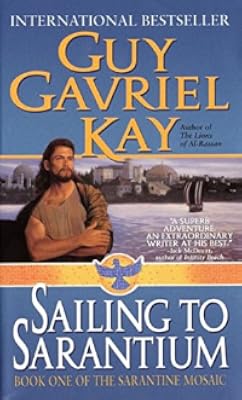
For the first time in one collection, the two internationally bestselling novels of The Sarantine Mosaic, one of Guy Gavriel Kay's most loved works. Sailing to Sarantium Sarantium is the golden city: holy to the faithful, exalted by the poets, jewel of the world, and heart of an empire. Artisan Caius Crispus receives a summons from the emperor and sets off on a journey toward the Imperial City. But before Crispin can reach Sarantium, with its taverns and gilded sanctuaries, chariot races and show more palaces, he must pass through a land of pagan ritual and mysterious danger. Sailing to Sarantium, the first volume of the brilliant Sarantine Mosaic, weaves an utterly compelling story of the allure and intrigue of a magnificent city and the people drawn into its spell. Lord of Emperors Having finally achieved his journey to fabled Sarantium, Crispin the mosaicist wants nothing more than to confront the challenges of his art high on the scaffolding of destiny--but in Sarantium no man may easily withdraw from the turmoil of court and city, or forget that the presence of the half-world is always close by. To the Imperial City there comes another voyager, this time from the east. Rustem of Kerakek, a physician, must find his own balance of family and ambition, healing and death, as he, too, is drawn into the deadly webs of Sarantium. In this concluding volume of the Sarantine Mosaic, Lord of Emperors merges page-turning adventure with a deeply moving meditation on art and power, and the eternal human struggle to leave a legacy. show lessTags
Recommendations
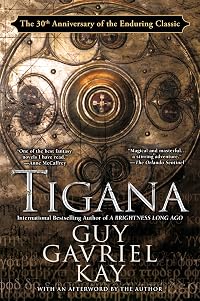
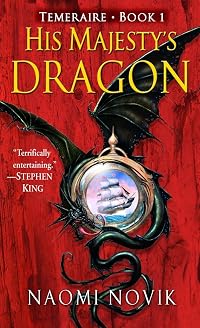
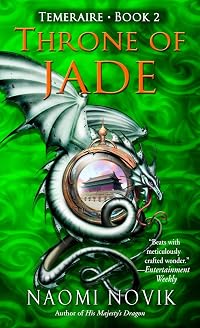

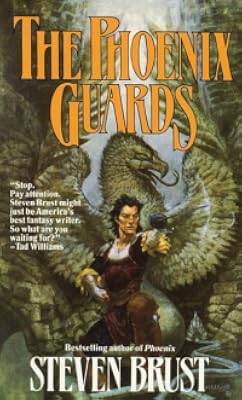







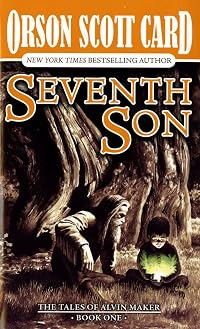
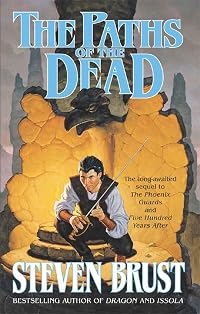
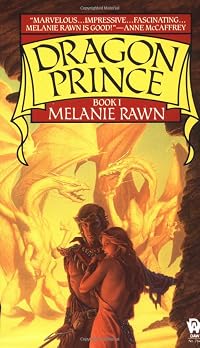
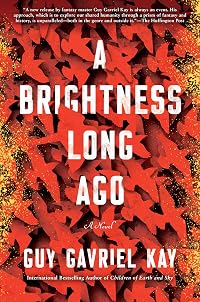

Member Recommendations

Yarrow Theodora appears in 'Sailing to Sarantium' as the empress Alixana.
Member Reviews
Comprising Sailing to Sarantium and Lord of Emperors, The Sarantine Mosaic is less a conventional fantasy epic than a meditation on art, power, and mortality set in a world mirroring Byzantine Constantinople.
Kay’s Sarantium is unmistakably modeled on the court of Justinian I and Theodora, though refracted through fiction. The novel’s emotional center, however, is not the emperor but Crispin, a mosaicist summoned to decorate the great sanctuary dome. Through his eyes, we encounter a civilization at its zenith—politically brilliant, spiritually divided, and perpetually shadowed by intrigue.
What distinguishes this duology is its restraint. The fantastical elements are minimal, woven lightly into the historical texture rather than show more dominating it. Kay’s interest lies not in spectacle but in consequence. Court politics unfold through subtle maneuvering, whispered alliances, and carefully measured ambition. The tension derives from proximity to power rather than battlefield escalation.
Crispin’s craft is the novel’s governing metaphor. Mosaic—assembling fragments of colored stone into a transcendent image—mirrors Kay’s narrative method. Individual scenes, conversations, and side characters accumulate until they form a luminous whole. Art becomes both defiance against mortality and complicity with empire: beauty commissioned by authority cannot escape political meaning.
The prose is elegant and deliberate. Kay favors controlled lyricism, avoiding excess while allowing moments of genuine emotional force. He excels at portraying interior states—regret, desire, jealousy, faith—without melodrama. Several secondary characters, particularly the empress-figure, possess layered motivations that complicate any simple moral alignment.
If there is a limitation, it lies in pacing. Readers expecting rapid plot turns may find the narrative patient to the point of austerity. Yet that slowness is integral to the experience. The duology invites contemplation rather than urgency.
Ultimately, The Sarantine Mosaic is about the cost of brilliance—personal and imperial. It asks whether art can outlast tyranny, whether love can survive proximity to power, and whether the fragments of a life can cohere into something enduring.
It is historical fantasy at its most disciplined: measured, intelligent, and quietly devastating. show less
Kay’s Sarantium is unmistakably modeled on the court of Justinian I and Theodora, though refracted through fiction. The novel’s emotional center, however, is not the emperor but Crispin, a mosaicist summoned to decorate the great sanctuary dome. Through his eyes, we encounter a civilization at its zenith—politically brilliant, spiritually divided, and perpetually shadowed by intrigue.
What distinguishes this duology is its restraint. The fantastical elements are minimal, woven lightly into the historical texture rather than show more dominating it. Kay’s interest lies not in spectacle but in consequence. Court politics unfold through subtle maneuvering, whispered alliances, and carefully measured ambition. The tension derives from proximity to power rather than battlefield escalation.
Crispin’s craft is the novel’s governing metaphor. Mosaic—assembling fragments of colored stone into a transcendent image—mirrors Kay’s narrative method. Individual scenes, conversations, and side characters accumulate until they form a luminous whole. Art becomes both defiance against mortality and complicity with empire: beauty commissioned by authority cannot escape political meaning.
The prose is elegant and deliberate. Kay favors controlled lyricism, avoiding excess while allowing moments of genuine emotional force. He excels at portraying interior states—regret, desire, jealousy, faith—without melodrama. Several secondary characters, particularly the empress-figure, possess layered motivations that complicate any simple moral alignment.
If there is a limitation, it lies in pacing. Readers expecting rapid plot turns may find the narrative patient to the point of austerity. Yet that slowness is integral to the experience. The duology invites contemplation rather than urgency.
Ultimately, The Sarantine Mosaic is about the cost of brilliance—personal and imperial. It asks whether art can outlast tyranny, whether love can survive proximity to power, and whether the fragments of a life can cohere into something enduring.
It is historical fantasy at its most disciplined: measured, intelligent, and quietly devastating. show less
Una novela fantástica muy interesante. La idea de una ambientación en un entorno pseudobizantino me parece francamente original (al menos, yo no conozco otra) y Kay maneja muy bien todos los elementos. Lo sobrenatural está dosificado de manera adecuada y, en muchas ocasiones, más sugerido que mostrado, lo que mantiene su carácter misterioso. Los personajes, a pesar de que muchos son versiones apenas veladas de sus equivalentes históricos (no cuesta nada reconocer a Justiniano, Teodora, Belisario, Procopio o Amalasunta, por ejemplo), están bien desarrollados, con motivaciones complejas y actitudes coherentes. La ambientación también está bien introducida, evitando exposiciones excesivas y utilizando los elementos justos desde show more el punto de vista de personajes que se mueven en un mundo que ya conocen.
Además, me gusta cómo el estilo del autor fluye y cómo el ritmo de la novela no decae en ningún momento. El único inconveniente es que no se trata de una historia completa, por lo que mi juicio final queda en suspenso hasta la siguiente entrega, pero, por ahora, todo apunta bien. show less
Además, me gusta cómo el estilo del autor fluye y cómo el ritmo de la novela no decae en ningún momento. El único inconveniente es que no se trata de una historia completa, por lo que mi juicio final queda en suspenso hasta la siguiente entrega, pero, por ahora, todo apunta bien. show less
A long time ago young and intrepid I became convinced that finding connections between things was the height of criticism, rather than looking at the differences and the implications of those differences. Intertextuality and all that crap you know…But I soon discovered that it was a reductive opinion and I found plenty of support for online; the whole "everything's a remix" attitude where, if you think about it, man, everything's like the same. It was the criticism of much of Goodreads (a website I've less time for now) where art had to be empirical and quantifiable. X is like Y, therefore we need a jargon term to describe all things like X or Y because it is a movement or technique. This isn't to say there's no place in criticism for show more technical terms and identifying techniques; versification is a healthy field and knowing your iambs and so on is useful to be armed to talk about literature. On the other hand the quantifiable and measurable is only one half of criticism, the other being looking at the purpose to which those things are put. I can identify a line of iambic pentameter, or a Hero's Journey, or whatever; on the other hand the next step, I feel, is understanding what makes this line a good line, or this Hero's Journey interesting and novel.
I don't really 'trust' professional reviews for books and in fact have previously got into arguments with a few authors about their use of 'paid reviews' on Facebook/Amazon/Goodreads, etc., to give 5* rave reviews. When the books then turn out to be pretty meh. More widely though, for me reading is quite a personal experience. What I like and enjoy is heavily dependant on person choice and experiences. There are loads of fairly trashy fantasy series which will never win a prize for literature (nor should they!).
I was engrossed and addicted for 5 wonderful days devouring the almost 1000 pages of this duology. The writing and prose is eloquent, clever, and beautiful; Kay’s storytelling had me captivated within the first few pages: the ideas, the words, the descriptions all rooted in what I can only call a legendary mythical-fantasy-realism that almost seemed just as rooted in reality, science and history at times. I particularly loved the second novel. Reading these 2 volumes in 2021 didn't just stop time for me, but turned it inside out for me, as I felt I was as much accessing a gigantic dreamscape as reading a book. What Kay does is Poetry in prose I call it - prosetry ( prose+ poetry). Some of Kays’ descriptions are so rich: like Milton and Blake converted into paragraphs, into prose. Silly as it sounds I was just so angry with myself for not having re-read them earlier. Rare is the poetry or prose that can truly transport you to another place, imaginary dimension, and make you want to stay there. Thankfully Kay is one of those few writers who still walk amongst us (I still mourn the loss of Ursula Le Guin every so often) who can raise you to Heaven, and even higher heights, just on the strength of their words, their prosetry.
I read the individual volumes of this duology in 2007. I was curious to see how it fared now 14 years later. I gave the 2 individual volumes “Sailing to Sarantium” and “Lord of Emperors” 4 stars in 2007. Now I’m gonna bump it to 5 stars because the amount of crap being published nowadays in Fantasy is so disgustingly high and feel the need to promote outstanding stuff and this work by Kay is one of the best things ever published in the Fantasy field. I loved this Kay re-read so much that I’m going to embark on “The Lions of Al-Rassan” next which I still remember as one of my favourites. show less
I don't really 'trust' professional reviews for books and in fact have previously got into arguments with a few authors about their use of 'paid reviews' on Facebook/Amazon/Goodreads, etc., to give 5* rave reviews. When the books then turn out to be pretty meh. More widely though, for me reading is quite a personal experience. What I like and enjoy is heavily dependant on person choice and experiences. There are loads of fairly trashy fantasy series which will never win a prize for literature (nor should they!).
I was engrossed and addicted for 5 wonderful days devouring the almost 1000 pages of this duology. The writing and prose is eloquent, clever, and beautiful; Kay’s storytelling had me captivated within the first few pages: the ideas, the words, the descriptions all rooted in what I can only call a legendary mythical-fantasy-realism that almost seemed just as rooted in reality, science and history at times. I particularly loved the second novel. Reading these 2 volumes in 2021 didn't just stop time for me, but turned it inside out for me, as I felt I was as much accessing a gigantic dreamscape as reading a book. What Kay does is Poetry in prose I call it - prosetry ( prose+ poetry). Some of Kays’ descriptions are so rich: like Milton and Blake converted into paragraphs, into prose. Silly as it sounds I was just so angry with myself for not having re-read them earlier. Rare is the poetry or prose that can truly transport you to another place, imaginary dimension, and make you want to stay there. Thankfully Kay is one of those few writers who still walk amongst us (I still mourn the loss of Ursula Le Guin every so often) who can raise you to Heaven, and even higher heights, just on the strength of their words, their prosetry.
I read the individual volumes of this duology in 2007. I was curious to see how it fared now 14 years later. I gave the 2 individual volumes “Sailing to Sarantium” and “Lord of Emperors” 4 stars in 2007. Now I’m gonna bump it to 5 stars because the amount of crap being published nowadays in Fantasy is so disgustingly high and feel the need to promote outstanding stuff and this work by Kay is one of the best things ever published in the Fantasy field. I loved this Kay re-read so much that I’m going to embark on “The Lions of Al-Rassan” next which I still remember as one of my favourites. show less
I read the two books contained in this volume as one, so I can't really review them separately. Loved the setting, loved the characters, loved the writing. Elements of mystery and magic woven through the setting, but not central.
Loved the analogy of bird-to-soul; loved the complexity of characters' religions, faiths, beliefs, and integrity. In this book, characters could have varying levels of these four things without contradiction. Thus, spirituality in these books is much better developed than in most fantasy / sci-fi.
Loved the analogy of bird-to-soul; loved the complexity of characters' religions, faiths, beliefs, and integrity. In this book, characters could have varying levels of these four things without contradiction. Thus, spirituality in these books is much better developed than in most fantasy / sci-fi.
Ratings
Members
- Recently Added By
Lists

Recommend the 20 best books you've read in the last five years
2,168 works; 608 members

Historical Fantasy
93 works; 14 members

Canadian Jurist-Novelists
313 works; 1 member
Author Information

35+ Works 38,851 Members
Guy Gavriel Kay was born on November 7, 1954 in Weyburn, Saskatchewan, Canada. He became interested in fantasy fiction while working as an assistant to Christopher Tolkien. He assisted him with the editing of J. R. R. Tolkien's The Silmarillion. After receiving a law degree from the University of Toronto, he became principal writer and associate show more producer for the CBC radio series, The Scales of Justice. He also wrote several episodes when the series moved to television. He has written social and political commentary for several publications including the National Post, The Globe and Mail, and The Guardian. His first fantasy novels were The Summer Tree, The Wandering Fire, and The Darkest Road, which make up the Fionavar Tapestry Trilogy. His other works include A Song for Arbonne, The Lions of Al-Rassan, Beyond This Dark House, The Last Light of the Sun, and Under Heaven. He has received numerous awards including and the Aurora Award for Tigana and The Wandering Fire, the 2008 World Fantasy Award for Best Novel for Ysabel, and the International Goliardos Award for his work in the fantasy field. (Bowker Author Biography) show less
Some Editions
Awards and Honors
Awards
Series

Work Relationships
Contains
Classifications
Statistics
- Members
- 86
- Popularity
- 372,915
- Reviews
- 4
- Rating
- (4.32)
- Languages
- English, Russian, Spanish
- Media
- Paper, Ebook
- ISBNs
- 4
- ASINs
- 5