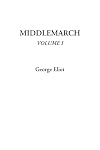
Middlemarch (1/2)
by George Eliot
On This Page
Description
George Eliot's Middlemarch intricately portrays the lives of diverse characters in a provincial English town. Dorothea Brooke, a woman of idealistic aspirations, seeks purpose in marriage and reform. Meanwhile, Dr. Lydgate, a brilliant physician, strives to revolutionize medicine. Their stories, along with others, intertwine, revealing the complexities of human relationships, societal pressures, and the challenges of living with integrity in a changing world. The novel explores themes of show more ambition, disillusionment, and the search for meaning. show lessTags
Recommendations





















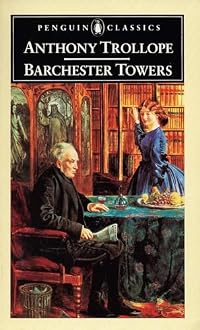
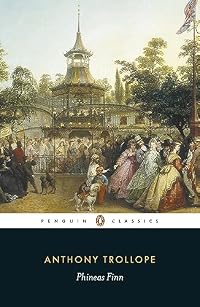




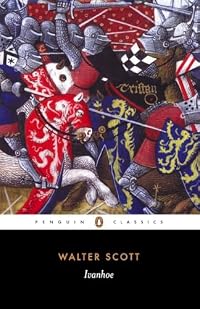


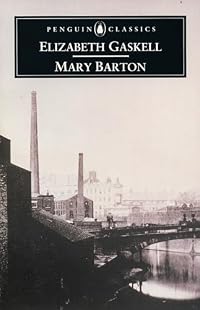


Member Recommendations
Member Reviews
A highly intelligent and literary read, but ultimately rather dry, despite some interesting characters. The book's main point of interest for me is that it contains my all time favourite literary quote.............. "A man's mind, what there is of it, has always the advantage of being masculine,- as the smallest birch-tree is of a higher kind than the most soaring palm,- and even his ignorance is of a sounder quality'.
I am not "well-read" enough to say that this is the greatest book I have ever read, nor scholarly enough to even attempt to review this lengthy novel. As I grow in my reading of literature, I am glad to say that I have read Middlemarch. Well worth the effort.
Ratings
Members
- Recently Added By
Author Information

381+ Works 61,702 Members
George Eliot was born Mary Ann Evans on a Warwickshire farm in England, where she spent almost all of her early life. She received a modest local education and was particularly influenced by one of her teachers, an extremely religious woman whom the novelist would later use as a model for various characters. Eliot read extensively, and was show more particularly drawn to the romantic poets and German literature. In 1849, after the death of her father, she went to London and became assistant editor of the Westminster Review, a radical magazine. She soon began publishing sketches of country life in London magazines. At about his time Eliot began her lifelong relationship with George Henry Lewes. A married man, Lewes could not marry Eliot, but they lived together until Lewes's death. Eliot's sketches were well received, and soon after she followed with her first novel, Adam Bede (1859). She took the pen name "George Eliot" because she believed the public would take a male author more seriously. Like all of Eliot's best work, The Mill on the Floss (1860), is based in large part on her own life and her relationship with her brother. In it she begins to explore male-female relations and the way people's personalities determine their relationships with others. She returns to this theme in Silas Mariner (1861), in which she examines the changes brought about in life and personality of a miser through the love of a little girl. In 1863, Eliot published Romola. Set against the political intrigue of Florence, Italy, of the 1490's, the book chronicles the spiritual journey of a passionate young woman. Eliot's greatest achievement is almost certainly Middlemarch (1871). Here she paints her most detailed picture of English country life, and explores most deeply the frustrations of an intelligent woman with no outlet for her aspirations. This novel is now regarded as one of the major works of the Victorian era and one of the greatest works of fiction in English. Eliot's last work was Daniel Deronda. In that work, Daniel, the adopted son of an aristocratic Englishman, gradually becomes interested in Jewish culture and then discovers his own Jewish heritage. He eventually goes to live in Palestine. Because of the way in which she explored character and extended the range of subject matter to include simple country life, Eliot is now considered to be a major figure in the development of the novel. She is buried in Highgate Cemetery, North London, England, next to her common-law husband, George Henry Lewes. (Bowker Author Biography) show less
Series
Belongs to Publisher Series
Everyman's Library (854)
Work Relationships
Is contained in
The Works of George Eliot: Vol. I - Adam Bede, The Mill on the Floss, Romola; Vol. II -- Middlemarch: A Study of Provincial life, Daniel Deronda; Vol. III -- Felix Holt, The Radical, Silas Marner, The Lifted Veil, Brother Jacob,Scenes from Clerical Life by George Eliot (indirect)
90 Masterpieces You Must Read (Vol.1): Novels, Poetry, Plays, Short Stories, Essays, Psychology & Philosophy by Various (indirect)
Classic British Fiction: Six novels by George Eliot, in a single file, improved 8/23/2010 by George Eliot (indirect)
George Eliot Six Pack - Middlemarch, Daniel Deronda, Silas Marner, The Lifted Veil, The Mill on the Floss and Adam Bede (Illustrated with links to free ... all six books) (Six Pack Classics Book 8) by George Eliot (indirect)
George Eliot's Works: Adam Bede, Felix Holt, Middlemarch and Romola. (4 Volumes) by George Eliot (indirect)
Works of George Eliot. The Mill on the Floss, Daniel Deronda, Adam Bede, Middlemarch, The Lifted Veil & more. (mobi) by George Eliot (indirect)
George Eliot's Works: Adam Bede/Daniel Deronda/Felix Holt and Clerical Life/Middlemarch/Mill on the Floss/Romola (6 vols) by George Eliot (indirect)
Novels of George Eliot in Five Volumes with Illustrations: Adam Bede; The Mill in the Floss; Silas Marner; Clerical Life; Felix Holt; Middlemarch by George Eliot (indirect)
George Elliot Works: 7 books - Middlemarch, Adam Bede, Daniel Deronda, Romola, Impressions of Theophrastus Such..., Silas Marner, Felix Holt, the Radical (George Elliot Works, 7 of ? in set) by George Elliot (indirect)
George Eliot Collection: The Complete Novels, Short Stories, Poems and Essays (Middlemarch, Daniel Deronda, Scenes of Clerical Life, Adam Bede, The Lifted Veil...) by George Eliot (indirect)
George Eliot's Works (Six Volumes): Adam Bede, Scenes of Clerical Life, Middlemarch, The Mill On the Floss, Daniel Deronda, Felix Holt (The Radical), The Spanish Gypsy, Jubal and Other Poems, Romola, Theophrastus Such by George Eliot (indirect)
The Complete Novels of George Eliot - All 9 Novels in One Edition: Adam Bede, The Lifted Veil, The Mill on the Floss, Silas Marner, Romola, Brother Jacob, ... the Radical, Middlemarch & Daniel Deronda by George Eliot (indirect)
George Eliot's Works 5 Volumes Romola,The Mill On The Floss,Middlemarch,Daniel Deronda,Felix Holt by George Eliot (indirect)
Common Knowledge
- Canonical title
- Middlemarch (1/2) (1/2)
- Original title
- Middlemarch
- Original publication date
- 1871-1872
Classifications
Statistics
- Members
- 129
- Popularity
- 252,022
- Reviews
- 2
- Rating
- (4.37)
- Languages
- 8 — Danish, English, Finnish, German, Norwegian (Bokmål), Spanish, Swedish, Turkish
- Media
- Paper, Audiobook
- ISBNs
- 17
- ASINs
- 9