On This Page
Description
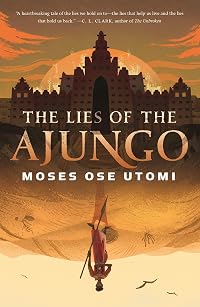
"Set in a secondary world reminiscent of Saharan Africa, Moses Ose Utomi's debut novella, The Lies of the Ajungo, follows one boy's epic quest to bring water back to his city and save his mother's life. They say there is no water in the City of Lies. They say there are no heroes in the City of Lies. They say there are no friends beyond the City of Lies. But would you believe what they say in the City of Lies? In the City of Lies, they cut out your tongue when you turn thirteen, to appease show more the terrifying Ajungo Empire and make sure it continues sending water. Tutu will be thirteen in three days, but his parched mother won't last that long. So Tutu goes to his oba and makes a deal: she provides water for his mother, and in exchange he will travel out into the desert and bring back water for the city. Thus begins Tutu's quest for the salvation of his mother, his city, and himself. The Lies of the Ajungo opens the curtains on a tremendous world, and begins the epic fable of the Forever Desert. With every word, Moses Ose Utomi weaves magic"-- show lessTags
Recommendations



Member Reviews
The Lies of Ajungo (The Forever Desert, Book 1), Moses Ose Utomi
This book is less than 100 pages, and yet, the wallop it packs is greater than books of enormous length. It is so creative that it captivated me, and I simply had to read it straight through. It was very violent, but the violence seemed largely justified and appropriate, although the idea that right makes might, did not always succeed; sometimes those battling for what was right succumbed to the fight
This is a gifted author. There is not one wasted word or phrase. The message is clear. Those who tell us to fear are probably the ones we should fear. Those who warn us against danger, are probably the ones who are most dangerous. Those who tell us you are our enemy, are show more actually probably the enemies. We must be vigilant. Our eyes, ears and tongues should be used to fight for justice, not to succumb to weakness. We must work hard to be strong and brave. We must see, hear and speak the truth, if we want to live in a world that is peaceful and joyous. That is the message I gleaned from this brief little book that is far more profound than any others I have recently read. While its message is not political, is not about race and is not about gender, it is nevertheless about social justice.
Can justice and truth win? Can we live in harmony? Are we being duped by our leaders into believing in a world that does not exist, so that they can create the elite world they live in quite contentedly? Who are our real enemies, and who are falsely accused of being enemies? Interestingly enough, there are moments, as we read this novella, that our own way of life will be questioned, our own heroes may suddenly have clay feet.
In this book, you will find an answer to, and the consequences of, the search for truth. There may not be any winners standing, but the future may win, in the end, if we are willing to fight for it. show less
This book is less than 100 pages, and yet, the wallop it packs is greater than books of enormous length. It is so creative that it captivated me, and I simply had to read it straight through. It was very violent, but the violence seemed largely justified and appropriate, although the idea that right makes might, did not always succeed; sometimes those battling for what was right succumbed to the fight
This is a gifted author. There is not one wasted word or phrase. The message is clear. Those who tell us to fear are probably the ones we should fear. Those who warn us against danger, are probably the ones who are most dangerous. Those who tell us you are our enemy, are show more actually probably the enemies. We must be vigilant. Our eyes, ears and tongues should be used to fight for justice, not to succumb to weakness. We must work hard to be strong and brave. We must see, hear and speak the truth, if we want to live in a world that is peaceful and joyous. That is the message I gleaned from this brief little book that is far more profound than any others I have recently read. While its message is not political, is not about race and is not about gender, it is nevertheless about social justice.
Can justice and truth win? Can we live in harmony? Are we being duped by our leaders into believing in a world that does not exist, so that they can create the elite world they live in quite contentedly? Who are our real enemies, and who are falsely accused of being enemies? Interestingly enough, there are moments, as we read this novella, that our own way of life will be questioned, our own heroes may suddenly have clay feet.
In this book, you will find an answer to, and the consequences of, the search for truth. There may not be any winners standing, but the future may win, in the end, if we are willing to fight for it. show less
Review originally posted on thefantasyreviews.com
*I received a free copy of this book in exchange for a fair and honest review. All views are my own.
“They say there is no water in the City of Lies.”
With that opening line Moses Ose Utomi transports readers to a dark secondary world where water is so scarce that dying from dehydration is common. The peoples of The City of Lies are so desperate for water that they are willing to give up their tongues to the oppressive Ajungo in exchange for the precious liquid. There is little hope for change, as no other sources of water have been found, no matter how many young people have traversed into the Forever Desert.
Often times in fantasy we are always looking for longer books. It seems to be show more a commonly held belief that a fantasy novel under 100k words is incapable to balancing character, worldbuilding, and plot. And yeah, I will admit that a lot of time it is the big chunky books that stick with me because I dwelled for so long in those worlds. But Utomi’s novella, clocking in at around 2 hours of reading time, challenges the belief that to be better in secondary-world fantasy that you have to be bigger. In this book, which is short even for a novella, Utomi envisages a world that feels complete and lived in, while taking us on a wonderful character journey. I cannot get this novella out of my head, and it is going to occupy a lot of my brain space for a while yet!
The main character in The Lies of the Ajungo is Tutu, a thirteen year old boy who quests into The Forever Desert to find a source of water to save his mother. One of the most fascinating aspects of this novella is that Utomi takes one of the most common tropes in epic fantasy, the coming-of-age narrative, and remixes it into something wholly different. Tutu starts the novella ignorant of the ways of the real world. He takes everything at face value and believes all of the adages and saying passed down from one generation to the next. He travels into the desert to bring water back to his people; he sees himself as the mythical hero figure, the Chosen One that will be worshipped for finally finding water.
But his dreams are quickly dashed as Tutu finds out that not everyone and everything is as it seems. Rather than seeing Tutu overcome adverse challenges and ascend to fulfill some kind of Chosen One role, we see Tutu has he becomes disillusioned with the world as his eyes are opened to what is really going on.
One of my favorite things about novellas as a storytelling vehicle is their ability to pull the rug out from under the reader. They are longer than short stories and so have more time to build out the characters and world, but are short enough that twists and turns don’t feel like the reader is being cheated or bamboozled in some way. Utomi uses the novella’s length and pacing to his advantage to not only keep things moving along at a nice clip, but also to shock, awe, and surprise the reader at many turns.
Throughout the novella, Utomi’s main theme is power. How do people gain power? How do people keep power? How do people manipulate and quell the masses to prevent questioning of that power? Many of the things Utomi explores in this novella are prescient to the situation in many of the West’s democracies – how are lies and political rhetoric (particularly xenophobia and the demonization of outsiders) programmed into our own political systems? I say this often in my reviews, but one thing I look for in a “five star read” is thematic depth and development; in other words, how the author uses the unrestricted imaginative limits of the genre to comment upon the social conditions we live in today. Utomi cleverly deepens his cultural critique as the world expands beyond the border of the City of Lies, and as Tutu broadens his own global understandings.
Sometimes with short stories and novellas it can feel like the entire “point “is the theme or the narrative twist. I know I felt this way (and to some extent still feel this way), and as a predominantly character reader I am often hesitant about shorter works. However, Utomi doesn’t allow theme or plot twists to get in the way of developing some great characters in a very short amount of time. Obviously, the star of the show is Tutu, who feels so layered in just the first few pages, and whose character arc is more emotionally satisfying than what other main characters take 14 700+ page books to accomplish. But Tutu is not alone. Through Tutu’s journey there at least 4 or 5 really well-developed characters that you will cheer and weep with/for (but remember – we don’t waste tears in the City of Lies!). The characters just leap off the page.
And all of this works for two main reasons. The first is that Utomi is really smart and considered in how he establishes his setting. As the readers we get enough of the history, culture, and ways of being in the world without feeling inundated. While readers who only read fantasy for the worldbuilding might find the setting a bit scarce here, I thought it provided a really nice backdrop that supported the characters and themes. The world felt complete without being overbearing.
And the other reason the novella comes together is that I was also completely swept up in Utomi’s prose style. Without being overwritten or flowery, Utomi evoked an oral, mythical style. Amongst many other reasons, this is a key element of why the book industry should support books written by POC authors. The Euro-American tradition has its own tropes and story-telling styles that have been passed down, but after a while all of these stories start to feel the “same”. And it is not just in who is being represented or the struggles the characters face (although those can start to feel restrictive and one-note as well), but there is also the style of storytelling. How plots are constructed, narratives are weaved, and characters are brought to life are closely linked to cultural understandings of myth, legend, story, cosmology, and worldview. They are closely linked to how stories are told in a society; the specific and nuanced ways story is integrated into one’s daily life. Utomi’s words and sentences, the very way he constructs the novella itself, not only matches the kind of story he is telling here, but also is just a different way of engaging with written stories than many other authors. Utomi is definitely not alone in this kind of story, but it is that kind of book where the first page indicates that you have gotten something “different” from the publishing norm. Hopefully more kinds of diverse storytelling and prose styles from different cultural traditions continue to be pushed and welcomed in mainstream publishing.
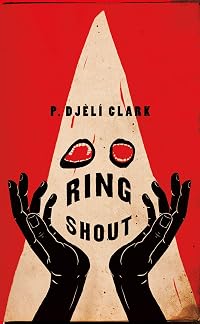
If you are a fan of P. Djeli Clark, Saara Al-Arifi, or CL Clark, you will definitely be drawn into Utomi’s world. I think I saw that two more novellas in this series are planned (Amazon already has a March 2024 release date for book 2), and I will be one of the first ones to pick up them up.
Concluding Thoughts
An emotionally gripping novella about how far powerful people who go to maintain their power and one young boy whose eyes are opened to the real world, Moses Ose Utomi wrote one of the most memorable reading experiences I have had in a while. In less than 100 pages Utomi brings to life an entire world, filled with fascinating characters, and relevant sociopolitical commentary. Readers should definitely consider picking up this book. show less
*I received a free copy of this book in exchange for a fair and honest review. All views are my own.
“They say there is no water in the City of Lies.”
With that opening line Moses Ose Utomi transports readers to a dark secondary world where water is so scarce that dying from dehydration is common. The peoples of The City of Lies are so desperate for water that they are willing to give up their tongues to the oppressive Ajungo in exchange for the precious liquid. There is little hope for change, as no other sources of water have been found, no matter how many young people have traversed into the Forever Desert.
Often times in fantasy we are always looking for longer books. It seems to be show more a commonly held belief that a fantasy novel under 100k words is incapable to balancing character, worldbuilding, and plot. And yeah, I will admit that a lot of time it is the big chunky books that stick with me because I dwelled for so long in those worlds. But Utomi’s novella, clocking in at around 2 hours of reading time, challenges the belief that to be better in secondary-world fantasy that you have to be bigger. In this book, which is short even for a novella, Utomi envisages a world that feels complete and lived in, while taking us on a wonderful character journey. I cannot get this novella out of my head, and it is going to occupy a lot of my brain space for a while yet!
The main character in The Lies of the Ajungo is Tutu, a thirteen year old boy who quests into The Forever Desert to find a source of water to save his mother. One of the most fascinating aspects of this novella is that Utomi takes one of the most common tropes in epic fantasy, the coming-of-age narrative, and remixes it into something wholly different. Tutu starts the novella ignorant of the ways of the real world. He takes everything at face value and believes all of the adages and saying passed down from one generation to the next. He travels into the desert to bring water back to his people; he sees himself as the mythical hero figure, the Chosen One that will be worshipped for finally finding water.
But his dreams are quickly dashed as Tutu finds out that not everyone and everything is as it seems. Rather than seeing Tutu overcome adverse challenges and ascend to fulfill some kind of Chosen One role, we see Tutu has he becomes disillusioned with the world as his eyes are opened to what is really going on.
One of my favorite things about novellas as a storytelling vehicle is their ability to pull the rug out from under the reader. They are longer than short stories and so have more time to build out the characters and world, but are short enough that twists and turns don’t feel like the reader is being cheated or bamboozled in some way. Utomi uses the novella’s length and pacing to his advantage to not only keep things moving along at a nice clip, but also to shock, awe, and surprise the reader at many turns.
Throughout the novella, Utomi’s main theme is power. How do people gain power? How do people keep power? How do people manipulate and quell the masses to prevent questioning of that power? Many of the things Utomi explores in this novella are prescient to the situation in many of the West’s democracies – how are lies and political rhetoric (particularly xenophobia and the demonization of outsiders) programmed into our own political systems? I say this often in my reviews, but one thing I look for in a “five star read” is thematic depth and development; in other words, how the author uses the unrestricted imaginative limits of the genre to comment upon the social conditions we live in today. Utomi cleverly deepens his cultural critique as the world expands beyond the border of the City of Lies, and as Tutu broadens his own global understandings.
Sometimes with short stories and novellas it can feel like the entire “point “is the theme or the narrative twist. I know I felt this way (and to some extent still feel this way), and as a predominantly character reader I am often hesitant about shorter works. However, Utomi doesn’t allow theme or plot twists to get in the way of developing some great characters in a very short amount of time. Obviously, the star of the show is Tutu, who feels so layered in just the first few pages, and whose character arc is more emotionally satisfying than what other main characters take 14 700+ page books to accomplish. But Tutu is not alone. Through Tutu’s journey there at least 4 or 5 really well-developed characters that you will cheer and weep with/for (but remember – we don’t waste tears in the City of Lies!). The characters just leap off the page.
And all of this works for two main reasons. The first is that Utomi is really smart and considered in how he establishes his setting. As the readers we get enough of the history, culture, and ways of being in the world without feeling inundated. While readers who only read fantasy for the worldbuilding might find the setting a bit scarce here, I thought it provided a really nice backdrop that supported the characters and themes. The world felt complete without being overbearing.
And the other reason the novella comes together is that I was also completely swept up in Utomi’s prose style. Without being overwritten or flowery, Utomi evoked an oral, mythical style. Amongst many other reasons, this is a key element of why the book industry should support books written by POC authors. The Euro-American tradition has its own tropes and story-telling styles that have been passed down, but after a while all of these stories start to feel the “same”. And it is not just in who is being represented or the struggles the characters face (although those can start to feel restrictive and one-note as well), but there is also the style of storytelling. How plots are constructed, narratives are weaved, and characters are brought to life are closely linked to cultural understandings of myth, legend, story, cosmology, and worldview. They are closely linked to how stories are told in a society; the specific and nuanced ways story is integrated into one’s daily life. Utomi’s words and sentences, the very way he constructs the novella itself, not only matches the kind of story he is telling here, but also is just a different way of engaging with written stories than many other authors. Utomi is definitely not alone in this kind of story, but it is that kind of book where the first page indicates that you have gotten something “different” from the publishing norm. Hopefully more kinds of diverse storytelling and prose styles from different cultural traditions continue to be pushed and welcomed in mainstream publishing.
If you are a fan of P. Djeli Clark, Saara Al-Arifi, or CL Clark, you will definitely be drawn into Utomi’s world. I think I saw that two more novellas in this series are planned (Amazon already has a March 2024 release date for book 2), and I will be one of the first ones to pick up them up.
Concluding Thoughts
An emotionally gripping novella about how far powerful people who go to maintain their power and one young boy whose eyes are opened to the real world, Moses Ose Utomi wrote one of the most memorable reading experiences I have had in a while. In less than 100 pages Utomi brings to life an entire world, filled with fascinating characters, and relevant sociopolitical commentary. Readers should definitely consider picking up this book. show less
It's a cross between a fable and a post-apocalyptic wasteland, with a significant African point of view, and that makes for a strong story that's hard to put down. It's short. There are things about it that I found predictable (as fables often are) and there was much that was fresh and new and harsh and beautiful. I liked the strong message to oppressors. I think it's a huge story in a small package and Moses Utomi is an author to watch.
Advanced Reader's Copy provided by Edelweiss
Advanced Reader's Copy provided by Edelweiss
I love it when my NetGalley reads work out!
I’ve been making an excel sheet, trying to plan my reads for the month. The lies of Ajungo were initially not on my list. I got approved for some books on NetGalley and ended up with 13 books to download. A fun fact about me is that I don’t like the number 13. I’m superstitious about it, even though I know that’s ridiculous. I do my best not to let it impact things, but I figured this was a small thing, and I could give into it this one time. Given that NetGalley has now added page numbers to the information section, I could download a small book and add it to my excel sheet.
And that’s how I started The Lies of the Ajungo by Moses Ose Utomi, and I’m so happy I did!
Your girl isn’t show more a sci-fi fan. For instance, I’ve been trying to get through Dune, but honestly, I just can’t focus on it (I loved the movie, though). I also don’t like high fantasy (so yes, not that into the lord of the rings), steampunk, spies/assassins, or even urban fantasy. But I’ll try something every so often and hope for a different outcome. This is why I haven’t given up on Dune, and I loved Book of Night by Holly Black. This is also why I tried The Lies of the Ajungo, and as stated above, I’m so glad I did!
They say there is no water in the City of Lies. They say there are no heroes in the City of Lies. They say there are no friends beyond the City of Lies. But would you believe what they say in the City of Lies?
In Tutu’s city, they cut out your tongue when you turn 13 to appease the Ajungo empire. In exchange, the empire sends their drought-ridden city some water; not enough to thrive, just enough to survive. Tutu has only 14 days to go before his tongue is cut out. Still, as his mother collapses from dehydration, he volunteers to search for water if they keep her alive for a year.
The say there is no iron in the city of lies.
While the story has some really interesting themes, such as collaboration with those in power and what people are willing to do to maintain control, anyone can do those themes. Many writers focus so heavily on those themes that they sacrifice the story. Moses Ose Utomi does none of that. He writes in a way that makes you want to slow down and savor each word. It’s not slow at all, but I don’t want for anything in terms of the world Utomi builds up here. I can recognise this as a prequel; it goes by like one. But it also makes me want to read the series when they come out, so it clearly does its job.
They say there is no sight in the city of lies
But I am leaving the book with 4 out of 5 stars. And it’s only fair to talk about what I didn’t like. My primary concern when reading this book is that Tutu comes into his powers faster than I think can be reasonably expected. It was also tougher to become emotionally invested in the characters, which is the trade-off when the author has less space to write about them. That’s important to me which is why it’s more 4 stars than 5. show less
I’ve been making an excel sheet, trying to plan my reads for the month. The lies of Ajungo were initially not on my list. I got approved for some books on NetGalley and ended up with 13 books to download. A fun fact about me is that I don’t like the number 13. I’m superstitious about it, even though I know that’s ridiculous. I do my best not to let it impact things, but I figured this was a small thing, and I could give into it this one time. Given that NetGalley has now added page numbers to the information section, I could download a small book and add it to my excel sheet.
And that’s how I started The Lies of the Ajungo by Moses Ose Utomi, and I’m so happy I did!
Your girl isn’t show more a sci-fi fan. For instance, I’ve been trying to get through Dune, but honestly, I just can’t focus on it (I loved the movie, though). I also don’t like high fantasy (so yes, not that into the lord of the rings), steampunk, spies/assassins, or even urban fantasy. But I’ll try something every so often and hope for a different outcome. This is why I haven’t given up on Dune, and I loved Book of Night by Holly Black. This is also why I tried The Lies of the Ajungo, and as stated above, I’m so glad I did!
They say there is no water in the City of Lies. They say there are no heroes in the City of Lies. They say there are no friends beyond the City of Lies. But would you believe what they say in the City of Lies?
In Tutu’s city, they cut out your tongue when you turn 13 to appease the Ajungo empire. In exchange, the empire sends their drought-ridden city some water; not enough to thrive, just enough to survive. Tutu has only 14 days to go before his tongue is cut out. Still, as his mother collapses from dehydration, he volunteers to search for water if they keep her alive for a year.
The say there is no iron in the city of lies.
While the story has some really interesting themes, such as collaboration with those in power and what people are willing to do to maintain control, anyone can do those themes. Many writers focus so heavily on those themes that they sacrifice the story. Moses Ose Utomi does none of that. He writes in a way that makes you want to slow down and savor each word. It’s not slow at all, but I don’t want for anything in terms of the world Utomi builds up here. I can recognise this as a prequel; it goes by like one. But it also makes me want to read the series when they come out, so it clearly does its job.
They say there is no sight in the city of lies
But I am leaving the book with 4 out of 5 stars. And it’s only fair to talk about what I didn’t like. My primary concern when reading this book is that Tutu comes into his powers faster than I think can be reasonably expected. It was also tougher to become emotionally invested in the characters, which is the trade-off when the author has less space to write about them. That’s important to me which is why it’s more 4 stars than 5. show less
Oh, I really wish I liked this better. I think if it were a full-length novel, rather than a novella, I find it a lot more compelling. As it is, things felt very rushed, cliché in their simplicity, and a little juvenile for what was promised.
Content warnings:
- ableism
Representation:
- all the characters are from a high-fantasy world, most likely based on West Africa
In the City of Lies, children's tongues are cut out at age thirteen and sent to the Ajungo Empire, so that they will continue sending the city water. Tutu will be thirteen in three days, but for his dying mother he sets out on a journey into the desert surrounding his city to find more water and bring it back.
What I really liked about this novella was its fable-like style. show more All that talk about epic journeys in the summary is a bit misleading, but I also would like the story to have leaned a little harder into that fable style. Reading it as a story, without the beauty of that style, falls rather flat when taking the clichéd story elements into consideration.
There was also this element of ableism to the world building that I really didn't care for: in the City of Lies, everyone but the children can't speak. And somehow the author thinks that would mean the oral history of their people would be lost. There are almost countless ways that people who can't speak can still communicate—even if not using a "standard" sign language. Even orally, their stories can continue on through rhymes or songs with the children. I know this is just set up for the plot, but it kept me from being able to enjoy the story as much as I could have.
We have a typical hero's quest (a chosen one—a boy—sets out on a dangerous journey to fetch or find something—water) with a lot of plot elements spelled out for the reader instead of unfolding naturally. For example, when Tutu encounters the dead children in the beginning of his quest, I feel like it would have been a more interesting read had the author not told us that the City of Lies sent thousands of kids off to find water before him. It could have added a nice sense of mystery and foreboding. Of course, that's just me. The book also constantly says that something is going to happen before it does, destroying what tension there is, or even spoiling things. In oral storytelling this can definitely work. But this is a completely different art form, and not all of the techniques are well suited to cross over into each other's realms.
All in all, I think the story might have been better suited as a full-length, epic novel or some kind of visual form, like a graphic novel. It has a very animated feel, much like in anime (I laughed when I saw that the author had pitched this story to his agent as "Attack on Titan in North Africa." Don't get me wrong, AoT sucks, but it's so apparent that the author was inspired by anime, in a fun way). Even though I had a feeling about the ending, it still surprised me. And even though this isn't my thing, I'm glad it's doing well. show less
Content warnings:
- ableism
Representation:
- all the characters are from a high-fantasy world, most likely based on West Africa
In the City of Lies, children's tongues are cut out at age thirteen and sent to the Ajungo Empire, so that they will continue sending the city water. Tutu will be thirteen in three days, but for his dying mother he sets out on a journey into the desert surrounding his city to find more water and bring it back.
What I really liked about this novella was its fable-like style. show more All that talk about epic journeys in the summary is a bit misleading, but I also would like the story to have leaned a little harder into that fable style. Reading it as a story, without the beauty of that style, falls rather flat when taking the clichéd story elements into consideration.
There was also this element of ableism to the world building that I really didn't care for: in the City of Lies, everyone but the children can't speak. And somehow the author thinks that would mean the oral history of their people would be lost. There are almost countless ways that people who can't speak can still communicate—even if not using a "standard" sign language. Even orally, their stories can continue on through rhymes or songs with the children. I know this is just set up for the plot, but it kept me from being able to enjoy the story as much as I could have.
We have a typical hero's quest (a chosen one—a boy—sets out on a dangerous journey to fetch or find something—water) with a lot of plot elements spelled out for the reader instead of unfolding naturally. For example,
All in all, I think the story might have been better suited as a full-length, epic novel or some kind of visual form, like a graphic novel. It has a very animated feel, much like in anime (I laughed when I saw that the author had pitched this story to his agent as "Attack on Titan in North Africa." Don't get me wrong, AoT sucks, but it's so apparent that the author was inspired by anime, in a fun way). Even though I had a feeling about the ending, it still surprised me. And even though this isn't my thing, I'm glad it's doing well. show less
African style fantasy with a clear folk/fairy-tale like feel. Although everything is wrapped up nicely, this could easily have been fleshed out into a longer novel. As it is, this novella is tightly plotted and never feels rushed. Will definitely check out the author's future work.
A review copy was provided by the publisher.
A review copy was provided by the publisher.
The plot was intriguing, but the writing felt very sterile and impassive. For that reason, it couldn’t keep my interest. The Lies of Ajungo is all plot, and I'm someone who is more partial to character-driven stories. But I liked how the story focused on lies being passed down and what a threat unity is to the powers that be.
There were also some found family/second family vibes here, but no time to get to know the characters. I didn’t feel the connection between any of them.
Ending Quote:He thought about the story that would be told of this day and whether, when history was written, he would be the hero who ushered in the new world or the villain who destroyed the old one.”
There were also some found family/second family vibes here, but no time to get to know the characters. I didn’t feel the connection between any of them.
Ending Quote:
Members
- Recently Added By
Lists

Books Read in 2023
5,638 works; 147 members

2024 Hugo Awards -- Eligible Works -- Novellas
23 works; 6 members

Kindle Fantasy/Science Fiction
206 works; 1 member
Author Information

5+ Works 478 Members
Some Editions
Awards and Honors
Awards
Series

Common Knowledge
- Canonical title
- The Lies of the Ajungo
- Original publication date
- 2023-03-21
- Dedication
- To my parents,
Oseyi Mike Utomi and Stella Odalomhen Uwaibi-Utomi,
who journeyed bravely beyond their City of Lies,
shared generously the water they found,
and prepared me for my own journey
through the Forever... (show all) Desert. - First words
- There is no water in the City of Lies.
- Last words
- (Click to show. Warning: May contain spoilers.)Then, with the last of his energy, Tutu closed his eyes and fulfilled his promise to return.
- Publisher's editor
- Engle-Laird, Carl
- Blurbers
- Clark, C.L.; Lee, Fonda; Okungbowa, Suyi Davies; Huchu, T.L.; Broaddus, Maurice; Brennan, Marie (show all 7); Ekpeki, Oghenechovwe Donald
Classifications
Statistics
- Members
- 295
- Popularity
- 109,179
- Reviews
- 13
- Rating
- (4.20)
- Languages
- English
- Media
- Paper, Ebook
- ISBNs
- 2
- ASINs
- 1