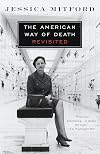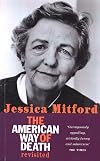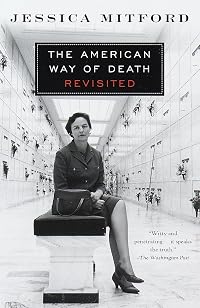
The American Way of Death Revisited
by Jessica Mitford
On This Page
Description
Only the scathing wit and searching intelligence of Jessica Mitford could turn an exposé of the American funeral industry into a book that is at once deadly serious and side-splittingly funny. When first published in 1963, this landmark of investigative journalism became a runaway bestseller and resulted in legislation to protect grieving families from the unscrupulous sales practices of those in "the dismal trade." Just before her death in 1996, Mitford thoroughly revised and updated her show more classic study. The American Way of Death Revisited confronts new trends, including the success of the profession's lobbyists in Washington, inflated cremation costs, the telemarketing of pay-in-advance graves, and the effects of monopolies in a death-care industry now dominated by multinational corporations. With its hard-nosed consumer activism and a satiric vision out of Evelyn Waugh's novel The Loved One, The American Way of Death Revisited will not fail to inform, delight, and disturb. "Brilliant--hilarious. . . . A must-read for anyone planning to throw a funeral in their lifetime."--New York Post "Witty and penetrating--it speaks the truth."--The Washington Post show lessTags
Recommendations







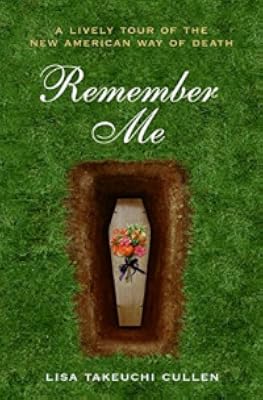
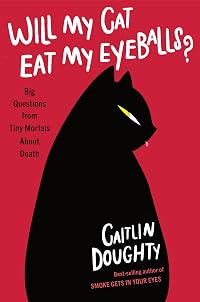


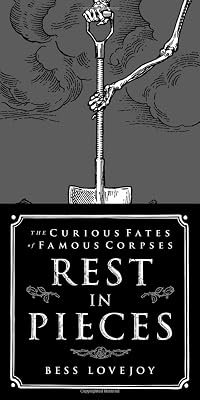







Member Recommendations
Member Reviews
Once upon a time, straight out of college, I almost took a job in funeral sales. I'm glad I steered clear of that lucrative career path. The money would've been great, but not at the expense of all that absurd psychological manipulation and sales shenanigans I'd of had to have conned the bereaved with, every day, 9-5.
"Wouldn't your loved one have wanted to be buried in this gold embossed coffin? I understand he was a man of modest means, and made great personal sacrifices for you and your family, doesn't he now deserve the best now for his eternal rest?"
What shysters, just a small step removed from their sleazy, used car salespeople, next of kin. I wouldn't be caught dead working in the funeral industry, preying upon people's raw show more emotional weakness in their greatest -- and gravest -- time of need. What a disgusting, self-serving industry the funeral business became in the twentieth century in the U.S.A., and remains so, even now, despite occasional promises of reform that have arisen in reaction to persistent whistle blowers like Jessica Mitford, whose American Way of Death elicited a similar (though smaller scaled) legislative response that The Jungle did for the meat packing industry.
Jessica Mitford wrote a wonderful, smart, and snarky exposé on the closed culture and shady sales tactics of these embalming-crazed bastards -- or "memorial counselors" -- as their business cards allege they are today, who don't bat an eye inside their posh offices insisting that embalming is "required by law" when in fact no such laws requiring the dead have to be embalmed exist on the books or have ever existed. This lie has been so ingrained in U.S. culture, as Mitford observes, that these memorial counselors don't even ask the bereaved if they want "the deceased" to be embalmed; they just assume you do unless you say you don't. And if you don't want embalming, but rather, refrigeration, the average memorial counselor will proclaim, because of health reasons, that "the law requires it." But the law doesn't -- and never has -- required it. It's a lie.
But as Mitford pointed out, if you're not an attorney or legal expert, and in your vulnerable condition (you may still be in shock), having just lost a loved one, you're probably not going to argue with them that it isn't the law, but will take their good word for it; because, after all, they're the experts right?, they're the authorities on the matter, and you automatically accept their authority unconsciously. They're dressed in their Sunday best and their speech even sounds, the way they talk, if they're smooth at it, sympathetic. Like they care about you. Certainly they wouldn't dream of taking advantage of you at a horrible time like this!
But they do. They have. And will continue to do so. They've been screwing all of us over, in fact, for almost one hundred years: first our great-grandparents, then our grandparents, then our parents, and now us, doing so when we're at our lowest, screwing us over with flowery lies. How many poor people that the funeral industry has purported to serve have only been made poorer by exorbitant, debt-inducing price tags for services that are often unnecessary to begin with, such as embalming or air-tight coffins? Bless Jessica Mitford for exposing the industry's collective ruthlessness and unprofessional practices throughout the last thirty-plus years of her life. show less
"Wouldn't your loved one have wanted to be buried in this gold embossed coffin? I understand he was a man of modest means, and made great personal sacrifices for you and your family, doesn't he now deserve the best now for his eternal rest?"
What shysters, just a small step removed from their sleazy, used car salespeople, next of kin. I wouldn't be caught dead working in the funeral industry, preying upon people's raw show more emotional weakness in their greatest -- and gravest -- time of need. What a disgusting, self-serving industry the funeral business became in the twentieth century in the U.S.A., and remains so, even now, despite occasional promises of reform that have arisen in reaction to persistent whistle blowers like Jessica Mitford, whose American Way of Death elicited a similar (though smaller scaled) legislative response that The Jungle did for the meat packing industry.
Jessica Mitford wrote a wonderful, smart, and snarky exposé on the closed culture and shady sales tactics of these embalming-crazed bastards -- or "memorial counselors" -- as their business cards allege they are today, who don't bat an eye inside their posh offices insisting that embalming is "required by law" when in fact no such laws requiring the dead have to be embalmed exist on the books or have ever existed. This lie has been so ingrained in U.S. culture, as Mitford observes, that these memorial counselors don't even ask the bereaved if they want "the deceased" to be embalmed; they just assume you do unless you say you don't. And if you don't want embalming, but rather, refrigeration, the average memorial counselor will proclaim, because of health reasons, that "the law requires it." But the law doesn't -- and never has -- required it. It's a lie.
But as Mitford pointed out, if you're not an attorney or legal expert, and in your vulnerable condition (you may still be in shock), having just lost a loved one, you're probably not going to argue with them that it isn't the law, but will take their good word for it; because, after all, they're the experts right?, they're the authorities on the matter, and you automatically accept their authority unconsciously. They're dressed in their Sunday best and their speech even sounds, the way they talk, if they're smooth at it, sympathetic. Like they care about you. Certainly they wouldn't dream of taking advantage of you at a horrible time like this!
But they do. They have. And will continue to do so. They've been screwing all of us over, in fact, for almost one hundred years: first our great-grandparents, then our grandparents, then our parents, and now us, doing so when we're at our lowest, screwing us over with flowery lies. How many poor people that the funeral industry has purported to serve have only been made poorer by exorbitant, debt-inducing price tags for services that are often unnecessary to begin with, such as embalming or air-tight coffins? Bless Jessica Mitford for exposing the industry's collective ruthlessness and unprofessional practices throughout the last thirty-plus years of her life. show less
Surely the dead must be rolling in their proverbial graves!
In "The American Way of Death Revisited," journalist and muckracker Jessica Mitford presents a searing exposé of the "death-care" industries, particularly funeral homes/directors and cemeteries. She potently argues that many death-care workers, rather than looking out for their customers' best interests, are more concerned about their bottom lines; that the FTC has failed to curb manipulative and downright illegal sales techniques engaged in by these businesses; that many of our assumptions about funerary practices are wrong; and that consumers should actively take part in honoring their dearly departed, rather than turning the task (and thousands of dollars) over to show more McMortuaries.
With the help of undercover investigations, disgruntled death-care workers, and grieving families who fell prey to unscrupulous death-care workers, Ms. Mitford details the manipulative, deceitful, and sometimes illegal tactics that death-care workers use to trump their competitors in an increasingly oversaturated market. We're even treated to shocking statements right from the horses' mouths: the authors offers a multitude of quotes pulled straight from the trade journals, such as "The Director," "Mortuary Management," "Casket & Sunnyside," and (my personal favorite) "American Professional Embalmer."
In "The American Way of Death Revisited," we learn the following:
* Although funeral directors would like you to believe otherwise, embalming is neither required by state law nor essential to public health.
* Again contrary to the fibs of the "funeral men" (as Ms. Mitford ominously refers to them), citizens are free to scatter "cremains" wherever they so choose (the state of California is the lone exception) - it is not necessary to bury them, store them in a pricey urn, or pay someone to scatter them. Nor is it required that your loved one be cremated in a casket - a cardboard or pine box or shroud does just as well.
* The purchase of "pre-need" plans usually serve as in invitation for the old "bait-and-switch" trick; by the time you pass away, the casket you initially paid for is no longer available. Thus, your grieving relatives are forced to choose between a free yet inferior substitute - or an "upgrade" for a fee.
* Open casket funerals are a rather new invention, and are unique to the United States. Although funeral directors assert that a public viewing (of an embalmed corpse, of course) is necessary for healing in the survivors, they cannot produce one documented, scientific study to support this claim. Nor are they licensed psychologists; strangely, this does not prevent them from charging customers for "grief counseling."
* As in many other industries, the ownership of funeral homes and cemeteries is becoming concentrated in the hands of a few massive McMonopolies. In some areas of the country, as many as 70% of the funeral homes may be owned by one company (talk about price fixing!). Even more infuriating are the companies' attempts to conceal ownership from consumers; they would much rather have you believe that you're purchasing a plan from kindly old "Uncle" Jack, who handled your grandmother's funeral arrangements so many years ago.
Of course, these are but a few of the insidious practices engaged in by the "funeral men." The author manages to fill a full 274 pages with the others.
Ms. Mitford also explains where the Federal Trade Commission was (and has been) while millions of Americans were (are) being ripped off during their time of utmost vulnerability. The answer certainly won't give you much faith in the current state of our government (unless you share Mark Twain's sentiments: "I think I can say, and say with pride, that we have legislatures that bring higher prices than any in the world.").
"The American Way of Death Revisited" is actually a revised and updated version of 1963's "The American Way of Death." While Ms. Mitford does offer some new information and insight, including more on the FTC and the development of McMortuaries, much of the information is dated. For example, many of the price quotes are still in 1960s currency. For this reason alone, I'd give the book 4.5 stars rather than 5.
Nonetheless, "The American Way of Death Revisited" is an impressive and shocking piece of work. It's interesting to note how the "American Way of Death" is a relative recent phenomenon, and not a longstanding tradition, as those in the industry would have you believe. England is proud to boast that they're 50 years behind us in their funerary practices; let's hope that, through collective action, we can regress even further back than 50 years, to the days of simple pine coffins and home viewings.
http://www.easyvegan.info/2005/05/10/the-american-way-of-death-revisited-by-jess... show less
In "The American Way of Death Revisited," journalist and muckracker Jessica Mitford presents a searing exposé of the "death-care" industries, particularly funeral homes/directors and cemeteries. She potently argues that many death-care workers, rather than looking out for their customers' best interests, are more concerned about their bottom lines; that the FTC has failed to curb manipulative and downright illegal sales techniques engaged in by these businesses; that many of our assumptions about funerary practices are wrong; and that consumers should actively take part in honoring their dearly departed, rather than turning the task (and thousands of dollars) over to show more McMortuaries.
With the help of undercover investigations, disgruntled death-care workers, and grieving families who fell prey to unscrupulous death-care workers, Ms. Mitford details the manipulative, deceitful, and sometimes illegal tactics that death-care workers use to trump their competitors in an increasingly oversaturated market. We're even treated to shocking statements right from the horses' mouths: the authors offers a multitude of quotes pulled straight from the trade journals, such as "The Director," "Mortuary Management," "Casket & Sunnyside," and (my personal favorite) "American Professional Embalmer."
In "The American Way of Death Revisited," we learn the following:
* Although funeral directors would like you to believe otherwise, embalming is neither required by state law nor essential to public health.
* Again contrary to the fibs of the "funeral men" (as Ms. Mitford ominously refers to them), citizens are free to scatter "cremains" wherever they so choose (the state of California is the lone exception) - it is not necessary to bury them, store them in a pricey urn, or pay someone to scatter them. Nor is it required that your loved one be cremated in a casket - a cardboard or pine box or shroud does just as well.
* The purchase of "pre-need" plans usually serve as in invitation for the old "bait-and-switch" trick; by the time you pass away, the casket you initially paid for is no longer available. Thus, your grieving relatives are forced to choose between a free yet inferior substitute - or an "upgrade" for a fee.
* Open casket funerals are a rather new invention, and are unique to the United States. Although funeral directors assert that a public viewing (of an embalmed corpse, of course) is necessary for healing in the survivors, they cannot produce one documented, scientific study to support this claim. Nor are they licensed psychologists; strangely, this does not prevent them from charging customers for "grief counseling."
* As in many other industries, the ownership of funeral homes and cemeteries is becoming concentrated in the hands of a few massive McMonopolies. In some areas of the country, as many as 70% of the funeral homes may be owned by one company (talk about price fixing!). Even more infuriating are the companies' attempts to conceal ownership from consumers; they would much rather have you believe that you're purchasing a plan from kindly old "Uncle" Jack, who handled your grandmother's funeral arrangements so many years ago.
Of course, these are but a few of the insidious practices engaged in by the "funeral men." The author manages to fill a full 274 pages with the others.
Ms. Mitford also explains where the Federal Trade Commission was (and has been) while millions of Americans were (are) being ripped off during their time of utmost vulnerability. The answer certainly won't give you much faith in the current state of our government (unless you share Mark Twain's sentiments: "I think I can say, and say with pride, that we have legislatures that bring higher prices than any in the world.").
"The American Way of Death Revisited" is actually a revised and updated version of 1963's "The American Way of Death." While Ms. Mitford does offer some new information and insight, including more on the FTC and the development of McMortuaries, much of the information is dated. For example, many of the price quotes are still in 1960s currency. For this reason alone, I'd give the book 4.5 stars rather than 5.
Nonetheless, "The American Way of Death Revisited" is an impressive and shocking piece of work. It's interesting to note how the "American Way of Death" is a relative recent phenomenon, and not a longstanding tradition, as those in the industry would have you believe. England is proud to boast that they're 50 years behind us in their funerary practices; let's hope that, through collective action, we can regress even further back than 50 years, to the days of simple pine coffins and home viewings.
http://www.easyvegan.info/2005/05/10/the-american-way-of-death-revisited-by-jess... show less
“[The funeral director] will do his best to hypnotize the family into believing that the more expensive the casket, the more elaborate the preparations, the greater the love and honor shown the deceased…” so Mitford quotes a 1942 ed. of Etiquette in “The American Way of Death Revisited.” This work is exactly what a reader wants from evidence-based, forthright investigative journalism.
Did you know that embalming isn't required? No religion commends it, nor health or sanitation. Yet funeral directors will embalm a body without first consulting the family. It is also unnecessary for an open casket. In fact, this pricey procedure only lasts through the service and burial. The real preservation is for bodies donated to science. But show more it is claimed as necessary for “grief therapy." In 1996 a $7000+ funeral was not uncommon.
Did you know that a casket isn't required for cremation? The costlier grades cannot be burned or reused. They are broken down and scrapped. Cremation is no guarantee against the show room, along with flowers, portraits, escorting services, multiple “coaches” for the funeral train, etc. Even Jacqueline Kennedy faced these "nefarious transactions" during her husband’s funeral, despite the efforts by Robert K.
At the time of this book, the top players were: Service Corp. Intl, the Loewen Group and Stewart Enterprises with profits in the billions. Terms like “service”, “preparation room”, “reposing room,” or “grieving room” among many others, are all part of the sales pitch. In the industry, “combos” are cemeteries with integrated undertaking. "It is standard practice to not start construction until at least 1/3 of all burial space has been sold.” So much greed and manipulation! At the end the author was sure to include a directory of non-profit funeral and memorial societies for each U.S. state. I absolutely commend this author for her efforts. show less
Did you know that embalming isn't required? No religion commends it, nor health or sanitation. Yet funeral directors will embalm a body without first consulting the family. It is also unnecessary for an open casket. In fact, this pricey procedure only lasts through the service and burial. The real preservation is for bodies donated to science. But show more it is claimed as necessary for “grief therapy." In 1996 a $7000+ funeral was not uncommon.
Did you know that a casket isn't required for cremation? The costlier grades cannot be burned or reused. They are broken down and scrapped. Cremation is no guarantee against the show room, along with flowers, portraits, escorting services, multiple “coaches” for the funeral train, etc. Even Jacqueline Kennedy faced these "nefarious transactions" during her husband’s funeral, despite the efforts by Robert K.
At the time of this book, the top players were: Service Corp. Intl, the Loewen Group and Stewart Enterprises with profits in the billions. Terms like “service”, “preparation room”, “reposing room,” or “grieving room” among many others, are all part of the sales pitch. In the industry, “combos” are cemeteries with integrated undertaking. "It is standard practice to not start construction until at least 1/3 of all burial space has been sold.” So much greed and manipulation! At the end the author was sure to include a directory of non-profit funeral and memorial societies for each U.S. state. I absolutely commend this author for her efforts. show less
The American Way of Death Revisited by Jessica Mitford blew my freaking mind. There's no other way to say it. I took 4 pages of notes after finishing it and then bought my own copy so that I could reference back to it. As you might have guessed from the title this is another book about death culture and funeral practices in the United States. (Here are 3 more on the topic: Caitlin Doughty 1 & 2 and Bess Lovejoy.) Mitford gives a comprehensive look at the funeral industry in America up to the last update of her book in 1997. (A small portion of the book compares the US outlook on death with the UK and there is a stark difference.) She does not shy away from making her points about the injustices committed by those working in the funeral show more industry. She discusses the methods employed by everyone from funeral home directors to gravestone manufacturers. This book was a definite eyeopener in terms of what is actually legal when it comes to the handling of the dead. (Spoiler alert: pretty much everything.)
"Alas, poor Yorick! How surprised he would be to see how his counterpart of today is whisked off to a funeral parlor and is in short order sprayed, sliced, pierced, pickled, trussed, trimmed, creamed, waxed, painted, rouged, and neatly dressed - transformed from common corpse into a Beautiful Memory Picture. This process is known in the trade as embalming and restorative art, and is so universally employed in the United States and Canada that for years the funeral director did it routinely, without consulting corpse or kin. He regards as eccentric those few who are hardy enough to suggest that it might be dispensed with yet no law requires embalming, no religious doctrine commends it, nor is it dictated by considerations of health, sanitation, or even of personal daintiness. In no part of the world but in North America is it widely used. The purpose of embalming is to make the corpse presentable for viewing in a suitably costly container; and here too the funeral director routinely, without first consulting the family, prepares the body for public display." - pg 43
I include this lengthy quote (and another in a moment) to illustrate the importance of being educated about what your rights are both as the deceased and as the loved one making the arrangements after death. Mitford includes accounts of deliberate fraud by members of the funeral industry against the grieving. (Many funeral homes even include in their pricing grief counseling!) The frauds range from offering 'package deals' with no options for opting out, non-disclosed fees prior to invoicing, refusal to provide itemized statements for services, or inflation on pre-need arrangements (example: plots purchased well before death). I think this is a book that every single person should read because it discusses in depth a topic which is considered taboo in our country but until it is talked about openly and frankly as Mitford does the funeral industry under its many guises will continue to take advantage of the average consumer. Know your rights, people! 10/10
And speaking of rights I'd like to leave you with this bit of advice from the last chapter of Mitford's book:
"Send a friend to two or more mortuaries to obtain their general price lists and casket prices. Ask for the cost of direct cremation, including transportation costs and crematory fees. Likewise, for the cost of immediate burial. Pay no money in advance. If death has not yet occurred and you wish to pay in installments, do so by setting up a Totten Trust, naming yourself or a relative or close friend as beneficiary. Remember, above all, that many funeral homes have a "no-walk" policy, which means simply that if and when you start to walk out, the fee will come down, down, down until a level acceptable to you is reached." - pg 274 show less
"Alas, poor Yorick! How surprised he would be to see how his counterpart of today is whisked off to a funeral parlor and is in short order sprayed, sliced, pierced, pickled, trussed, trimmed, creamed, waxed, painted, rouged, and neatly dressed - transformed from common corpse into a Beautiful Memory Picture. This process is known in the trade as embalming and restorative art, and is so universally employed in the United States and Canada that for years the funeral director did it routinely, without consulting corpse or kin. He regards as eccentric those few who are hardy enough to suggest that it might be dispensed with yet no law requires embalming, no religious doctrine commends it, nor is it dictated by considerations of health, sanitation, or even of personal daintiness. In no part of the world but in North America is it widely used. The purpose of embalming is to make the corpse presentable for viewing in a suitably costly container; and here too the funeral director routinely, without first consulting the family, prepares the body for public display." - pg 43
I include this lengthy quote (and another in a moment) to illustrate the importance of being educated about what your rights are both as the deceased and as the loved one making the arrangements after death. Mitford includes accounts of deliberate fraud by members of the funeral industry against the grieving. (Many funeral homes even include in their pricing grief counseling!) The frauds range from offering 'package deals' with no options for opting out, non-disclosed fees prior to invoicing, refusal to provide itemized statements for services, or inflation on pre-need arrangements (example: plots purchased well before death). I think this is a book that every single person should read because it discusses in depth a topic which is considered taboo in our country but until it is talked about openly and frankly as Mitford does the funeral industry under its many guises will continue to take advantage of the average consumer. Know your rights, people! 10/10
And speaking of rights I'd like to leave you with this bit of advice from the last chapter of Mitford's book:
"Send a friend to two or more mortuaries to obtain their general price lists and casket prices. Ask for the cost of direct cremation, including transportation costs and crematory fees. Likewise, for the cost of immediate burial. Pay no money in advance. If death has not yet occurred and you wish to pay in installments, do so by setting up a Totten Trust, naming yourself or a relative or close friend as beneficiary. Remember, above all, that many funeral homes have a "no-walk" policy, which means simply that if and when you start to walk out, the fee will come down, down, down until a level acceptable to you is reached." - pg 274 show less
When Jessica Mitford first wrote this expose, it was a shocking book. That was in 1963; I read the updated 1998 version. Sadly, she died just as they were finishing up the book. I would have loved to have read what she thought about the funeral industry today!
While Mitford is careful to point out that there are honest and caring funeral professionals, she takes aim at the ones who are in it strictly for the money. While *any* business is in it for money, people seeking funeral services are in a very vulnerable position; they are both emotionally wrung out and racing against the clock to get things done. Few people are in the position to shop around, so when a funeral professional engages in some of the practices advocated in some of the show more professional magazines, they are very apt to get away with them. Strategic placement of less expensive coffins (“Caskets” these days) so they look cheaper than they are, provoking guilt feelings if the family doesn’t buy the most expensive everything, lying about laws concerning embalming, burial vaults, and more are all on the menu. And as more and more family owned funeral parlors get bought up by mega-corporations, which own not just the funeral parlor but the cemetery and the flower shop, choices are disappearing.
What makes this peculiarly American? In 1998, America was about the only place where open casket funerals were common. Having the corpse in view, there was a great opportunity to sell the family on embalming, cosmetics, clothing, and a fancy coffin interior, all of which are unneeded if we’re not looking at Uncle John or Aunt Edith. Embalming was nearly unheard of in other countries. (Mortuaries have been known to lie and tell families that embalming was required by law. It wasn’t. Anywhere.) Having a big funeral at the mortuary, with lots of flowers, was mostly an American thing. Cremation was not in big use, although it’s gotten much more used today. (That was another selling point: they wanted to sell a place in the cemetery to bury the ashes in, so they said that if the ashes were scattered, there would be no place for the family to visit the loved one)
The book is well researched. Mitford managed to get hold of lots of professional magazine, went to funeral profession conferences, and talked with many both in the industry and close to it. The story is horrifying, but Mitford’s wit is biting and the book is an amusing read. She is even handed where it’s called for. I feel it’s a very important book, one that should be read early in life, before one is likely to have to deal with the industry, so that one doesn’t end up railroaded into spending every penny giving Grandpa the send-off the mortuary feels he deserves, marble angles, super mattress in the coffin, shoes for in the coffin advertised as ‘comfortable’, and all. show less
While Mitford is careful to point out that there are honest and caring funeral professionals, she takes aim at the ones who are in it strictly for the money. While *any* business is in it for money, people seeking funeral services are in a very vulnerable position; they are both emotionally wrung out and racing against the clock to get things done. Few people are in the position to shop around, so when a funeral professional engages in some of the practices advocated in some of the show more professional magazines, they are very apt to get away with them. Strategic placement of less expensive coffins (“Caskets” these days) so they look cheaper than they are, provoking guilt feelings if the family doesn’t buy the most expensive everything, lying about laws concerning embalming, burial vaults, and more are all on the menu. And as more and more family owned funeral parlors get bought up by mega-corporations, which own not just the funeral parlor but the cemetery and the flower shop, choices are disappearing.
What makes this peculiarly American? In 1998, America was about the only place where open casket funerals were common. Having the corpse in view, there was a great opportunity to sell the family on embalming, cosmetics, clothing, and a fancy coffin interior, all of which are unneeded if we’re not looking at Uncle John or Aunt Edith. Embalming was nearly unheard of in other countries. (Mortuaries have been known to lie and tell families that embalming was required by law. It wasn’t. Anywhere.) Having a big funeral at the mortuary, with lots of flowers, was mostly an American thing. Cremation was not in big use, although it’s gotten much more used today. (That was another selling point: they wanted to sell a place in the cemetery to bury the ashes in, so they said that if the ashes were scattered, there would be no place for the family to visit the loved one)
The book is well researched. Mitford managed to get hold of lots of professional magazine, went to funeral profession conferences, and talked with many both in the industry and close to it. The story is horrifying, but Mitford’s wit is biting and the book is an amusing read. She is even handed where it’s called for. I feel it’s a very important book, one that should be read early in life, before one is likely to have to deal with the industry, so that one doesn’t end up railroaded into spending every penny giving Grandpa the send-off the mortuary feels he deserves, marble angles, super mattress in the coffin, shoes for in the coffin advertised as ‘comfortable’, and all. show less
Jessica Mitford's exposé of the American funeral industry (and it IS industrial) is hilarious. She has you holding your sides as you find out how your body is prepared for embalming. No really, you hold them! You don't want those guys touching your sides! This book is both disgusting and informative. After you read this, you will be convinced that cremation is the only way to go, once you go.
It seems rather morbid to give a book about the American funeral industry five stars. But it was a very interesting book, and a very eye-opening look into the business end of death. One of the best things about it was how funny it was. Most of this wasn't the author's doing, it was when she directly quoted from trade journals of the funeral industry that the laughs kept coming. I don't think I was supposed to be laughing, though, which made those gems even funnier.
Members
- Recently Added By
Author Information

15+ Works 4,138 Members
Awards and Honors
Distinctions
Work Relationships
Is a (non-series) sequel to
Common Knowledge
- Original publication date
- 1998
- People/Characters
- Dr. Josiah Bartlett; August Chelini; Charles Denning; Hubert Eaton; Tom Fisher; William Gawler (show all 20); Enoch Glascock; Ron Hast; William Hunter; Wilber Krieger; Ray Loewen; Ann Merchant; Silvio Nieri; Peggy Porter; Emily Post; Howard Raether; Franklin D. Roosevelt; Robert Waltrip; Evelyn Waugh; Gerald Wright
- Dedication
- Dedicated to Karen Leonard, Lisa Carlson, and Father Henry Wasielewski, who, each and all, have inherited the mantle of Scourge of the Undertaking Industry
- First words
- When funeral directors have taxed me - which they have, and not infrequently - with being beastly about them in my book, I can affirm in good conscience that there is hardly an unkind word about them.
- Quotations
- Dead bodies can be cremated. All of them ought to be, for earth burial, a horrible practice, will some day be prohibited by law, not only because it is hideously unaesthetic, but because the dead would crowd the living off t... (show all)he earth if it could be carried out to its end of preserving our bodies for their resurrection on an imaginary day of judgment (in sober fact, every day is a day of judgment. - George Bernard Shaw
The Americans pioneers a fast-food, hard sell approach to death...the creeping disneyfication...in the funeral industry. It's the ultimate commercialization - the final tastelessness. McDeath is on its way to a funeral parlou... (show all)r near you..." - The Guardian - Last words
- (Click to show. Warning: May contain spoilers.)Remember, above all, that many funeral homes have a "no-walk" policy, which means simply that if and when you start to walk out, the price will come down, down, down until a level acceptable to you is reached.
Classifications
- Genres
- Nonfiction, General Nonfiction, Sociology
- DDC/MDS
- 338.47363750973 — Society, government, & culture Economics Production Secondary industries and services Services and specific products
- LCC
- HD9999 .U53 .U554 — Social sciences Industries. Land use. Labor Industries. Land use. Labor Special industries and trades Miscellaneous industries and trades
- BISAC
Statistics
- Members
- 785
- Popularity
- 35,492
- Reviews
- 18
- Rating
- (4.03)
- Languages
- English
- Media
- Paper, Ebook
- ISBNs
- 5
- ASINs
- 3