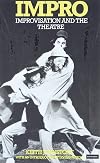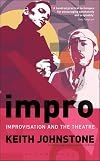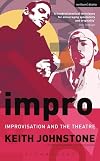
Impro: Improvisation and the Theatre
by Keith Johnstone
On This Page
Description
Impro is the most dynamic, funny, wise, practical, and provocative book on theatre craft that I have ever read. (James Roose-Evans, British theatre director, priest, and writer) Keith Johnstone's involvement with the theatre began when George Devine and Tony Richardson, artistic directors of the Royal Court Theatre, commissioned a play from him. This was in 1956. A few years later, he was associate artistic director, working as a playreader and director, in particular helping to run the show more writers' group. The improvisatory techniques and exercises that evolved there, fostering spontaneity and narrative skills, were developed further in the actors' studio and, then, in demonstrations to schools and colleges. This ultimately resulted in the founding of a company of performers called The Theatre Machine. Divided into four sections - Status, Spontaneity, Narrative Skills, and Masks and Trance - and arranged more or less in the order a group might approach them, the audiobook sets out the specific techniques and exercises which Johnstone has himself found most useful and most stimulating. The result is both an audiobook of ideas and a fascinating exploration of the nature of spontaneous creativity. This audio edition of Impro is skillfully narrated by William Reay and includes as a second appendix a previously unpublished essay The Full Mask, which Johnstone wrote 50 years after the original publication of the book. Produced and published by Echo Point Books & Media, an independent bookseller in Brattleboro, Vermont. ©1979, 1981 Keith Johnstone, Irving Wardle. show lessTags
Recommendations





Member Reviews
I just finished reading "Impro" by Keith Johnstone, and I'm going to need to read it again.
It feels like one of the most important books I've ever read, but it was terrifying. I am normally afraid of flying, but as I read it on a flight home, I was more afraid that I was too feebly inducted to the Mask, afraid of the trance state that I've never encountered.
I was repeatedly filled with gratitude for my theater teacher's brief tutelage, and envious of my past self doing this work in the school theatre of my mind. I was so lucky to have that opportunity, to be coaxed out of trepidation and into the dramatic catharsis that I wish I could share with my adult colleagues and friends.
So many of the people I met through these exercises were show more invaluable mentors. I don't know what kind of monster I would have become had school mates not been understanding and untouched by my vocalized perversions, or had directors not been masterfully "cool" and "therapeutically bland" at crucial moments.
The book also had me thinking of my professionally performing friends with pride and envy; naches because each is one of ours and envy because each is pushing herself in ways I've grown too cowardly to approach.
I am thinking of re-reading Johnstone's book for the purpose of extracting from it simple, programmatic definitions of his exercises.
I'll play them with my new D&D group, and maybe it will help them get into character!
I'll play them with my colleagues at Software Incorporated, and maybe we'll all get fired!
I'll play them religiously with the next company I form — technical or theatrical — and maybe we'll all get better! show less
It feels like one of the most important books I've ever read, but it was terrifying. I am normally afraid of flying, but as I read it on a flight home, I was more afraid that I was too feebly inducted to the Mask, afraid of the trance state that I've never encountered.
I was repeatedly filled with gratitude for my theater teacher's brief tutelage, and envious of my past self doing this work in the school theatre of my mind. I was so lucky to have that opportunity, to be coaxed out of trepidation and into the dramatic catharsis that I wish I could share with my adult colleagues and friends.
So many of the people I met through these exercises were show more invaluable mentors. I don't know what kind of monster I would have become had school mates not been understanding and untouched by my vocalized perversions, or had directors not been masterfully "cool" and "therapeutically bland" at crucial moments.
The book also had me thinking of my professionally performing friends with pride and envy; naches because each is one of ours and envy because each is pushing herself in ways I've grown too cowardly to approach.
I am thinking of re-reading Johnstone's book for the purpose of extracting from it simple, programmatic definitions of his exercises.
I'll play them with my new D&D group, and maybe it will help them get into character!
I'll play them with my colleagues at Software Incorporated, and maybe we'll all get fired!
I'll play them religiously with the next company I form — technical or theatrical — and maybe we'll all get better! show less
Improv is one those things that gets a bad rap, but when done well is amazing to watch. The principles in here beyond the most famous ones (i.e., always say yes) provide some interesting storytelling techniques: 1. interrupt a routine, 2. keep the action on-stage and don't talk about what happened elsewhere or what happened before, and 3. don't cancel out the story. The last section on masks is a bit weird, but still interesting.
This book is oddly popular in my non-theatrical circles, so I figured I'd give it a go. The first half is a man talking about the improv games he teaches and what they can teach about about interpersonal relationships. A lot of his message is that beginning improvisers need to be protected from themselves; that they need to be given permission to fail in order to take chances and become better. I find myself thinking about this a lot now that he's mentioned it.
The other big takeaway was in status games, and we as humans are incapable of doing things that are status-neutral. Everything we say and every action we take confers status, and by being cognizant of this we can use it to our advantage. Status isn't something we have; it's show more something we carve out when we need it. Most people have a preferred status that they play at, and it takes practice to get people to be able to play different statuses.
And then the last half is about letting gods into your soul or something. It mentions "possession cults" a little too often for comfort. show less
The other big takeaway was in status games, and we as humans are incapable of doing things that are status-neutral. Everything we say and every action we take confers status, and by being cognizant of this we can use it to our advantage. Status isn't something we have; it's show more something we carve out when we need it. Most people have a preferred status that they play at, and it takes practice to get people to be able to play different statuses.
And then the last half is about letting gods into your soul or something. It mentions "possession cults" a little too often for comfort. show less
A great book that hasn't dated. It has great improvisation games and the author is the real inventor of theatresports when he went to live in Vancouver. The mask stuff is still a great introduction to mask work and the devising theatre descriptions are still priceless.
I found tons of interesting and useful information in this book not only about improv and acting, but social situations and interacting with others. I would recommend this book to teachers especially. Johnstone goes into detail about the problems he finds in the way teachers interact with their students and the harm it causes the children. Highly recommended.
A beautiful, funny and amazing book about behavioural patterns and how to break them. Deep insight into human values and behaviour.
"Impro ought to be required reading not only for theatre people generally but also for teachers, educators, and students of all kinds and persuassions. Readers of this book are not going to agree with everything in it; but if they are not challenged by it, if they do not ultimately succumb to its wisdom and whimsicality, they are in a very sad state indeed . . . .Johnstone seeks to liberate the imagination, to cultivate in the adult the creative power of the child . . . .Deserves to be widely read and tested in the classroom and rehearsal hall . . .Full of excellent good sense, actual observations and inspired assetions."
–CHOICE: Books for College Libraries
–CHOICE: Books for College Libraries
Members
- Recently Added By
Lists

Mind Expanding Books by hackerkid
581 works; 8 members
Author Information

5 Works 1,025 Members
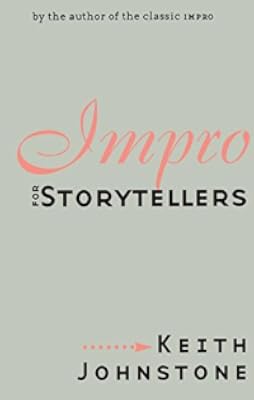
Keith Johnstone is an inspirational teacher and writer. Impro For Storytellers takes jealous and self-obsessed beginners and teaches them to play games with good nature and to fail gracefully. If you've ever been clumsy and awkward, this book will improve your interpersonal skills and encourage a life-long study of human interaction.
Common Knowledge
- Original publication date
- 1979
Classifications
- Genres
- General Nonfiction, Nonfiction
- DDC/MDS
- 792.028 — Arts & recreation Recreation, sports, and performing arts Stage presentations modified standard subdivisions Techniques, procedures, apparatus, equipment, materials, miscellany Acting and Performance
- LCC
- PN2071 .I5 — Language and Literature Literature (General) Literature (General) Drama Dramatic representation. The theater Art of acting
- BISAC
Statistics
- Members
- 797
- Popularity
- 35,062
- Reviews
- 9
- Rating
- (4.20)
- Languages
- 9 — Danish, Dutch, English, Finnish, French, German, Italian, Spanish, Swedish
- Media
- Paper, Audiobook, Ebook
- ISBNs
- 26
- ASINs
- 9