On This Page
Description
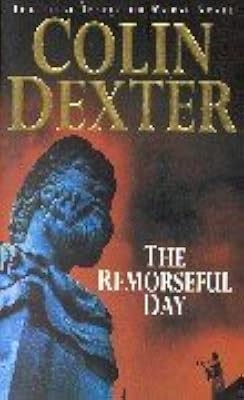
Fiction. Mystery. Suspense. Thriller. For a year, the murder of Mrs. Yvonne Harrison at her home in Oxfordshire had baffled the Thames Valley CID. The manner of her death—her naked handcuffed body left lying in bed—matched her reputation as a women of adventuresome sexual tastes. The case seemed perfect for Inspector Morse. So why has he refused to become involved—even after anonymous hints of new evidence, even after a fresh murder? Sgt. Lewis's loyalty to his infuriating boss slowly show more turns to deep distress as his own investigations suggest that Mrs. Harrison was no stranger to Morse. Far from it. Never has Morse performed more brilliantly than in this final adventure, whose masterly twists and turns through the shadowy byways of passion grip us to the death. . . . show lessTags
Recommendations






Member Reviews
I can't believe that it has taken until now for me to read a Colin Dexter book. It just goes to show how much there is out there still to be read!
This is another of those books to which I have come via the television. John Thaw did an excellent job of portraying my second favourite detective fiction (Sorry, but Daziel and Pascoe shades it - both televisually and in literary format), and, I think, that my enjoyment of the screen version delayed my perusal of the pure written form. I did not want to find too much different to the version of the detective that I knew. I need not have worried. Morse is exactly the same character as played by Thaw, the only difference being that in novel form, we are able to get deeper into the psyche of the show more main characters. This is particularly true of Strange, a bit part on TV who is much rounder in the book.
If one is going to dip a toe into the original material, where does one start? In my case, at the end with a poor quality book club version of the last book in the series. There is no logic to this, just a statement of fact.
Dexter is a superb writer. Almost like a poet, every word appears to be carefully chosen and, whilst I admit to reaching for a dictionary several times during my journey through the book, I never got the impression that he was advertising his greater vocabulary. The story is suitably tangled and keeps one on the verge of a solution from an early stage, but never quite arriving until the last few pages - just as any good whodunnit should. The book examines the human condition in an entertaining manner and was a thoroughly enjoyable experience. Whilst, of course, a certain suspension of disbelief is required, the story flows with credibility and, I'll admit to joining Lewis in a few tears as the curmudgeonly detective breathed his last. Definitely one to read again at some point. show less
This is another of those books to which I have come via the television. John Thaw did an excellent job of portraying my second favourite detective fiction (Sorry, but Daziel and Pascoe shades it - both televisually and in literary format), and, I think, that my enjoyment of the screen version delayed my perusal of the pure written form. I did not want to find too much different to the version of the detective that I knew. I need not have worried. Morse is exactly the same character as played by Thaw, the only difference being that in novel form, we are able to get deeper into the psyche of the show more main characters. This is particularly true of Strange, a bit part on TV who is much rounder in the book.
If one is going to dip a toe into the original material, where does one start? In my case, at the end with a poor quality book club version of the last book in the series. There is no logic to this, just a statement of fact.
Dexter is a superb writer. Almost like a poet, every word appears to be carefully chosen and, whilst I admit to reaching for a dictionary several times during my journey through the book, I never got the impression that he was advertising his greater vocabulary. The story is suitably tangled and keeps one on the verge of a solution from an early stage, but never quite arriving until the last few pages - just as any good whodunnit should. The book examines the human condition in an entertaining manner and was a thoroughly enjoyable experience. Whilst, of course, a certain suspension of disbelief is required, the story flows with credibility and, I'll admit to joining Lewis in a few tears as the curmudgeonly detective breathed his last. Definitely one to read again at some point. show less
This is the last of the Morse series and again another excellent novel, and another excellent narration by Samuel West.
Morse met Yvonne Harrison when he was in hospital last and he fell for her, and she for him.
Her murder comes when he is involved in another case and he initially won't take on the case and is fully aware of a conflict of interest. But he continues to take an interest in it, and when a second murder happens he agrees to become involved.
Lewis finds Morse's attitude hard to fathom and he worries about how involved Morse actually was with Yvonne Harrison, particularly after he discovers part of a letter that Morse sent to her.
This was also virtually the last of Colin Dexter's novels although he remained involved in the show more television series Lewis and Endeavour. Like the earlier novels in the series, it gave Dexter the chance to display his erudite knowledge and literary skills. These are not just police procedurals but display complicated interweaving of plot threads and character development.
Colin Dexter died in 2017. He won many awards for his novels and in 1997 was presented with a well deserved CWA Cartier Diamond Dagger for outstanding services to crime literature. I think he raised crime fiction writing to a real literary level. show less
Morse met Yvonne Harrison when he was in hospital last and he fell for her, and she for him.
Her murder comes when he is involved in another case and he initially won't take on the case and is fully aware of a conflict of interest. But he continues to take an interest in it, and when a second murder happens he agrees to become involved.
Lewis finds Morse's attitude hard to fathom and he worries about how involved Morse actually was with Yvonne Harrison, particularly after he discovers part of a letter that Morse sent to her.
This was also virtually the last of Colin Dexter's novels although he remained involved in the show more television series Lewis and Endeavour. Like the earlier novels in the series, it gave Dexter the chance to display his erudite knowledge and literary skills. These are not just police procedurals but display complicated interweaving of plot threads and character development.
Colin Dexter died in 2017. He won many awards for his novels and in 1997 was presented with a well deserved CWA Cartier Diamond Dagger for outstanding services to crime literature. I think he raised crime fiction writing to a real literary level. show less
The last book in the series ... and the best. I've only recently realised that these aren't detective stories, so much as character studies of Chief Inspector Morse: with that, I've changed my attitude and it's been richly rewarded with my appreciation peaking at the same time as Dexter's craft.
Strange (Morse's boss, coming into focus more sharply, and now mirroring the TV series portrayal) directs Morse to take on a case hard on the heels of Morse recovering from ill health. Morse is reluctant, and complications regarding his involvement with the murder victim are highlighted. Lewis is caught in the middle of the interplay between Morse and Strange, but the bond between Morse and Lewis seems ever deeper. More murders follow, and the show more plot is just as convoluted as always. The ending - as befits the last in the series - is less ambiguous than that of some of the others, but has significant punch.
My previous dissatisfaction with earlier works was not present on this excursion, and I happily went along with the baffling twists and turns in the investigations as suspects are flagged up and then removed from the plot. I ignored the red herrings and dead ends, and concentrated on the interplay between Morse, Lewis and Strange as they each moved towards different parts of their lives and/or careers. Dexter's use of cultural snippets to presage the events in each chapter is something I've always been happy with, and he still drops in words that baffle me. That mannered writing style does mean that it's not transparent, and that you have to concentrate rather than just let the words wash over you. For this reason, I can't give the book top marks.
So, a fitting conclusion to the series and I'm glad I stuck with it after the shaky start. As to whether I'd recommend it ... Well, for a fan of detective stories it is a must, but if you're going to tackle the series on the basis of the TV stories then I'd say that you need to treat them as separate things: if you don't get along with the first few books in the series then - even though they get better - the series will still turn out to be a slog. As for me - this final story made it all worthwhile. show less
Strange (Morse's boss, coming into focus more sharply, and now mirroring the TV series portrayal) directs Morse to take on a case hard on the heels of Morse recovering from ill health. Morse is reluctant, and complications regarding his involvement with the murder victim are highlighted. Lewis is caught in the middle of the interplay between Morse and Strange, but the bond between Morse and Lewis seems ever deeper. More murders follow, and the show more plot is just as convoluted as always. The ending - as befits the last in the series - is less ambiguous than that of some of the others, but has significant punch.
My previous dissatisfaction with earlier works was not present on this excursion, and I happily went along with the baffling twists and turns in the investigations as suspects are flagged up and then removed from the plot. I ignored the red herrings and dead ends, and concentrated on the interplay between Morse, Lewis and Strange as they each moved towards different parts of their lives and/or careers. Dexter's use of cultural snippets to presage the events in each chapter is something I've always been happy with, and he still drops in words that baffle me. That mannered writing style does mean that it's not transparent, and that you have to concentrate rather than just let the words wash over you. For this reason, I can't give the book top marks.
So, a fitting conclusion to the series and I'm glad I stuck with it after the shaky start. As to whether I'd recommend it ... Well, for a fan of detective stories it is a must, but if you're going to tackle the series on the basis of the TV stories then I'd say that you need to treat them as separate things: if you don't get along with the first few books in the series then - even though they get better - the series will still turn out to be a slog. As for me - this final story made it all worthwhile. show less
Excellent writing. I love the Morse character, who had become real for me, having watched John Thaw bring him to life in the TV series and had never wanted to read this last story or see the last episode of the series and watch him die. Still, it was a pleasure to read this book, so well put together. I never wanted to put it down, even though I knew that I would be left very sad at the end.
Not the best of the Morse books, definitely not the first to read in the series. Feels more like a pastiche, or parody even, than a full work of Colin Dexter; Lewis, Morse and Strange have become caricatures rather than the interesting characters they were.
I read a reviewer who said that fans of Inspector Morse should not be put off in reading this book just because it is the last one, and Dexter kills Morse off at the end. I was one of that crowd, but I finally got around to the book. The story involves an old case of murder of a woman with whom Morse may, or may not, have had an affair and in the light of which he may, or may not, have interfered in some way with the original investigation even though he was not directly assigned to it. All of this causes Lewis to question Morse's honesty and objectivity, and he only finds the truth after Morse's death. The story is vintage Morse with a case that no one else seems able to solve, with all sorts of twists and turns and false leads but show more through which Morse, with his intuitive thinking and curmudgeonly style finds the threads that finally come together. Morse is not in good shape at the beginning of the novel and at the end he suffers a heart attach which does not kill him immediately, but which puts him in the hospital where he lingers for only a few days.
Dexter pulls no emotional punches. At the end, Morse has one more sip of scotch from the nurse, and then:
For just a little while, Morse opened his eyes and looked up at her.
"Please thank Lewis for me..."
But so softly spoken were the words that she wasn't quite able to catch them.
And then, in a more universal appreciation of what it means when a life is extinguished, Lewis is at the morgue:
The eyes were closed, but the expression on the waxy face was hardly one of great serenity, for some hint of pain still lingered there. Like so many other contemplating a dead person, Lewis found himself pondering so many things as he thought of Morse's mind within the skull. Thought of that wonderful memory, of that sensitivity to music and literature, above all of that capacity for thinking laterally, vertically, diagonally – whateverwhichway that extraordinary brain should decide to go. But all gone now, for death had scattered that union of component atoms into the air, and Morse would never move or think or speak again.
Feeling slightly guilty, Lewis looked around him. But at least for the moment his only company was the dead. And bending down he put his lips to Morse's forehead, and whispered just two final words: "Goodbye, sir."
(Sept/00) show less
Dexter pulls no emotional punches. At the end, Morse has one more sip of scotch from the nurse, and then:
For just a little while, Morse opened his eyes and looked up at her.
"Please thank Lewis for me..."
But so softly spoken were the words that she wasn't quite able to catch them.
And then, in a more universal appreciation of what it means when a life is extinguished, Lewis is at the morgue:
The eyes were closed, but the expression on the waxy face was hardly one of great serenity, for some hint of pain still lingered there. Like so many other contemplating a dead person, Lewis found himself pondering so many things as he thought of Morse's mind within the skull. Thought of that wonderful memory, of that sensitivity to music and literature, above all of that capacity for thinking laterally, vertically, diagonally – whateverwhichway that extraordinary brain should decide to go. But all gone now, for death had scattered that union of component atoms into the air, and Morse would never move or think or speak again.
Feeling slightly guilty, Lewis looked around him. But at least for the moment his only company was the dead. And bending down he put his lips to Morse's forehead, and whispered just two final words: "Goodbye, sir."
(Sept/00) show less
I still find it difficult to like the Morse novels (where the essentially romantic Morse of the TV veers towards the leery and prurient - not to mention patronising), but this is better than the earlier ones and the detective story itself is intricate and well designed..
Members
- Recently Added By
Lists

The Guardian's 1000 Novels Everyone Must Read
1,005 works; 550 members

Survey of Mysteries and Crime Fiction
96 works; 17 members

Best Crime Fiction
48 works; 3 members

Books About Murder
313 works; 7 members
Detective Stories
343 works; 5 members

Books Read in 2014
2,343 works; 86 members

Read in 2014
334 works; 11 members

BBC Radio 4 Bookclub
340 works; 13 members
Author Information

124+ Works 18,844 Members
Norman Colin Dexter was born in Stamford, Lincolnshire, England on September 29, 1930. He received a bachelor's degree in classics in 1953 and a master's degree in 1958 at from Christ's College, Cambridge University. He taught classics for many years, but growing deafness forced him to retire in 1966. For the next two decades, he was the senior show more assistant secretary at the Oxford Delegacy of Local Examinations. He retired in 1988 to become a full-time writer. He was best known for creating the character Chief Inspector Morse. The Inspector Morse series began in 1975 with Last Bus to Woodstock and ended in 1999 with The Remorseful Day. The books were adapted into the television series Inspector Morse, which ran from 1987 to 2000. Dexter won the British Crime Writers' Gold Dagger Award for The Wench is Dead in 1989 and again in 1992 for The Way Through the Woods. He received the organization's lifetime achievement award, the Diamond Dagger, in 1997. He also wrote Cracking Cryptic Crosswords: A Guide to Solving Cryptic Crosswords in 2010. He died on March 21, 2017 at the age of 86. (Bowker Author Biography) show less
Some Editions
Awards and Honors
Series

Belongs to Publisher Series
rororo (22819)
Work Relationships
Is contained in
Common Knowledge
- Canonical title
- The Remorseful Day
- Original title
- The Remorseful Day
- Original publication date
- 1999
- People/Characters
- Inspector Morse; Sergeant Lewis
- Important places
- Oxford, Oxfordshire, England, UK; Oxfordshire, England, UK
- Related movies
- Inspector Morse: The Remorseful Day (2000 | IMDb)
- Epigraph
- Ensanguining the skies
How heavily it dies
Into the west away;
Past touch and sight and sound
Not further to be found
How hopeless underground
Falls the remorseful day
(A.E. Housman, More Poems, XVI)
<... (show all)br>When I wrote my 1997 letter I thought I had little to look forward to in 1998, but it turns out that I was stupidly optimistic
(David MacKenzie, On the Dole in Darlington)
Prolegomenon
As o'er me now thy lean'st thy breast,
With launder'd bodice crisply pressed,
Lief I'd prolong my grievous ill--
Wert thou my guardian angel still.
(Edmund Raikes, 1537-65, The Nur... (show all)se)
Chapter 1
You holy Art, when all my hope is shaken,
And through life's raging tempest am I drawn,
You make my heart with warmest love to waken,
As if into a better world reborn.
(From An Die Mu... (show all)sik, translated by Basil Swift)
Chapter 2
When Napoleon's eagle eye flashed down the list of officers proposed for promotion, he was wont to scribble in the margin against any particular name: "Is he lucky, though?"
(Felix Kirkmarkham, <... (show all)i>The Genius of Napoleon)
Chapter 3
Which of you shall have a friend and shalt go unto him at midnight and say unto him, Friend, lend me three loaves. And he from within shall answer and say, Trouble me not: the door is now shut; I cannot... (show all) rise and give thee. I say unto you, though he will not rise and give him, because he is his friend, yet because of his importunity he will rise and give him as many as he needeth.
(St. Luke, ch. XI, vv. 5-8)
Chapter 4
He and the sombre, silent Spirit met--
They knew each other both for good and ill;
Such was their power, that neither could forget
His former friend and future foe; but still
There was a hig... (show all)h, immortal, proud regret
In either's eye, as if 'twere less their will
Than destiny to make the eternal years
Their date of war, and their "Champ Clos" the spheres.
(Byron, The Vision of Judgment, XXXII)
Chapter 5
In the country of the blind, the one-eyed man is King.
(Afghan proverb)
Chapter 6
The English country gentleman galloping after a fox -- the unspeakable in full pursuit of the uneatable.
(Oscar Wilde)
Chapter 7
Whoever could possibly confuse "Traffic Lights" and "Driving License"? You could! Just stand in front of your mirror tonight and mouth those two phrases silently to yourself.
(Lynne Dubin, Th... (show all)e Limitations of Lip-reading)
Chapter 8
Bankers are just like anybody else,
Except richer.
(Ogden Nash, I'm a Stranger Here Myself)
Chapter 9
He looked at me with eyes I thought
I was not like to find.
(A. E. Housman, More Poems, XLI)
Chapter 10
He was a self-made man who owed his lack of success to nobody.
(Joseph Heller, Catch-22)
Chapter 11
Take notice, lords, he has a loyal breast,
For you have seen him open 't. Read o'er this;
And after, this: and then to breakfast with
What appetite you have.
(Shakespeare, Henry VIII... (show all))
Chapter 12
Yet ev'n these bones from insult to protect
Some frail memorial still erected nigh,
With uncouth rhimes and shapeless sculpture deck'd,
Implores the passing tribute of a sigh.
(Thomas G... (show all)ray, Elegy Written in a Country Churchyard)
Chapter 13
Ponderanda sunt testimonia, non numeranda.
(All testimonies aggregate
Not by their number, but their weight)
(Latin proverb)
Chaper 14
The man who says to one, go, and he goeth, and to another, come, and he cometh, has, in most cases, more sense of restraint and difficulty than the man who obeys him.
(John Ruskin, The Stones of Veni... (show all)ce)
Chapter 15
I have received no more than one or two letters in my life that were worth the postage.
(Henry Thoreau)
Chapter 16
The vilest deeds like poison weeds
Bloom well in prison-air,
It is only what is good in Man
That wastes and withers there:
Pale Anguish keeps the heavy gate.
And the warder is Despair.... (show all)i>
(Oscar Wilde, The Ballad of Reading Gaol)
Chapter 17
What is it that roareth thus?
Can it be a Motor Bus?
All this noise and hideous hum
Indicat Motorem Bum.
(Anon.)
Chapter 18
Any fool can tell the truth; but it requires a man of some sense to know how to lie well.
(Samuel Butler)
Chapter 19
It's good to hope; it's the waiting that spoils it.
(Yiddish proverb)
Chapter 20
Then said the Jews unto him, Thou art not yet fifty years old, and hast thou seen Abraham? Jesus said unto them, Verily, verily, I say unto you, Before Abraham was, I am.
(The Gospel according to St... (show all). John, ch. VII, vv. 57, 58)
Chapter 21
BURMA (Be Undressed Ready My Angel)
(An acronym frequently printed on the backs of envelopes posted to sweethearts by servicement about to go on leave, or by prisoners about to be released.)
Chapter 22
. . . a mountain range of Rubbish, like an old volcano, and its geological foundation was Dust, Coal-dust, vegetable-dust, bone-dust, crockery-dust, rough dust, and sifted dust -- all manner of Dust in th... (show all)e accumulated Rubbish.
(Dickens, Our Mutual Friend)
Chapter 23
A novel, like a beggar, should always be kept "moving on." Nobody knew this better than Fielding, whose novels, like most good ones, are full of inns.
(Augustine Birrell, The Office of Literature... (show all)>)
Chapter 24
In many an Oxfordshire Ale-house the horseshoe is hung upside-down, in the form that is of an Arch or an Omega. This age-old custom (I have been convincingly informed) is not to allow the Luck to run out ... (show all)but to prevent the Devil building up a nest therein.
(D. Small, A Most Complete Guide to the Hostelries of the Cotswolds)
Chapter 25
Sometimes it is that searchers spot
The kind of thing they'd rather not.
(Lessing, Nathan der Weise)
Chapter 26
UNDERGRADUATE: But you're blowing up the wrong tyre, sir. It's the back one that's flat.
DON: Goodness me! You mean the two of them are not connected?
(Freshman seeking to assist his tutor outside ... (show all)Trinity College, Oxford)
Chapter 27
In the afternoon they came unto a land
In which it seemed always afternoon,
All round the coast the languid air did swoon,
Breathing like one that hath a weary dream.
(Tennyson, The ... (show all)Lotus-eaters)
Chapter 28
Alas, poor Yorick! -- I knew him, Horatio.
(Shakespeare, Hamlet)
Chapter 29
CALIPH: And now how shall we employ the time of waiting for our deliverance?
JAFAR: I shall meditate upon the mutability of human affairs.
MASRUR: And I shall sharpen my sword upon my thigh.
HA... (show all)SSAN: And I shall study the pattern of this carpet.
CALIPH: Hassan, I will join thee: Thou art a man of taste.
(James Elroy Flecker, Hassan)
Chapter 30
Often would the deaf man know the answers had he but the faculty of hearing the questions. Likewise would the unimaginative man guess wisely at the answers had he but the wit of posing to himself the appr... (show all)opriate questions.
(Viscount Mumbles, from Essays on the Imagination)
Chapter 31
His voice was angry: "What time do you call this?"
She stood penitently on the doorstep: "Sorry!"
"Where've you parked?" (It was the decade's commonest question in Oxford.)
"Exactly... (show all)i>. I just couldn't find a parking space anywhere."
(Terry Benczik, Still Life with Absinthe)
Chapter 32
Should any young or old officer experience incipient or actual signs of vomiting at the sight of some particularly harrowing scene of crime the said person should not necessarily attribute such nausea to ... (show all)some psychological vulnerability, but rather to the virtually universal reflex-reactions of the upper intestine.
(The SOCO Handbook, Revised 1999)
Chapter 33
For the good are always the merry,
Save by an evil chance.
And the merry love the fiddle,
And the merry love to dance:
And when the folk there spy me,
They will all come up to me,
And dance like a wave of the sea.
(W. B. Yeats, The Fiddler of Dooney)
Chapter 34
Sunt lacrimae rerum et mentem mortalia tangunt.
(Always in life are there tears being shed for things, and human suffering ever touches the heart.)
(Virgil, Aeneid, I, I. 462)
Chapter 35
The trouble about always trying to preserve the health of the body is that it is so difficult to do without destroying the health of the mind.
(G. K. Chesterton)
Chapter 36
Dr. Franklin shewed me that the flames of two candles joined give a much stronger light than both of them separate; as is made very evident by a person holding the two candles near his face, first separat... (show all)e, and then joined in one.
(Joseph Priestley, Optiks)
Chapter 37
Careless talk costs lives.
(Second World War slogan)
I think men who have a pierced ear are better prepared for marriage. They've experienced pain and bought jewelry.
(Rita Rudner)
Chapter 38
All persons are puzzles until at last we find in some word or act the key to the man, to the woman; straightaway all their past words and actions lie in light before us.
(Emerson, Journals... (show all)>)
Chapter 39
Q: Doctor, how many autopsies have you performed on dead people?
A: All of my autopsies are performed on dead people.
(Reported in the Massachusetts Lawyers' Journal)
Chapter 40
Odd instances of strange coincidence are really not all that odd perhaps.
(Queen Caroline's advocate, speaking in the House of Lords)
Chapter 41
But when he once attains the utmost round,
He then unto the ladder turns his back,
Looks in the clouds, scorning the base degrees
By which he did ascend.
(Shakespeare, Julius Caesar<... (show all)/i>)
Chapter 42
And what is the use of a book without pictures or conversations?
(Lewis Carroll, Alice in Wonderland)
Chapter 43
For coping with even one quarter of that running course known as "Marathon" -- for coping without frequent halts for refreshment or periodic bouts of vomiting -- a man has to dedicate one half of his usef... (show all)ul years to quite intolerable training and endurance. Such dedication is not for me.
(Diogenes Small, 1797-1805, The Joys of Occasional Idleness)
Chapter 44
CLINTON WINS ON BUDGET, BUT MORE LIES AHEAD
(From USA's Best Newspaper Headlines, 1997)
Chapter 45
Nunquam ubi sub ubi!
Chapter 46
For the clash between the Classical and the Gothic revivals, visitors might go to the top end of Beaumont Street and compare the Greek glory of the Ashmolean on the left with the Gothic push of the Randol... (show all)ph Hotel on the right.
(Jan Morris, Oxford)
Chapter 47
Different things can add up in different ways whilst reaching an identical solution, just as "eleven plus two" forms an anagram of "twelve plus one".
(Margot Gleave, A Classical Education)
Chapter 48
We trust we are not guilty of sacrilege in suggesting that the teaching of Religious Knowledge in some schools would pose an almighty challenge even for the Almighty Himself.
(From the introduction to ... (show all)Religious Education in Secondary Schools, 1967-87, HMSO)
Chapter 49
"God save thee, ancient Mariner!
From the fiends, that plague thee thus!--
Why look'st thou so?" -- "With my cross-bow
I shot the Albatross."
(Coleridge, The Rime of the Ancient Mari... (show all)ner)
Chapter 50
I can't tell a lie -- not even when I hear one.
(John Bangs, 1862-1922)
Chapter 51
Once cheated, wife or husband feels the same; and where there's marriage without love, there will be love without marriage.
(Benjamin Franklin, Poor Richard's Almanack)
Chapter 52
With a gen'rous ol' pal who will pick up the tab
It's always real cool in a nice taxi-cab.
(J. Willington Spoole, Mostly on the Dole)
Chapter 53
At which period there were gentlemen and there were seamen in the navy. But the seamen were not gentlemen; and the gentlemen were not seamen.
(Macaulay, History of England)
Chapter 54
The time you won your town the race
We chaired you through the market-place;
Man and boy stood cheering by,
And home we brought you shoulder-high.
To-day, the road all runners come,
... (show all)Shoulder-high we bring you home.
And set you at your threshold down,
Townsman of a stiller town.
(A. E. Housman, A Shropshire Lad, XIX)
Chapter 55
Wherefore seeing we also are encompassed about with so great a cloud of witnesses, let us lay aside every prejudice and error that so doth easily beset us.
(St. Paul, Hebrews, ch. XII, v. 1)
Chapter 56
Have I Got News for You!
(TV program title)
Chapter 57
Ah, could thy grave, at Carthage, be!
Care not for that, and lay me where I fall!
Everywhere heard will be the judgement-call:
But at God's altar, oh! remember me.
(Matthew Arnold)
Chapter 58
It remains quite a problem to play the clarinet with false teeth, because there is great difficulty with the grip (this may even result in the plate being pulled out!). In addition there are problems wit... (show all)h the breathing, because it is difficult to project a successful airstream.
(Paul Harris, Clarinet Basics)
Chapter 59
Wherever God erects a house of prayer,
The Devil always builds a chapel there;
And 'twill be found, upon examination,
The latter has the largest congregation.
(Daniel Defoe, The True... (show all)-born Englishman)
Chapter 60
Have respect unto the covenant: for the dark places of the earth are full of the habitations of cruelty.
(Psalm74, v. 20)
Chapter 61
character (n.) handwriting, style of writing; Shakes. Meas. for M. Here is the hand and seal of the Duke. You know the character, I doubt not.
(Small's Enlarged English Dict., 18th... (show all) ed.)
Chapter 62
Don't tell me, sweet, that I'm unkind
Each time I black your eye,
Or raise a weal on your behind --
I'm just a loving guy.
We both despise the gentle touch,
So cut out the pretence;
Y... (show all)ou wouldn't love it half as much
Without the violence.
(Roy Dean, Lovelace Bleeding)
Chapter 63
With much talk will they tempt thee, and smiling upon thee will get out thy secrets.
(Ecclesiasticus, ch. XIII, v. 11)
Chapter 64
Refrain to-night
And that shall lead a kind of easiness
To the next abstinence: to the next more easy;
For use almost can change the stamp of nature.
(Shakespeare, Hamlet)
Chapter 65
Jealousy is that pain which a man feels from the apprehension that he is not equally beloved by the person whom he entirely loves.
(Addison, The Spectator)
Chapter 66
We might now be stepping through a dark door with no bottom on the other side, and fall flat on our faces.
(A member of the Honolulu City Council, quoted by the Press Corps)
Chapter 67
To run away from trouble is a form of cowardice; and whilst it is true that the suicide braves death, he does it not for some noble object but to escape some ill.
(Aristotle, Nicomachean Ethics)
Chapter 68
It is not the criminal things which are hardest to confess, but the ridiculous and the shameful.
(Rousseau, Confessions)
Chapter 69
SEC. OFF.: Antonio, I arrest thee at the suit of Count Orsino.
ANT.: You do mistake me, sir.
SEC. OFF.: No, sir, no jot.
(Shakespeare, Twelfth Night)
Chapter 70
I cried for madder music and for stronger wine,
But when the feast is finished and the lamps expire,
Then falls thy shadow, Cynara! the night is thine;
And I am desolate and sick of an old pas... (show all)sion,
Yea, hungry for the lips of my desire:
I have been faithful to thee, Cynara! in my fashion.
(Dowson, Non Sum Qualis Eram Bonae Sub Regno Cynarae)
Chapter 71
What more pleasant setting than the cinema for sweetly deodorized bodies to meet, unzip, and commune?
(Malcolm Muggeridge, The Most of Malcolm Muggeridge)
Chapter 72
Below me, there is the village, and looks how quiet and small!
And yet bubbles o'er like a city, with gossip, scandal, and spite.
(Tennyson, Maud)
Chapter 73
When I have fears that I may cease to be
Before my pen has glean'd my teeming brain . . .
(Keats, Sonnet)
Chapter 74
We are adhering to life now with our last muscle -- the heart.
(Djuna Barnes, Nightwood)
Chapter 75
The cart is shaken all to pieces, and the rugged road is very near its end.
(Dickens, Bleak House)
Chapter 76
Say, for what were hop-yards meant,
Or why was Burton built on Trent?
Oh many a peer of England brews
Livelier liquor than the Muse,
And malt does more than Milton can
To justify God's w... (show all)ays to man.
(A. E. Housman, A Shropshire Lad)
Chapter 77
Dear Sir/Madam
Please note that an entry on the Register of Electors in your name has been deleted for the following reason:
DEATH
If you have any objections, please notify me, in wri... (show all)ting, before the 25th November, 1998, and state the grounds for your objection.
Yours faithfully
(Communication from Carlow County Council to an erstwhile elector)
Chapter 78
. . . & that I be not bury'd in consecrated ground
& that no sexton be asked to toll the bell
& that no murners walk behind me at my funeral
& that no flours be planted on my g... (show all)rave . . .
(Thomas Hardy, The Mayor of Casterbridge)
Chapter 79
Heaven has no rage like love to hatred turned,
Nor hell a fury like a woman scorned.
(Congreve, The Mourning Bride)
If you're guilty, you'll have to prove it.
(Groucho Marx)
Chapter 80
I am retired. I am to be met with in trim gardens. I am already come to be known by my vacant face and careless gesture, perambulating at no fixed pace nor with any settled purpose. I walk about; not to ... (show all)and from.
(Charles Lamb, Last Essays of Elia)
Epilogue
Certainly the gods are ironical: they always punish one for one's virtues rather than for one's sins.
(Ernest Dowson, Letters) - Dedication
- For George, Hilary, Maria, and Beverley (Please note the Oxford comma)
- First words
- "So I often hook my foot over the side of the mattress."
- Last words
- (Click to show. Warning: May contain spoilers.)And after looking around him as guiltily as Morse must have done in the Summertown newsagent's, for a little while, in his desolation, he wept silently.
- Original language*
- englanti
*Some information comes from Common Knowledge in other languages. Click "Edit" for more information.
Classifications
Statistics
- Members
- 1,604
- Popularity
- 14,140
- Reviews
- 19
- Rating
- (3.95)
- Languages
- 10 — Danish, Dutch, English, Finnish, French, German, Icelandic, Italian, Slovenian, Swedish
- Media
- Paper, Audiobook, Ebook
- ISBNs
- 46
- ASINs
- 15