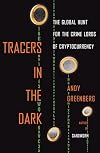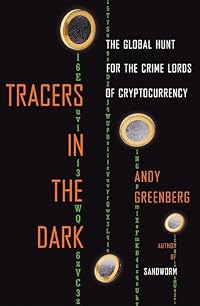
Tracers in the Dark: The Global Hunt for the Crime Lords of Cryptocurrency
by Andy Greenberg
On This Page
Description
"A propulsive story of a new breed of investigators who have cracked the Bitcoin blockchain, taking once-anonymous realms of money, drugs, and violence and holding them up to the light Black markets have always thrived in the shadows of society. Increasingly, these enterprises-drug dealing, money laundering, human trafficking, terrorist funding-have found their shadows online. Digital crime lords inhabiting lawless corners of the internet have operated more freely than their analog show more counterparts could have ever dreamed of. At the heart of their massive conspiracies: cryptocurrency. By transacting not in dollars or pounds but in Bitcoin-a currency with anonymous ledgers, overseen by no government, beholden to no bankers-black marketeers robbed law enforcement for years of their chief method of cracking down on criminal markets, namely, following the money. But what if the centerpiece of this dark economy held a secret, fatal flaw? What if their currency wasn't so cryptic after all? An investigator using the right mixture of technical wizardry, financial forensics, and old-fashioned persistence could crack open an entire world of crime. Men with No Names is a story of crime and consequences unlike any other. With unprecedented access to the major players in federal law enforcement and private industry, veteran cybersecurity reporter Andy Greenberg tells an astonishing saga of criminal empires built and destroyed. He introduces an IRS agent with a defiant streak; a Bitcoin-tracing Danish entrepreneur; and a colorful ensemble of hardboiled agents and prosecutors as they delve deep into the crypto-underworld. The result is a thrilling, globe-spanning story of dirty cops, drug bazaars, sex-abuse rings, and the biggest takedown of an online narcotics market in the history of the internet. This is a cat-and-mouse story and a tale of a technological one-upmanship that's utterly of our time. Filled with canny maneuvering and shocking twists, it answers a provocative question: How would some of the world's most brazen criminals behave if they were sure they could never get caught?"-- show lessTags
Recommendations





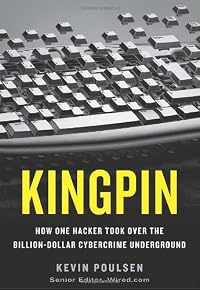
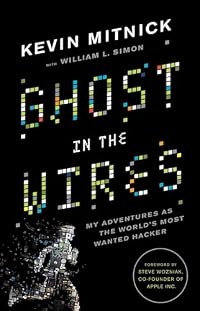
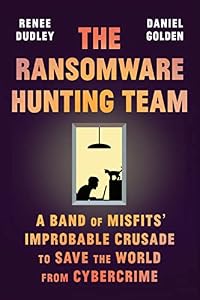

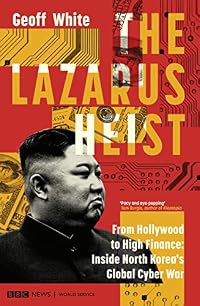
















Member Recommendations


Member Reviews
I listened to this book in a day and a half, it was that engaging. Starting with money-laundering crypto-crime, Greenberg spends most of the book on the AlphaBay dark web drug marketplace, and the take-down of its founder in Thailand. His profiles of the bad guys and the good guys bring them all to life (this is a mini-series begging to happen) in a way that's hard to put down.
Once that's done, Greenberg moves on to the grimmest part of the story, the uses of crypto to fund the global market for child abuse videos. He concludes with more recent efforts to circumvent the discoverability of crypto sources with ever-more-creative new models, and the always-accelerating efforts of law enforcement to stay one step ahead of crime.
absolutely show more fascinating. show less
Once that's done, Greenberg moves on to the grimmest part of the story, the uses of crypto to fund the global market for child abuse videos. He concludes with more recent efforts to circumvent the discoverability of crypto sources with ever-more-creative new models, and the always-accelerating efforts of law enforcement to stay one step ahead of crime.
absolutely show more fascinating. show less
I swear this book reads more like a spy novel than accurate events surrounding the tracking down and arrest of cryptocurrency crooks. One of the attractions of Bitcoin and other cryptocurrencies was their supposed impenetrability to law enforcement. But as with anything digital, there’s always a way, and this is also a story of how clever researchers and cops discovered ways to track transactions by using the very device, the blockchain, that was supposed to guarantee both anonymity and security.
But a more basic and skeptical thought immediately struck Gambaryan about this new form of currency. “Participants can be anonymous,” he had read. But if this blockchain truly recorded every transaction in the entire Bitcoin economy, then show more it sounded like the precise opposite of anonymity: a trail of bread crumbs left behind by every single payment. A forensic accountant’s dream...Gambaryan had always had his doubts about Bitcoin’s untraceability. From the very first time he’d read about Bitcoin, back in 2010, his accountant’s brain had wondered how it could truly provide anonymity when the records of every transaction were shared with so many thousands of machines around the world—even if those transactions were to addresses rather than names
The blockchain is a form of public ledger that is duplicated across millions of computers and involves solving a mathematical algorithm that requires increasing amounts of computer power. Because it is public and always duplicated, it’s trusted, but it also provides an enormous amount of data for analysis.
When someone moves a sum of bitcoins, their wallet software broadcasts the transaction over the internet to Bitcoin’s network of “nodes,” the thousands of servers around the world that store copies of the blockchain. Whichever node first receives the announcement of the new transaction then passes it on to other nodes, which in turn broadcast it out further, so that the record of the payment is confirmed and copied into the blockchain’s global ledger of all transactions. The system is a bit like a crowd of people who each whisper a rumor to their immediate neighbors, so that the information spreads virally through the crowd in ripples—but at digital speeds designed to inform the entire network in minutes or even seconds.
Some of the agencies involved in the hunt are unknown to the vast majority of people. The IRS-CI, for example, an arm of the IRS had some very sophisticated analysts who loved the challenge of breaking the unbreakable and beating a new cipher.
“Every Bitcoin user has access to the public Bitcoin blockchain and can see every Bitcoin address and its respective transfers. Due to this publicity, it is possible to determine the identities of Bitcoin address owners by analyzing the blockchain,” the ruling read. “There is no intrusion into a constitutionally protected area because there is no constitutional privacy interest in the information on the blockchain.The HSI agent wasn’t caught in the Welcome to Video dragnet because IRS agents had violated his privacy. He was caught, the judges concluded, because he had mistakenly believed his Bitcoin transactions to have ever been private in the first place.”
As the Berkeley researcher Nick Weaver had warned, and as cryptocurrency users around the world were finally learning, “The blockchain is forever.”
Very interesting book that should cause those wanting to transact criminally in cryptocurrency to tremble.
Note that Tigran Gambaryan, one of the principal IRS investigators working on tracing bitcoin blockchain transactions has been imprisoned in Nigeria. “Gambaryan was detained alongside a colleague in mid-March on the grounds that Binance had devalued the country’s fiat currency and enabled the “illicit” transfer of funds. While his colleague was able to escape, Gambaryan remains imprisoned on financial crimes charges—even as a growing number of US lawmakers pressure the Biden administration to facilitate his release.” Wired Magazine show less
But a more basic and skeptical thought immediately struck Gambaryan about this new form of currency. “Participants can be anonymous,” he had read. But if this blockchain truly recorded every transaction in the entire Bitcoin economy, then show more it sounded like the precise opposite of anonymity: a trail of bread crumbs left behind by every single payment. A forensic accountant’s dream...Gambaryan had always had his doubts about Bitcoin’s untraceability. From the very first time he’d read about Bitcoin, back in 2010, his accountant’s brain had wondered how it could truly provide anonymity when the records of every transaction were shared with so many thousands of machines around the world—even if those transactions were to addresses rather than names
The blockchain is a form of public ledger that is duplicated across millions of computers and involves solving a mathematical algorithm that requires increasing amounts of computer power. Because it is public and always duplicated, it’s trusted, but it also provides an enormous amount of data for analysis.
When someone moves a sum of bitcoins, their wallet software broadcasts the transaction over the internet to Bitcoin’s network of “nodes,” the thousands of servers around the world that store copies of the blockchain. Whichever node first receives the announcement of the new transaction then passes it on to other nodes, which in turn broadcast it out further, so that the record of the payment is confirmed and copied into the blockchain’s global ledger of all transactions. The system is a bit like a crowd of people who each whisper a rumor to their immediate neighbors, so that the information spreads virally through the crowd in ripples—but at digital speeds designed to inform the entire network in minutes or even seconds.
Some of the agencies involved in the hunt are unknown to the vast majority of people. The IRS-CI, for example, an arm of the IRS had some very sophisticated analysts who loved the challenge of breaking the unbreakable and beating a new cipher.
“Every Bitcoin user has access to the public Bitcoin blockchain and can see every Bitcoin address and its respective transfers. Due to this publicity, it is possible to determine the identities of Bitcoin address owners by analyzing the blockchain,” the ruling read. “There is no intrusion into a constitutionally protected area because there is no constitutional privacy interest in the information on the blockchain.The HSI agent wasn’t caught in the Welcome to Video dragnet because IRS agents had violated his privacy. He was caught, the judges concluded, because he had mistakenly believed his Bitcoin transactions to have ever been private in the first place.”
As the Berkeley researcher Nick Weaver had warned, and as cryptocurrency users around the world were finally learning, “The blockchain is forever.”
Very interesting book that should cause those wanting to transact criminally in cryptocurrency to tremble.
Note that Tigran Gambaryan, one of the principal IRS investigators working on tracing bitcoin blockchain transactions has been imprisoned in Nigeria. “Gambaryan was detained alongside a colleague in mid-March on the grounds that Binance had devalued the country’s fiat currency and enabled the “illicit” transfer of funds. While his colleague was able to escape, Gambaryan remains imprisoned on financial crimes charges—even as a growing number of US lawmakers pressure the Biden administration to facilitate his release.” Wired Magazine show less
Not as good as the reviews, but still very interesting. I learned alot about cryptocurrency and the blockchain. The one thing that surprised me more than anything was the level of cooperation between agencies and other persons trying to track down criminals through their efforts at de-anonymizing the blockchain. The section on sexual abuse of children was hard to read, though.
It was a little long in the end, but overall it was a page turner. The writing is accessible to people who have little knowledge of cryptocurrency. The author strives to present a balanced picture of the technology used to track criminals through their use of cryptocurrency.
I never thought I would want to read a book about Bitcoin, but this book was just so freaking fascinating. I had a hard time putting it down. I want there to be a sequel, and then I want to read that sequel!
Andy Greenberg’s Tracers in the Dark once again shows us the value of independent journalism in a vastly changing world.
It can’t have escaped Greenberg’s attention that his stories of cybercrime and law enforcement predates the golden age of large language models, also known as but not confined to generative AI.
Law enforcement and the criminals will undoubtedly use AI in new attempts to foul and/or secure privacy of crypto transactions.
This book is further proof to me that the fall of the Putin and N. Korean regimes cannot come fast enough, as they are harbouring and in too many cases hosting cybercrime crime on a massive scale.
It can’t have escaped Greenberg’s attention that his stories of cybercrime and law enforcement predates the golden age of large language models, also known as but not confined to generative AI.
Law enforcement and the criminals will undoubtedly use AI in new attempts to foul and/or secure privacy of crypto transactions.
This book is further proof to me that the fall of the Putin and N. Korean regimes cannot come fast enough, as they are harbouring and in too many cases hosting cybercrime crime on a massive scale.
Nicely confirms my thought back in ~2013 that Bitcoin's global, permanent ledger made transactions the opposite of anonymous. Disappointing that to first approximation, all "commerce" conducted via cryptocurrencies is for child porn, drugs, arms or ransomware payments.
Members
- Recently Added By
Lists

Penguin Random House
458 works; 4 members
Author Information

7 Works 1,074 Members
Awards and Honors
Notable Lists
Common Knowledge
- Original publication date
- 2022
Classifications
- Genres
- Nonfiction, Technology, Politics and Government, Business, General Nonfiction, Biography & Memoir
- DDC/MDS
- 364.16 — Society, Government, and Culture Social problems and social services Crime Criminal offenses Crimes of property
- LCC
- HV6773 .G7424 — Social sciences Social pathology. Social and public welfare. Criminology Social pathology. Social and public welfare. Criminology Crimes and offenses
- BISAC
Statistics
- Members
- 242
- Popularity
- 133,839
- Reviews
- 9
- Rating
- (4.14)
- Languages
- English
- Media
- Paper, Audiobook, Ebook
- ISBNs
- 6
- ASINs
- 3