On This Page
Description
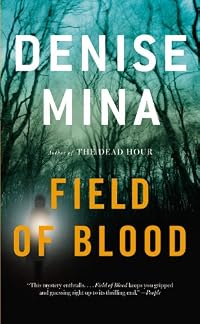
Set in Glasgow in 1981, a time of hunger strikes, riots and unemployment that decimated the old industrial heartlands, The Field of Blood is the first in the tense Paddy Meehan series from Scotland's princess of crime, Denise Mina. The vicious murder of a young child provides rookie journalist Paddy Meehan with her first big break when the suspect turns out to be her fiance's 11-year old cousin. Launching her own investigation into the horrific crime, Paddy uncovers lines of deception deep show more in Glasgow's past, with more horrific crimes in the future if she fails to solve the mystery. Infused with Mina's unique blend of dark humor, personal insights and social injustice, the story grips the reader while challenging our perceptions of childhood innocence, crime and punishment, and right or wrong. show lessTags
Recommendations









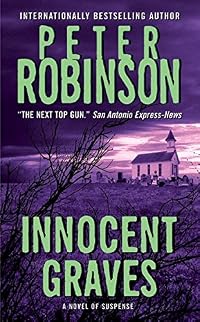
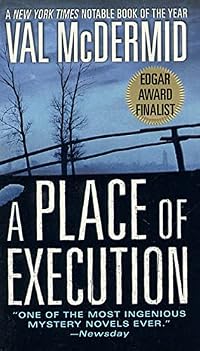
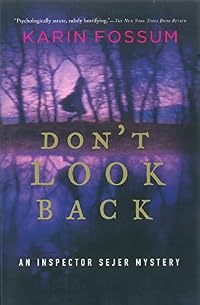
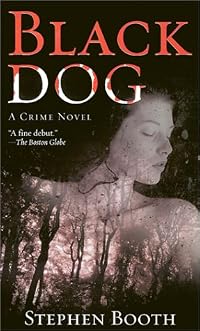







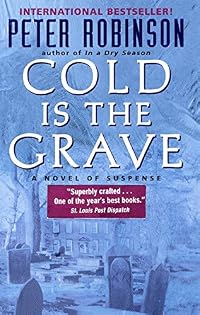
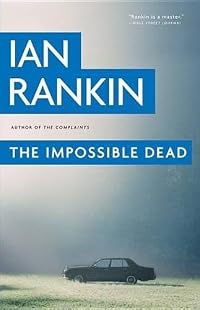
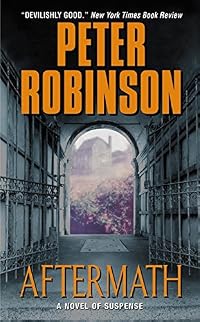
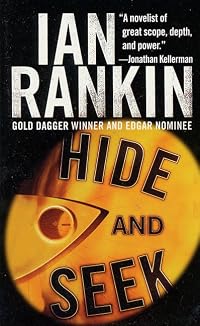
Member Recommendations

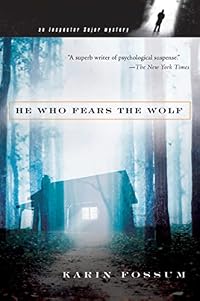
JuliaMaria Der Start jeweils einer Karriere als Jounalistin in einer männerdominierten Welt, einmal in Glasgow, einmal in Stockholm. Beide mit Männern verlobt, die zunächst sehr nett scheinen, die Emanzipation ihrer Verlobten aber strikt ablehnen.
Member Reviews
Yay! Cheers for Paddy - can't wait to read her next book. Such a lovely, ungainly young woman, fraught with the insecurities (in *spades*!) that attend every girl who's trying to keep her identity while dealing with family and admirers who don't "get" her. Oh, Paddy, I'd love to have had you as a friend at that age, and now I'm old enough to be your mother I want to make you dinner!
As far as I know, this is the first mystery I've read that's set in Scotland, and it was a winning introduction to the dialect and setting. Also, I remember 1981 well - having graduated from high school that year - so the references to the fashions, etc. are poignant for me. (Wonder why DM chose that time, though? Perhaps she's planning for Paddy to catch up show more to modern days over the course of the series. Kind of clever planning, actually.)
Details peculiar to the setting and era - the pub-dwellers, journalists, male-female relations, Protestant-Catholic conflict, women's roles, class issues - they were all fascinating to me without taking over the story. As usual it made me want to travel and see it all for myself.
The only thing that left me feeling a little unsatisfied was the connection between the first and second Paddys. The attempt to draw the connection between the two confused me (which I readily admit could be reader incompetence on my part) and seemed a little strained - you know, forcing square pegs into round holes. I'll go out on a limb and guess what DM was aiming for and perhaps someone could email me if I got it wrong: Paddy 2's guilt over falsely accusing someone (who in the end is guilty anyway) forces both a confrontation and an epiphany about her role as a reporter...while Paddy 1's experience of being falsely accused renders him just another body taking up space in a pub - though it does provide a connection that explains Paddy 2's shoddy treatment by the local cops. Is that plot device, though, enough to warrant such a lengthy examination? I give up, I'm clueless on this. show less
As far as I know, this is the first mystery I've read that's set in Scotland, and it was a winning introduction to the dialect and setting. Also, I remember 1981 well - having graduated from high school that year - so the references to the fashions, etc. are poignant for me. (Wonder why DM chose that time, though? Perhaps she's planning for Paddy to catch up show more to modern days over the course of the series. Kind of clever planning, actually.)
Details peculiar to the setting and era - the pub-dwellers, journalists, male-female relations, Protestant-Catholic conflict, women's roles, class issues - they were all fascinating to me without taking over the story. As usual it made me want to travel and see it all for myself.
The only thing that left me feeling a little unsatisfied was the connection between the first and second Paddys. The attempt to draw the connection between the two confused me (which I readily admit could be reader incompetence on my part) and seemed a little strained - you know, forcing square pegs into round holes. I'll go out on a limb and guess what DM was aiming for and perhaps someone could email me if I got it wrong: Paddy 2's guilt over falsely accusing someone (who in the end is guilty anyway) forces both a confrontation and an epiphany about her role as a reporter...while Paddy 1's experience of being falsely accused renders him just another body taking up space in a pub - though it does provide a connection that explains Paddy 2's shoddy treatment by the local cops. Is that plot device, though, enough to warrant such a lengthy examination? I give up, I'm clueless on this. show less
Warning: this review contains spoilers.
Glasgow, 1981: Patricia "Paddy" Meehan, an aspiring journalist, is a copyboy at the Scottish Daily News, trying to make her way in a predominantly male profession. The paper is swept up in covering the brutal murder of a four-year-old boy, and one of the suspects turns out to be a relative of Paddy's fiancé. Where do her loyalties lie, the family or her career? And how much risk is she prepared to take to uncover the truth?
I really enjoyed this book. The portrayal of Glasgow in the early 80s was one of the selling points for me, and it delivered. It also taught me a few things about the religious background of the city; as a Catholic, Paddy feels like an outsider in a predominantly Protestant show more town. Paddy herself makes a likeable and relatable heroine, especially when she's trying to figure out what she wants to do and how to reconcile that with what everyone else wants her to do---who hasn't had that struggle?
Of the other characters, Dr Pete struck a particular chord with me. I'm not sure if it's because Peter Capaldi plays him in the 2011 TV adaptation of this novel or what, but I was touched by his quiet mentoring of Paddy and his swansong at the very end of the book. It still makes me cry a little even now as I write about it.
I would recommend this if you want to know about Glasgow in between the eras covered by Gordon Ferris in his Douglas Brodie series and Christopher Brookmyre in his Jasmine Sharp/Catherine Macleod series. I'd also recommend it if you are fond of stories involving pre-Internet journalism and female protagonists. show less
Glasgow, 1981: Patricia "Paddy" Meehan, an aspiring journalist, is a copyboy at the Scottish Daily News, trying to make her way in a predominantly male profession. The paper is swept up in covering the brutal murder of a four-year-old boy, and one of the suspects turns out to be a relative of Paddy's fiancé. Where do her loyalties lie, the family or her career? And how much risk is she prepared to take to uncover the truth?
I really enjoyed this book. The portrayal of Glasgow in the early 80s was one of the selling points for me, and it delivered. It also taught me a few things about the religious background of the city; as a Catholic, Paddy feels like an outsider in a predominantly Protestant show more town. Paddy herself makes a likeable and relatable heroine, especially when she's trying to figure out what she wants to do and how to reconcile that with what everyone else wants her to do---who hasn't had that struggle?
Of the other characters, Dr Pete struck a particular chord with me. I'm not sure if it's because Peter Capaldi plays him in the 2011 TV adaptation of this novel or what, but I was touched by his quiet mentoring of Paddy and his swansong at the very end of the book. It still makes me cry a little even now as I write about it.
I would recommend this if you want to know about Glasgow in between the eras covered by Gordon Ferris in his Douglas Brodie series and Christopher Brookmyre in his Jasmine Sharp/Catherine Macleod series. I'd also recommend it if you are fond of stories involving pre-Internet journalism and female protagonists. show less
Denise Mina, as I’ve mentioned in previous reviews of her work, certainly falls on the darker side of the spectrum in terms of setting, characters (even protagonists) and stories. The residents of Mina's Glasgow are often flawed in ways we can all recognize, if not relate to, and usually struggle to keep their head above water as they deal with circumstances of ethnicity, geography and, usually, class.
To read a Denise Mina novel is to see the world reflected in a brutally objective, but always compelling and artfully executed, mirror.
This would make for dreary reading were it not for her deadly wit, strangely reminiscent of Jane Austen in its often cynical social commentary.
In Field of Blood, the first installment of the Paddy show more Meehan series, Mina’s gift for showing how social mores and family ties ultimately control us all are in fine form, though there is less humor.
Paddy Meehan, A Glasgow native named after a real-life man wrongly convicted of murder and ultimately redeemed by the dogged work of an enterprising journalist, is a copyboy determined to become a journalist herself.
That backdrop alone – a Glasgow press room in early 1980s, when no women need apply and reporters openly drink on shift at the pub next door, long before print’s quick demise under the monolithic internet is even a speculative thought– makes for great reading in and of itself. Mina does not disappoint in who she populates the newsroom with either, as always maintaining wonderfully diverse voices for each characters (in a Mina novel, characters never sound the same, even when they're from the same neighborhood or SES).
Still, readers of her Garnett Hill trilogy may feel, as I did, that there is something a bit rawer and less sophisticated in Mina’s writing in this book, and I wondered as I read this book if this wasn’t one of her earlier works.
Which isn't to say, in any way, one shouldn't read it. It is not to be missed. The brutal torture and murder of a toddler by two young boys is par for the course in terms of a dark subject matter. Moreover, this is one of the first book I have ever read where I was truly disturbed and unsettled within the first few pages, and I have read quite a bit of both true crime, crime reporting and fictional crime. But this murder lingered for reasons I won't say as it that would be a rather obnoxious spoiler.
For Paddy, the murder ultimately forces her to explore her ambition, her morals, her strengths and even her faith and family ties. The answers are sometimes messy, sometimes cruelly clear-cut, but all the more satisfying for that.
American readers, myself included, may need to brush up on the social unrest in Scotland during 1981 between Catholics and Protestants and a worker’s movement, but it is not essential to be versed in these things to understand or enjoy this book. Mina, as always, will show you, whether you’re ready or not.
Before ending this review, it's worth adding a side note. Another thing that struck me about this book is that Paddy is a woman who is overweight and, naturally, trying to lose weight. As a woman who has struggled with her weight for her entire life, I have never read a more true account of what it is like to have the all-pervasive, ever-present internal dialogue of what want has/did/didn’t/shouldn’t have/will/won’t eat, each and every day. I found it refreshing and startling, and, if I am honest, it actually forced me to acknowledge how much I have allowed my own weight to be tied to my self-worth, and not for the better.
As a writer, I’m amazed at Mina’s ability to do this as, judging from her photos, she has not struggled with her weight. But perhaps she has. At any rate, I admire her courage and, honestly, it made Paddy a much more realistic character in the end. At the very least, it speaks for Mina's technical skill in crafting and maintaining character.
So, if you’re a fan of Denise Mina to begin with, you’ll enjoy this book, but perhaps not as much as some of her others. For a series beginning though, it is a great beginning. I’m so looking forward to getting to know Paddy more in the future.
*** This review can be seen in its original post on my mystery review blog, The Body on the Floor, on Blogger. You can find it, and other character series mystery reviews, at: http://bodyonthefloor.blogspot.com *** show less
To read a Denise Mina novel is to see the world reflected in a brutally objective, but always compelling and artfully executed, mirror.
This would make for dreary reading were it not for her deadly wit, strangely reminiscent of Jane Austen in its often cynical social commentary.
In Field of Blood, the first installment of the Paddy show more Meehan series, Mina’s gift for showing how social mores and family ties ultimately control us all are in fine form, though there is less humor.
Paddy Meehan, A Glasgow native named after a real-life man wrongly convicted of murder and ultimately redeemed by the dogged work of an enterprising journalist, is a copyboy determined to become a journalist herself.
That backdrop alone – a Glasgow press room in early 1980s, when no women need apply and reporters openly drink on shift at the pub next door, long before print’s quick demise under the monolithic internet is even a speculative thought– makes for great reading in and of itself. Mina does not disappoint in who she populates the newsroom with either, as always maintaining wonderfully diverse voices for each characters (in a Mina novel, characters never sound the same, even when they're from the same neighborhood or SES).
Still, readers of her Garnett Hill trilogy may feel, as I did, that there is something a bit rawer and less sophisticated in Mina’s writing in this book, and I wondered as I read this book if this wasn’t one of her earlier works.
Which isn't to say, in any way, one shouldn't read it. It is not to be missed. The brutal torture and murder of a toddler by two young boys is par for the course in terms of a dark subject matter. Moreover, this is one of the first book I have ever read where I was truly disturbed and unsettled within the first few pages, and I have read quite a bit of both true crime, crime reporting and fictional crime. But this murder lingered for reasons I won't say as it that would be a rather obnoxious spoiler.
For Paddy, the murder ultimately forces her to explore her ambition, her morals, her strengths and even her faith and family ties. The answers are sometimes messy, sometimes cruelly clear-cut, but all the more satisfying for that.
American readers, myself included, may need to brush up on the social unrest in Scotland during 1981 between Catholics and Protestants and a worker’s movement, but it is not essential to be versed in these things to understand or enjoy this book. Mina, as always, will show you, whether you’re ready or not.
Before ending this review, it's worth adding a side note. Another thing that struck me about this book is that Paddy is a woman who is overweight and, naturally, trying to lose weight. As a woman who has struggled with her weight for her entire life, I have never read a more true account of what it is like to have the all-pervasive, ever-present internal dialogue of what want has/did/didn’t/shouldn’t have/will/won’t eat, each and every day. I found it refreshing and startling, and, if I am honest, it actually forced me to acknowledge how much I have allowed my own weight to be tied to my self-worth, and not for the better.
As a writer, I’m amazed at Mina’s ability to do this as, judging from her photos, she has not struggled with her weight. But perhaps she has. At any rate, I admire her courage and, honestly, it made Paddy a much more realistic character in the end. At the very least, it speaks for Mina's technical skill in crafting and maintaining character.
So, if you’re a fan of Denise Mina to begin with, you’ll enjoy this book, but perhaps not as much as some of her others. For a series beginning though, it is a great beginning. I’m so looking forward to getting to know Paddy more in the future.
*** This review can be seen in its original post on my mystery review blog, The Body on the Floor, on Blogger. You can find it, and other character series mystery reviews, at: http://bodyonthefloor.blogspot.com *** show less
A small boy, 3 years old, is killed in a very gruesome way and almost immediately two boys, age 10 and 11, are arrested for the murder. Paddy Meehan is 18 years old and a copyboy for the newspaper in Glasgow, Scotland. She wants to be a journalist, something that very few women were in 1981 in Glasgow, especially Irish Catholic women who lived in Glasgow. They were mostly wives and mothers. Paddy's family expects her to do the same. They expect her to marry her finacee, who is a good man, and then have kids and a family. But Paddy wants to be a journalist.
The murder of the 3 year old little boy and then the subsequent arrest of the other two boys for the murder is shocking to the newsroom and all of Glasgow. Paddy knows that this is the show more story that could help make her if she could find something that would bring her to the attention of the editors. Then she discovers before anyone else that one of the arrested boys is her finacee's cousin. She knows she can't write the story or even give it to anyone because everyone she knows would disown her. Here is her chance and she can't use it. In an extraordinarily naive moment on her part she tells another woman at the paper and the woman betrays her trust and writes the story. Her family, her finacee, her whole community shun her; no one speaks to her or listens to her when she speaks to them for several days.
Interwoven into the murder mystery involving the 3 year old boy is the story of another Paddy Meehan who was convicted for the murder of a woman he didn't kill and was also convicted of being a spy 12 years before Paddy begins trying to find a way to become a journalist. The earlier story involving the first Paddy Meehan has nothing to do with the murder of the child but is important in the telling to the story of our Paddy Meehan. I read the second book in this series first and already knew that the original Paddy Meehan still haunts our Paddy Meehan when the second book occurs. Some have been confused by the first Paddy's story taking up so much time in this book. And it is distracting, but the book is about Paddy not the murdered boy, so the whole story of the original Paddy is important.
The origianl Paddy Meehan was a real person and was arrested and served time for a murder he did not committ. The murder of the 3 year old boy is also based on a real murder that occurred in 1993 in England (though our story occurs in 1981). There is also a riot that occurs in the book that did occur in Glasgow in the early 80's. The writer, Denise Mina uses these elements well in telling the story of Paddy as well as using Glasgow's struggle with the colapse of the industrial center in the city that occurred in the late 70's and early 80's. Weaving all these elements together is slow reading at times, this is definitely not a fast paced thriller but much more of a slow paced character study.
When the tension does occur later in the book, the writer does it well until the very end where the only real action scene in the book is also the only weak scene in the whole book. It feels clumsy and not very believable. But Paddy is very believable. What you expect her to do at the end of the book is what she does. So do all the other people in her family and at work. show less
The murder of the 3 year old little boy and then the subsequent arrest of the other two boys for the murder is shocking to the newsroom and all of Glasgow. Paddy knows that this is the show more story that could help make her if she could find something that would bring her to the attention of the editors. Then she discovers before anyone else that one of the arrested boys is her finacee's cousin. She knows she can't write the story or even give it to anyone because everyone she knows would disown her. Here is her chance and she can't use it. In an extraordinarily naive moment on her part she tells another woman at the paper and the woman betrays her trust and writes the story. Her family, her finacee, her whole community shun her; no one speaks to her or listens to her when she speaks to them for several days.
Interwoven into the murder mystery involving the 3 year old boy is the story of another Paddy Meehan who was convicted for the murder of a woman he didn't kill and was also convicted of being a spy 12 years before Paddy begins trying to find a way to become a journalist. The earlier story involving the first Paddy Meehan has nothing to do with the murder of the child but is important in the telling to the story of our Paddy Meehan. I read the second book in this series first and already knew that the original Paddy Meehan still haunts our Paddy Meehan when the second book occurs. Some have been confused by the first Paddy's story taking up so much time in this book. And it is distracting, but the book is about Paddy not the murdered boy, so the whole story of the original Paddy is important.
The origianl Paddy Meehan was a real person and was arrested and served time for a murder he did not committ. The murder of the 3 year old boy is also based on a real murder that occurred in 1993 in England (though our story occurs in 1981). There is also a riot that occurs in the book that did occur in Glasgow in the early 80's. The writer, Denise Mina uses these elements well in telling the story of Paddy as well as using Glasgow's struggle with the colapse of the industrial center in the city that occurred in the late 70's and early 80's. Weaving all these elements together is slow reading at times, this is definitely not a fast paced thriller but much more of a slow paced character study.
When the tension does occur later in the book, the writer does it well until the very end where the only real action scene in the book is also the only weak scene in the whole book. It feels clumsy and not very believable. But Paddy is very believable. What you expect her to do at the end of the book is what she does. So do all the other people in her family and at work. show less
This is the first book in Mina's series starring Paddy Meehan. Paddy is a great, if not always likable character, and her struggles to balance her ambitions as a reporter with her family's demands and Catholic morals are fascinating. The prose is dark and lush. The mystery itself is okay, although I guessed the murderer long before Paddy did. The scene that opens the novel is stomach-churning, and I would warn readers that it features not only a crime against a very small child, but a graphic description of the crime from the child's point of view. Overall, I liked it a lot and I will definitely be reading more in the series, because Paddy's such an interesting character and Mina's such a skillful author. Four stars.
Ohmagawd, YES! I loved this book! It was excellent. It wasn't too long. It wasn't too short. It was just right. Denise Mina knows how to tell a story without filling a reader's head full of useless information. This mystery is a thick stew of tasty little ingredients that keeps you gulping it down until you've finished the whole pot.
It features a young girl with no advantages in life other than the fact that she's smart and capable. She's not a lithe vixen, she's overweight, and that makes a refreshing change from other mystery novels I've read. After reading Elizabeth George's latest, this series is and was a wonderful little gift for my aching, befuddled, and overwhelmed little brain.
Definitely worth a pick up! Please do!
It features a young girl with no advantages in life other than the fact that she's smart and capable. She's not a lithe vixen, she's overweight, and that makes a refreshing change from other mystery novels I've read. After reading Elizabeth George's latest, this series is and was a wonderful little gift for my aching, befuddled, and overwhelmed little brain.
Definitely worth a pick up! Please do!
Paddy is an 18-year old working as a copyboy at the newspaper office with dreams of being a reporter. Although she considers herself fat, she has a fiancé named Sean whose family is close to hers. A 3-year old is murdered and two 10-year old boys are arrested for the crime -- one of them is Sean’s cousin. Paddy finds herself torn between her ambitions and the beliefs of her Catholic family and fiancé. The chasm gets wider when a confidence to a friend at the paper leads to a newspaper article on her fiancé’s family and everyone believes Paddy herself wrote it. For this imagined act of betrayal she is shunned by her family (while living in the same house) and Sean won’t return her calls. Her avoidance of her own home leads Paddy show more to investigate Baby Brian’s death and how it possibly connects to another murdered child from years earlier. She eventually teams up with a reporter at work, who becomes a romantic interest.
Denise Mina is brilliant at creating characters and making you care about them. The passage at the front of the book was too disturbing to read and after a brief skim I passed it by. Also taking away a bit from the narrative flow was the interlacing backstory of Paddy's namesake Paddy Meehan, who apparently was convicted of murder in the 60's but continued to insist on his innocence. (What had this to do with the plot? Not a thing.) Although intelligent, Paddy makes rookie mistakes along the way and stumbles a bit awkwardly through the investigation, which is realistic for an amateur. I’m glad I have the rest of the books in this series already on my bookshelf. It will be interesting to see how Paddy develops both as a character and as a journalist. 3.5 stars show less
Denise Mina is brilliant at creating characters and making you care about them. The passage at the front of the book was too disturbing to read and after a brief skim I passed it by. Also taking away a bit from the narrative flow was the interlacing backstory of Paddy's namesake Paddy Meehan, who apparently was convicted of murder in the 60's but continued to insist on his innocence. (What had this to do with the plot? Not a thing.) Although intelligent, Paddy makes rookie mistakes along the way and stumbles a bit awkwardly through the investigation, which is realistic for an amateur. I’m glad I have the rest of the books in this series already on my bookshelf. It will be interesting to see how Paddy develops both as a character and as a journalist. 3.5 stars show less
Members
- Recently Added By
Lists

British Mystery
469 works; 14 members

Books Read in 2018
4,360 works; 110 members
Author Information

60+ Works 11,356 Members
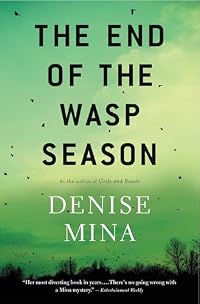
Denise Mina was born in Glasgow in 1966. She initially left school at the age of 16 and worked a variety of low skilled jobs like bar maid and kitchen porter. She later returned to school and earned a law degree from Glasgow University. She has since become a crime writer and playwright. She has authored the Garnethill trilogy and three novels show more featuring the character Patricia Meehan, a Glasgow journalist. She has also done some comic book writing with 13 issues of Hellblazer. She won the John Creasy Dagger for Best First Crime Novel for her book, Garnethill, in 1998. She also won the Theakston's Old Peculier Crime Novel of the Year Award with her title,The End of Wasp Season, in 2012. (Bowker Author Biography) show less
Awards and Honors
Awards
Series

Belongs to Publisher Series
Common Knowledge
- Canonical title
- Field of Blood
- Original title
- Field of Blood
- Original publication date
- 2005-07
- People/Characters
- Paddy Meehan
- Important places
- Glasgow, Scotland, UK
- Epigraph
- Judas . . . purchased a field with the reward of iniquity . . . And it was known unto all the dwellers at Jerusalem . . . that [the] field is called . . . the field of blood.
ACTS 1: 16-19 (King James Version... (show all)) - Dedication
- For Fergus.
Fight on, baby. - First words
- They were still traveling, into the dark.
- Quotations
- He could see figures running, melting into the brightness, and then, as if the fact of other people had been a mistake, he was alone again.
- Last words
- (Click to show. Warning: May contain spoilers.)He died of throat cancer in 1994.
Classifications
Statistics
- Members
- 838
- Popularity
- 32,596
- Reviews
- 34
- Rating
- (3.65)
- Languages
- 9 — Dutch, English, Finnish, French, German, Norwegian (Bokmål), Polish, Spanish, Swedish
- Media
- Paper, Audiobook, Ebook
- ISBNs
- 43
- UPCs
- 1
- ASINs
- 7