
Stephen Booth (1) (1952–)
Author of Black Dog
For other authors named Stephen Booth, see the disambiguation page.
About the Author
Image credit: EMS Author Photos
Series
Works by Stephen Booth
Associated Works
Australian Reader's Digest Select Editions: Under Orders • The Husband • Scared to Live • Orbit (2007) 16 copies, 1 review
Tagged
Common Knowledge
- Canonical name
- Booth, Stephen
- Birthdate
- 1952
- Gender
- male
- Education
- Birmingham City University (formerly Birmingham Polytechnic)
- Occupations
- journalist
goat breeder - Organizations
- Toggenburg Breeders Society (past president)
- Agent
- Teresa Chris (Teresa Chris Literary Agency)
- Short biography
- A former newspaper journalist, Stephen Booth is the author of 17 novels in the Ben Cooper and Diane Fry series, all set in and around England’s Peak District national park, and featuring two Derbyshire police detectives. In the UK, he has been shortlisted four times for CWA Daggers and is a winner of the Dagger in the Library. In the USA, he has twice won the award for Best British Crime Novel of the Year and is an Anthony Award nominee. Stephen's books are translated into 16 languages, and are currently in development for a TV series. He also leads crime writing workshops and teaches courses for Writing School East Midlands.
- Nationality
- UK
- Birthplace
- Burnley, Lancashire, England, UK
- Places of residence
- Burnley, Lancashire, England, UK (birth)
Blackpool, Lancashire, England, UK
Nottinghamshire, England, UK - Map Location
- UK
Members
Reviews
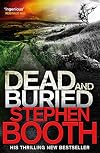
A challenge for a mystery series writer is to keep the protagonist's story moving along for regular readers, but still make it accessible to new readers who may come into the series without reading earlier books. In Dead and Buried, the 13th in the Ben Cooper/Diane Fry series set in the Peak District in England, author Stephen Booth has crafted a story that any new reader will have no trouble following. Unfortunately, those who have read earlier books in the series are likely to be show more frustrated by the unchanging negative dynamic in the relationship between Ben Cooper and Diane Fry.
Just when Fry thought she'd finally escaped Edendale, its sheep and all the colleagues she disdained in Edendale's CID, she's dragged back. She's now part of a regional Major Crimes unit, called in when evidence is found relating to the high-profile disappearance of a tourist couple on the moors near Edendale over two years earlier. That disappearance happened in a Christmastime blizzard, which is hard for Ben Cooper's imagination to picture now that it's a hot, dry summer and dangerous moorland fires keep popping up. The investigation takes on a new dimension when a local man is found murdered in the Lighthouse, a now-closed pub that was connected to the disappearance of the couple.
Ben Cooper, newly promoted to Detective Sergeant, is about to be married to Scene of Crime technician Liz Petty, and is a little distracted by all the wedding and house planning. But not so distracted as to fail to be annoyed at being put in an essentially subordinate position to Fry. For him, it's not so much that Diane is in an important position and is running the investigation, as that her elevation hasn't changed Diane a bit. She is still hostile to everyone on the Edendale force, including (or even especially) Ben. She never misses a chance to make sarcastic and demeaning remarks, to dismiss any suggestions made by anyone else and to let everyone know just what she thinks of Edendale and everyone in it. If anything, Diane's bad attitude is worse than ever.
The mystery story here was promising, but I found it too easy to figure out what happened and whodunnit---and I'm usually no genius at that sort of thing. There was a piece of the story line that was just dropped, as if it was a red herring, even though it felt more like an additional thread that would be pursued to a separate conclusion. And the ending was jarringly abrupt.
Booth's writing is vividly descriptive and was put to good use in this story, with the moorland wildfires playing a part throughout the book. Booth's descriptions of the smoke, sometimes insinuating and other times overwhelming and menacing, were evocative. I just wish he'd use his writing power to go somewhere new with Ben Cooper and Diane Fry, especially Fry. She's painted as a talented, but extremely bitter person who tries to make life as miserable for everyone around her as it seems to be for her. I'm just bored and annoyed with her nasty cracks and the way Ben Cooper seethes but never confronts her. We've been there, done that, all too many times at this point. I got the faintest glimmer at the end of the book that this stagnant negative dynamic may be about to change; that Ben's anger may boil over now. I hope that happens and that it's the catalyst for real change in the relationship between these two characters. I'll give Booth one more chance to make that happen. show less
Just when Fry thought she'd finally escaped Edendale, its sheep and all the colleagues she disdained in Edendale's CID, she's dragged back. She's now part of a regional Major Crimes unit, called in when evidence is found relating to the high-profile disappearance of a tourist couple on the moors near Edendale over two years earlier. That disappearance happened in a Christmastime blizzard, which is hard for Ben Cooper's imagination to picture now that it's a hot, dry summer and dangerous moorland fires keep popping up. The investigation takes on a new dimension when a local man is found murdered in the Lighthouse, a now-closed pub that was connected to the disappearance of the couple.
Ben Cooper, newly promoted to Detective Sergeant, is about to be married to Scene of Crime technician Liz Petty, and is a little distracted by all the wedding and house planning. But not so distracted as to fail to be annoyed at being put in an essentially subordinate position to Fry. For him, it's not so much that Diane is in an important position and is running the investigation, as that her elevation hasn't changed Diane a bit. She is still hostile to everyone on the Edendale force, including (or even especially) Ben. She never misses a chance to make sarcastic and demeaning remarks, to dismiss any suggestions made by anyone else and to let everyone know just what she thinks of Edendale and everyone in it. If anything, Diane's bad attitude is worse than ever.
The mystery story here was promising, but I found it too easy to figure out what happened and whodunnit---and I'm usually no genius at that sort of thing. There was a piece of the story line that was just dropped, as if it was a red herring, even though it felt more like an additional thread that would be pursued to a separate conclusion. And the ending was jarringly abrupt.
Booth's writing is vividly descriptive and was put to good use in this story, with the moorland wildfires playing a part throughout the book. Booth's descriptions of the smoke, sometimes insinuating and other times overwhelming and menacing, were evocative. I just wish he'd use his writing power to go somewhere new with Ben Cooper and Diane Fry, especially Fry. She's painted as a talented, but extremely bitter person who tries to make life as miserable for everyone around her as it seems to be for her. I'm just bored and annoyed with her nasty cracks and the way Ben Cooper seethes but never confronts her. We've been there, done that, all too many times at this point. I got the faintest glimmer at the end of the book that this stagnant negative dynamic may be about to change; that Ben's anger may boil over now. I hope that happens and that it's the catalyst for real change in the relationship between these two characters. I'll give Booth one more chance to make that happen. show less
Nach dem Klappentext (siehe auch obenstehende Kurzbeschreibung) zu urteilen, erwartete ich einen blutrünstigen Thriller mit vielen Toten (oder so ähnlich). Tatsächlich jedoch entpuppte es sich als einer der typisch englischen Krimis, in denen neben der eigentlichen Verbrechen noch eine Reihe weiterer Themen ausgiebig beschrieben werden.
In diesem Fall sind es die Schwierigkeiten der Landbevölkerung, die mehr oder weniger gut versuchen mit den Änderungen klarzukommen (oder auch nicht), show more die das moderne Leben mit sich bringt. Auch den privaten Verhältnissen der beiden Hauptdarsteller wird viel Raum eingeräumt, man erfährt viel über deren Ängste, Befürchtungen, Hoffnungen, so dass man beide bald klar vor Augen hat.
Nicht ganz passend fand ich den Schluß: Während das Buch trotz des doch recht blutigen und grausamen Auftaktes anschließend eher einen ruhigeren Gang einschlägt, artet der Schluß zu einem regelrechten Actionfinale aus, der zwar wirklich überraschend war, aber hier irgendwie etwas übertrieben wirkte.
Fazit: Für Fans des typisch britischen Krimis ein Genuß, für die Anhänger blutiger und brutaler Thriller eher enttäuschend. show less
In diesem Fall sind es die Schwierigkeiten der Landbevölkerung, die mehr oder weniger gut versuchen mit den Änderungen klarzukommen (oder auch nicht), show more die das moderne Leben mit sich bringt. Auch den privaten Verhältnissen der beiden Hauptdarsteller wird viel Raum eingeräumt, man erfährt viel über deren Ängste, Befürchtungen, Hoffnungen, so dass man beide bald klar vor Augen hat.
Nicht ganz passend fand ich den Schluß: Während das Buch trotz des doch recht blutigen und grausamen Auftaktes anschließend eher einen ruhigeren Gang einschlägt, artet der Schluß zu einem regelrechten Actionfinale aus, der zwar wirklich überraschend war, aber hier irgendwie etwas übertrieben wirkte.
Fazit: Für Fans des typisch britischen Krimis ein Genuß, für die Anhänger blutiger und brutaler Thriller eher enttäuschend. show less

Police procedural set in England? Check.
Ties to an incident in WW2? Check.
Ties to an incident in WW2 that involves a plane crash? Check.
This book ticks a lot of boxes for me, and for my first foray into the Cooper and Fry series I liked it pretty well. It was a bonus that a Canadian character showed up, and I loved the description of Eden Valley Books. Used bookstores in fiction are almost as fun as the real thing. I liked the sense of place in this book, and the contrast between local boy show more Cooper and import Fry. I would pick up another in the series. show less
Ties to an incident in WW2? Check.
Ties to an incident in WW2 that involves a plane crash? Check.
This book ticks a lot of boxes for me, and for my first foray into the Cooper and Fry series I liked it pretty well. It was a bonus that a Canadian character showed up, and I loved the description of Eden Valley Books. Used bookstores in fiction are almost as fun as the real thing. I liked the sense of place in this book, and the contrast between local boy show more Cooper and import Fry. I would pick up another in the series. show less
A Canadian woman asks the police of England’s Peak District for assistance into the investigation of the war-time crash of an air craft in the area. Her grandfather had been the pilot but had disappeared from the accident site and never been seen in the 57 years years since the night of the crash. Of the remaining crew only one person, a Polish man, survived and is still in the area today. The police hierarchy refuses to assist the Canadian because they’re busy. A man’s body has been show more cut in half by a snow plough, another man’s been beaten up and, although they don’t know it yet, a young woman has died in the snow too. However DC Ben Cooper is intrigued by the Canadian’s quest and, almost against his own will, becomes involved in investigating the story. His boss, DS Diane Fry, is angry at him about that.
As I mentioned the other day, this book dragged for me. Seriously dragged. Every person’s clothes, every building, every location seemed to be described in minute, unnecessary detail. It soon became impossible to tell which people and events were crucial to the story because every body and every thing was given the same detailed introduction. And then there were the tangents. For example at one point a character notices a police car has the force’s website address written on it which is followed by a long description of what one would find on the website. None of which is even remotely relevant to the story. Alone this example wouldn’t bother me but it is one of dozens of such tangents that detracted from the flow of the narrative and turned what should have been an interesting story into a directionless amble. At one point Police realise that the woman who died in the snow probably had a baby but they don’t seem to put much effort into locating the child, or at least no more than they do for anything else, which seems highly improbable to me.
I don’t think this is an issue of length or pace. I have loved longer books and slower ones. This is an issue of storytelling where knowing what to leave out is as important, if not more so, as what is included. For me anyway story telling is about being taken on a journey and here I felt as if I’d been dropped in the middle of a forest and had to find my own way out without the benefit of a compass or the ability to leave a breadcrumb trail. I found my way out in the end but I’d taken so many wrong turns I’d lost interest in the outcome.
I did like Ben Cooper who is a far cry from the alcohol-addled, ex-wife trailing cop so prevalent in crime fiction. His introspection and somewhat naive outlook were refreshing and the way he and his experiences were used to explore themes of family and community was first rate. There appeared to be some kind of unresolved issue between him and Diane Fry but I really couldn’t work out whether it was professional or personal (it seemed to be both at different times). Perhaps this is explained more in the first two books in this series which I haven’t read. Regardless, I neither liked Fry nor found her particularly credible but I really can’t explain why.
I really wanted to like Blood on the Tongue as Booth’s books have been recommended by many people whose tastes I trust. Although I did enjoy meeting Ben Cooper I didn’t enjoy it enough to make me come back for more so this series is one I’ll just have to agree to disagree about. show less
As I mentioned the other day, this book dragged for me. Seriously dragged. Every person’s clothes, every building, every location seemed to be described in minute, unnecessary detail. It soon became impossible to tell which people and events were crucial to the story because every body and every thing was given the same detailed introduction. And then there were the tangents. For example at one point a character notices a police car has the force’s website address written on it which is followed by a long description of what one would find on the website. None of which is even remotely relevant to the story. Alone this example wouldn’t bother me but it is one of dozens of such tangents that detracted from the flow of the narrative and turned what should have been an interesting story into a directionless amble. At one point Police realise that the woman who died in the snow probably had a baby but they don’t seem to put much effort into locating the child, or at least no more than they do for anything else, which seems highly improbable to me.
I don’t think this is an issue of length or pace. I have loved longer books and slower ones. This is an issue of storytelling where knowing what to leave out is as important, if not more so, as what is included. For me anyway story telling is about being taken on a journey and here I felt as if I’d been dropped in the middle of a forest and had to find my own way out without the benefit of a compass or the ability to leave a breadcrumb trail. I found my way out in the end but I’d taken so many wrong turns I’d lost interest in the outcome.
I did like Ben Cooper who is a far cry from the alcohol-addled, ex-wife trailing cop so prevalent in crime fiction. His introspection and somewhat naive outlook were refreshing and the way he and his experiences were used to explore themes of family and community was first rate. There appeared to be some kind of unresolved issue between him and Diane Fry but I really couldn’t work out whether it was professional or personal (it seemed to be both at different times). Perhaps this is explained more in the first two books in this series which I haven’t read. Regardless, I neither liked Fry nor found her particularly credible but I really can’t explain why.
I really wanted to like Blood on the Tongue as Booth’s books have been recommended by many people whose tastes I trust. Although I did enjoy meeting Ben Cooper I didn’t enjoy it enough to make me come back for more so this series is one I’ll just have to agree to disagree about. show less
Lists
Awards


You May Also Like


Associated Authors
Statistics
- Works
- 23
- Also by
- 4
- Members
- 5,945
- Popularity
- #4,153
- Rating
- 3.6
- Reviews
- 181
- ISBNs
- 352
- Languages
- 10
- Favorited
- 20

