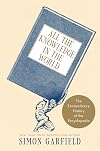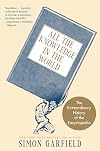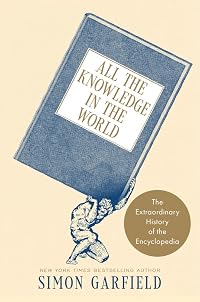
All the Knowledge in the World: The Extraordinary History of the Encyclopedia
by Simon Garfield
On This Page
Description
"The encyclopedia once shaped our understanding of the world. Created by thousands of scholars and the most obsessive of editors, a good set conveyed a sense of absolute wisdom on its reader. Contributions from Albert Einstein, Sigmund Freud, Orville Wright, Alfred Hitchcock, Marie Curie and Indira Gandhi helped millions of children with their homework. Adults cleared their shelves in the belief that everything that was explainable was now effortlessly accessible in their living rooms. Now show more these huge books gather dust and sell for almost nothing on eBay. Instead, we get our information from our phones and computers, apparently for free. What have we lost in this transition? And how did we tell the progress of our lives in the past? All the Knowledge in the World is a history and celebration of those who created the most ground-breaking and remarkable publishing phenomenon of any age. Simon Garfield, who "has a genius for being sparked to life by esoteric enthusiasm and charming readers with his delight" (The Times), guides us on an utterly delightful journey, from Ancient Greece to Wikipedia, from modest single-volumes to the 11,000-volume Chinese manuscript that was too big to print. He looks at how Encyclopedia Britannica came to dominate the industry, how it spawned hundreds of competitors, and how an army of ingenious door-to-door salesmen sold their wares to guilt-ridden parents. He reveals how encyclopedias have reflected our changing attitudes towards sexuality, race, and technology, and exposes how these ultimate bastions of trust were often riddled with errors and prejudice. With his characteristic ability to tackle the broadest of subjects in an illuminating and highly entertaining way, Simon Garfield uncovers a fascinating and important part of our shared past and wonders whether the promise of complete knowledge--that most human of ambitions--will forever be beyond our grasp."-- show lessTags
Recommendations







Member Reviews
I often enjoy books by journalist types and I have enjoyed other things by Simon Garfield. This cleverly written (he employs an alphabetical approach) survey of the history of encyclopaedias is right up my street. We never had Britannica at home though my mother would like to have bought it and we certainly had other things in the same sort of league (including some second hand Arthur Mees and some Grolier volumes as well as the Waverley one volume and the Collins modern). This paperback takes you all the way from the earliest books of knowledge through to Wikipedia which has come only in the last 25 years. It was so unpreicatable and yet here it is. Truth is you can't cram knowledge into a bottle really and our ultimate need is wisdom show more not more knowledge. Very enjoyable read. show less
As with all of Garfield's works, broad, engaging, good, interesting, well-written, and well-researched. A good history of the encyclopedia from olden times to Wikipedia. Definitely you will learn something. Maybe could have used more images.
As someone who grew up with encyclopedia volumes, I was really excited to read this. But it was dull, boring and long.
I had expected to learn about the history of encyclopedia and not articles that the author found in various editions from various ages, which it seems is the entirety of the book.
If you have 15 hours to spare, I'd suggest reading an actual encyclopedia instead.
I had expected to learn about the history of encyclopedia and not articles that the author found in various editions from various ages, which it seems is the entirety of the book.
If you have 15 hours to spare, I'd suggest reading an actual encyclopedia instead.
Alla voce "Homo" la prima edizione della Enciclopedia Britannica definiva la "donna" come la "femmina dell'uomo".
----
It was definetely a man's world.The first Britannica defined "woman" as "the female of man. See "Homo"
-----
Posseggo tutti i volumi, con i relativi aggiornamenti annuali, sino all'ultima edizione cartacea. Questa recensione è "work in progress"...
----
I own all the volumes, with their annual updates, up to the last printed edition. This review is "work in progress" ...
----
It was definetely a man's world.The first Britannica defined "woman" as "the female of man. See "Homo"
-----
Posseggo tutti i volumi, con i relativi aggiornamenti annuali, sino all'ultima edizione cartacea. Questa recensione è "work in progress"...
----
I own all the volumes, with their annual updates, up to the last printed edition. This review is "work in progress" ...
Sep 2, 2022Italian
Ratings
Members
- Recently Added By
Published Reviews
Two thousand years ago, a young Cilician named Oppian, wanting to rehabilitate his disgraced father, decided to write Halieutica, an account of the world of fishes, as a gift for Marcus Aurelius. It was a mixture of possible fact and definite fiction – if only there were octopuses that climb trees and fishes that fancy goats – and it was a success. His father was forgiven, and the son’s show more written work accepted as authoritative knowledge. In short, although Wikipedia, ‘the free encyclopaedia’, calls Halieutica ‘a didactic epic,’ it was an early encyclopaedia – a word taken from the Greek enkyklios paideia, meaning ‘knowledge in the round’, and which has come to denote a set of books that contains articles that can be cross-referenced, is in alphabetical order and is the authors’ view of what knowledge needs to be known and what unknowns need to remain unknown.
Simon Garfield does not write about Oppian (I mention him not for one-upmanship but because more people should know about a man who wrote that deer sailed the sea using their horns as sails). But this history of the encyclopaedia (and its future) does not lack for learned gentlemen and their learned books. This is definitely a man’s world: in the first Encyclopaedia Britannica the definition of ‘woman’ was ‘the female of man. See Homo’, and things did not much improve until the 20th century.
And so many men: British, German, French, Chinese. Britannica was by no means the first. Garfield makes a convincing case for the encyclopaedic status of works by Pliny (who believed menstruating women can expel insects from the trees), Gervase of Tilbury, Isidore of Seville and (delightfully) a Herr Franckenstein, whose detailed medical entries instructed any prospective amputators of arms that the time needed for sawing through forearm bones was about the same needed to say the Lord’s Prayer. All had ambition to encircle knowledge and transmit it to others, for the common good and for profit. All had elements of what Garfield calls ‘the vast commitment required to make those volumes – an astonishing energy force – and the belief that such a thing will be worthwhile. Those who bought them did so in the hope of purchasing perennial value.’
And what value, sometimes. Britannica was founded in 1768 in Edinburgh, and its first compilers were not necessarily experts. Andrew Bell was an engraver with an unfeasibly large nose and William Smellie an ex-priest and polymath. The entries were in alphabetic order, a controversial decision that became the standard. The first volume covered Aa to Bzo, ‘a town of Africa, in the kingdom of Morocco’. Expert contributions came from filleting published books, a common practice. See ‘Plagiary’ in Ephraim Chambers’s encyclopaedia of 1710, in which Chambers wrote that he could not be accused of ‘author theft’ because ‘what they take from others they do it avowedly, and in the open sun. In effect, their quality gives them a title to everything that may be for their purpose, wherever they find it’.
Denis Diderot’s Encyclopédie, published between 1751 and 1772, instead had original writing from Voltaire (Elegance, History, Taste and others) and Jean-Jacques Rousseau, whose entry on political economy should be required reading for our current government: ‘It is one of the most important concerns of government to prevent the extreme inequality of fortunes... not by building hospitals for the poor but by guaranteeing that the citizens will not become poor.’
An encyclopaedia was meant as reference, but also to be savoured. The 11th edition of Britannica (1929) featured Cecil B. DeMille on motion pictures and J.B. Priestley on English literature. It was, wrote Denis Boyles, ‘plausible, reasonable, unruffled, often reserved and completely authoritative’. And sometimes plain wrong. Garfield reaps many pages out of the unsavoury views of the past, from awful entries on negroes and Hitler and homosexuality, even while believing that ‘scholarship of any era is still scholarship’. It is valuable to know ‘what 1819 knew about Egypt, and what 1824 understood about James Watt’.
Sometimes the book drags, weighed down by the encyclopaedic bounty. Turn the page and my heart sinks to find yet another set of learned gentlemen compiling yet another set of clever books. I think back to the entry of ‘Abridgement’ in the first Britannica, written by the polymath Smellie, who attended many lectures. He wrote: ‘The art of conveying much sentiment in a few words is the happiest talent an author can be possessed of’; and abridging ‘is particularly useful in taking the substance of what is delivered by professors’. Or authors attempting to be encyclopaedic about encyclopaedias. (Garfield states early on that this is not his intention; he will write only about those he judges ‘most significant or interesting, or indicative of a turning point in how we view the world’.) Perhaps, then, this is a book to be used like an encyclopaedia: to be put down but always picked up again. To be read with pleasure, but not all at once.
Because it is a pleasure. Garfield writes fluidly, cheerily and charmingly, even while the breeziness does not detract from the scale of his ambition: to understand nothing less than humans’ need for knowledge and how to convey and preserve it. When is knowledge a factoid? Who gets to be the gatekeeper? Who, in the words of Arthur Mee, the editor of the Children’s Encyclopaedia, is holding up the stars?
Garfield’s love for Wikipedia, dismissed by snobs but used by us all, is surprising but heartfelt. He believes in the democracy of input, and that errors are usually righted and that Wikipedia’s gatekeeping works. (He also believes that people can’t edit their own entries, but I corrected mine with no trouble, as it said I was American and I can’t have that.)
Wikipedia is now the way of all knowledge and the printed encyclopaedia is doomed by its very structure. ‘It can never know it all or show enough of what it knows. It can’t hope to keep up with important developments in the world, nor take back what it said about Hitler or slavery.’ Endless editions, salesmen crisscrossing America selling expensive sets – none can compare with the speed of the click. Even so, Garfield concludes, there is still a place for Slow Books. ‘A fine encyclopaedia will stand you in good stead like an old wristwatch: its timing may be out, and sometimes it may not work at all, but its mechanics will always intrigue.’ show less
Simon Garfield does not write about Oppian (I mention him not for one-upmanship but because more people should know about a man who wrote that deer sailed the sea using their horns as sails). But this history of the encyclopaedia (and its future) does not lack for learned gentlemen and their learned books. This is definitely a man’s world: in the first Encyclopaedia Britannica the definition of ‘woman’ was ‘the female of man. See Homo’, and things did not much improve until the 20th century.
And so many men: British, German, French, Chinese. Britannica was by no means the first. Garfield makes a convincing case for the encyclopaedic status of works by Pliny (who believed menstruating women can expel insects from the trees), Gervase of Tilbury, Isidore of Seville and (delightfully) a Herr Franckenstein, whose detailed medical entries instructed any prospective amputators of arms that the time needed for sawing through forearm bones was about the same needed to say the Lord’s Prayer. All had ambition to encircle knowledge and transmit it to others, for the common good and for profit. All had elements of what Garfield calls ‘the vast commitment required to make those volumes – an astonishing energy force – and the belief that such a thing will be worthwhile. Those who bought them did so in the hope of purchasing perennial value.’
And what value, sometimes. Britannica was founded in 1768 in Edinburgh, and its first compilers were not necessarily experts. Andrew Bell was an engraver with an unfeasibly large nose and William Smellie an ex-priest and polymath. The entries were in alphabetic order, a controversial decision that became the standard. The first volume covered Aa to Bzo, ‘a town of Africa, in the kingdom of Morocco’. Expert contributions came from filleting published books, a common practice. See ‘Plagiary’ in Ephraim Chambers’s encyclopaedia of 1710, in which Chambers wrote that he could not be accused of ‘author theft’ because ‘what they take from others they do it avowedly, and in the open sun. In effect, their quality gives them a title to everything that may be for their purpose, wherever they find it’.
Denis Diderot’s Encyclopédie, published between 1751 and 1772, instead had original writing from Voltaire (Elegance, History, Taste and others) and Jean-Jacques Rousseau, whose entry on political economy should be required reading for our current government: ‘It is one of the most important concerns of government to prevent the extreme inequality of fortunes... not by building hospitals for the poor but by guaranteeing that the citizens will not become poor.’
An encyclopaedia was meant as reference, but also to be savoured. The 11th edition of Britannica (1929) featured Cecil B. DeMille on motion pictures and J.B. Priestley on English literature. It was, wrote Denis Boyles, ‘plausible, reasonable, unruffled, often reserved and completely authoritative’. And sometimes plain wrong. Garfield reaps many pages out of the unsavoury views of the past, from awful entries on negroes and Hitler and homosexuality, even while believing that ‘scholarship of any era is still scholarship’. It is valuable to know ‘what 1819 knew about Egypt, and what 1824 understood about James Watt’.
Sometimes the book drags, weighed down by the encyclopaedic bounty. Turn the page and my heart sinks to find yet another set of learned gentlemen compiling yet another set of clever books. I think back to the entry of ‘Abridgement’ in the first Britannica, written by the polymath Smellie, who attended many lectures. He wrote: ‘The art of conveying much sentiment in a few words is the happiest talent an author can be possessed of’; and abridging ‘is particularly useful in taking the substance of what is delivered by professors’. Or authors attempting to be encyclopaedic about encyclopaedias. (Garfield states early on that this is not his intention; he will write only about those he judges ‘most significant or interesting, or indicative of a turning point in how we view the world’.) Perhaps, then, this is a book to be used like an encyclopaedia: to be put down but always picked up again. To be read with pleasure, but not all at once.
Because it is a pleasure. Garfield writes fluidly, cheerily and charmingly, even while the breeziness does not detract from the scale of his ambition: to understand nothing less than humans’ need for knowledge and how to convey and preserve it. When is knowledge a factoid? Who gets to be the gatekeeper? Who, in the words of Arthur Mee, the editor of the Children’s Encyclopaedia, is holding up the stars?
Garfield’s love for Wikipedia, dismissed by snobs but used by us all, is surprising but heartfelt. He believes in the democracy of input, and that errors are usually righted and that Wikipedia’s gatekeeping works. (He also believes that people can’t edit their own entries, but I corrected mine with no trouble, as it said I was American and I can’t have that.)
Wikipedia is now the way of all knowledge and the printed encyclopaedia is doomed by its very structure. ‘It can never know it all or show enough of what it knows. It can’t hope to keep up with important developments in the world, nor take back what it said about Hitler or slavery.’ Endless editions, salesmen crisscrossing America selling expensive sets – none can compare with the speed of the click. Even so, Garfield concludes, there is still a place for Slow Books. ‘A fine encyclopaedia will stand you in good stead like an old wristwatch: its timing may be out, and sometimes it may not work at all, but its mechanics will always intrigue.’ show less
added by AntonioGallo
Author Information

25+ Works 7,510 Members
Simon Garfield is the author of several acclaimed books, including "The End of the Innocence: Britain in the Time of AIDS", winner of the Somerset Maugham Award. He lives in London. (Publisher Provided)
Common Knowledge
- Original publication date
- 2022
- Epigraph
- "A large work is difficult because it is large." -Samuel Johnson, preference to A Dictionary of the English Language, 1755
"Books can be useful from so many points of view. In my early days, for example, I used to use the Encyclopedia Britannica as a trouser-press, and certainly the house that was without it was to be pitied." -Ford Maddox Ford, ... (show all)letter to the Philadelphia Inquirer, September 1929
The great mass of human knowledge - so vast in its range that not even its editors can hope to read through the complete work." -BBC News report on the fourteenth edition of Encyclopedia Britannica, 1951 - First words
- On Friday, 4 June 2021, I made peterhodgson1959, an offer for his encyclopedia. -Introduction
That's what they said when he approached. -Aah, Here Comes Andrew Bell, Chapter 1
Classifications
Statistics
- Members
- 237
- Popularity
- 136,861
- Reviews
- 4
- Rating
- (3.88)
- Languages
- English
- Media
- Paper, Audiobook, Ebook
- ISBNs
- 11
- ASINs
- 6