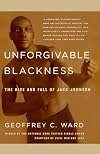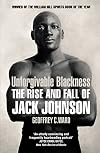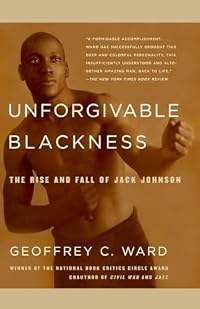
Unforgivable Blackness: The Rise and Fall of Jack Johnson
by Geoffrey C. Ward
On This Page
Description
Presents the life of the first black heavyweight boxing champion, whose flamboyant personality and defiance of racial stereotypes in the early twentieth century often made him the object of public outrage and a target of law enforcement officials.Tags
Recommendations






Member Reviews
Normally I wouldn't have much interest in the biography of a boxer. But for the last 6 years I have been dating one, so eventually it was going to happen. Wow. Jack Johnson led an extraordinary life. In a time when whites ran everything and each race stayed on their side of the color line, Jack Johnson lived as if their were no races. He worked up from poverty to become the first African American Heavy Weight Champion. He was known for his fast cars (even patented a wrench for working on them), expensive clothes, and lots of white women. When black men could be lynched for just the rumor of having a relationship with a white woman, Jack Johnson traveled around with multiple white prostitutes. He was flamboyant in his excess. The whites show more were so uncomfortable with his 'Unforgivable Blackness' they went looking for the Great White Hope to defeat Jack Johnson. Would highly recommend this little tidbit American History. show less
In the introduction to his biography of Jack Johnson, Geoffrey C. Ward indicates that his primary source was newspaper articles. And indeed, this biography reads much like a very long newspaper account of the life of Jack Johnson. This isn't good or bad, but an apt description of what it is like reading this biography. In fact, Ward has done a commendable job in weaving what he had to work with into a very readable, informative, and enjoyable work.
Jack Johnson was the boxing world heavyweight champion from 1908-1915. And he was the first black heavyweight champion, which dominates the story of his life inside the ring and out. Johnson became heavyweight champion at a time when boxing was just barely out of the bare knuckle era, and show more while more organized as a sport, was still a rough and tumble and often illegal activity. Boxing, even as it is today, was often surround by unsavory characters. During that era throwing fights for money or to set up matches wasn't uncommon. Johnson learned his craft literally starting from the bottom up in local tough man or boxing contests and his skills eventually lead him to the top of his sport.
What make Johnson's story so interesting are two things - race and his profligate lifestyle. Race played a key role in his life even though he himself ignored race and didn't let it interfere with how he behaved or what he did. He often sported white women on his arm and eventually married a white woman, and did not defer to anyone, black or white. This made him an even more incendiary figure for the race conscious press and America at the time. Many white heavyweights wouldn't fight Johnson - most notably Jim Jefferies who held the title at a time when Johnson was the obvious deserving opponent for a shot at the champion. Eventually Jefferies retired and "conferred" his title on Tommy Burns, a bulked up white middleweight. Johnson chased after Burns and through the pressure of the press he eventually landed his title shot and dominated his lesser opponent, winning the heavyweight championship of the world.
This eventually lead to one of the most pivotal heavyweight boxing matches in history - and certainly the most pivotal fight of Johnson's career - a match with former heavyweight champion Jim Jefferies. Jefferies was obviously reluctant to come out of retirement to fight the new champion but pressure from friends and many in the press and boxing world, who didn't want to see a black man hold the championship, more or less forced his hand. The fight eventually took place on July 4, 1910 in Reno, New Mexico. Thousands were in attendance but millions throughout the country waited for the result. Johnson dominated Jefferies through much of the fight, eventually knocking him out in the 15th round. Johnson's win legitimized his title as heavyweight champion. Unfortunately, it also touched off violence against blacks throughout the country.
Jefferies utter defeat also lead to a search for a "great white hope" to defeat Johnson. Eventually, Johnson was beaten by a huge but less skilled Jess Willard in Havana, Cuba on April 5, 1915. Johnson probably lost as much because of age, he was around 37 at the time, and the rather unfortunate events in is life from the time of the Jefferies victory to his match against Willard in Cuba. During that time he appears to have spent most of his money, married a white woman who eventually committed suicide, and married another white woman against the violent protests of her family. This led, in a rather convoluted way, to his fleeing the country with his new wife in tow after being brought up on charges of violating the Mann Act. During all this time, and the only reason to mention the ethnicity of his wives, was the vilification Johnson received in the press across America and the hatred he engendered among some, including those in law enforcement, who wanted to bring him down. Thus, Johnson had to go through convoluted negotiations and travel arrangements to even defend his title again Willard in Cuba. Eventually, Johnson decided to come back to America but had to face a jail sentence, which he served. After getting out of jail, broke because he spent most of his money, he mostly earned a living through boxing exhibitions and similar activities.
Johnson's lifestyle some would call raucous. He made a lot of money for his era and he spent it freely on clothes, cars, and the women he kept as companions some of which were prostitutes or former prostitutes. One can look up to Johnson for not letting racism stand in the way of living his life the way he wanted to live it and kowtowing to no one. One could also look askance as his philandering, spendthrift way of life, but who are we to really judge? Undoubtedly Johnson brought some of his problems on himself. Also undoubtedly he was treated unfairly because of the era in which he lived in. Had Johnson lived today he might get some negative press, but more likely he would have a legion of fans who willing to overlook some of the things he did in his private life.
Cars were relatively new invention in early 1900's and Johnson loved cars and bought several of them. He often liked to drive fast. This too eventually caught up with him as, while speeding, he swerved to miss a truck and rammed his car into a tree. He died in 1946 after an adventurous 68 years.
Note this book is the companion to Ken Burn's documentary of the life of Jack Johnson using the same title. show less
Jack Johnson was the boxing world heavyweight champion from 1908-1915. And he was the first black heavyweight champion, which dominates the story of his life inside the ring and out. Johnson became heavyweight champion at a time when boxing was just barely out of the bare knuckle era, and show more while more organized as a sport, was still a rough and tumble and often illegal activity. Boxing, even as it is today, was often surround by unsavory characters. During that era throwing fights for money or to set up matches wasn't uncommon. Johnson learned his craft literally starting from the bottom up in local tough man or boxing contests and his skills eventually lead him to the top of his sport.
What make Johnson's story so interesting are two things - race and his profligate lifestyle. Race played a key role in his life even though he himself ignored race and didn't let it interfere with how he behaved or what he did. He often sported white women on his arm and eventually married a white woman, and did not defer to anyone, black or white. This made him an even more incendiary figure for the race conscious press and America at the time. Many white heavyweights wouldn't fight Johnson - most notably Jim Jefferies who held the title at a time when Johnson was the obvious deserving opponent for a shot at the champion. Eventually Jefferies retired and "conferred" his title on Tommy Burns, a bulked up white middleweight. Johnson chased after Burns and through the pressure of the press he eventually landed his title shot and dominated his lesser opponent, winning the heavyweight championship of the world.
This eventually lead to one of the most pivotal heavyweight boxing matches in history - and certainly the most pivotal fight of Johnson's career - a match with former heavyweight champion Jim Jefferies. Jefferies was obviously reluctant to come out of retirement to fight the new champion but pressure from friends and many in the press and boxing world, who didn't want to see a black man hold the championship, more or less forced his hand. The fight eventually took place on July 4, 1910 in Reno, New Mexico. Thousands were in attendance but millions throughout the country waited for the result. Johnson dominated Jefferies through much of the fight, eventually knocking him out in the 15th round. Johnson's win legitimized his title as heavyweight champion. Unfortunately, it also touched off violence against blacks throughout the country.
Jefferies utter defeat also lead to a search for a "great white hope" to defeat Johnson. Eventually, Johnson was beaten by a huge but less skilled Jess Willard in Havana, Cuba on April 5, 1915. Johnson probably lost as much because of age, he was around 37 at the time, and the rather unfortunate events in is life from the time of the Jefferies victory to his match against Willard in Cuba. During that time he appears to have spent most of his money, married a white woman who eventually committed suicide, and married another white woman against the violent protests of her family. This led, in a rather convoluted way, to his fleeing the country with his new wife in tow after being brought up on charges of violating the Mann Act. During all this time, and the only reason to mention the ethnicity of his wives, was the vilification Johnson received in the press across America and the hatred he engendered among some, including those in law enforcement, who wanted to bring him down. Thus, Johnson had to go through convoluted negotiations and travel arrangements to even defend his title again Willard in Cuba. Eventually, Johnson decided to come back to America but had to face a jail sentence, which he served. After getting out of jail, broke because he spent most of his money, he mostly earned a living through boxing exhibitions and similar activities.
Johnson's lifestyle some would call raucous. He made a lot of money for his era and he spent it freely on clothes, cars, and the women he kept as companions some of which were prostitutes or former prostitutes. One can look up to Johnson for not letting racism stand in the way of living his life the way he wanted to live it and kowtowing to no one. One could also look askance as his philandering, spendthrift way of life, but who are we to really judge? Undoubtedly Johnson brought some of his problems on himself. Also undoubtedly he was treated unfairly because of the era in which he lived in. Had Johnson lived today he might get some negative press, but more likely he would have a legion of fans who willing to overlook some of the things he did in his private life.
Cars were relatively new invention in early 1900's and Johnson loved cars and bought several of them. He often liked to drive fast. This too eventually caught up with him as, while speeding, he swerved to miss a truck and rammed his car into a tree. He died in 1946 after an adventurous 68 years.
Note this book is the companion to Ken Burn's documentary of the life of Jack Johnson using the same title. show less
"Unforgivable Blackness" is a somewhat dry and very factual retelling of the life of Jack Johnson, the first black heavyweight boxing champion of the world.
For those unfamiliar with Johnson's story, this book is an eye-opener. Johnson had to deal with bigotry and prejudice on a scale almost unimaginable today, as evidenced throughout the book by incredibly racist clippings from the newspapers of record.
It is the power of Johnson's story that makes this book hum, not the prose. The book has the feeling of a four hundred page newspaper article telling Johnson's story; the whole affair is told in a very matter-of-fact fashion. While the abundance of fact and detail here enables the reader to understand Johnson's story, the prose will not show more sweep you away.
This book was needed, however, given the romanticization of Johnson in such works as "The Great White Hope;" Johnson is clearly a very flawed human being, and it is this flawed picture presented here that provides the real strength of Ward's work.
Jack Johnson himself is the star here, both the richness of his character and the adversities he faced. He shines through on most pages, and it is his character along with the detail and accuracy of the presentation of Johnson and his times that make this worth reading. show less
For those unfamiliar with Johnson's story, this book is an eye-opener. Johnson had to deal with bigotry and prejudice on a scale almost unimaginable today, as evidenced throughout the book by incredibly racist clippings from the newspapers of record.
It is the power of Johnson's story that makes this book hum, not the prose. The book has the feeling of a four hundred page newspaper article telling Johnson's story; the whole affair is told in a very matter-of-fact fashion. While the abundance of fact and detail here enables the reader to understand Johnson's story, the prose will not show more sweep you away.
This book was needed, however, given the romanticization of Johnson in such works as "The Great White Hope;" Johnson is clearly a very flawed human being, and it is this flawed picture presented here that provides the real strength of Ward's work.
Jack Johnson himself is the star here, both the richness of his character and the adversities he faced. He shines through on most pages, and it is his character along with the detail and accuracy of the presentation of Johnson and his times that make this worth reading. show less
Ratings
Members
- Recently Added By
Lists

Best books on sport
33 works; 6 members

Recreation
93 works; 1 member
Author Information

86+ Works 9,177 Members
Geoffrey C. Ward is an author, historian, and screenwriter. He has written for numerous documentary films, and has won the National Book Critics Circle Award, the Francis Parkman Prize, and was a finalist for the Pulitzer Prize. Geoffrey Champion Ward was born in 1940 in Newark, Ohio. He was a graduate of Oberlin College in 1962. He is an editor, show more author, historian and writer of scripts for American history documentaries for public television. He is the author or co-author of 18 books, including five companion books to the documentaries he has written. He is the winner of seven Emmy Awards. He was the founding editor of Audience Magazine (1970-1973) and the editor of American Heritage Magazine (1977-1982). His 1989 biography of Franklin Delano Roosevelt, A First-class Temperament: the Emergence of Franklin Roosevelt, won the National Book Critics Circle Award and the Francis Parkman Prize of the Society of American Historians and was a finalist for the Pulitzer Prize. The principal writer of the television mini-series The Civil War, Ward has collaborated with its co-producer Ken Burns on most of the documentaries he has made since, including Jazz, Baseball, The War and Not For Ourselves Alone: The Story of Elizabeth Cady Stanton and Susan B. Anthony. This work has earned him five Emmy Awards. He also won two Emmys for the American Experience series, including The Kennedys, in 1992 and TR,The Story of Theodore Roosevelt in 1996. His script for the documentary Unforgivable Blackness: The Rise and Fall of Jack Johnson, won the Writers Guild of America Award in 2005 and the accompanying book won the 2006 William Hill Sports Book of the Year and the Anisfield-Wolf Award for best biography. His works include The War: An Intimate History, Moving to Higher Ground: How Jazz can Change Your Life and Unforgivable Blackness: The Rise and Fall of Jack Johnson. His title The Roosevelts: An Intimate History made The New York Times Best Seller List in 2014. (Bowker Author Biography) show less
Awards and Honors
Common Knowledge
- People/Characters
- Jack Johnson
- Related movies
- Unforgivable Blackness: The Rise and Fall of Jack Johnson (2004 | IMDb)
Classifications
- Genres
- Sports and Leisure, Nonfiction, Biography & Memoir, General Nonfiction, History
- DDC/MDS
- 796.83 — Arts & recreation Recreation, sports, and performing arts Athletic and outdoor sports and games Combat sports Boxing
- LCC
- GV1132 .J7 .W37 — Geography, Anthropology and Recreation Recreation. Leisure Recreation. Leisure Sports Fighting sports: Bullfighting, boxing, fencing, etc.
- BISAC
Statistics
- Members
- 263
- Popularity
- 123,471
- Reviews
- 3
- Rating
- (4.02)
- Languages
- English
- Media
- Paper, Ebook
- ISBNs
- 6
- ASINs
- 3