
Wil Haygood
Author of The Butler: a Witness to History
About the Author
Wil Haygood is a staff writer on the Style section of the Washington Post.
Works by Wil Haygood
Showdown: Thurgood Marshall and the Supreme Court Nomination That Changed America (2015) 190 copies, 9 reviews
Tigerland: 1968-1969: A City Divided, a Nation Torn Apart, and a Magical Season of Healing (2018) 41 copies, 1 review
The Clinic 1 copy
Kamerdyner 1 copy
Associated Works
The Word: Black Writers Talk About the Transformative Power of Reading and Writing (2011) — Contributor — 35 copies, 2 reviews
Tagged
Common Knowledge
- Birthdate
- 1954-09-19
- Gender
- male
- Education
- Miami University of Ohio (BA|Urban Studies|1976)
- Occupations
- journalist
biographer - Organizations
- Washington Post
Boston Globe
Call & Post - Awards and honors
- Ohio Dominican College (LHD|1993)
Sunday Magazine Editors Association Award (Profile writing|1993)
Pulitzer Prize finalist (Feature Writing|1991) - Agent
- Esther Newberg
- Nationality
- USA
- Birthplace
- Columbus, Ohio, USA
- Associated Place (for map)
- Ohio, USA
Members
Reviews
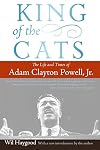
Was Clayton an opportunistic spectator, or progressive instigator to social change? It seems to me from this detailed, encompassing biography a blend of the two from the flashy Harlem politician who coined the phrase "Black Power" at his 1966, May Howard Univ. speech. Chameleon-like, he stumped for Eisenhower and allied with LBJ; anything to advance his profile and advance integration for African-Americans. Clayton's career with the two major parties covered a transformative, show more post-Reconstruction era when the GOP traded Teddy Roosevelt-era progressivism to buck change and the Democrats fractions into the recalcitrant Southern Dixiecrats and a radicalizable norther arm of the party. Along the way, Clayton chased skirts and photo ops in Europe, Africa, Puerto Rico (where he hoped statehood would advance him from the House of Representatives to the Senate), and Bimini where he hunkered down battling ethics violations instead of representing his constituents. I do admire his pluck in taking on both The Mob and corrupt police in battling numbers rackets and other corruption in his district. show less
Tigerland: 1968-1969: A City Divided, a Nation Torn Apart, and a Magical Season of Healing by Wil Haygood
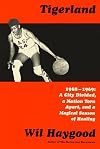
Summary: The story of the 1968-69 East High School Tigers championship basketball and baseball teams at a black high school in segregated Columbus, Ohio during the tumultuous aftermath of the killing of Martin Luther King, Jr.
I'm a Columbus, Ohio transplant, and like many, know little of the city's history, even sports history, beyond Ohio State football. But I love history, and sports, and so when Wil Haygood's new book on the legendary East High School Tiger basketball and baseball teams show more came up for review, I snagged a copy.
Columbus, Ohio in 1968 had a segregated school system. And it was far from equal. Facilities, text books, and sports facilities at black East High School were inferior to other schools. The death of Martin Luther King, Jr. hit the community hard. King had preached regularly at Union Grove Baptist Church. What would happen among the students in the high school that was the centerpiece of that community?
This book tells the story of the leadership of three men at East High School. Jack Gibbs was the black principal of the school, Bob Hart, the white basketball coach, and Paul Pennell, the white baseball coach. All three were marked by a deep concern for their students and players, and their families. Gibbs tirelessly advocated for the school, and even found a way to transport families to the basketball championship against Canton McKinley. Both coaches recognized the raw talent of the black athletes and convinced them they could be champions.
The book also is a narrative of the championship season of each team, divided into Part One for the basketball team, and Part Two for the baseball team. Two of the basketball players, Eddie "the Rat" Ratleff and Bo Pete Lamar were later college All-Americans in the same year and Ratleff played on the 1972 U.S. Olympic team. Personal stories of the players mix with game accounts leading up to the state championships for each team (Ratleff played on both). He tells us the story of the subsequent lives of a number of these figures--both good and painful.
Haygood, who has written biographies of Thurgood Marshall, Sammy Davis, Sugar Ray Robinson, and Adam Clayton Powell, Jr. and a family memoir on growing up in Columbus, brings his knowledge of the city and the history of race in the U.S. together in this work. He sets the story of the Tigers against backdrop of the racial segregation in the city, including the court ruling by Black judge Robert Duncan, upheld in the Supreme Court desegregating Columbus schools. He narrates a challenged, yet vibrant Black community centered around churches, the schools, and Mt Vernon Avenue businesses. He weaves enough of the national history in--from King to Jackie Robinson to give context.
There is a tendency on the part of some to want to isolate sports from the issues of race in our country. There is also a tendency to focus our discourse on race at a national level and forget that real progress has to find expression in each of our local contexts. Heygood weaves sport and racial history together, as well as the challenges we face as a nation and the possibilities in our local communities. He makes us consider who will be the Jack Gibbs, the Bob Hart, the Paul Pennell of our day.
____________________________
Disclosure of Material Connection: I received a complimentary review copy of this book from the publisher in exchange for an honest review. The opinions I have expressed are my own. show less
I'm a Columbus, Ohio transplant, and like many, know little of the city's history, even sports history, beyond Ohio State football. But I love history, and sports, and so when Wil Haygood's new book on the legendary East High School Tiger basketball and baseball teams show more came up for review, I snagged a copy.
Columbus, Ohio in 1968 had a segregated school system. And it was far from equal. Facilities, text books, and sports facilities at black East High School were inferior to other schools. The death of Martin Luther King, Jr. hit the community hard. King had preached regularly at Union Grove Baptist Church. What would happen among the students in the high school that was the centerpiece of that community?
This book tells the story of the leadership of three men at East High School. Jack Gibbs was the black principal of the school, Bob Hart, the white basketball coach, and Paul Pennell, the white baseball coach. All three were marked by a deep concern for their students and players, and their families. Gibbs tirelessly advocated for the school, and even found a way to transport families to the basketball championship against Canton McKinley. Both coaches recognized the raw talent of the black athletes and convinced them they could be champions.
The book also is a narrative of the championship season of each team, divided into Part One for the basketball team, and Part Two for the baseball team. Two of the basketball players, Eddie "the Rat" Ratleff and Bo Pete Lamar were later college All-Americans in the same year and Ratleff played on the 1972 U.S. Olympic team. Personal stories of the players mix with game accounts leading up to the state championships for each team (Ratleff played on both). He tells us the story of the subsequent lives of a number of these figures--both good and painful.
Haygood, who has written biographies of Thurgood Marshall, Sammy Davis, Sugar Ray Robinson, and Adam Clayton Powell, Jr. and a family memoir on growing up in Columbus, brings his knowledge of the city and the history of race in the U.S. together in this work. He sets the story of the Tigers against backdrop of the racial segregation in the city, including the court ruling by Black judge Robert Duncan, upheld in the Supreme Court desegregating Columbus schools. He narrates a challenged, yet vibrant Black community centered around churches, the schools, and Mt Vernon Avenue businesses. He weaves enough of the national history in--from King to Jackie Robinson to give context.
There is a tendency on the part of some to want to isolate sports from the issues of race in our country. There is also a tendency to focus our discourse on race at a national level and forget that real progress has to find expression in each of our local contexts. Heygood weaves sport and racial history together, as well as the challenges we face as a nation and the possibilities in our local communities. He makes us consider who will be the Jack Gibbs, the Bob Hart, the Paul Pennell of our day.
____________________________
Disclosure of Material Connection: I received a complimentary review copy of this book from the publisher in exchange for an honest review. The opinions I have expressed are my own. show less
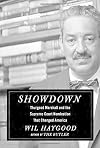
Thurgood Marshall may not have worn a cape and tights, but he was, nevertheless, every inch a superhero.
Wil Haygood takes us back to Marshall’s childhood to tell us what it was like for a young, smart, ambitious kid growing up in a world in which he couldn’t even use most public bathrooms or be admitted to many restaurants and hotels. But this never diminished his spirit and determination. On the contrary, it inspired him further not only to achieve, but to work for change for everyone show more else.
This book uses the Senate confirmation hearings for Marshall’s Supreme Court nomination as scaffolding to structure his story; the author goes back and forth in time, basically telling in large part the history of black America from post-Reconstruction times onward. It is a nasty and brutal history which will often have you cringing (there are, for example, two blow-by-blow accounts of lynchings, though the accounts are quite germane), but will greatly enhance your understanding of the country as it is today.
Evaluation: If you only read about the life of one trailblazing hero, I recommend reading about Thurgood Marshall. His unparalleled bravery in spite of constant threats against his life, his unflagging dedication to others, and his unfailing good humor and optimism in the face of unrelenting efforts by whites to keep him down, is utterly amazing and inspirational.
I've seen some reviews opine that Devil in the Grove, also about Marshall, is superior to this book. I found it excellent as well, but the fact is, when you're writing about a true giant of a man like Marshall, it's hard to go wrong. show less
Wil Haygood takes us back to Marshall’s childhood to tell us what it was like for a young, smart, ambitious kid growing up in a world in which he couldn’t even use most public bathrooms or be admitted to many restaurants and hotels. But this never diminished his spirit and determination. On the contrary, it inspired him further not only to achieve, but to work for change for everyone show more else.
This book uses the Senate confirmation hearings for Marshall’s Supreme Court nomination as scaffolding to structure his story; the author goes back and forth in time, basically telling in large part the history of black America from post-Reconstruction times onward. It is a nasty and brutal history which will often have you cringing (there are, for example, two blow-by-blow accounts of lynchings, though the accounts are quite germane), but will greatly enhance your understanding of the country as it is today.
Evaluation: If you only read about the life of one trailblazing hero, I recommend reading about Thurgood Marshall. His unparalleled bravery in spite of constant threats against his life, his unflagging dedication to others, and his unfailing good humor and optimism in the face of unrelenting efforts by whites to keep him down, is utterly amazing and inspirational.
I've seen some reviews opine that Devil in the Grove, also about Marshall, is superior to this book. I found it excellent as well, but the fact is, when you're writing about a true giant of a man like Marshall, it's hard to go wrong. show less
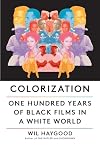
Colorization: One Hundred Years of Black Films in a White World by Wil Haywood is a 2021 Knopf publication.
Wil Haywood has written a study of the history and struggle of black cinema, starting in the silent era and bringing us right up to present day.
Beginning with ‘A Birth of a Nation’ and the protest surrounding it, Haywood takes us on a journey through the decades, featuring not only the films, but the triumphs, setbacks, and the continual struggle for recognition and show more acknowledgement.
This is a very in-depth history, and contains a wealth of obscure, behind the scenes information, alongside familiar faces, films, producers and directors.
The book is a little chunky- as it does go over an entire century’s worth of material, but it’s a smooth, easy read and goes by quickly.
I was very interested in the older history, especially, because it was mostly new material for me- but of course, I did enjoy reading about the players I recognized, learning more about their career launches, the struggles they encountered, and the impact they made on cinema and on history.
Haywood gives a wonderful presentation, with organization, and research. The book does seem to run out of steam towards the end, with fewer opportunities for little-known insights, that aren't still fresh in our memories.
That said, this is a fabulous piece of cinematic history, which includes a segment of photographs, notes, Bibliography, and illustrated credits.
For me, there were some nice memories in here. I was reminded of some movies I have not watched in a long time, while learning a great deal about those movies I didn’t know.
But more importantly, the book chronicles the contributions of black artists and black films, the racism, politics, and social themes involved, through the years, while continuing to battle some of these same issues today- one century later.
Overall, this is an informative, fascinating book, all fans of history and the cinema will want to experience.
4 stars show less
Wil Haywood has written a study of the history and struggle of black cinema, starting in the silent era and bringing us right up to present day.
Beginning with ‘A Birth of a Nation’ and the protest surrounding it, Haywood takes us on a journey through the decades, featuring not only the films, but the triumphs, setbacks, and the continual struggle for recognition and show more acknowledgement.
This is a very in-depth history, and contains a wealth of obscure, behind the scenes information, alongside familiar faces, films, producers and directors.
The book is a little chunky- as it does go over an entire century’s worth of material, but it’s a smooth, easy read and goes by quickly.
I was very interested in the older history, especially, because it was mostly new material for me- but of course, I did enjoy reading about the players I recognized, learning more about their career launches, the struggles they encountered, and the impact they made on cinema and on history.
Haywood gives a wonderful presentation, with organization, and research. The book does seem to run out of steam towards the end, with fewer opportunities for little-known insights, that aren't still fresh in our memories.
That said, this is a fabulous piece of cinematic history, which includes a segment of photographs, notes, Bibliography, and illustrated credits.
For me, there were some nice memories in here. I was reminded of some movies I have not watched in a long time, while learning a great deal about those movies I didn’t know.
But more importantly, the book chronicles the contributions of black artists and black films, the racism, politics, and social themes involved, through the years, while continuing to battle some of these same issues today- one century later.
Overall, this is an informative, fascinating book, all fans of history and the cinema will want to experience.
4 stars show less
Lists
Awards


You May Also Like


Associated Authors
Statistics
- Works
- 13
- Also by
- 2
- Members
- 934
- Popularity
- #27,503
- Rating
- 3.6
- Reviews
- 29
- ISBNs
- 53
- Languages
- 2
- Favorited
- 1