
Gilbert King
Author of Devil in the Grove: Thurgood Marshall, the Groveland Boys, and the Dawn of a New America
About the Author
Gilbert King was awarded the 2013 Pulitzer Prize in Nonfiction for Devil in the Grove: Thurgood Marshall, the Groveland Boys, and the Dawn of a New America, which was also a New York Times bestseller and a finalist for the Dayton Literary Peace Prize. A contributor to Smithsonian magazine and The show more Marshall Project, King also writes about justice for The New York Times and The Washington Post. He lives in New York City. show less
Image credit: Gilbert King
Works by Gilbert King
Devil in the Grove: Thurgood Marshall, the Groveland Boys, and the Dawn of a New America (2012) 1,082 copies, 54 reviews
Beneath a Ruthless Sun: A True Story of Violence, Race, and Justice Lost and Found (2018) 219 copies, 8 reviews
The Execution of Willie Francis: Race, Murder, and the Search for Justice in the American South (2008) 55 copies, 1 review
Bone Valley: A True Story of Injustice and Redemption in the Heart of Florida (2025) 36 copies, 1 review
Tagged
Common Knowledge
- Other names
- King, Gilbert Anthony
- Birthdate
- 1962-02-22
- Gender
- male
- Education
- University of South Florida
- Occupations
- writer
photographer - Organizations
- New York Times
Washington Post
Smithsonian - Awards and honors
- Honorary Doctor of Humane Letters, University of South Florida
Pulitzer Prize (2013) - Agent
- Farley Chase, Chase Literary Agency
- Nationality
- USA
- Birthplace
- Rockville Center, New York, USA
- Associated Place (for map)
- New York, USA
Members
Reviews
Devil in the Grove: Thurgood Marshall, the Groveland Boys, and the Dawn of a New America by Gilbert King
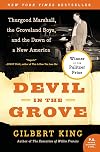
[Devil in the Grove] is a nonfiction book that takes place in Florida the 1940s-50s. It follows a case where four young Black men were accused of raping a white woman when she and her boyfriend find themselves in a broken down car along the side of the road. It is absolutely obvious from the very beginning that these Black men had nothing to do with raping her or injuring the couple in any way. In fact only two of the accused were even on the scene at all - they had stopped briefly to see if show more the couple needed help - but the other two were honestly just the closest Black men at hand to round out the 4 needed to support the woman's accusation. One of the 4 Black men that they try to arrest runs and is killed. The other three will stand trial in Lake County, Florida.
The NAACP gets involved in this case, and Thurgood Marshall as well, so the book includes some detail about Marshall's life. But mainly, the focus is on the trial and the brutal conditions for Black people living in Lake County, Florida. The police brutally coerce confessions from some of the accused men through some of the worst torture you can imagine. The community burns down the family home of one of the accused, Samuel Shepard. They were one of the most successful Black families in the county. During the trial, any evidence that would stand against the prosecution's case is blatantly hidden and not introduced and the local judge supports all of it. Supporting evidence is obviously fabricated. The NAACP defense knows that their only chance is to try for an appeal.
This book also briefly describes other similar trials around the country to show that this is not only happening in Florida. There is a nationwide focus to the book and there are other cases making their way to the Supreme Court concurrently with this case. These parts give a little break to the reader to catch your breath from all the horror happening in Florida.
One of the most evil people (with plenty to choose from in this book) is the Sheriff of Lake County, Willis McCall. There is no way to view this man without complete disgust. I found it unbelievable that he didn't die until 1994 - when I was a sophomore in high school. It's so easy to think about the Jim Crow South as existing in a different era, but that fact connected it to me. These things were happening when my grandparents were adults and my parents were just being born. It's not the distant past. I think books like these make it so obvious why we are still where we are today - with police brutality against Blacks and inequalities in our schools, just to scratch the surface. It's only been 70 years since lynchings were commonplace and there were no rights for Black people in the courts.
Despite this rather long review (for me), I didn't even scratch the surface of what actually happened in this trial or the outcomes for these accused. I think every American should read this book. I think it's vital for us to acknowledge what life was like for Black people in the South in the not so distant past, both because it's part of our history and because it informs what is happening in our country today. show less
The NAACP gets involved in this case, and Thurgood Marshall as well, so the book includes some detail about Marshall's life. But mainly, the focus is on the trial and the brutal conditions for Black people living in Lake County, Florida. The police brutally coerce confessions from some of the accused men through some of the worst torture you can imagine. The community burns down the family home of one of the accused, Samuel Shepard. They were one of the most successful Black families in the county. During the trial, any evidence that would stand against the prosecution's case is blatantly hidden and not introduced and the local judge supports all of it. Supporting evidence is obviously fabricated. The NAACP defense knows that their only chance is to try for an appeal.
This book also briefly describes other similar trials around the country to show that this is not only happening in Florida. There is a nationwide focus to the book and there are other cases making their way to the Supreme Court concurrently with this case. These parts give a little break to the reader to catch your breath from all the horror happening in Florida.
One of the most evil people (with plenty to choose from in this book) is the Sheriff of Lake County, Willis McCall. There is no way to view this man without complete disgust. I found it unbelievable that he didn't die until 1994 - when I was a sophomore in high school. It's so easy to think about the Jim Crow South as existing in a different era, but that fact connected it to me. These things were happening when my grandparents were adults and my parents were just being born. It's not the distant past. I think books like these make it so obvious why we are still where we are today - with police brutality against Blacks and inequalities in our schools, just to scratch the surface. It's only been 70 years since lynchings were commonplace and there were no rights for Black people in the courts.
Despite this rather long review (for me), I didn't even scratch the surface of what actually happened in this trial or the outcomes for these accused. I think every American should read this book. I think it's vital for us to acknowledge what life was like for Black people in the South in the not so distant past, both because it's part of our history and because it informs what is happening in our country today. show less
Devil in the Grove: Thurgood Marshall, the Groveland Boys, and the Dawn of a New America by Gilbert King
(7) This was an excellent and chilling portrait of Jim Crow Florida. I had read about this case through the J Edgar Hoover biography I read last year which is what prompted me to get this Pulitzer-Prize winning narrative non-fiction. This was an exploration of the Groveland case and Thurgood Marshall and the NAACP Legal Defense Fund's role in defending the accused men. It takes place in central Florida, amid the orange groves, in the 1940's when segregation was the law and order. Enforced by show more extra-judicial threats and lynching by the KKK which often contained many of the citizens that were supposed to protect the community. Four black men, 2 of them veterans, one a teenager are accused of raping a white girl - a capital crime given some creepy fetish of exalting Southern white women's purity.
The book does an excellent job setting the scene and trying to recreate events although he never tries to present anything he doesn't know for sure as fact leading to certain gaps in the story of the night in question. The men are hunted down, confessions are beaten out of them, evidence manufactured, there is an attempted lynching and later in the book certainly a murder by law enforcement that goes unpunished due to the complicity of cracker white supremacy. It is truly sickening.
One of the worst parts of this book are seeing the attitudes reflected in the people of today. I have family that lives in that part of Florida. I hear the things the State's politicians say - "where woke goes to die." It seems a chilling echo of this legacy. As one of the NAACP lawyers says in the book - "They have just taken their hoods off."
The book escapes a higher rating from me only because it felt long. I really enjoyed learning more about Thurgood Marshall and the other cases he tried, but some parts about the NAACP politics etc were a drag. At times the book was not engaging.
Anyway, this book is deserving of its Pulitzer Prize and I think should be required reading in any US History course. The one thing I do know is that I never want to step foot in the State of Florida again. I'll be damned if if ever give them another dime of my vacation budget. show less
The book does an excellent job setting the scene and trying to recreate events although he never tries to present anything he doesn't know for sure as fact leading to certain gaps in the story of the night in question. The men are hunted down, confessions are beaten out of them, evidence manufactured, there is an attempted lynching and later in the book certainly a murder by law enforcement that goes unpunished due to the complicity of cracker white supremacy. It is truly sickening.
One of the worst parts of this book are seeing the attitudes reflected in the people of today. I have family that lives in that part of Florida. I hear the things the State's politicians say - "where woke goes to die." It seems a chilling echo of this legacy. As one of the NAACP lawyers says in the book - "They have just taken their hoods off."
The book escapes a higher rating from me only because it felt long. I really enjoyed learning more about Thurgood Marshall and the other cases he tried, but some parts about the NAACP politics etc were a drag. At times the book was not engaging.
Anyway, this book is deserving of its Pulitzer Prize and I think should be required reading in any US History course. The one thing I do know is that I never want to step foot in the State of Florida again. I'll be damned if if ever give them another dime of my vacation budget. show less
Devil in the Grove: Thurgood Marshall, the Groveland Boys, and the Dawn of a New America by Gilbert King
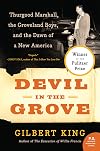
A well-researched and well-rounded accounts of one of the most important and overlooked civil rights cases in American history. While Thurgood Marshall's name is on the title King provides a detailed look at the key figures on all sides of this case, from Marshall's fellow lawyers at the Legal Defense Fund, to a sheriff and deputies willing to do what it takes to keep Jim Crow intact, to skeptical journalists to the Klan and their sympathetic politicians. Probably the most important show more character was the community in Lake County, Florida where many had doubts about a white couple's charges of rape against four young black men --charges whose details did not seem to add up -- and yet supported the prosecution of the men out of both self-interest and a desire to keep the white supremacist structures intact. The description of how the tentacles of bigotry reached every aspect of southern life provides great insight into how some of the worst atrocities in American history could happen and gives insight into injustices that continue to happen. show less
Devil in the Grove: Thurgood Marshall, the Groveland Boys, and the Dawn of a New America by Gilbert King
This account of what was essentially a legal lynching in the Florida of the late 1940s and early 1950s—endorsed and pursued against four innocent black men by the local police and judiciary—is still depressingly familiar in the 21st century. In 1949, a young white woman called Norma Padgett claimed that she had been abducted and raped by four black men. Despite overwhelming evidence in favour of the men's innocence, the defense of the "flower of white Southern womanhood" required that show more all four—Ernest Thomas, Charles Greenlee, Samuel Shepherd and Walter Irvin—be hunted down, and either shot on the spot (as was the case with Ernest Thomas) or put on trial for their lives. Thurgood Marshall, later to become the first African American justice of the US Supreme Court, was one of the NAACP lawyers who defended the men—ably, but in vain, because no amount of evidence was going to lead to the exoneration of four black men in a Florida county whose sheriff was a known KKK member, a sheriff who had killed one of the accused, and would go on to murder at least one more of them.
While I could wish for more thorough footnoting at points, and while I feel that there's a little too much of that popular history genre tendency to tell us what someone "must have" felt or thought, Gilbert King's account is a powerful one. It is a thorough-going indictment of the racism inherent in the US justice system, and of how the willful ignorance and complacency of white people enables the perpetuation of that racism. Devil in the Grove is a horrifying and uncomfortable read—and because of that, a necessary one. show less
While I could wish for more thorough footnoting at points, and while I feel that there's a little too much of that popular history genre tendency to tell us what someone "must have" felt or thought, Gilbert King's account is a powerful one. It is a thorough-going indictment of the racism inherent in the US justice system, and of how the willful ignorance and complacency of white people enables the perpetuation of that racism. Devil in the Grove is a horrifying and uncomfortable read—and because of that, a necessary one. show less
Lists
Awards


You May Also Like


Associated Authors
Statistics
- Works
- 12
- Members
- 1,540
- Popularity
- #16,721
- Rating
- 4.2
- Reviews
- 64
- ISBNs
- 30
- Favorited
- 2