
About the Author
Alex Heard is the editorial director of Outside magazine. He has worked as an editor and writer at The New York Times Magazine, Slate, Wired, and The New Republic, and is the author of Apocalypse Pretty Soon. He lives in Santa Fe, New Mexico.
Works by Alex Heard
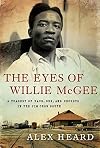
The Eyes of Willie McGee: A Tragedy of Race, Sex, and Secrets in the Jim Crow South (2010) 107 copies, 6 reviews
Tagged
Common Knowledge
- Canonical name
- Heard, Alex
- Birthdate
- 1957-10-14
- Gender
- male
- Education
- Vanderbilt University
- Short biography
- Alex Heard is an editor at Wired magazine. He has also edited and written for The New York Times Magazine, Outside, The New Republic, Slate, and many other publications. "A Two-party South" and other political books were written by George Alexander Heard (3/14/1917-7/24/2009) born in Savannah, Georgia, graduate of the University of North Carolina, former diplomat and scholar.
- Nationality
- USA
- Birthplace
- Jackson, Mississippi, USA
- Places of residence
- Santa Fe, New Mexico, USA
- Associated Place (for map)
- USA
Members
Reviews
This review was first written for Author Exposure: http://www.authorexposure.com/2010/07/book-review-eyes-of-willie-mcgee-by.html
THE EYES OF WILLIE McGEE: A TRAGEDY OF RACE, SEX, AND SECRETS IN THE JIM CROW SOUTH by Alex Heard presents more questions than answers. Yet, in so doing, it is an outrageously honest and well-documented vehicle to enlighten those unaware of how one extraordinary judicial argument unknowingly provided the ballast for the Civil Rights movement in our country.
Willie show more McGee endured the charade of three blatantly biased “trials,” for a questionable crime he allegedly committed—the impulsive rape of a white Southern woman by the name of Willette Hawkins in Laurel, Mississippi one early morning in November 1945. He consequently became a pivotal icon for the Civil Rights Congress in their initial impetus to challenge the “Jim Crow” laws, which measured justice solely on the color of one’s skin, rather than any heinous crime itself.
Alex Heard provides a complex, yet systematically presented view of pre-Civil Rights history. It is a challenging narrative, chronicling the controversial and scandalous actions of respectable politicians and government agencies during this volatile period of America’s history. The battle between an unyielding “Jim Crow” South, at odds over federal intrusion into their rights to adjudicate laws in accordance to instilled Southern values and cultural traditions, and the federal government, forms the historical backdrop of the book. Ultimately, according to Craig Zaim (in a legal analysis of the case), “…Willie McGee died a casualty of the battle Mississippi waged to maintain its autonomy against federal power” (340-41).
This mesmerizing chronological narration includes a staggering forty pages of bibliography and notes, numerous and exacting interviews, time-consuming trips to locales, family members, and research venues. Despite this evidence, Alex Heard readily acknowledges that the Willie McGee case remains a question mark in the troublesome archives of this one black man sentenced to die for a crime he personally alleged never occurred. Alex Heard’s attempts to unravel what actually happened on that fateful pre-dawn morning, and the contradictory assertions he uncovered, reveal that only two people can bear witness to the truth: young, black, married father and provider Willie McGee and young, white, married mother and housewife Willette Hawkins. Whether a consensual and long-standing sexual alliance between the two ever existed still remains a mystery because both individuals are deceased.
The aforementioned scrupulous attention to the minutest details might suggest tedious, textbook-style writing. On the contrary, I found this book to be both absorbing and shocking. I was amazed by the number of well-known celebrities, authors, politicians, etc., who willingly joined in the battle to prevent an execution. White Southern citizens’ crimes of the same caliber and worse, rarely, if ever, ended with the death penalty. Willie McGee’s fate was sealed before he entered any courtroom. All avenues and any attempts to save his life were futile.
Most startling was the revelation of the Civil Rights Congress’ role. The CRC was allegedly committed to the wide-ranging issues of civil liberties, but actually dedicated itself to defend individual Communists and the Communist Party. Tainted by this ostracized and feared association, the CRC and the NAACP often clashed on viable tactics to preeminently attain civil liberties for the Negro citizens of the United States. The Civil Rights Congress was supremely instrumental in sustaining worldwide visibility for Willie McGee. Conversely, the NAACP sought to distance itself from the CRC and chose to abandon one man in order to focus on the ultimate struggle to gain civil liberties for all Negroes.
Fortunately, as Heard writes, “By the mid-1950’s, the civil rights movement was moving rapidly, spurred by dramatic events that set the tone for the historic changes of the late 1950’s and 1960’s...the eventual triumph of the NAACP’s core strategy of forcing change by waging constitutional battles in federal courts—made it easy to forget that the Civil Rights Congress had ever existed, which it ceased to do in early 1956” (341-42).
I would find it difficult to forget what I read, and rightfully so. Without hesitation, we fought a world war to secure freedom and justice for all. Yet, we failed to carry that message home. Rather than yield, we shamefully engaged in a tumultuous period of unwarranted conflict until irrefutable laws granted equality to all our citizens. show less
THE EYES OF WILLIE McGEE: A TRAGEDY OF RACE, SEX, AND SECRETS IN THE JIM CROW SOUTH by Alex Heard presents more questions than answers. Yet, in so doing, it is an outrageously honest and well-documented vehicle to enlighten those unaware of how one extraordinary judicial argument unknowingly provided the ballast for the Civil Rights movement in our country.
Willie show more McGee endured the charade of three blatantly biased “trials,” for a questionable crime he allegedly committed—the impulsive rape of a white Southern woman by the name of Willette Hawkins in Laurel, Mississippi one early morning in November 1945. He consequently became a pivotal icon for the Civil Rights Congress in their initial impetus to challenge the “Jim Crow” laws, which measured justice solely on the color of one’s skin, rather than any heinous crime itself.
Alex Heard provides a complex, yet systematically presented view of pre-Civil Rights history. It is a challenging narrative, chronicling the controversial and scandalous actions of respectable politicians and government agencies during this volatile period of America’s history. The battle between an unyielding “Jim Crow” South, at odds over federal intrusion into their rights to adjudicate laws in accordance to instilled Southern values and cultural traditions, and the federal government, forms the historical backdrop of the book. Ultimately, according to Craig Zaim (in a legal analysis of the case), “…Willie McGee died a casualty of the battle Mississippi waged to maintain its autonomy against federal power” (340-41).
This mesmerizing chronological narration includes a staggering forty pages of bibliography and notes, numerous and exacting interviews, time-consuming trips to locales, family members, and research venues. Despite this evidence, Alex Heard readily acknowledges that the Willie McGee case remains a question mark in the troublesome archives of this one black man sentenced to die for a crime he personally alleged never occurred. Alex Heard’s attempts to unravel what actually happened on that fateful pre-dawn morning, and the contradictory assertions he uncovered, reveal that only two people can bear witness to the truth: young, black, married father and provider Willie McGee and young, white, married mother and housewife Willette Hawkins. Whether a consensual and long-standing sexual alliance between the two ever existed still remains a mystery because both individuals are deceased.
The aforementioned scrupulous attention to the minutest details might suggest tedious, textbook-style writing. On the contrary, I found this book to be both absorbing and shocking. I was amazed by the number of well-known celebrities, authors, politicians, etc., who willingly joined in the battle to prevent an execution. White Southern citizens’ crimes of the same caliber and worse, rarely, if ever, ended with the death penalty. Willie McGee’s fate was sealed before he entered any courtroom. All avenues and any attempts to save his life were futile.
Most startling was the revelation of the Civil Rights Congress’ role. The CRC was allegedly committed to the wide-ranging issues of civil liberties, but actually dedicated itself to defend individual Communists and the Communist Party. Tainted by this ostracized and feared association, the CRC and the NAACP often clashed on viable tactics to preeminently attain civil liberties for the Negro citizens of the United States. The Civil Rights Congress was supremely instrumental in sustaining worldwide visibility for Willie McGee. Conversely, the NAACP sought to distance itself from the CRC and chose to abandon one man in order to focus on the ultimate struggle to gain civil liberties for all Negroes.
Fortunately, as Heard writes, “By the mid-1950’s, the civil rights movement was moving rapidly, spurred by dramatic events that set the tone for the historic changes of the late 1950’s and 1960’s...the eventual triumph of the NAACP’s core strategy of forcing change by waging constitutional battles in federal courts—made it easy to forget that the Civil Rights Congress had ever existed, which it ceased to do in early 1956” (341-42).
I would find it difficult to forget what I read, and rightfully so. Without hesitation, we fought a world war to secure freedom and justice for all. Yet, we failed to carry that message home. Rather than yield, we shamefully engaged in a tumultuous period of unwarranted conflict until irrefutable laws granted equality to all our citizens. show less

Here's a real-life version of the trial in To Kill a Mockingbird, though it's far murkier and complicated. Willie McGee was an African-American man who, in 1945, was sentenced to death for raping a white housewife, Willette Hawkins. His trial was unfair- he was tried by an all-white jury who debated for only about two minutes before convicting him in a hostile courthouse where he couldn't even put together two words coherently, he was so terrified of being lynched by the mob outside.
Willie show more McGee caught the interest of many civil rights organizations in America (mainly the Communists, which may have been troublesome for him), and even more people around the world. William Faulkner spoke out about him. Norman Mailer. Letters poured in from China, Germany, the UK and countless other places, pleading his innocence.
But did those supporters really have the facts straight? As Alex Heard investigates the case, he finds multiple, serious discrepancies about the "facts" presented. Did Willie and Willette have a forbidden affair? Who was Willie's wife at the time, and did she really take care of his children? Was Willie innocent? Was Willette as horrible and manipulative as some people believe?
In 1940s and 1950s Mississippi, only black men could be sentenced to death for rape. White men would, at most, get life in prison (and often got out early). As if that wasn't unfair enough, many black men didn't even make it to trial. They would often be attacked by mobs and lynched. Or sometimes they'd go to trial and be sentenced to death so quickly, it was basically a "legal lynching."
Alex Heard discusses Communism and the way Communists were treated by the government (and everyone else) in the 1950s. He touches on newspaper titans, white supremacist senators, Harry Truman, Eleanor Roosevelt, Jessica Mitford and the way people can manipulate facts to make a rape victim seem like a malicious and cruel adulterer.
But that's the sad (and fascinating) thing. What were the facts? Whites who remember Willette Hawkins strongly believe that she was raped. Blacks who remember Willie McGee believe he was innocent and was the victim of a corrupt justice system. Both sides are so strong in their beliefs that they are unwilling to budge, looking at the same trial transcripts, the same information- and are unable to meet in the middle.
Honestly, I don't read much non-fiction and I found this book absolutely riveting. It was a disturbing portrait of America after World War II, but it was also a very successful attempt to view the country through the lens of one case and the way it affected everyone. It was amazing to see how far news of Willie McGee spread- we like to think that we live in a global environment now, but even in the 1950s, people as far away as the USSR and China knew and had strong opinions about one African-American man sentenced to death. It was amazing to read about someone who so captured the public imagination and who helped, in some small part, in starting a full-scale Civil Rights movement. show less
Willie show more McGee caught the interest of many civil rights organizations in America (mainly the Communists, which may have been troublesome for him), and even more people around the world. William Faulkner spoke out about him. Norman Mailer. Letters poured in from China, Germany, the UK and countless other places, pleading his innocence.
But did those supporters really have the facts straight? As Alex Heard investigates the case, he finds multiple, serious discrepancies about the "facts" presented. Did Willie and Willette have a forbidden affair? Who was Willie's wife at the time, and did she really take care of his children? Was Willie innocent? Was Willette as horrible and manipulative as some people believe?
In 1940s and 1950s Mississippi, only black men could be sentenced to death for rape. White men would, at most, get life in prison (and often got out early). As if that wasn't unfair enough, many black men didn't even make it to trial. They would often be attacked by mobs and lynched. Or sometimes they'd go to trial and be sentenced to death so quickly, it was basically a "legal lynching."
Alex Heard discusses Communism and the way Communists were treated by the government (and everyone else) in the 1950s. He touches on newspaper titans, white supremacist senators, Harry Truman, Eleanor Roosevelt, Jessica Mitford and the way people can manipulate facts to make a rape victim seem like a malicious and cruel adulterer.
But that's the sad (and fascinating) thing. What were the facts? Whites who remember Willette Hawkins strongly believe that she was raped. Blacks who remember Willie McGee believe he was innocent and was the victim of a corrupt justice system. Both sides are so strong in their beliefs that they are unwilling to budge, looking at the same trial transcripts, the same information- and are unable to meet in the middle.
Honestly, I don't read much non-fiction and I found this book absolutely riveting. It was a disturbing portrait of America after World War II, but it was also a very successful attempt to view the country through the lens of one case and the way it affected everyone. It was amazing to see how far news of Willie McGee spread- we like to think that we live in a global environment now, but even in the 1950s, people as far away as the USSR and China knew and had strong opinions about one African-American man sentenced to death. It was amazing to read about someone who so captured the public imagination and who helped, in some small part, in starting a full-scale Civil Rights movement. show less

My reactions to reading this book in 1999.
This book, in its travels amongst and personal meetings with various fringe believers (and background on those beliefs) reminded me of a combination of Philip Finch’s God, Guts, and Guns and Ed Regis’ Great Mambo Chicken, two of my favorite books. Heard also strikes a ground between the two in that his millinealists are both of a scientific, religious, or political nature.
Heard has an odd but useful stylistic quirk of alternating personal show more reporting with historical background or a completely different topic. Heard is usually sympathetic to his subjects quest for a new world even if usually skeptical of their means or some guru’s motives. I had heard of all these groups to one extant or another except for the Christian ministers and Jewish rabbis cheerfully breeding the “apocalypse cow”, an all-red heifer, necessary for sacrifices in the Restored Temple of Jerusalem prior to Christ returning. The heifers are referred to in the Old Testament and require special breeding to make one without blemish. I’d heard of the Gordon Michael Scallion (one flaw of this book is no index) et al Earth Changers, but Heard revealingly describes the emotional context of their apocalypse mongering. They envision, at least many do, good feelings preempting these Earth upheavals or a better world emerging. Many also seem to have a Heinleinian “competent man” air about them in that they assume only they and a few others will survive and woe unto those who aren’t wise or rich enough to heed their warnings.
I liked (and these were the author’s favorite) the groups trying to build artificial nations/islands in the sea. They come across as enthusiastic, naïve polymaths. Heard briefly describes the founding of Minerva in 1968 on some tidal atolls in the Pacific. I’d only heard of them and the whole nation building (in every sense of the world) notion in an article for replica (I think) Minervan gold coins. Its fate points to a problem with forming your own countries: if you’re successful, somebody will conquer you as Tonga did Minerva. (Somebody has even written a book on this very subject suggesting the do-it-yourself country needs a do-it-yourself nuke.) Heard also surprised me by relating several episodes of violence by Jewish apocalyptic groups in Jerusalem. (They hate the Dome of the Rock being on the site of the Old Temple.)
Many groups were familiar. The Unarians, who, like many religious groups formed by the revelation of one person – here the married couple of the Normans – are going through a crises after their founders’ deaths, and other saucer contactees. Heard likes most of his subjects and thinks most are sincere (if greedy sometimes), but he spots a total charlatan in NakaMats, Japanese and reputed inventor of a “free energy”. He also is suspicious of the Monroe Institute as a plagiarizing, money-grubbing group that claims to teach “scientific” methods of controlling out-of-body experiences. He regards Dr. Steven Greer as an egomaniacal, though ,UFO believer who seems to have deluded himself into thinking only he and his loyal followers can call UFOS down.
The Extropians and other fervent believers that soon science will conquer death show up here along with the various supposed life-extending regiments. In the same chapter (humorously – there’s a lot of humor in this book – entitled “Death, Be Not in My Face”), Chet Flemming, a pseudonym, author of the odd If We Can Keep a Severed Head Alive, shows up. He not only turns out to be a patent attorney and acquaintance of the author, but an environmental apocalyptic though, later, he concentrates on his successful medical investments and less on the end of the world. Heard puts in an afterword as to what’s new with most of his subjects, and he generally sees the irrationality he has reported on as benign if not good sometimes. The one exception is the chapter of the Republic of Texas and other Christian apocalyptics of the Identity and militia sort. Despite generally regarding his subject, Ron Cole, as harmless, he repeats the same old Southern Poverty Law Center – type warnings of this sort of belief being a ticking timebomb. Perhaps, but many millennial groups of all sorts of stripes, have a few members capable of terror. He does point out Cole and authors have legitimate complaints about Waco and that it’s not the publicity seeking members of these groups you have to watch out for. It’s the ones you don’t here about. The stuff on Republic of Texas, some members of which have turned violent, was interesting.
All in all a very entertaining and informative look at millennialism in America show less
This book, in its travels amongst and personal meetings with various fringe believers (and background on those beliefs) reminded me of a combination of Philip Finch’s God, Guts, and Guns and Ed Regis’ Great Mambo Chicken, two of my favorite books. Heard also strikes a ground between the two in that his millinealists are both of a scientific, religious, or political nature.
Heard has an odd but useful stylistic quirk of alternating personal show more reporting with historical background or a completely different topic. Heard is usually sympathetic to his subjects quest for a new world even if usually skeptical of their means or some guru’s motives. I had heard of all these groups to one extant or another except for the Christian ministers and Jewish rabbis cheerfully breeding the “apocalypse cow”, an all-red heifer, necessary for sacrifices in the Restored Temple of Jerusalem prior to Christ returning. The heifers are referred to in the Old Testament and require special breeding to make one without blemish. I’d heard of the Gordon Michael Scallion (one flaw of this book is no index) et al Earth Changers, but Heard revealingly describes the emotional context of their apocalypse mongering. They envision, at least many do, good feelings preempting these Earth upheavals or a better world emerging. Many also seem to have a Heinleinian “competent man” air about them in that they assume only they and a few others will survive and woe unto those who aren’t wise or rich enough to heed their warnings.
I liked (and these were the author’s favorite) the groups trying to build artificial nations/islands in the sea. They come across as enthusiastic, naïve polymaths. Heard briefly describes the founding of Minerva in 1968 on some tidal atolls in the Pacific. I’d only heard of them and the whole nation building (in every sense of the world) notion in an article for replica (I think) Minervan gold coins. Its fate points to a problem with forming your own countries: if you’re successful, somebody will conquer you as Tonga did Minerva. (Somebody has even written a book on this very subject suggesting the do-it-yourself country needs a do-it-yourself nuke.) Heard also surprised me by relating several episodes of violence by Jewish apocalyptic groups in Jerusalem. (They hate the Dome of the Rock being on the site of the Old Temple.)
Many groups were familiar. The Unarians, who, like many religious groups formed by the revelation of one person – here the married couple of the Normans – are going through a crises after their founders’ deaths, and other saucer contactees. Heard likes most of his subjects and thinks most are sincere (if greedy sometimes), but he spots a total charlatan in NakaMats, Japanese and reputed inventor of a “free energy”. He also is suspicious of the Monroe Institute as a plagiarizing, money-grubbing group that claims to teach “scientific” methods of controlling out-of-body experiences. He regards Dr. Steven Greer as an egomaniacal, though ,UFO believer who seems to have deluded himself into thinking only he and his loyal followers can call UFOS down.
The Extropians and other fervent believers that soon science will conquer death show up here along with the various supposed life-extending regiments. In the same chapter (humorously – there’s a lot of humor in this book – entitled “Death, Be Not in My Face”), Chet Flemming, a pseudonym, author of the odd If We Can Keep a Severed Head Alive, shows up. He not only turns out to be a patent attorney and acquaintance of the author, but an environmental apocalyptic though, later, he concentrates on his successful medical investments and less on the end of the world. Heard puts in an afterword as to what’s new with most of his subjects, and he generally sees the irrationality he has reported on as benign if not good sometimes. The one exception is the chapter of the Republic of Texas and other Christian apocalyptics of the Identity and militia sort. Despite generally regarding his subject, Ron Cole, as harmless, he repeats the same old Southern Poverty Law Center – type warnings of this sort of belief being a ticking timebomb. Perhaps, but many millennial groups of all sorts of stripes, have a few members capable of terror. He does point out Cole and authors have legitimate complaints about Waco and that it’s not the publicity seeking members of these groups you have to watch out for. It’s the ones you don’t here about. The stuff on Republic of Texas, some members of which have turned violent, was interesting.
All in all a very entertaining and informative look at millennialism in America show less

Some Americans believe that the history of the earth is about to end, and they have been making ultimate preparations. Alex Heard has gained the confidence of quite a variety of these sometimes amusing, sometimes pathetic, sometimes scary people and organizations. Some of the fun went out of this largely lighthearted book when the Ugandan cult, The Movement for the Restoration of the Ten Commandments of God, murdered nearly a thousand of its members while I was reading. The "science" that show more many of these people invoke is quite surreal, and includes the notion that sources of "free energy" are being suppressed by the Establishment. show less
Awards


You May Also Like


Statistics
- Works
- 9
- Members
- 221
- Popularity
- #101,334
- Rating
- 3.6
- Reviews
- 9
- ISBNs
- 21
- Languages
- 1