
Wendy Kaminer
Author of Sleeping With Extra-Terrestrials
About the Author
Wendy Kaminer is the author of many books, including Free for All: Defending Liberty in America Today; I'm Dysfunctional, You're Dysfunctional: The Recovery Movement and Other Self-Help Fashions; and Sleeping with Extra-Terrestrials: The Rise of Irrationalism and Perils of Piety. She lives in show more Boston. show less
Image credit: Kathy Chapman, 2008
Works by Wendy Kaminer
I'm Dysfunctional, You're Dysfunctional: The Recovery Movement and Other Self-Help (1993) 156 copies, 3 reviews
False Security 1 copy
Associated Works
Tagged
Common Knowledge
- Canonical name
- Kaminer, Wendy
- Birthdate
- 12-28-1949
- Gender
- female
- Nationality
- USA
- Associated Place (for map)
- USA
Members
Reviews
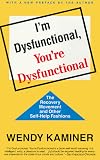
I have long been frustrated with the self-help movement. To me, all those books out there are saying, "You aren't good enough." And they are written, for the most part, by people who have a limited experience with the wide range of people who might be looking at their book. Writers, in other words, who don't really know what they are talking about.
So I loved finding this book. Although written in the early 1990s it holds true today. Kaminer examines several types of "recovery" movements, show more then moves into other self-help movements. She examines what the authors are saying and determines that most of them contradict themselves, are not based on clear thinking, and, worst of all, encourage a status of victimhood and dependency. "You can't help it." "You need help." "You can't do it alone".
Kaminer is especially ruthless when she discusses how this movement has muddied the waters of what is really abuse. Now any kind of difficulty can be labeled as abuse, as traumatic, "as bad as being in a concentration camp". The notion is absurd but I happen to know someone who has bought exactly this argument about her own childhood, that it was worse than being in a concentration camp. Come on! It's so ridiculous. And Kaminer is not afraid to say so, often with laugh-out-loud humor.
More people need to read this book. It might shake them loose of that feeling that they need someone else to approve what they do, to tell them what to do. show less
So I loved finding this book. Although written in the early 1990s it holds true today. Kaminer examines several types of "recovery" movements, show more then moves into other self-help movements. She examines what the authors are saying and determines that most of them contradict themselves, are not based on clear thinking, and, worst of all, encourage a status of victimhood and dependency. "You can't help it." "You need help." "You can't do it alone".
Kaminer is especially ruthless when she discusses how this movement has muddied the waters of what is really abuse. Now any kind of difficulty can be labeled as abuse, as traumatic, "as bad as being in a concentration camp". The notion is absurd but I happen to know someone who has bought exactly this argument about her own childhood, that it was worse than being in a concentration camp. Come on! It's so ridiculous. And Kaminer is not afraid to say so, often with laugh-out-loud humor.
More people need to read this book. It might shake them loose of that feeling that they need someone else to approve what they do, to tell them what to do. show less
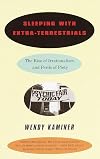
“The contrary willingness to accept untested personal testimony as public truth is at the heart of the irrationalism that confronts us today. . . Generally, the only proof offered for a fantastic belief is the passion it inspires in believers.” Kaminer’s new book decries the influence that irrational belief has on public policy. In the introduction she humorously ridicules her going to a homeopath, recognizing that it has no scientific validity, and she knows the result is due to the show more placebo effect, yet that effect is real to her. She argues, however, that others should not take her testimony at face value. Objective evidence should be required.
Kaminer discusses the public’s eagerness to join in the hysteria over satanic ritual child abuse, mass mourning for celebrities, how junk science and personal prejudice have influenced public policy decisions related to drugs, school vouchers, and classroom prayer. We are in danger of losing our skepticism, she argues, and that is dangerous for a democratic society. She acknowledges the personal need of many for divinities, but she suggests that a society that wears its piety in the public square craving for angels and alien abductions, not to mention Saint Diana, is more likely to look for miracles than face the challenges of living in a pluralistic society.
And she comes down quite hard on religious faith as feeding the irrational. “What’s the difference between crossing yourself or hanging a mezuzah outside your door and avoiding black cats. Believing that you’ve been abducted by aliens or that Elvis is alive is, on its face, no sillier than believing that Christ rose from the dead. . . People who believe that God heeds their prayers have probably” waived the right to mock people who talk to trees and guardian angels or claim to channel the spirits of Native Americans.” One man’s superstition is another’s sacred.
Kaminer blames the media for much of this, they quail in the face of the supernatural. Skepticism is edited out of journalistic reporting and she doubts H. L. Mencken could publish many of his antagonistic remarks about religious silliness, arguing that we risk becoming less religiously free than during the Victorian era. She is a fervent advocate of religious freedom. “Separation of church and state does not desire, much less mandate, the banishment of religious faith from public life, as right-wing rhetoric sometimes suggests. . . .The right of religious people to organize and mount political protest is, in par, a right of private association, which the government is bound to accommodate, but not support.” But she cites numerous instances of religious viewpoints appearing in work and school settings, almost universally those of Protestant Christianity.
Kaminer’s examples are witty and eerily disturbing. Together they present a rather disturbing vision of the future and she ends with a plea for a return to science, skepticism, reason, and freedom of inquiry.
“The rights and interests of individual believers clash with religious institutions when the institutions seek sponsorship of the state. Crusades to breach the boundaries between church and state constitute a much greater threat to religious tolerance than any number of evangelical atheists. Theocracies throughout history have made that clear.”
As I was reviewing some of Kaminer’s magazine articles I stumbled upon a very recent commentary which I quote in its entirety:
“Sometimes I put my faith in sectarian rivalries, which helped derail the most recent proposed school-prayer amendment to the Constitution. Last year, an organization in Arkansas, Put God Back in Public School, decided not to press for the introduction of school prayers in Arkansas (instead, they demanded state funding for special Christian schools). The group reconsidered the value of school prayer after its founder Kathy Smith, consulted with God: ‘I asked God, “Do you want me to change the law to put prayer in the schools?” He said no. If you do that, kids would have the right to pray to other gods, too. They could pray to Buddha. God doesn’t want that. There is only one God.’
What more can I say but ‘Amen’.” show less
Kaminer discusses the public’s eagerness to join in the hysteria over satanic ritual child abuse, mass mourning for celebrities, how junk science and personal prejudice have influenced public policy decisions related to drugs, school vouchers, and classroom prayer. We are in danger of losing our skepticism, she argues, and that is dangerous for a democratic society. She acknowledges the personal need of many for divinities, but she suggests that a society that wears its piety in the public square craving for angels and alien abductions, not to mention Saint Diana, is more likely to look for miracles than face the challenges of living in a pluralistic society.
And she comes down quite hard on religious faith as feeding the irrational. “What’s the difference between crossing yourself or hanging a mezuzah outside your door and avoiding black cats. Believing that you’ve been abducted by aliens or that Elvis is alive is, on its face, no sillier than believing that Christ rose from the dead. . . People who believe that God heeds their prayers have probably” waived the right to mock people who talk to trees and guardian angels or claim to channel the spirits of Native Americans.” One man’s superstition is another’s sacred.
Kaminer blames the media for much of this, they quail in the face of the supernatural. Skepticism is edited out of journalistic reporting and she doubts H. L. Mencken could publish many of his antagonistic remarks about religious silliness, arguing that we risk becoming less religiously free than during the Victorian era. She is a fervent advocate of religious freedom. “Separation of church and state does not desire, much less mandate, the banishment of religious faith from public life, as right-wing rhetoric sometimes suggests. . . .The right of religious people to organize and mount political protest is, in par, a right of private association, which the government is bound to accommodate, but not support.” But she cites numerous instances of religious viewpoints appearing in work and school settings, almost universally those of Protestant Christianity.
Kaminer’s examples are witty and eerily disturbing. Together they present a rather disturbing vision of the future and she ends with a plea for a return to science, skepticism, reason, and freedom of inquiry.
“The rights and interests of individual believers clash with religious institutions when the institutions seek sponsorship of the state. Crusades to breach the boundaries between church and state constitute a much greater threat to religious tolerance than any number of evangelical atheists. Theocracies throughout history have made that clear.”
As I was reviewing some of Kaminer’s magazine articles I stumbled upon a very recent commentary which I quote in its entirety:
“Sometimes I put my faith in sectarian rivalries, which helped derail the most recent proposed school-prayer amendment to the Constitution. Last year, an organization in Arkansas, Put God Back in Public School, decided not to press for the introduction of school prayers in Arkansas (instead, they demanded state funding for special Christian schools). The group reconsidered the value of school prayer after its founder Kathy Smith, consulted with God: ‘I asked God, “Do you want me to change the law to put prayer in the schools?” He said no. If you do that, kids would have the right to pray to other gods, too. They could pray to Buddha. God doesn’t want that. There is only one God.’
What more can I say but ‘Amen’.” show less
Many people would admit to a certain scepticism when it comes to religions or beliefs other than their own. For some, the mere idea that another person's point-of-view is equally valid to their own would be seen as ludicrous, even blasphemous. But Wendy Kaminer posesses no such qualms. She fully realizes that every belief system has inherent illogic qualities. What she can't understand is why others have a hard time when it comes to a rational discussion on the topic.
SLEEPING WITH show more EXTRA-TERRESTRIALS is Kaminer's ode to the irrational, a witty and incisive commentary on irrational beliefs of all kinds. Not merely content to stick to established religions, Kaminer examines New-Age Mysticism, Reincarnation, Feminine Intuition, Self-Help Books, Repressed Memories, and Cyberspace. What she discovers, at times, can be alarming.
In a series of essays, Kaminer disects the recent North American trend to believe ANYTHING. In researching healers, mystics, and gurus, Kaminer presents the reader with one simple truth: If someone says something sincerely enough, or loud enough, we will believe it, no questions asked. If someone has talked to angels, we believe it. If someone has a repressed memory of child abuse, we believe it. If someone has talked to the spirits of our ancestors, we believe it. All without one single shred of evidence of any kind.
Kaminer does not dump on religion. She fully realizes the value a belief system can provide the average individual. But the apparent willingness of the public to adhere to anyone who proclaims something forceful enough can be an eye-opening experience.
In one precise example, she cites a 'study' presented by Pat Robertson, which showed that the crime rate in America has risen steadily ever since prayer was removed from public schools. That, Mr. Robertson proclaims, is proof positive that a lack of prayer in school leads to criminal activity. The flaw in this logic, as Kaminer astutely points out, is that the crime has also been on the rise ever since man first walked on the moon. Therefore, space travel has directly contributed to the rising crime rate. The ease with which the public accepts one statement without any thought to alternatives is frightening.
Kaminer is simply saying, "Ask questions." Don't be content to blithely follow the teachings of someone without examining that person first. Rationality is in ever decreasing supply these days, as people are more and more prone to 'jump on the bandwagon' of anything presented with apparent authority. In her section on 'Junk Science', Kaminer exposes the irrationality of scientists as well, who jumped aboard the 'Cold Fusion' debate, despite the fact that no hard evidence was ever provided. Simply seeing it on television was enough to convince scores of people that cold fusion (a pipe-dream) had been created. In another very telling moment, Kaminer tells of how she was greeted with boos and hisses on a talk show, when she asserted that a father who yells at a child is not the same thing as a father who assaults a child. Despite no evidence being presented, the audience would rather agree with the 'victim', rather than think it through.
Kaminer may be preaching to the choir. While her presentation is a breath of fresh air for some, there are others who would not see the value in this book, dismissing it as mere nonsense, or hatred. But of course, those who would be quick to dismiss the book without reading it, are precisely the sorts of individuals that Kaminer is writing about. Think about that. show less
SLEEPING WITH show more EXTRA-TERRESTRIALS is Kaminer's ode to the irrational, a witty and incisive commentary on irrational beliefs of all kinds. Not merely content to stick to established religions, Kaminer examines New-Age Mysticism, Reincarnation, Feminine Intuition, Self-Help Books, Repressed Memories, and Cyberspace. What she discovers, at times, can be alarming.
In a series of essays, Kaminer disects the recent North American trend to believe ANYTHING. In researching healers, mystics, and gurus, Kaminer presents the reader with one simple truth: If someone says something sincerely enough, or loud enough, we will believe it, no questions asked. If someone has talked to angels, we believe it. If someone has a repressed memory of child abuse, we believe it. If someone has talked to the spirits of our ancestors, we believe it. All without one single shred of evidence of any kind.
Kaminer does not dump on religion. She fully realizes the value a belief system can provide the average individual. But the apparent willingness of the public to adhere to anyone who proclaims something forceful enough can be an eye-opening experience.
In one precise example, she cites a 'study' presented by Pat Robertson, which showed that the crime rate in America has risen steadily ever since prayer was removed from public schools. That, Mr. Robertson proclaims, is proof positive that a lack of prayer in school leads to criminal activity. The flaw in this logic, as Kaminer astutely points out, is that the crime has also been on the rise ever since man first walked on the moon. Therefore, space travel has directly contributed to the rising crime rate. The ease with which the public accepts one statement without any thought to alternatives is frightening.
Kaminer is simply saying, "Ask questions." Don't be content to blithely follow the teachings of someone without examining that person first. Rationality is in ever decreasing supply these days, as people are more and more prone to 'jump on the bandwagon' of anything presented with apparent authority. In her section on 'Junk Science', Kaminer exposes the irrationality of scientists as well, who jumped aboard the 'Cold Fusion' debate, despite the fact that no hard evidence was ever provided. Simply seeing it on television was enough to convince scores of people that cold fusion (a pipe-dream) had been created. In another very telling moment, Kaminer tells of how she was greeted with boos and hisses on a talk show, when she asserted that a father who yells at a child is not the same thing as a father who assaults a child. Despite no evidence being presented, the audience would rather agree with the 'victim', rather than think it through.
Kaminer may be preaching to the choir. While her presentation is a breath of fresh air for some, there are others who would not see the value in this book, dismissing it as mere nonsense, or hatred. But of course, those who would be quick to dismiss the book without reading it, are precisely the sorts of individuals that Kaminer is writing about. Think about that. show less
I really enjoyed this book. Kaminer honestly tells the reader her thoughts and doesn't try to cloud them in some kind of authoritarian mist. She critiques the self help movement without stooping to it's level. Not providing answer but spurring the reader to think for herself by providing questions and insights.
Lists
You May Also Like


Associated Authors
Statistics
- Works
- 13
- Also by
- 1
- Members
- 633
- Popularity
- #39,815
- Rating
- 3.6
- Reviews
- 14
- ISBNs
- 19
- Languages
- 2
- Favorited
- 6