
Martin Gardner (1914–2010)
Author of The Scientific American Book of Mathematical Puzzles & Diversions
About the Author
Martin Gardner is the author of more than seventy books on a vast range of topics including "Did Adam & Eve Have Navels?", "Calculus Made Easy", & "The Annotated Alice". He lives in Hendersonville, North Carolina. (Publisher Provided)
Disambiguation Notice:
Martin F. Gardner, the author of Threatened Plants of Central and South Chile, is a different author.
Image credit: Martin Gardner, Mathematician
Series
Works by Martin Gardner
The Colossal Book of Mathematics: Classic Puzzles, Paradoxes, and Problems (2001) 528 copies, 3 reviews
The Second Scientific American Book of Mathematical Puzzles and Diversions (1961) 491 copies, 4 reviews
Are Universes Thicker Than Blackberries?: Discourses on Godel, Magic Hexagrams, Little Red Riding Hood, and Other Mathematical and Pseudoscientific Topics (2003) 207 copies, 4 reviews
The New Ambidextrous Universe: Symmetry and Asymmetry from Mirror Reflections to Superstrings: Third Revised Edition (1990) 164 copies, 1 review
The Universe in a Handkerchief: Lewis Carroll's Mathematical Recreations, Games, Puzzles, and Word Plays (1996) 144 copies, 1 review
When You Were a Tadpole and I Was a Fish: And Other Speculations About This and That (2009) 131 copies, 4 reviews
Visitors from Oz: The Wild Adventures of Dorothy, the Scarecrow, and the Tin Woodman (1998) 116 copies, 1 review
Fractal Music, Hypercards and More...: Mathematical Recreations from Scientific American Magazine (1992) 109 copies, 1 review
Sphere Packing, Lewis Carroll and Reversi (New Martin Gardner Mathematical Library) (2009) 83 copies
My Best Mathematical and Logic Puzzles (Dover Recreational Math) (Dover Math Games & Puzzles) (1982) 44 copies
From the Wandering Jew to William F. Buckley, Jr. : On Science, Literature, and Religion (2000) 40 copies, 1 review
The No-Sided Professor and Other Tales of Fantasy, Humor, Mystery, and Philosophy (1987) 25 copies, 2 reviews
A Gathering of Gardner: Time Travel and Other Mathematical Bewilderments/Penrose Tiles to Trapdoor Ciphers and the Retur (1989) 15 copies
How Not to Test a Psychic: Ten Years of Remarkable Experiments With Renowned Clairvoyant Pavel Stepanek (1989) 11 copies
Over the Coffee Cups 5 copies
Thang [short fiction] 4 copies
Bacons Geheimnis. Die Wurzeln des Zufalls und andere numerische Merkwürdigkeiten (1992) 4 copies, 1 review
No-Sided Professor [short fiction] 3 copies
Show di magia matematica 3 copies
The Gardner-Smith Correspondence 3 copies
Izquierda y derecha en el cosmos 3 copies
Cut the Cards 2 copies
Confessioni di un medium 2 copies
Oom [short story] 2 copies
PASSATEMPI MATEMATICI Volume secondo — Editor — 1 copy
La ciencia 1 copy
DIVERTIMENTOS MATEMÁTICOS 1 copy
Nuove confessioni di un medium: altri trucchi e segreti usati dai sensitivi quaderni di magia 3 1 copy
L' Univers Ambidextre 1 copy
Puzzles Old & New 1 copy
ROSQUILLAS MATEMÁTICAS 1 copy
Математические досуги 1 copy
Есть идея! 1 copy
Martin Gardner Interview 1 copy
Che cos'e la relativita 1 copy
Curious Problems & Puzzles 1 copy
Stranger Than Fact Volume II, No. I Summer, 1964 Manifesto of the Institute of General Eclectics 1 copy
Che cos'è la relatività 1 copy
Mathematical Puzzles of Sam Loyd (2 Books) Volume 1 and 2 — Editor — 1 copy
VISUAL BRAINSTORMS 2 1 copy
Mit dem Fahrstuhl in die 4. Dimension. Mathematische Rätsel, Paradoxien und neue logische Probleme 1 copy
Математические новеллы 1 copy
Paradojas que hacen pensar 1 copy
Children's Digest March 1952 1 copy
Мартин Гарднер - 17 книг 1 copy
Associated Works
Alice's Adventures in Wonderland / Through the Looking-Glass (1865) — Introduction, some editions — 29,511 copies, 315 reviews
The Emperor's New Mind: Concerning Computers, Minds, and the Laws of Physics (1989) — Foreword, some editions — 3,445 copies, 29 reviews
Casey at the Bat: A Ballad of the Republic Sung in the Year 1888 (1888) — Introduction, some editions — 1,742 copies, 55 reviews
How to Think About Weird Things: Critical Thinking for a New Age (1995) — Foreword — 478 copies, 12 reviews
The Annotated Alice: 150th Anniversary Deluxe Edition (150th Deluxe Anniversary Edition) (The Annotated Books) (2015) — Editor — 347 copies, 6 reviews
Wordplay: The Philosophy, Art, and Science of Ambigrams (1992) — Foreword, some editions — 261 copies, 1 review
More Annotated Alice: Alice's Adventures in Wonderland & Through the Looking Glass (1990) — Editor — 258 copies, 2 reviews
The Country of the Blind and Other Science-Fiction Stories (1997) — Editor, some editions — 235 copies, 1 review
This Is My Best: Great Writers Share Their Favorite Work (2004) — Contributor — 175 copies, 3 reviews
Magical Mathematics: The Mathematical Ideas That Animate Great Magic Tricks (2011) — Foreword — 166 copies, 1 review
The Wasp in a Wig: A Suppressed Episode of Through the Looking Glass and What Alice Found There (1977) — Editor, some editions — 116 copies, 1 review
Anticipations of the Reaction of Mechanical and Scientific Progress: Upon Human Life and Thought (1999) — Introduction, some editions — 78 copies, 2 reviews
Counterpoints: 25 Years of The New Criterion on Culture and the Arts (2007) — Contributor — 48 copies
Isaac Asimov's Science Fiction Magazine: Vol. 8, No. 1 [January 1984] (1984) — Contributor — 19 copies
Isaac Asimov's Science Fiction Magazine: Vol. 6, No. 8 [August 1982] (1982) — Contributor — 17 copies, 1 review
Isaac Asimov's Science Fiction Magazine: Vol. 2, No. 2 [March-April 1978] (1978) — Contributor — 17 copies
Isaac Asimov's Science Fiction Magazine: Vol. 9, No. 10 [October 1985] (1985) — Contributor — 15 copies
Isaac Asimov's Science Fiction Magazine: Vol. 9, No. 1 [January 1985] (1985) — Contributor — 15 copies
Isaac Asimov's Science Fiction Magazine: Vol. 10, No. 10 [October 1986] (1986) — Contributor — 15 copies
Isaac Asimov's Science Fiction Magazine: Vol. 7, No. 4 [April 1983] (1983) — Contributor — 13 copies
Isaac Asimov's Science Fiction Magazine: Vol. 9, No. 12 [December 1985] (1985) — Contributor — 13 copies
Isaac Asimov's Science Fiction Magazine: Vol. 7, No. 11 [November 1983] (1983) — Contributor — 13 copies
Isaac Asimov's Science Fiction Magazine: Vol. 9, No. 3 [March 1985] (1985) — Contributor — 12 copies
Isaac Asimov's Science Fiction Magazine: Vol. 10, No. 8 [August 1986] (1986) — Contributor — 12 copies
Isaac Asimov's Science Fiction Magazine: Vol. 7, No. 2 [February 1983] (1983) — Contributor — 12 copies
Isaac Asimov's Science Fiction Magazine: Vol. 6, No. 2 [February 1982] (1982) — Contributor — 11 copies
Science Fiction Omnibus: The Best Science Fiction Stories: 1949, 1950 (1952) — Contributor — 11 copies
Humpty Dumpty's Magazine for Little Children #243, December 1976 — Contributor — 1 copy
Mr. Belloc Objects and Still Objects to "The Outline of History" (2008) — Introduction, some editions — 1 copy
The American Book Collector — Contributor, some editions — 1 copy
Kalki : Studies in James Branch Cabell — Contributor, some editions — 1 copy
Tagged
Common Knowledge
- Canonical name
- Gardner, Martin
- Birthdate
- 1914-10-21
- Date of death
- 2010-05-22
- Gender
- male
- Education
- University of Chicago (B.A. | Philosophy | 1936)
- Occupations
- science writer
author
mathematician - Organizations
- CSICOP: Committee for Scientific Investigation of Claims of the Paranormal
Humpty Dumpty
Scientific American
Skeptical Inquirer
United States Navy (WWII) - Awards and honors
- American Academy of Arts & Sciences (1997)
George Pólya Award (2000)
Trevor Evans Award (1998)
Carl B. Allendoerfer Award (1990)
Leroy P. Steele Prize for Mathematical Exposition (1987)
L. Frank Baum Memorial Award (1971) - Relationships
- Gardner, James (son)
- Short biography
- Martin Gardner was born on October 21 1914 in Tulsa, Oklahoma, the son of a geologist who started a small oil business and became a wildcatter. As a child Martin enjoyed magic tricks and playing chess. After graduating from high school in 1932, he earned a bachelor's degree in Philosophy at the University of Chicago, having also studied history, literature and the sciences under the intellectually-stimulating Great Books curriculum.
Although brought up a devout Methodist, he lost his Christian faith as a result of his wide reading, a transition he covered in a semi-autobiographical novel The Flight of Peter Fromm (1973).
In 1937 Gardner returned to Oklahoma, taking a reporter's job on the Tulsa Tribune, and after a spell in public relations back at the University of Chicago, in 1942 joined the US Naval Reserve as a yeoman in the destroyer escort USS Pope. On night watch, he dreamed up plots for stories, which he sold to Esquire magazine. After the war he became a freelance writer, and in the 1950s wrote features for Humpty Dumpty's Magazine and other children's periodicals.
In 1956 he sold an article to Scientific American magazine and followed this up with an essay about hexaflexagons – hexagons made from strips of paper that show different faces when flexed in different ways. This so impressed the publisher that Gardner was invited to produce a regular column along similar lines. Since he had not studied mathematics after high school, Gardner plundered second-hand bookshops in Manhattan to find enough material to sustain his "Mathematical Games" column. In the event it ran for 25 years and earned Gardner the American Mathematical Society's prize for mathematical exposition.
His lack of scholarly expertise meant that instead of relying on academic jargon, Gardner packed his prose with cross-cultural references, jokes and anecdotes, giving the column the broadest-possible appeal. He introduced his readers to riddles, paradoxes, enigmas and even magic tricks, as well as concepts such as fractals and Chinese tangram puzzles, redefining the concept of "recreational mathematics".
Gardner also became known as a sceptic of the paranormal, and wrote works debunking public figures such as the psychic Uri Geller, who gained fame for claiming to bend spoons with his mind. In his first book Fads and Fallacies in the Name of Science (1952), Gardner exposed such quackery as flat-earth cults, alien abductions and a belief in UFOs. The book has since become a classic; the novelist Kingsley Amis, an early fan, regretted not stealing a copy when he had had the chance.
In 1976, with Carl Sagan, Isaac Asimov and others, Gardner co-founded the Committee for the Scientific Evaluation of Claims of the Paranormal, and wrote regularly for its magazine, the Skeptical Inquirer. Its most recent issue includes a feature he wrote on Oprah Winfrey's New Age interests.
In more than 70 books, Gardner produced lay guides to Einstein's Theory of Relativity; ambidexterity and physical symmetry; the bath plug vortex (the phenomenon by which bathwater in the northern hemisphere drains in an anticlockwise direction and clockwise in the southern hemisphere); and even the concept of God. He also published fiction, poetry and literary and film criticism as well as puzzle books.
In The Numerology of Dr Matrix (1967) Gardner investigated links between numerals and the occult, asking (for example) what is special about the number 8,549,176,320? (A: It is the 10 natural integers arranged in the order of the English alphabet.)
His many admirers instituted a regular convention of Gardner followers, known as "Gatherings for Gardner" (G4G), which attracted magicians, puzzle fans and mathematicians from all over the world.
Although Gardner attended these as guest of honour, as a matter of course he avoided conferences, meetings and parties, and despite his facility as a polymath never owned a computer or used email. He preferred to work standing up, and, while magic and conjuring tricks remained his principal hobby, was also an accomplished exponent of the musical saw.
Martin Gardner married, in 1952, Charlotte Greenwald, who predeceased him in 2000. Their two sons survive him.
(The Telegraph: Martin Gardner, 7:14PM BST 25 May 2010) - Nationality
- USA
- Birthplace
- Tulsa, Oklahoma, USA
- Places of residence
- Hendersonville, North Carolina, USA
New York, New York, USA
Hastings-on-Hudson, New York, USA - Place of death
- Norman, Oklahoma, USA
- Map Location
- Oklahoma, USA
- Disambiguation notice
- Martin F. Gardner, the author of Threatened Plants of Central and South Chile, is a different author.
Members
Reviews
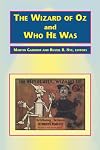
This probably isn't what you think.
See a book that lists Martin Gardner as an editor that is listed as an expanded edition of The Wonderful Wizard of Oz, and you'll probably think it's an annotated Wizard.
Sadly, it's not so. There is an annotated Wizard, but it's by Michael Patrick Hearn. And, yes, if you are a fan of L. Frank Baum, you probably want that, because -- in addition to The Wonderful Wizard of Oz and a full (maybe too full) set of annotations, the Hearn book has W. W. Densow's show more illustrations in color, the way they were drawn to be printed. You don't often find the color illustrations, these days.
And, sadly, you won't find them in the Gardner/Nye edition. You get a text of the Wizard, which is fine, but only a small subset of the illustrations, and in black and white, not color. What the Gardner/Nye edition adds is an "Appreciation" by Nye and a medium-length biography of Baum by Gardner.
The appreciation is probably acceptable, although it certainly didn't excite me. The biography is problematic -- for instance, in discussing the second Oz book, The Marvelous Land of Oz, Gardner talks about the army of women led by General Jinjur, and says that the stereotypic view of Jinjur's army probably reflects Baum's view of the Women's Rights movement. But it doesn't. Baum was a firm proponent of women's rights, and as a newspaper editorialist in South Dakota, he had campaigned vigorously for women's suffrage in that state. The reason that Jinjur leads an army of pretty young women is that Baum had an obsession with the theatre -- he hoped to turn The Marvelous Land of Oz into a drama, and to attract audiences, he wanted an army of chorus girls (such as had been included in the stage version of The Wonderful Land of Oz, which was about 10% Baum and 90% the work of the producer/director).
The appreciation and the biography both have a lot of problems like that. They were simply written too early, before Baum criticism and Baum biography became serious subjects and the necessary research had been done. So every part of this book has a better replacement. For the biography of Baum, there are several alternatives; my favorite (I haven't read them all by any means) is Katharine M. Rogers' L. Frank Baum: Creator of Oz. A good appreciation can be found in Michael O. Riley's Oz and Beyond. And almost any edition of The Wonderful Wizard.... will have more Denslow illustrations than this book does. As it stands, the Gardner/Nye book is an attempt to stuff three different books into one set of covers. But they just didn't fit. show less
See a book that lists Martin Gardner as an editor that is listed as an expanded edition of The Wonderful Wizard of Oz, and you'll probably think it's an annotated Wizard.
Sadly, it's not so. There is an annotated Wizard, but it's by Michael Patrick Hearn. And, yes, if you are a fan of L. Frank Baum, you probably want that, because -- in addition to The Wonderful Wizard of Oz and a full (maybe too full) set of annotations, the Hearn book has W. W. Densow's show more illustrations in color, the way they were drawn to be printed. You don't often find the color illustrations, these days.
And, sadly, you won't find them in the Gardner/Nye edition. You get a text of the Wizard, which is fine, but only a small subset of the illustrations, and in black and white, not color. What the Gardner/Nye edition adds is an "Appreciation" by Nye and a medium-length biography of Baum by Gardner.
The appreciation is probably acceptable, although it certainly didn't excite me. The biography is problematic -- for instance, in discussing the second Oz book, The Marvelous Land of Oz, Gardner talks about the army of women led by General Jinjur, and says that the stereotypic view of Jinjur's army probably reflects Baum's view of the Women's Rights movement. But it doesn't. Baum was a firm proponent of women's rights, and as a newspaper editorialist in South Dakota, he had campaigned vigorously for women's suffrage in that state. The reason that Jinjur leads an army of pretty young women is that Baum had an obsession with the theatre -- he hoped to turn The Marvelous Land of Oz into a drama, and to attract audiences, he wanted an army of chorus girls (such as had been included in the stage version of The Wonderful Land of Oz, which was about 10% Baum and 90% the work of the producer/director).
The appreciation and the biography both have a lot of problems like that. They were simply written too early, before Baum criticism and Baum biography became serious subjects and the necessary research had been done. So every part of this book has a better replacement. For the biography of Baum, there are several alternatives; my favorite (I haven't read them all by any means) is Katharine M. Rogers' L. Frank Baum: Creator of Oz. A good appreciation can be found in Michael O. Riley's Oz and Beyond. And almost any edition of The Wonderful Wizard.... will have more Denslow illustrations than this book does. As it stands, the Gardner/Nye book is an attempt to stuff three different books into one set of covers. But they just didn't fit. show less
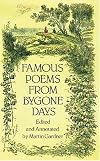
When I saw this book, I had to ask myself whether I would have bought it had it been by someone other than Martin Gardner? And would it be a better book if someone else had written it?
Interesting questions both. This is, of course, not the first volume of annotations by Gardner; The Annotated Alice was and is a much-beloved example of Gardner's skills as a commentator. But that book was also a better fit for Gardner, the much-loved creator of Scientific American's Mathematical Recreations show more column. To annotate Lewis Carroll requires a knowledge of Charles Dodgson's mathematical gifts as well as of his approach to nonsense.
No such special skills are required here; this is simply an anthology of once-well-known poems. So there is no need for the "Gardner touch." And, indeed, it is probably a weaker book than the Annotated Alice or the Annotated Hunting of the Snark. In the commentary, Gardner often admits to being, in effect, stumped. Probably almost all the information here could be found with a quick Google search.
On the other hand, it's a solid collection of poems, with a useful organization and helpful notes. A brilliant book? No. But a helpful and enjoyable one. show less
Interesting questions both. This is, of course, not the first volume of annotations by Gardner; The Annotated Alice was and is a much-beloved example of Gardner's skills as a commentator. But that book was also a better fit for Gardner, the much-loved creator of Scientific American's Mathematical Recreations show more column. To annotate Lewis Carroll requires a knowledge of Charles Dodgson's mathematical gifts as well as of his approach to nonsense.
No such special skills are required here; this is simply an anthology of once-well-known poems. So there is no need for the "Gardner touch." And, indeed, it is probably a weaker book than the Annotated Alice or the Annotated Hunting of the Snark. In the commentary, Gardner often admits to being, in effect, stumped. Probably almost all the information here could be found with a quick Google search.
On the other hand, it's a solid collection of poems, with a useful organization and helpful notes. A brilliant book? No. But a helpful and enjoyable one. show less
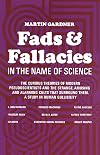
Suffers a bit from having been written in the 1950s (at one point he complains about yogurt!), but otherwise a nice tour through the various forms of pseudoscience plaguing reality since basically forever.
OTOH, this book is fascinating for being written in the 1950s, as a lot of the things he covers were actually happening at the time of writing, and, for some of them he actually knew the people involved. A fair amount of the nonsense infected science fiction fans, authors, and show more editors/publishers, most notably and disturbingly, dianetics and then Scientology. Hubbard was alive and nuts at the time, and Gardner is pretty vicious about the man and his ideas.
It’s fascinating to see what things have hung on and what’s become passé. In the 2020s, UFO wackiness had pretty much died down until suddenly popping up again. A whole range of nuttiness, especially in the area of health, has not only survived, but has mutated and penetrated society much more deeply than it had in the 1950s.
All this crap is about to get much, much worse with the 2024 election about to legitimize some of the nuttiest ideas (and people) by giving them a government platform to huckster from. America has always been full of crazy conspiracy theories, wackadoodle religious ideas, and dangerous “medical” interventions, but most of that remained below the surface, allowing most people to tell themselves that the country was at least mostly sane and mostly a positive force in the world, never mind what people in other countries thought.
Well, that’s over now, and maybe books like Gardner’s will, if no longer giving us hope for a better, saner, world, at least document some of the nuttery that got us to where we are today. show less
OTOH, this book is fascinating for being written in the 1950s, as a lot of the things he covers were actually happening at the time of writing, and, for some of them he actually knew the people involved. A fair amount of the nonsense infected science fiction fans, authors, and show more editors/publishers, most notably and disturbingly, dianetics and then Scientology. Hubbard was alive and nuts at the time, and Gardner is pretty vicious about the man and his ideas.
It’s fascinating to see what things have hung on and what’s become passé. In the 2020s, UFO wackiness had pretty much died down until suddenly popping up again. A whole range of nuttiness, especially in the area of health, has not only survived, but has mutated and penetrated society much more deeply than it had in the 1950s.
All this crap is about to get much, much worse with the 2024 election about to legitimize some of the nuttiest ideas (and people) by giving them a government platform to huckster from. America has always been full of crazy conspiracy theories, wackadoodle religious ideas, and dangerous “medical” interventions, but most of that remained below the surface, allowing most people to tell themselves that the country was at least mostly sane and mostly a positive force in the world, never mind what people in other countries thought.
Well, that’s over now, and maybe books like Gardner’s will, if no longer giving us hope for a better, saner, world, at least document some of the nuttery that got us to where we are today. show less
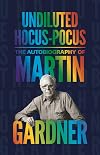
Back in the olden days, when Scientific American had more text than graphics and the articles ran to more than a column length, I used to read my dad's copies and enjoyed the Mathematical Games column written by Martin Gardner. Knowing his background as a magician, a skeptic, a man who made his living as a writer, I eagerly picked up this book.
John Greenleaf Whittier once wrote, "For of all sad words of tongue or pen, The saddest are these: 'It might have been!' " This might have been a good show more book. It SHOULD have been a good book. But it's not. It's terrible. It's not an autobiography, but a series of rambling anecdotes, most of which are about other people. Gardner will write, "I met so-and-so", and then spend a number of pages talking about that guy's penchant for practical jokes. Then it's "And I also met X" and go on about the next guy's life. Worse, the book is filled with "I'll talk about that in another chapter" and "I write about that in {name of another book Gardner wrote}."
Are there no editors? Are there no grammarians? Gardner is allowed to get away with sentences such as "If you see his name on a technical paper with Fan Chung, Fan is his wife." (If you don't see his name on a technical paper with her, she's not his wife?) And, "As I type, I was ninety-five on October 21, 2009."
I checked this book out of the library, and have catalogued it so that I can review it and warn people off. It's a sad end to a writing life. show less
John Greenleaf Whittier once wrote, "For of all sad words of tongue or pen, The saddest are these: 'It might have been!' " This might have been a good show more book. It SHOULD have been a good book. But it's not. It's terrible. It's not an autobiography, but a series of rambling anecdotes, most of which are about other people. Gardner will write, "I met so-and-so", and then spend a number of pages talking about that guy's penchant for practical jokes. Then it's "And I also met X" and go on about the next guy's life. Worse, the book is filled with "I'll talk about that in another chapter" and "I write about that in {name of another book Gardner wrote}."
Are there no editors? Are there no grammarians? Gardner is allowed to get away with sentences such as "If you see his name on a technical paper with Fan Chung, Fan is his wife." (If you don't see his name on a technical paper with her, she's not his wife?) And, "As I type, I was ninety-five on October 21, 2009."
I checked this book out of the library, and have catalogued it so that I can review it and warn people off. It's a sad end to a writing life. show less
Lists
Awards


You May Also Like


Associated Authors
Statistics
- Works
- 229
- Also by
- 85
- Members
- 15,713
- Popularity
- #1,446
- Rating
- 4.0
- Reviews
- 147
- ISBNs
- 475
- Languages
- 16
- Favorited
- 48

