
Ian Stewart (1) (1945–)
Author of The Science of Discworld
For other authors named Ian Stewart, see the disambiguation page.
About the Author
Ian Stewart is a professor emeritus of mathematics at the University of Warwick. The author of numerous books on math, he has written for New Scientist, Discover, and Scientific American, among other publications in the United Kingdom and the United States. He lives in Coventry, England.
Image credit: Taken by Stewart's wife, Avril Stewart.
Series
Works by Ian Stewart
Ashes 2 copies
Does Chaos Rule the Cosmos? 1 copy
Les Chroniques de Rose Polymath (Russiasn Edition) / Tainy katastrofy (per. s frantsuzskogo) / Тайны катастрофы (1987) 1 copy
Play It Again, Psam 1 copy
Curlew's Choice {novelette} 1 copy
Associated Works
Seeing Further: The Story of Science, Discovery, and the Genius of the Royal Society (2010) — Contributor — 1,155 copies, 19 reviews
What Is Mathematics? An Elementary Approach to Ideas and Methods (1941) — Author, some editions — 1,052 copies, 11 reviews
The Next Fifty Years: Science in the First Half of the Twenty-first Century (2002) — Contributor — 410 copies, 10 reviews
Aliens: The World's Leading Scientists on the Search for Extraterrestrial Life (2016) — Contributor — 180 copies, 9 reviews
Analog Science Fiction/Science Fact: Vol. XCVIII, No. 6 (June 1978) (1978) — Contributor — 28 copies
Analog Science Fiction and Fact: Vol. CXIV, No. 1 & 2 (January 1994) (1994) — Author — 16 copies, 1 review
Tagged
Common Knowledge
- Legal name
- Stewart, Ian Nicholas
- Birthdate
- 1945-09-24
- Gender
- male
- Education
- University of Cambridge (Churchill College)
- Occupations
- professor
mathematician - Organizations
- University of Warwick
- Awards and honors
- Michael Faraday Prize (1995)
Fellow of the Royal Society (2001)
Christopher Zeeman Medal (2008)
Lewis Thomas Prize for Writing about Science (2015) - Nationality
- UK
- Birthplace
- Folkestone, Kent, England, UK
- Map Location
- England, UK
Members
Reviews

Ian Stewart's one-century-on sequel to Edwin Abbott's Flatland is far longer and in many ways more wide-ranging than its Victorian original. Almost taking hypergeometry for granted, it also treats qualitative dimensionality, fractals, topology, projective geometry, and an assortment of geometric issues implicated in theoretical physics: relativistic cosmology, quantum physics, and M-theory. These last topics may have aged a bit, but my own physics understanding is still back around the 2001 show more date of this book, so nothing put me off there, and the mathematical issues haven't changed at any rate.
Protagonist Vikki Line's psychopomp is the Space Hopper, inspired by a UK-model hippity-hop bouncing toy, and he equips her with a "Virtual Unreality Engine" that allows her (if not always the reader) to visualize and operate in all of the exotic geometries treated in the story. There is a rather comical Faust and Mephistopheles air to the relationship here.
Flatterland is full of nods to Lewis Carroll, with Vikki clearly taking the role of Alice in a "mathiversal" wonderland. This homage reaches its peak in Chapter 6 "The Topologist's Tea Party." The book is thick with puns and dadjokery. I am glad that I was already sufficiently well-read mathematically to perceive the conventional names of the topics and concepts sometimes screened behind layers of wordplay. Humans are "Planiturthians," whose proper names are given without breaks, like Ianstewart.
Stewart recognizes and praises the social satire in Abbott's original Flatland, but his own version of it is a feminism that was hardly daring at the turn of the millennium. As the book progressed into more diverse mathematical topics, I thought he had even left the social commentary behind, but he did return to it in a mildly satisfying manner at the end. The text makes it clear that "Flatterland" doesn't have anything to do with flattery; or does it? show less
Protagonist Vikki Line's psychopomp is the Space Hopper, inspired by a UK-model hippity-hop bouncing toy, and he equips her with a "Virtual Unreality Engine" that allows her (if not always the reader) to visualize and operate in all of the exotic geometries treated in the story. There is a rather comical Faust and Mephistopheles air to the relationship here.
Flatterland is full of nods to Lewis Carroll, with Vikki clearly taking the role of Alice in a "mathiversal" wonderland. This homage reaches its peak in Chapter 6 "The Topologist's Tea Party." The book is thick with puns and dadjokery. I am glad that I was already sufficiently well-read mathematically to perceive the conventional names of the topics and concepts sometimes screened behind layers of wordplay. Humans are "Planiturthians," whose proper names are given without breaks, like Ianstewart.
Stewart recognizes and praises the social satire in Abbott's original Flatland, but his own version of it is a feminism that was hardly daring at the turn of the millennium. As the book progressed into more diverse mathematical topics, I thought he had even left the social commentary behind, but he did return to it in a mildly satisfying manner at the end. The text makes it clear that "Flatterland" doesn't have anything to do with flattery; or does it? show less
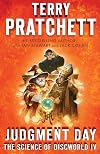
I find it very interesting that scientists will present an extensive argument against the existence of the spiritual realm without allowing a single actual voice from that realm to be heard. Experiences of mystics, extensively documented, visions of deities, evidence for esp., recorded premonitions, careful examinations of religious belief and practice by such eminent minds as William James, all ignored. Why it's almost as if science is yet another religion that cannot bear to examine the show more claims of its rivals. And, as other reviewers have noted, the Discworld story that forms an interested frame for the other volumes in the series is reduced to a minimum in this volume. show less
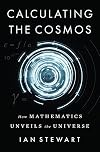
Ian Stewart is an English mathematician who writes entertaining books on the importance of mathematics in just about every aspect of life. He demonstrates, with hardly an equation in sight, how math forms the basis for discoveries ranging from technological advances on earth to the ability to visit the moon; from predicting the nature of atoms to learning about the workings of galaxies.
The core theme of the book is that:
“…there are mathematical patterns in the motions and structure of show more both celestial and terrestrial bodies, from the smallest dust particle to the universe as a whole. Understanding those patterns allows us not just to explain the cosmos, but also to explore it, exploit it, and protect ourselves against it.
Arguably the greatest breakthrough is to realise that there are patterns. After that, you know what to look for, and while it may be difficult to pin the answers down, the problems become a matter of technique.”
Thus he describes, for example, (1) how Newton’s invention of calculus enabled him to “prove” or at least gain insight into why planetary orbits were (as Kepler had shown) elliptical rather than circular; (2) how mathematical perturbations in the orbit of Uranus led to the discovery of Neptune; (3) how Einstein’s general relativity field equations implied the existence of black holes; and (4) how math has been instrumental in many other somewhat less famous astronomical theories and phenomena. [And, although the author doesn't mention this particular application, it is math that can decide the important question of whether two smaller pizzas is better than ordering one big pizza.]
Interestingly, Stewart also argues that the mathematical basis for the existence of “dark matter” may not be on the rock solid ground that some commentators have implied. Of course, the problem with dark matter is that it is not composed of atoms or the familiar elementary particles that interact with light, so it cannot be detected except by measuring its theorized influence on what we can see. But Stewart argues that explanations other than the existence of dark matter could also account for perturbations in expected calculations. [This book was published in 2016; some advances in understanding dark matter have been made since that date.]
Stewart writes, “The main thrust of Calculating the Cosmos is the need for, and the astonishing success of, mathematical reasoning in astronomy and cosmology.” But he also shows where accepted scientific reasoning has led to false conclusions in the past, such as when astronomers sought a planet between Mercury and the sun because of the precession of the perihelion of Mercury’s orbit: there is no such planet. He says that making mistakes is part of the scientific process, and that our scientific (as opposed to mathematical) knowledge is always tentative. He concludes:
“Maybe dark matter is a mistake. Maybe alien life can be radically different from anything we’ve ever encountered, possibly even than we can imagine.
Maybe.
Maybe not.
The fun will be finding out.”
Evaluation: Those who avoid math are missing out on the vast worlds that open up through its application. It is a bit like having a whole new set of powerful lenses through which to see the world, or a whole new set of utensils, pots, and pans in your kitchen. What miraculous revelations can be made with such an elegant toolbox! Stewart helps you see just what ideas have been developed from the intersection of math and science. For me, there is little more exciting than learning about the unraveling of the secrets of the universe.
(JAB) show less
The core theme of the book is that:
“…there are mathematical patterns in the motions and structure of show more both celestial and terrestrial bodies, from the smallest dust particle to the universe as a whole. Understanding those patterns allows us not just to explain the cosmos, but also to explore it, exploit it, and protect ourselves against it.
Arguably the greatest breakthrough is to realise that there are patterns. After that, you know what to look for, and while it may be difficult to pin the answers down, the problems become a matter of technique.”
Thus he describes, for example, (1) how Newton’s invention of calculus enabled him to “prove” or at least gain insight into why planetary orbits were (as Kepler had shown) elliptical rather than circular; (2) how mathematical perturbations in the orbit of Uranus led to the discovery of Neptune; (3) how Einstein’s general relativity field equations implied the existence of black holes; and (4) how math has been instrumental in many other somewhat less famous astronomical theories and phenomena. [And, although the author doesn't mention this particular application, it is math that can decide the important question of whether two smaller pizzas is better than ordering one big pizza.]
Interestingly, Stewart also argues that the mathematical basis for the existence of “dark matter” may not be on the rock solid ground that some commentators have implied. Of course, the problem with dark matter is that it is not composed of atoms or the familiar elementary particles that interact with light, so it cannot be detected except by measuring its theorized influence on what we can see. But Stewart argues that explanations other than the existence of dark matter could also account for perturbations in expected calculations. [This book was published in 2016; some advances in understanding dark matter have been made since that date.]
Stewart writes, “The main thrust of Calculating the Cosmos is the need for, and the astonishing success of, mathematical reasoning in astronomy and cosmology.” But he also shows where accepted scientific reasoning has led to false conclusions in the past, such as when astronomers sought a planet between Mercury and the sun because of the precession of the perihelion of Mercury’s orbit: there is no such planet. He says that making mistakes is part of the scientific process, and that our scientific (as opposed to mathematical) knowledge is always tentative. He concludes:
“Maybe dark matter is a mistake. Maybe alien life can be radically different from anything we’ve ever encountered, possibly even than we can imagine.
Maybe.
Maybe not.
The fun will be finding out.”
Evaluation: Those who avoid math are missing out on the vast worlds that open up through its application. It is a bit like having a whole new set of powerful lenses through which to see the world, or a whole new set of utensils, pots, and pans in your kitchen. What miraculous revelations can be made with such an elegant toolbox! Stewart helps you see just what ideas have been developed from the intersection of math and science. For me, there is little more exciting than learning about the unraveling of the secrets of the universe.
(JAB) show less
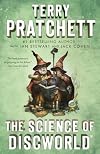
Various "Science of..." books for fantasy settings strive to explain impossible technology by interpreting the possible, this one does none of that. Pratchett alternates basic science of evolution, ecosystems (rainforests are basically oxygen neutral when you consider rotting vegetation), cosmogony, space travel, and more. The "novel" part is a story of wizards of Unseen University building our world in a Discworld lab and watching life and geology unfold. The story goes to possible show more post-Earth plans for the human race. Apparently, there is a Part 2 and I would like to read that, too. show less
Lists
Awards


You May Also Like


Associated Authors
Statistics
- Works
- 89
- Also by
- 18
- Members
- 20,370
- Popularity
- #1,064
- Rating
- 3.7
- Reviews
- 211
- ISBNs
- 733
- Languages
- 18
- Favorited
- 13