
Timothy B. Tyson
Author of Blood Done Sign My Name
About the Author
Timothy B. Tyson is a professor of Afro-American studies at the University of Wisconsin-Madison
Image credit: Courtesy of the publisher
Works by Timothy B. Tyson
Associated Works
Tagged
Common Knowledge
- Birthdate
- 1959
- Gender
- male
- Education
- Duke University (Ph.D., history)
- Occupations
- professor
- Nationality
- USA
- Associated Place (for map)
- USA
Members
Discussions
Blood Done Sign My Name, Timothy B. Tyson in World Reading Circle (July 2013)
Reviews

A memoir of a boy growing up in Oxford, North Carolina, as the son of a minister, and a look at the Civil Rights movement, beginning after the Civil Rights Act was enacted, and an account of the senseless murder of a young Black man and the aftermath, seems like too much for one book to handle effectively, but it really works.
Timothy Tyson is ten when Henry Morrow is murdered outside a small convenience store, setting fire to the simmering conflict in a small Southern city. Tyson's father show more is the pastor of the Methodist church and he is seen as a radical by many of his congregation, having brought in Black guest pastors at a time when that was not done. But around 1970, the struggle for equality shifts, the Civil Rights Act was passed, but it's unevenly enforced, and the people asking for equality are learning that rights are not given out of benevolence or because it's the right thing to do, that officials and shop owners and institutions have to be scared of not doing so. And so Tyson watches as his father moves from a leader in the fight for equality, to a bystander. Tyson tells this broad story of the rise of the Black Power movement through the events and people living in one small city, through one murder in a country where the lynchings and murders of Black people were endemic, and through the eyes of a ten year old boy.
Tyson is a historian of the Civil Rights movement and a good storyteller, so this book both gives a good overview of what was happening in the country and in Oxford, and has real emotional resonance. show less
Timothy Tyson is ten when Henry Morrow is murdered outside a small convenience store, setting fire to the simmering conflict in a small Southern city. Tyson's father show more is the pastor of the Methodist church and he is seen as a radical by many of his congregation, having brought in Black guest pastors at a time when that was not done. But around 1970, the struggle for equality shifts, the Civil Rights Act was passed, but it's unevenly enforced, and the people asking for equality are learning that rights are not given out of benevolence or because it's the right thing to do, that officials and shop owners and institutions have to be scared of not doing so. And so Tyson watches as his father moves from a leader in the fight for equality, to a bystander. Tyson tells this broad story of the rise of the Black Power movement through the events and people living in one small city, through one murder in a country where the lynchings and murders of Black people were endemic, and through the eyes of a ten year old boy.
Tyson is a historian of the Civil Rights movement and a good storyteller, so this book both gives a good overview of what was happening in the country and in Oxford, and has real emotional resonance. show less
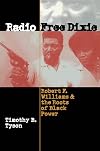
The biography of Robert F. Williams by Timothy B. Tyson provides a microcosmic picture of the odyssey that the African American freedom movement passed through during his lifetime: survival during the overwhelming hegemony of white supremacist groups prior to World War II, the significance of the War for inspiring black consciousness, the development of nonviolent resistance to Jim Crow, the struggles of the Black Power movement, and the sometimes tenuous but improved accommodation of the show more races after the turbulent Sixties.
Williams’ journey began with a seminal event in his life: as an eleven-year-old boy in 1936, he witnessed Jesse Helms, Sr., a policeman in Monroe, North Carolina, accost a black woman on the street, beat her, and drag her off to be raped. He never forgot the violence and the abuse, nor the laughter of white spectators. This, more than any other event, informed the future politics of Robert Williams.
Williams joined the army during World War II, but felt bitter over both the racism in the service, and the irony of blacks risking their lives abroad for “democracy” when they had no freedom at home. His unwillingness to be pushed around by white men in the army resulted in a stockade sentence, but at his hearing he said, “I told them that I was black, and that prison did not scare me because black men are born in prison. All they could do was put me in a smaller prison.” In the prison he felt proud, he later wrote, because “they would have preferred to have me as a nigger than locked up, but I preferred to be locked up than to be what they considered a nigger.”
Returning black veterans faced racial violence because whites were outraged at the idea that fighting alongside them in the war somehow gave blacks equal rights, or that they could now presume to be “as good as any white people.” Further, as Tyson avers, “behind the virulent opposition to racial equality was the ever-present shadow of miscegenation that undergirded white determination to preserve segregation.” What was good for the white goose was never good for the black gander. Thus, as Tyson reports, “the violence across the South immediately after the war produced dozens of dead, hundreds of injured, and thousands of terrified citizens for whom the protection of the law meant little or nothing.”
After 1945, the Cold War ironically marked a sea change for the struggle for equality, as America desired to prove the moral superiority of “democracy for all” to the Communist world. On the one hand, agitating against racial discrimination was now seen as aiding and abetting the Communist cause. On the other, the U.S. was interested in countering negative publicity vis-à-vis the Communists.
Egregious behavior by southern white supremacists still characterized the South, however, and Robert Williams strove to do something about it. He organized other black veterans in an attempt to protect the black citizens of Monroe from the very active Ku Klux Klan. He clashed with the NAACP about his use of defensive tactics; “nonviolence,” he contended, “depended on the conscience of the adversary; “rattlesnakes,” he observed, “were immune to such appeals, as were many Southern white supremacists.” What Williams advocated, then, was the principle of “armed self-reliance.” He did not agree with Black Power groups that violence was an end, or even a means, to racial justice. Rather, he saw it as just a necessary component of self-defense because protection by the law was not available to blacks in the South.
He constantly tweaked the leadership of the country on its hypocrisy. When Adlai Stevenson defended the Bay of Pigs incident to the U.N. on the grounds of Cuba’s oppressive regime, Williams sent him a telegram:
“Please convey to Mr. Adlai Stevenson: Now that the United States has proclaimed support for people willing to rebel against oppression, oppressed negroes of the South urgently request tanks, artillery, bombs, money and the use of American airfields and white mercenaries to crush the racist tyrants who have betrayed the American Revolution and Civil War. We also request prayers for this undertaking.”
Williams was forced to flee to Cuba and later China after a race riot in Monroe during which he organized an armed defense. As in many instances in the South, the victims were blamed for the outbreak and perpetuation of violence. While abroad, Williams began broadcasting “Radio Free Dixie” every Friday night, to provide encouragement and support to Southern blacks. He was finally allowed back in the U.S. after the Nixon Administration made its rapprochement with China, and was able to live out his life quietly in Michigan until his death from Hodgkin’s disease in 1996.
Throughout his life, Robert Williams fought FBI harassment (which included threatening potential employers not to hire him because he advocated the “Communist” idea of “equality”); he fought white supremacists in his community who tried to kill him and his family; he fought the national black leadership for trying to ostracize him for what they considered to be inflammatory tactics; and he fought the national white leadership for not taking a moral stand to help their own citizens live peaceful lives.
Tyson argues that Williams’ life and influence among other black leaders in the Civil Rights Movement demonstrates that the relationship between the nonviolent and aggressive philosophies of resistance are more complex than commonly believed. The current version of history served up to America that stresses the centrality of the nonviolent protest “idealizes black history, downplays the oppression of Jim Crow society, and even understates the achievements of African American resistance. Worse still, our cinematic civil rights movement blurs the racial dilemmas that follow us into the twenty-first century.”
Tyson wants us to know that the toppling of Jim Crow was a complicated matter, and that nonviolence alone probably could not have accomplished it. He wants us to know that “there existed among African Americans an indigenous current of militancy, a current that included the willingness to defend home and community by force.” He wants us to be aware that blacks, whenever possible, did in fact strive to protect their homes and their families even when it could mean serious injury or death.
Robert Williams would have been amazed and elated over the results of the 2008 presidential election. His courage and inspiration were surely pivotal in making this day happen. We can only hope he was watching somewhere, and rejoicing. show less
Williams’ journey began with a seminal event in his life: as an eleven-year-old boy in 1936, he witnessed Jesse Helms, Sr., a policeman in Monroe, North Carolina, accost a black woman on the street, beat her, and drag her off to be raped. He never forgot the violence and the abuse, nor the laughter of white spectators. This, more than any other event, informed the future politics of Robert Williams.
Williams joined the army during World War II, but felt bitter over both the racism in the service, and the irony of blacks risking their lives abroad for “democracy” when they had no freedom at home. His unwillingness to be pushed around by white men in the army resulted in a stockade sentence, but at his hearing he said, “I told them that I was black, and that prison did not scare me because black men are born in prison. All they could do was put me in a smaller prison.” In the prison he felt proud, he later wrote, because “they would have preferred to have me as a nigger than locked up, but I preferred to be locked up than to be what they considered a nigger.”
Returning black veterans faced racial violence because whites were outraged at the idea that fighting alongside them in the war somehow gave blacks equal rights, or that they could now presume to be “as good as any white people.” Further, as Tyson avers, “behind the virulent opposition to racial equality was the ever-present shadow of miscegenation that undergirded white determination to preserve segregation.” What was good for the white goose was never good for the black gander. Thus, as Tyson reports, “the violence across the South immediately after the war produced dozens of dead, hundreds of injured, and thousands of terrified citizens for whom the protection of the law meant little or nothing.”
After 1945, the Cold War ironically marked a sea change for the struggle for equality, as America desired to prove the moral superiority of “democracy for all” to the Communist world. On the one hand, agitating against racial discrimination was now seen as aiding and abetting the Communist cause. On the other, the U.S. was interested in countering negative publicity vis-à-vis the Communists.
Egregious behavior by southern white supremacists still characterized the South, however, and Robert Williams strove to do something about it. He organized other black veterans in an attempt to protect the black citizens of Monroe from the very active Ku Klux Klan. He clashed with the NAACP about his use of defensive tactics; “nonviolence,” he contended, “depended on the conscience of the adversary; “rattlesnakes,” he observed, “were immune to such appeals, as were many Southern white supremacists.” What Williams advocated, then, was the principle of “armed self-reliance.” He did not agree with Black Power groups that violence was an end, or even a means, to racial justice. Rather, he saw it as just a necessary component of self-defense because protection by the law was not available to blacks in the South.
He constantly tweaked the leadership of the country on its hypocrisy. When Adlai Stevenson defended the Bay of Pigs incident to the U.N. on the grounds of Cuba’s oppressive regime, Williams sent him a telegram:
“Please convey to Mr. Adlai Stevenson: Now that the United States has proclaimed support for people willing to rebel against oppression, oppressed negroes of the South urgently request tanks, artillery, bombs, money and the use of American airfields and white mercenaries to crush the racist tyrants who have betrayed the American Revolution and Civil War. We also request prayers for this undertaking.”
Williams was forced to flee to Cuba and later China after a race riot in Monroe during which he organized an armed defense. As in many instances in the South, the victims were blamed for the outbreak and perpetuation of violence. While abroad, Williams began broadcasting “Radio Free Dixie” every Friday night, to provide encouragement and support to Southern blacks. He was finally allowed back in the U.S. after the Nixon Administration made its rapprochement with China, and was able to live out his life quietly in Michigan until his death from Hodgkin’s disease in 1996.
Throughout his life, Robert Williams fought FBI harassment (which included threatening potential employers not to hire him because he advocated the “Communist” idea of “equality”); he fought white supremacists in his community who tried to kill him and his family; he fought the national black leadership for trying to ostracize him for what they considered to be inflammatory tactics; and he fought the national white leadership for not taking a moral stand to help their own citizens live peaceful lives.
Tyson argues that Williams’ life and influence among other black leaders in the Civil Rights Movement demonstrates that the relationship between the nonviolent and aggressive philosophies of resistance are more complex than commonly believed. The current version of history served up to America that stresses the centrality of the nonviolent protest “idealizes black history, downplays the oppression of Jim Crow society, and even understates the achievements of African American resistance. Worse still, our cinematic civil rights movement blurs the racial dilemmas that follow us into the twenty-first century.”
Tyson wants us to know that the toppling of Jim Crow was a complicated matter, and that nonviolence alone probably could not have accomplished it. He wants us to know that “there existed among African Americans an indigenous current of militancy, a current that included the willingness to defend home and community by force.” He wants us to be aware that blacks, whenever possible, did in fact strive to protect their homes and their families even when it could mean serious injury or death.
Robert Williams would have been amazed and elated over the results of the 2008 presidential election. His courage and inspiration were surely pivotal in making this day happen. We can only hope he was watching somewhere, and rejoicing. show less
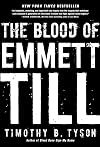
"White America's heritage of imagining blacks as fierce criminals, intent on political and sexual domination, as threatening bodies to be monitored and controlled, has never disappeared."
"In many inner cities the drug trade is the only enterprise that is hiring, while the national unemployment rate for young black men is well over twice that for other young men."
"We are still killing black youth because we have not yet killed white supremacy."
Wow. Just wow. This is an excellent historical show more telling of the murder of Emmett Till, a 14-year-old African-American boy killed in 1955 by white men in Mississippi. Emmett was visiting Mississippi for the summer; his home was in Chicago. Tyson does an excellent job of sorting through what is known, what is suspected, and what can be concluded from this brutal and senseless murder of a young Black boy at the hands of white supremacist men, angry at his apparent disrespectful comments to one of their wives. Even if Till did the worst of that which he was accused of doing: grabbing the hand of a white woman at a store counter, asking her for a date, wolf-whistling at her later as she went to her car for a pistol.... none of that even remotely deserves the kind of brutal beating and slaying to which he was subjected. His body was found a few days later, bloated and damaged, floating in the Tallahatchie River with a gin fan tied to his neck with a stretch of barbed wire. The murder is tagged as a significant catalyst for the civil rights movement of the mid-20th century.
Most of the book is an exploration of history. What happened in Leflore County of Mississippi on August 28, 1955? Tyson shifts deftly between historical record and rational deduction.
It's his epilogue, though, that lands a direct hit. He persuasively describes the white supremacy that yet permeates our society, perhaps not the virulent and visceral white supremacy of the men who murdered young Emmett Till, but the polite and practiced white supremacy of progressives (like me), well-intentioned members of society who remain immobile in the face of today's persistent and pernicious societal segregation, today's Jim Crow. Tyson is not throwing stones, but his analysis is compelling and level-headed.
This is a surprisingly quick read and highly recommended. It's a great history lesson and a thought-provoking work. show less
"In many inner cities the drug trade is the only enterprise that is hiring, while the national unemployment rate for young black men is well over twice that for other young men."
"We are still killing black youth because we have not yet killed white supremacy."
Wow. Just wow. This is an excellent historical show more telling of the murder of Emmett Till, a 14-year-old African-American boy killed in 1955 by white men in Mississippi. Emmett was visiting Mississippi for the summer; his home was in Chicago. Tyson does an excellent job of sorting through what is known, what is suspected, and what can be concluded from this brutal and senseless murder of a young Black boy at the hands of white supremacist men, angry at his apparent disrespectful comments to one of their wives. Even if Till did the worst of that which he was accused of doing: grabbing the hand of a white woman at a store counter, asking her for a date, wolf-whistling at her later as she went to her car for a pistol.... none of that even remotely deserves the kind of brutal beating and slaying to which he was subjected. His body was found a few days later, bloated and damaged, floating in the Tallahatchie River with a gin fan tied to his neck with a stretch of barbed wire. The murder is tagged as a significant catalyst for the civil rights movement of the mid-20th century.
Most of the book is an exploration of history. What happened in Leflore County of Mississippi on August 28, 1955? Tyson shifts deftly between historical record and rational deduction.
It's his epilogue, though, that lands a direct hit. He persuasively describes the white supremacy that yet permeates our society, perhaps not the virulent and visceral white supremacy of the men who murdered young Emmett Till, but the polite and practiced white supremacy of progressives (like me), well-intentioned members of society who remain immobile in the face of today's persistent and pernicious societal segregation, today's Jim Crow. Tyson is not throwing stones, but his analysis is compelling and level-headed.
This is a surprisingly quick read and highly recommended. It's a great history lesson and a thought-provoking work. show less
When asked to think of a picture of a truly heroic action, many people will think of the lone Chinese protester facing off a row of tanks in Tiananmen Square. After finishing Timothy B. Tyson’s magnificent new book, I now see a different picture.
As photographs go it isn’t much but the story behind it makes shivers run down my spine. The image is of Moses Wright, a lanky black sharecropper and great uncle of 14-year-old Emmett Till. In the photograph the 64-year old Wright, standing tall show more in a white shirt, black tie, and suspenders, pointing across a Mississippi courtroom at the two white men charged with Till’s kidnapping an murder. This may not sound like much, but many people sitting in that courtroom were convinced that they were witnessing an act of suicide. No black man who enjoyed living would ever testify against a white man. And yet he did it.
This is just one of many tremendous acts of courage described in this account of the lynching of Till and the trial that arguably served as a catalyst for the protests of the Civil Rights Era. I’ve often heard of the case but never knew before now how integral a part it played in the campaign to defeat Jim Crow. I cannot recommend this book highly enough. I sincerely hope that everyone reads it. This was a very dark time in our history that we should never forget. show less
As photographs go it isn’t much but the story behind it makes shivers run down my spine. The image is of Moses Wright, a lanky black sharecropper and great uncle of 14-year-old Emmett Till. In the photograph the 64-year old Wright, standing tall show more in a white shirt, black tie, and suspenders, pointing across a Mississippi courtroom at the two white men charged with Till’s kidnapping an murder. This may not sound like much, but many people sitting in that courtroom were convinced that they were witnessing an act of suicide. No black man who enjoyed living would ever testify against a white man. And yet he did it.
This is just one of many tremendous acts of courage described in this account of the lynching of Till and the trial that arguably served as a catalyst for the protests of the Civil Rights Era. I’ve often heard of the case but never knew before now how integral a part it played in the campaign to defeat Jim Crow. I cannot recommend this book highly enough. I sincerely hope that everyone reads it. This was a very dark time in our history that we should never forget. show less
Lists
Awards


You May Also Like


Associated Authors
Statistics
- Works
- 5
- Also by
- 1
- Members
- 1,812
- Popularity
- #14,190
- Rating
- 4.2
- Reviews
- 56
- ISBNs
- 33
- Languages
- 1
- Favorited
- 1