
Kathryn Stockett
Author of The Help
About the Author
Kathryn Stockett was born in 1969 in Mississippi. She graduated from the University of Alabama with a degree in English and Creative Writing. She soon got a job in magazine marketing and publishing in New York City. She became famous in 2009 with her debut novel, The Help. Her book tells the story show more of African-American Maids working in white households in Jackson Mississippi during the 1960's. It sold over ten million copies and spent more than 100 weeks on The New York Times Best Seller List. (Bowker Author Biography) show less
Works by Kathryn Stockett
Le Calamity Club 1 copy
Associated Works
Tagged
Common Knowledge
- Legal name
- Stockett, Kathryn
- Birthdate
- 1969
- Gender
- female
- Education
- University of Alabama
- Occupations
- novelist
- Agent
- Susan Ramer (Don Congdon Associates)
- Nationality
- USA
- Birthplace
- Jackson, Mississippi, USA
- Places of residence
- Jackson, Mississippi, USA
New York, New York, USA
Atlanta, Georgia, USA - Associated Place (for map)
- USA
Members
Discussions
The Help in Orange January/July (February 2012)
Reviews
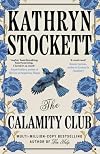
Eleven-year-old Meg Lefleur has learned the hard way to rely on no one. Now one of the unadoptable “big girls” at the Lafayette County Orphan Asylum, she fights each day to keep her spirit unbowed.
Then there is Birdie Calhoun, unmarried and outspoken. She has come to Oxford to ask her socialite sister to help the struggling family. But Birdie discovers her sister’s seemingly charmed life is a tapestry of lies.
I can honestly say, this is the best book of the year for me. And I never show more have best books. But these characters live so heavily in your heart and your mind that it is so difficult to let them go. I know this book is over 600 pages, but it did not feel like I was reading a book that long.
Meg’s situation will break your heart. But then again, so will Birdie’s. But when the solution to all their problems is “The Calamity Club”, you will laugh, cry, and then gasp for air. Not only that, the way this story wraps around itself and the characters become intertwined…it is brilliant.
Need a story that will keep you wanting more…THIS IS IT! Grab your copy today.
I received this novel from the publisher for a honest review. show less
Then there is Birdie Calhoun, unmarried and outspoken. She has come to Oxford to ask her socialite sister to help the struggling family. But Birdie discovers her sister’s seemingly charmed life is a tapestry of lies.
I can honestly say, this is the best book of the year for me. And I never show more have best books. But these characters live so heavily in your heart and your mind that it is so difficult to let them go. I know this book is over 600 pages, but it did not feel like I was reading a book that long.
Meg’s situation will break your heart. But then again, so will Birdie’s. But when the solution to all their problems is “The Calamity Club”, you will laugh, cry, and then gasp for air. Not only that, the way this story wraps around itself and the characters become intertwined…it is brilliant.
Need a story that will keep you wanting more…THIS IS IT! Grab your copy today.
I received this novel from the publisher for a honest review. show less
I tend to avoid the blockbuster bestsellers. But my mother's friend gave her The Help, and she passed it on to me. I wasn't very interested, although the movie trailers looked better than I'd expected. But I was in desperate need of something distracting one night, something other than what I'd been reading or, it seemed, anything else within reach, and The Help next thing I knew it was 2:30 AM and it was only through sheer willpower that I put this down and tried to go to sleep. Tried. It show more wasn't easy. I read this book in three sittings, and it would have been one if I'd had any say in the matter. That hasn't happened in a while.
An indication of how thoroughly distracted I was: I loathe, despise, and abominate the present tense in fiction. It's silly to admit it, but I was halfway through the book before it really registered that all three points of view in The Help are present tense. I grew used to it in Aibileen's section – it was just a part of the dialect, of Aibileen's voice; the same was true of Minny's, and by the time I started Skeeter's first chapter I was well beyond simply engrossed. I literally did a double-take when for some reason one present-tense usage registered It was simply that I was paying far more attention to what was happening than to how it was written – and it's been a very long time since that happened, that thoroughly.
It should not have been so very compulsively readable. Present tense; dialect to one degree or another throughout; but the three women whose voices tell the story are so vibrant and alive that Kathryn Stockett might have been able to get away with future tense Pig Latin and still produced gold. (I wouldn't recommend it, however.) Aibileen and Minny and Skeeter are each in her way wounded, and are not about to be sharing everything right off with someone they know as little as the reader. It takes time to gain their friendship and their confidence, and in the meantime the secrets they keep are only hinted at, to torment and tease. When the secrets are finally revealed, in their own time, they are equal to their buildup. Again, not something easily pulled off.
Each section is written just as if the narrator were talking to the reader, truly in her voice. Each woman's voice belongs to her and her alone. Aibileen's dialect is heavy, warm but mildly ironic, bitterness and sorrow always just below the surface – or higher. I adore Aibileen. Minny's mother was a schoolteacher and had no patience for slang, and Minny has never quite lapsed from her high standards; neither of these women is stupid, not by a long mark, but Minny's voice has a closer relationship to formal grammar – along with a bigger helping of sarcasm and bitterness. Skeeter is a college girl, and her voice, always worried, is closest to standard – but she is still a Mississippi girl and still calls the Harper & Row editor Missus Stein. One test of good fiction writing is whether a character's dialogue can be matched to that character based on style and syntax alone. Any single paragraph in this book can pass that test.
I feel a little stupid that some of the dangers of the time and place never occurred to me. The 60's aren't my milieu. I happily missed nearly all the decade, and the only thing I've regretted was the moon launch (and maybe the Beatles). Plus I'm a Northern girl; even at the worst of it, before I was born, it wasn't quite as bad here. (Partly because, I find, segregation was more due to strictly separated neighborhoods (or rather neighborhoods and ghettos) than law.) I knew some of it, of course. I knew the basics of the story of Emmet Till (though I didn't realize he was only 14; or maybe it was another case I had heard of. There were no doubt many). But I simply was clueless about how prevalent and constant the danger was. Every day, every action, every word and look and conversation and quirk of an eyebrow might be scrutinized, and might lead to … anything. Being fired; being beaten; being killed. Crosses burned, houses burned, bodies burned. And even beyond the danger, almost as hard to live with had to be the constant, continuous barrage of words. Even someone otherwise not unfriendly thought nothing of what is now (happily almost universally) considered outrageous remarks. Complete strangers were free to say appalling things.
I know – I've been sheltered, that this was such a revelation to me. Don't think I'm not, in a large way, grateful.
If I had been forced to say what I expected from The Help it would probably have been social commentary. Heart-warming. Heartstring-tugging. Some facile tale of some white girl's exposé on racial inequality. I was shocked, actually shocked, at the level of anxiety in this novel – it was more intense than a great many books intended as suspense novels. There was the not-quite comic suspense of what exactly the deal was with the pie. But, more, much more, there was the concern, the need to know if these women were going to be all right. There was no guarantee of that, none. Someone's review of another book nailed it:
"Yes, somehow Mason made even those aspects of the novel incredibly interesting though it’s a subject in which I have very little interest. I sympathised very much with Eloise’s terrors and her courage at facing them – in fact I found I couldn’t stop worrying about her even when I wasn’t reading the book."
I cared about these people. (Not characters: people.) I worried about them – yes, even when I wasn't reading the book. I learned from this, factually and emotionally. I was deeply impressed – this was a beautiful, beautiful book. show less
An indication of how thoroughly distracted I was: I loathe, despise, and abominate the present tense in fiction. It's silly to admit it, but I was halfway through the book before it really registered that all three points of view in The Help are present tense. I grew used to it in Aibileen's section – it was just a part of the dialect, of Aibileen's voice; the same was true of Minny's, and by the time I started Skeeter's first chapter I was well beyond simply engrossed. I literally did a double-take when for some reason one present-tense usage registered It was simply that I was paying far more attention to what was happening than to how it was written – and it's been a very long time since that happened, that thoroughly.
It should not have been so very compulsively readable. Present tense; dialect to one degree or another throughout; but the three women whose voices tell the story are so vibrant and alive that Kathryn Stockett might have been able to get away with future tense Pig Latin and still produced gold. (I wouldn't recommend it, however.) Aibileen and Minny and Skeeter are each in her way wounded, and are not about to be sharing everything right off with someone they know as little as the reader. It takes time to gain their friendship and their confidence, and in the meantime the secrets they keep are only hinted at, to torment and tease. When the secrets are finally revealed, in their own time, they are equal to their buildup. Again, not something easily pulled off.
Each section is written just as if the narrator were talking to the reader, truly in her voice. Each woman's voice belongs to her and her alone. Aibileen's dialect is heavy, warm but mildly ironic, bitterness and sorrow always just below the surface – or higher. I adore Aibileen. Minny's mother was a schoolteacher and had no patience for slang, and Minny has never quite lapsed from her high standards; neither of these women is stupid, not by a long mark, but Minny's voice has a closer relationship to formal grammar – along with a bigger helping of sarcasm and bitterness. Skeeter is a college girl, and her voice, always worried, is closest to standard – but she is still a Mississippi girl and still calls the Harper & Row editor Missus Stein. One test of good fiction writing is whether a character's dialogue can be matched to that character based on style and syntax alone. Any single paragraph in this book can pass that test.
I feel a little stupid that some of the dangers of the time and place never occurred to me. The 60's aren't my milieu. I happily missed nearly all the decade, and the only thing I've regretted was the moon launch (and maybe the Beatles). Plus I'm a Northern girl; even at the worst of it, before I was born, it wasn't quite as bad here. (Partly because, I find, segregation was more due to strictly separated neighborhoods (or rather neighborhoods and ghettos) than law.) I knew some of it, of course. I knew the basics of the story of Emmet Till (though I didn't realize he was only 14; or maybe it was another case I had heard of. There were no doubt many). But I simply was clueless about how prevalent and constant the danger was. Every day, every action, every word and look and conversation and quirk of an eyebrow might be scrutinized, and might lead to … anything. Being fired; being beaten; being killed. Crosses burned, houses burned, bodies burned. And even beyond the danger, almost as hard to live with had to be the constant, continuous barrage of words. Even someone otherwise not unfriendly thought nothing of what is now (happily almost universally) considered outrageous remarks. Complete strangers were free to say appalling things.
I know – I've been sheltered, that this was such a revelation to me. Don't think I'm not, in a large way, grateful.
If I had been forced to say what I expected from The Help it would probably have been social commentary. Heart-warming. Heartstring-tugging. Some facile tale of some white girl's exposé on racial inequality. I was shocked, actually shocked, at the level of anxiety in this novel – it was more intense than a great many books intended as suspense novels. There was the not-quite comic suspense of what exactly the deal was with the pie. But, more, much more, there was the concern, the need to know if these women were going to be all right. There was no guarantee of that, none. Someone's review of another book nailed it:
"Yes, somehow Mason made even those aspects of the novel incredibly interesting though it’s a subject in which I have very little interest. I sympathised very much with Eloise’s terrors and her courage at facing them – in fact I found I couldn’t stop worrying about her even when I wasn’t reading the book."
I cared about these people. (Not characters: people.) I worried about them – yes, even when I wasn't reading the book. I learned from this, factually and emotionally. I was deeply impressed – this was a beautiful, beautiful book. show less
As I write this there are race riots in many different cities across America over the killing of yet another black man by a uniformed police officer. reading The Help gave me some context as to where systemic racism was 60 years ago and what life was like for Black Americans. I know this is a work of fiction (but based on oral histories) but it so vividly brings in the emotional and personal aspects of "the help" - the things that were gratifying and the things that were horrifying, show more demeaning, and downright cruel in a system where skin color denoted a different species and brought on a culture of fear. I do not read fast, but this one I could not put down. I have not yet seen the movie, so did not know the plot, so each chapter, even though it was not adventure or exciting, brought its own surprises as the story unfolded. When is the sequel coming out? show less

It's 1962; things are about to get hot in Mississippi, where "our Nigras know their place", as frustrated young white women take over the reins of society from their frustrated white mothers, all of whom have taught their daughters how to behave, how to dress, and how to treat "the help". None of those lessons sit too well with Skeeter Phelan, who is too tall, with unmanageable hair and no fashion sense, who graduated from Ole Miss without a marriage proposal to go with her diploma, and who show more has arrived home to discover that a new maid has replaced Constantine, the black woman who raised her. No one is willing to talk about where Constantine went, or why. When Skeeter applies for a job at the local newspaper, she is given the task of writing the Jackson, Mississippi, equivalent of "Hints from Heloise". The only problem is, of course, she knows less than nothing about housekeeping. In the process of begging help from one of her friends' maids, Skeeter comes up with the dangerous and irresistible idea of collecting stories about the relationships between white women and their black maids----from the maids---and putting them together in a book. The Help is full of observations about friendship, motherhood, social change, honesty, loyalty, hypocrisy and treachery, but it is problematic for many reasons. It is a "white savior" sort of story, with stereotypical characters. Points off for one particularly distasteful scene that struck me as totally unnecessary and out of character for the book, demeaning to the Character involved, and designed to make the reader feel good about applauding an act of childish retribution by a grown woman. show less
Lists
First Novels (1)
Connie53 (1)
2023 Reads (1)
Women's Stories (1)
Southern Fiction (1)
Female Author (1)
To Read (1)
Favourite Books (1)
To Read (1)
Pageturners (1)
Unread books (1)
Awful Books (1)
A Novel Cure (1)
. (1)
Great Audiobooks (1)
Best Audiobooks (1)
1960s (1)
Carole's List (1)
Awards


You May Also Like


Associated Authors
Statistics
- Works
- 7
- Also by
- 2
- Members
- 34,357
- Popularity
- #552
- Rating
- 4.4
- Reviews
- 1,556
- ISBNs
- 177
- Languages
- 22
- Favorited
- 33

