
Jamie Ford
Author of Hotel on the Corner of Bitter and Sweet
About the Author
Jamie Ford graduated from the Art Institute of Seattle in 1988 and worked as an art director and as a creative director in advertising. He is also an alumnus of the Squaw Valley Community of Writers and the Orson Scott Card's Literary Boot Camp. His books include Hotel on the Corner of Bitter and show more Sweet and Songs of Willow Frost. (Bowker Author Biography) show less
Works by Jamie Ford
Associated Works
A People's Future of the United States: Speculative Fiction from 25 Extraordinary Writers (2019) — Contributor — 539 copies, 20 reviews
Alone Together: Love, Grief, and Comfort in the Time of COVID-19 (2020) — Contributor — 67 copies, 7 reviews
Tagged
Common Knowledge
- Canonical name
- Ford, Jamie
- Legal name
- Ford, James Mark
- Birthdate
- 1968-07-09
- Gender
- male
- Education
- The Art Institute of Seattle (BA|1988)
School of Visual Concepts
Olympic College - Occupations
- writer
novelist
creative director - Awards and honors
- Asian/Pacific American Award for Literature (2010)
- Agent
- Kristin Nelson (Literary)
- Relationships
- Procopio, Leesha (spouse)
- Nationality
- USA
- Birthplace
- Eureka, California, USA
- Places of residence
- Great Falls, Montana, USA
Seattle, Washington, USA - Associated Place (for map)
- USA
Members
Reviews
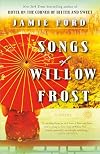
I loved every moment that I spent in the pages of Songs of Willow Frost. Both William and Willow have deep contrasts to their story, the bittersweet and the tragic the reader experiences both the berry best of their lives and the worst. It is Willow's story that I relate to more as a mother. She is a true example of selfless love.
The writing style is almost poetic at times, but never forced. I love beautiful writing, but it is a real pet peeve of mine that it not be a piece if literary work show more for just arts sake. The writing has to be entertaining and still simplistic enough to be enjoyed, and Jamie Ford struck a beautiful balance.
I have seen some reviews that have mentioned that William's story doesn't seem authentic since the vocabulary is well above a twelve year old boys. I couldn't disagree more. This is not a first person narrative, it is a story being told about both Willow and William, alternating between the two. The narrative voice remains the same and is very well done. Bravo, Jamie Ford. show less
The writing style is almost poetic at times, but never forced. I love beautiful writing, but it is a real pet peeve of mine that it not be a piece if literary work show more for just arts sake. The writing has to be entertaining and still simplistic enough to be enjoyed, and Jamie Ford struck a beautiful balance.
I have seen some reviews that have mentioned that William's story doesn't seem authentic since the vocabulary is well above a twelve year old boys. I couldn't disagree more. This is not a first person narrative, it is a story being told about both Willow and William, alternating between the two. The narrative voice remains the same and is very well done. Bravo, Jamie Ford. show less
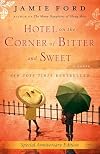
This is a work of historical fiction about an era we don't read or know enough about. Though published in 2009, the tragic and sorry themes of prejudice, racism, hatred and even internment of *others* are terribly timely and current. Our human species just never seems to learn anything does it?
The story is very character driven, and takes place in 2 time frames, 1942, and 1986. Henry and Keiko as 12-year-old friends in Seattle, during WWII, and as 50-something-year-olds in 1986. The themes show more of bullying, politics, family dynamics, culture and - wonderfully - jazz music, thread their way throughout the story. I was completely drawn in.
One thing bothered me, though and I have to wonder how this never was addressed. In the author's notes at the end, and through the many incarnations of how this story - originally written as a short story, then expanded to become the novel - how did no one ever mention this? Maybe it's just me, noticing something quirky (I do have that tendency), but at the very end of the story, the internet plays an important though small role. I was around in 1986 and as far as I can recall, no one used the internet, such as it was, in the way we are used to using it today. This little anachronism in the book just seems to me to be out of place though it truly doesn't detract from the story at all. show less
The story is very character driven, and takes place in 2 time frames, 1942, and 1986. Henry and Keiko as 12-year-old friends in Seattle, during WWII, and as 50-something-year-olds in 1986. The themes show more of bullying, politics, family dynamics, culture and - wonderfully - jazz music, thread their way throughout the story. I was completely drawn in.
One thing bothered me, though and I have to wonder how this never was addressed. In the author's notes at the end, and through the many incarnations of how this story - originally written as a short story, then expanded to become the novel - how did no one ever mention this? Maybe it's just me, noticing something quirky (I do have that tendency), but at the very end of the story, the internet plays an important though small role. I was around in 1986 and as far as I can recall, no one used the internet, such as it was, in the way we are used to using it today. This little anachronism in the book just seems to me to be out of place though it truly doesn't detract from the story at all. show less
In 1986, the current owner of the Panama Hotel begins remodeling, and finds possessions of several Japanese families who left Seattle in the 1940s when they were sent to internment camps. This discovery makes the news, and reminds newly widowed Henry Lee of his experiences as the son of Chinese immigrants in 1942. "Scholarshipping" in an all-white school, he makes a friend when Keiko Okabe transfers to his school and works alongside him in the cafeteria.
The narrative shifts between 1942 and show more 1986, and we see past and present from Henry's perspective. Ford evokes a rich sense of place in his descriptions of Seattle neighborhoods and the jazz scene in the 1940s. More a story of internal discovery than external events, the story and its characters insinuated their way into me until I found, to my surprise, that I cared enough to cry. show less
The narrative shifts between 1942 and show more 1986, and we see past and present from Henry's perspective. Ford evokes a rich sense of place in his descriptions of Seattle neighborhoods and the jazz scene in the 1940s. More a story of internal discovery than external events, the story and its characters insinuated their way into me until I found, to my surprise, that I cared enough to cry. show less
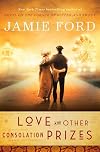
I received early access to this book in exchange for sending honest feedback and I couldn't be more pleased. It was a pleasure to read this story of deep and lasting love.
In the early 1900s Seattle is a town full of vice where foreign-born children, sold or given away by impoverished parents, can wind up auctioned off as servants, as entertainment at a street fair. This is Ernest Young's origin story. Half-white, half-Chinese, Ernest passes through the hands of a moralistic do-gooder before show more he lands as a minimally paid servant in a house of prostitution. There he becomes friends with two girls. One is Japanese born girl, another servant, and the second is the secret daughter of the establishment's Madam. Ernest falls in love with both.
The book ties together two stories. One is Ernest's life around 1909, when, as a child, he navigates the politics of a popular brothel with powerful patrons. The second story is Ernest, circa 1962, dealing with the illness of his wife, Gracie, with some help from two grown daughters. What ties the two tales together are two world's fair, both of which figure prominently in the lives of Ernest and his two childhood friends.
The book is beautifully evocative of the early 1900s, when Seattle is still a lawless place and there's much to be learned about hypocrisy and the moral war being fought by the wealthy against the downtrodden. But, above all this is a tender love story about love that can last a lifetime and the resiliency of human beings to heal from the most horrid experiences. A very powerful read. show less
In the early 1900s Seattle is a town full of vice where foreign-born children, sold or given away by impoverished parents, can wind up auctioned off as servants, as entertainment at a street fair. This is Ernest Young's origin story. Half-white, half-Chinese, Ernest passes through the hands of a moralistic do-gooder before show more he lands as a minimally paid servant in a house of prostitution. There he becomes friends with two girls. One is Japanese born girl, another servant, and the second is the secret daughter of the establishment's Madam. Ernest falls in love with both.
The book ties together two stories. One is Ernest's life around 1909, when, as a child, he navigates the politics of a popular brothel with powerful patrons. The second story is Ernest, circa 1962, dealing with the illness of his wife, Gracie, with some help from two grown daughters. What ties the two tales together are two world's fair, both of which figure prominently in the lives of Ernest and his two childhood friends.
The book is beautifully evocative of the early 1900s, when Seattle is still a lawless place and there's much to be learned about hypocrisy and the moral war being fought by the wealthy against the downtrodden. But, above all this is a tender love story about love that can last a lifetime and the resiliency of human beings to heal from the most horrid experiences. A very powerful read. show less
Lists
Awards


You May Also Like


Associated Authors
Statistics
- Works
- 10
- Also by
- 11
- Members
- 10,195
- Popularity
- #2,331
- Rating
- 3.9
- Reviews
- 716
- ISBNs
- 132
- Languages
- 15
- Favorited
- 11

