
About the Author
Joan Biskupic has covered the U.S. Supreme Court for more than twenty years and is the author of several books, including American Original: The Life and Constitution of Supreme Court justice Antonin Scalia and Sandra Day O'Connor: How the first Woman on the Supreme Court Became Its Most show more influential Justice. Biskupic is an editor in charge for legal affairs at Reuters News. Before joining Reuters in 2012, she was the Supreme Court correspondent for The Washington Post and for USA Today. A graduate of Georgetown Law, she is a regular panelist on PBS's Washington Week with Gwen Hill. She lives in Washington, D.C., and was a finalist for a Pulitzer Prize in 2015. show less
Works by Joan Biskupic
Sandra Day O'Connor: How the First Woman on the Supreme Court Became Its Most Influential Justice (2005) 159 copies, 2 reviews
American Original: The Life and Constitution of Supreme Court Justice Antonin Scalia (2009) 137 copies, 2 reviews
Nine Black Robes: Inside the Supreme Court's Drive to the Right and Its Historic Consequences (2023) 116 copies, 3 reviews
The Supreme Court yearbook 1 copy
Tagged
Common Knowledge
- Birthdate
- 1956
- Gender
- female
- Occupations
- author
journalist - Birthplace
- Chicago, Illinois, USA
- Associated Place (for map)
- Illinois, USA
Members
Reviews
American Original: The Life and Constitution of Supreme Court Justice Antonin Scalia by Joan Biskupic
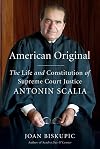
Justice Scalia is one of those people I'd love to have over for dinner (even though I don't quite have his love of opera,) but I don't buy his premise that he's an originalist, i.e. one who argues that the law is to be interpreted in light of the intent of the framers. I mean really, then we'd be back implementing the 3/5ths rule, and I don't buy the idea that the framers all thought monolithically. He despises the idea of a "living Constitution," yet refuses to answer questions that seem to show more go to the heart of contradictions in his decisions like 1995 United States v Lopez that overturned a federal law regulating guns near schools "because it trampled on state authority," but ten years later voted to "uphold a federal drug law that voided a California policy allowing marijuana use for medical purposes." So where was his reverence for state law in 2005 Gonzales v Raich?
"I do not think," Scalia wrote in Nixon v Missouri Municipal League, "that the avoidance of unhappy consequences is an adequate basis for interpreting a text." Well, perhaps not, but Scalia's arrogance would prohibit any other interpretation of that text but his own. He seems to be quite happy savaging his colleagues (Sandra Day O'Connor was a favorite target - he considered one of her opinions to be "devoid of content.") Biskupic suggests that Scalia's influence on the court could have been even greater had he tried to be a little more diplomatic and attempted to build consensus. He seems to be quite happy railing at cultural change, "...the court is designing a constitution for a country I do not recognize." And perhaps therein lies the rub. He doesn't want the world to change, he doesn't like gays, probably hates the ordination of woman, still goes to a Catholic church where the mass is said in Latin, loves his guns Clarence Thomas said "he loves killing unarmed animals", and the man as head of the household. Conceived in Florence, but born in Trenton -- which he hated -- he now admits to becoming more and more crotchety to the point where he might wish a return to the days of Medician flogging and ear notching as forms of punishment.
In the meantime, times have changed, and some on the court have recognized that. Brennan and others recognized that the United States of today is very different than that of 1789 and if the country is to survive and prosper perhaps some interpretative differences will emerge. Scalia insists that he separates his personal theology and morality from his judicial role, yet he has been quoted as saying that he learned at Georgetown, a Jesuit university, that you must never" separate your religious life from your intellectual life. They're not separate." And just a little before he was nominated to the Supreme Court by Reagan he said "his judicial philoso0phy was "inevitably affected by moral and theological perceptions." Sounds like Sotomayor's famous speech.
The fact remains that through force of will (and perhaps more than a little sarcasm) he has been, to quote Elena Kagan in 2007, "the justice who has had the most important impact over the years on how we think and talk about law." Certainly the term originalist and original meaning are now the prevailing term in any legal discussion. Originalists take the position that the words in the Constitution mean today what they meant in 1789 and must be interpreted in that light. This assumes that the world of today is the same as the world of 1789 and assumes , to quote Justice Brennan, that the greatness of the Constitution lies precisely in "the adaptibility of its great principles to cope with current problems and current needs." The early originalists focused on the framers "intent," but that had to be revised as it became clear that determining intent of the large number of writers of the Constitution proved impossible so the focus then shifted to textual originalism. His argument that in a democracy, the legislature makes the laws and judges interpret it, and that if judges use moral positions in their interpretation they have become lawmakers rather than interpreters, i.e. tying decisions to text prevents judicial despotism (surely he must see the irony of this view with Bush v Gore, surely) does find sympathy with me. But then so does Brennan's view that judges are there to make sure that the system is "fair."
Scalia’s background working for the executive branch under Ford which required him to testify Congress on many occasions, left him with a palpable disdain for the legislative process and legislators in particular. He was quoted once as saying he could take them all on with one hand tied behind his back. In fact, one of his legacies will be less attention being paid to the legislative history of a bill, i.e. what the legislators said during debates (somewhat ironic for a textualist.) If he has any particular bias it would certainly be a sympathy for the executive branch. With five Catholics and no Protestants now sitting on the bench and his strong adherence to conservative Catholicism, one suspects that might influence him as well. One of his less attractive features is his total arrogance in denying any kind of influence.
My suspicion is that Scalia wants a return to the inequality of the old days where the folks in power, the rich, all knew they were superior, that they were better and the courts validated that superiority. The rules become an unbendable way to enforce the distinctions. A preserver of distinctions and inequality.
Sorry for all the references to Brennan but I just finished [b:The Last Liberal: Justice William J. Brennan, Jr. and the Decisions That Transformed America|2931599|The Last Liberal Justice William J. Brennan, Jr. and the Decisions That Transformed America|Kim Isaac Eisler|http://photo.goodreads.com/books/1267379493s/2931599.jpg|2959033] and am reading [b:Justice Brennan: The Great Conciliator|1232256|Justice Brennan The Great Conciliator|Hunter R. Clark|http://photo.goodreads.com/books/1266750476s/1232256.jpg|1220857]. I have a short attention span.
minor editing 11/8/11 show less
"I do not think," Scalia wrote in Nixon v Missouri Municipal League, "that the avoidance of unhappy consequences is an adequate basis for interpreting a text." Well, perhaps not, but Scalia's arrogance would prohibit any other interpretation of that text but his own. He seems to be quite happy savaging his colleagues (Sandra Day O'Connor was a favorite target - he considered one of her opinions to be "devoid of content.") Biskupic suggests that Scalia's influence on the court could have been even greater had he tried to be a little more diplomatic and attempted to build consensus. He seems to be quite happy railing at cultural change, "...the court is designing a constitution for a country I do not recognize." And perhaps therein lies the rub. He doesn't want the world to change, he doesn't like gays, probably hates the ordination of woman, still goes to a Catholic church where the mass is said in Latin, loves his guns Clarence Thomas said "he loves killing unarmed animals", and the man as head of the household. Conceived in Florence, but born in Trenton -- which he hated -- he now admits to becoming more and more crotchety to the point where he might wish a return to the days of Medician flogging and ear notching as forms of punishment.
In the meantime, times have changed, and some on the court have recognized that. Brennan and others recognized that the United States of today is very different than that of 1789 and if the country is to survive and prosper perhaps some interpretative differences will emerge. Scalia insists that he separates his personal theology and morality from his judicial role, yet he has been quoted as saying that he learned at Georgetown, a Jesuit university, that you must never" separate your religious life from your intellectual life. They're not separate." And just a little before he was nominated to the Supreme Court by Reagan he said "his judicial philoso0phy was "inevitably affected by moral and theological perceptions." Sounds like Sotomayor's famous speech.
The fact remains that through force of will (and perhaps more than a little sarcasm) he has been, to quote Elena Kagan in 2007, "the justice who has had the most important impact over the years on how we think and talk about law." Certainly the term originalist and original meaning are now the prevailing term in any legal discussion. Originalists take the position that the words in the Constitution mean today what they meant in 1789 and must be interpreted in that light. This assumes that the world of today is the same as the world of 1789 and assumes , to quote Justice Brennan, that the greatness of the Constitution lies precisely in "the adaptibility of its great principles to cope with current problems and current needs." The early originalists focused on the framers "intent," but that had to be revised as it became clear that determining intent of the large number of writers of the Constitution proved impossible so the focus then shifted to textual originalism. His argument that in a democracy, the legislature makes the laws and judges interpret it, and that if judges use moral positions in their interpretation they have become lawmakers rather than interpreters, i.e. tying decisions to text prevents judicial despotism (surely he must see the irony of this view with Bush v Gore, surely) does find sympathy with me. But then so does Brennan's view that judges are there to make sure that the system is "fair."
Scalia’s background working for the executive branch under Ford which required him to testify Congress on many occasions, left him with a palpable disdain for the legislative process and legislators in particular. He was quoted once as saying he could take them all on with one hand tied behind his back. In fact, one of his legacies will be less attention being paid to the legislative history of a bill, i.e. what the legislators said during debates (somewhat ironic for a textualist.) If he has any particular bias it would certainly be a sympathy for the executive branch. With five Catholics and no Protestants now sitting on the bench and his strong adherence to conservative Catholicism, one suspects that might influence him as well. One of his less attractive features is his total arrogance in denying any kind of influence.
My suspicion is that Scalia wants a return to the inequality of the old days where the folks in power, the rich, all knew they were superior, that they were better and the courts validated that superiority. The rules become an unbendable way to enforce the distinctions. A preserver of distinctions and inequality.
Sorry for all the references to Brennan but I just finished [b:The Last Liberal: Justice William J. Brennan, Jr. and the Decisions That Transformed America|2931599|The Last Liberal Justice William J. Brennan, Jr. and the Decisions That Transformed America|Kim Isaac Eisler|http://photo.goodreads.com/books/1267379493s/2931599.jpg|2959033] and am reading [b:Justice Brennan: The Great Conciliator|1232256|Justice Brennan The Great Conciliator|Hunter R. Clark|http://photo.goodreads.com/books/1266750476s/1232256.jpg|1220857]. I have a short attention span.
minor editing 11/8/11 show less
Nine Black Robes: Inside the Supreme Court's Drive to the Right and Its Historic Consequences by Joan Biskupic
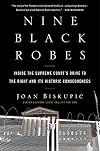
This is a history of the Supreme Court from 2016, shortly before Trump was elected, until shortly before the book was published in 2023, a time of great consequence for the country and the court. The history is told chronologically, primarily though a discussion of the court's many consequential decisions during this period. Through the decisions, we can see during the earlier years an incremental move to the right, but more recent decisions illustrate the court's move by leaps and bounds to show more the right, as it abandoned many of its earlier decisions with barely a nod to the doctrine of stare decisis. Along the way, the author includes a lot of anecdotal information about the various justices and the inner workings of the court.
As we all remember, Trump was able to appoint a justice almost immediately after he was elected due to Mitch McConnell's unprecedented actions in blocking Obama from appointing a successor to Justice Scalia after his death nearly a year before Obama's term ended. While Trump's first appointee, Neil Gorsusch, was a far-right ideologue, so was Scalia, and his appointment did not much shift the direction of the court. And, at that time, Chief Justice Roberts seemed very conscious of his role in history, and behind the scenes was working hard to prevent the Court from issuing radical decisions, seeking ways to decide cases on the most narrow grounds, constantly stressing stare decisis, and himself casting a deciding vote preventing the radical right-wingers on the court from going too far. This trend continued even after Trump was able to appoint a second right-wing ideologue, Brett Kavenaugh, after the retirement of the more moderate Justice Kennedy.
It was the appointment of Amy Coney Barrett after the death of Ruth Bader Ginsburg that emboldened the radicals on the court to refuse to compromise, to refuse to rule narrowly, to throw out stare decisis, all in favor of an extreme political agenda. The 5 right-wing conservatives on the court seemed to rally around Clarence Thomas, who is one of the most radical of the group, and Chief Justice Roberts seemed no longer in control of the group.
The book takes us up through the Dobbs decision (striking down Roe v. Wade) and to the appointment of Kitanji Brown to the court. As I was reading this book in early July, the court ended its term with decisions striking down affirmative action in education (a policy first upheld by the court when I was in law school in the early 1970's), overruling Biden's program to forgive student loans (a decision that many legal scholars see as overreaching and an entirely erroneous interpretation of the law on which Biden's forgiveness program was based), and expanding the ability of a business to discriminate against gays. As the dissent in Dobbs stated, " No one should be confident that this majority is done with its work." This was a compelling and highly readable book, even if you are not a recovering attorney, like me.
And I will note that this book ended before the revelations about the ethics violations and conflicts of interests of several of these justices (and in particular Clarence Thomas and his wife Ginni). In case you are unaware all lawyers and every federal judge is bound by a code of ethics, EXCEPT for Supreme Court justices. They have no code of ethics, just whatever they decide. And Chief Justice Roberts has indicated he has no interest in pursuing anything along these lines.
4 stars show less
As we all remember, Trump was able to appoint a justice almost immediately after he was elected due to Mitch McConnell's unprecedented actions in blocking Obama from appointing a successor to Justice Scalia after his death nearly a year before Obama's term ended. While Trump's first appointee, Neil Gorsusch, was a far-right ideologue, so was Scalia, and his appointment did not much shift the direction of the court. And, at that time, Chief Justice Roberts seemed very conscious of his role in history, and behind the scenes was working hard to prevent the Court from issuing radical decisions, seeking ways to decide cases on the most narrow grounds, constantly stressing stare decisis, and himself casting a deciding vote preventing the radical right-wingers on the court from going too far. This trend continued even after Trump was able to appoint a second right-wing ideologue, Brett Kavenaugh, after the retirement of the more moderate Justice Kennedy.
It was the appointment of Amy Coney Barrett after the death of Ruth Bader Ginsburg that emboldened the radicals on the court to refuse to compromise, to refuse to rule narrowly, to throw out stare decisis, all in favor of an extreme political agenda. The 5 right-wing conservatives on the court seemed to rally around Clarence Thomas, who is one of the most radical of the group, and Chief Justice Roberts seemed no longer in control of the group.
The book takes us up through the Dobbs decision (striking down Roe v. Wade) and to the appointment of Kitanji Brown to the court. As I was reading this book in early July, the court ended its term with decisions striking down affirmative action in education (a policy first upheld by the court when I was in law school in the early 1970's), overruling Biden's program to forgive student loans (a decision that many legal scholars see as overreaching and an entirely erroneous interpretation of the law on which Biden's forgiveness program was based), and expanding the ability of a business to discriminate against gays. As the dissent in Dobbs stated, " No one should be confident that this majority is done with its work." This was a compelling and highly readable book, even if you are not a recovering attorney, like me.
And I will note that this book ended before the revelations about the ethics violations and conflicts of interests of several of these justices (and in particular Clarence Thomas and his wife Ginni). In case you are unaware all lawyers and every federal judge is bound by a code of ethics, EXCEPT for Supreme Court justices. They have no code of ethics, just whatever they decide. And Chief Justice Roberts has indicated he has no interest in pursuing anything along these lines.
4 stars show less
Nine Black Robes: Inside the Supreme Court's Drive to the Right and Its Historic Consequences by Joan Biskupic
As the title suggests, this book explores both the Supreme Court justices and the cases they've decided over the past decade or so. Biskupic is a journalist and long-time Supreme Court reporter for the Washington Post, and her writing is succinct and easy to follow. She weaves in brief bios, working styles, and approaches to judging for most of the current Justices. At the same time, she explores the most impactful cases decided in the past few years. It's a very current book, with analysis show more focused on 2016 to the present.
I follow the Court pretty religiously, so none of this was new to me, but it was really interesting to read about it all at once and see the complete picture of what is happening. It's disturbing, maddening, and sad for me to read about. I'm not sure if the author would agree, but I think this book really is written for the liberal audience. I can't imagine any conservatives even picking it up. If you want a summary of the impact the Court has had on society and law over the past decade, this is an excellent place to begin. show less
I follow the Court pretty religiously, so none of this was new to me, but it was really interesting to read about it all at once and see the complete picture of what is happening. It's disturbing, maddening, and sad for me to read about. I'm not sure if the author would agree, but I think this book really is written for the liberal audience. I can't imagine any conservatives even picking it up. If you want a summary of the impact the Court has had on society and law over the past decade, this is an excellent place to begin. show less
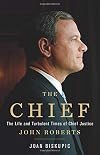
I guess it's easier to write about the times surrounding the life of Supreme Court of the United States Chief Justice John Roberts if you describe them as turbulent. And since compared to the Vietnam War and a decade's worth of riots or the depression and two episodes of global carnage that were the majority of the first half of the 20th century, the 1980s and 90's were garden club tea party, you need a tyrant to provide the turbulence. And thus you have The Chief: The Life and Turbulent show more Times of John Roberts by Joan Biskupic. Since his birth in 1955, John Roberts has apparently been connected, directly or indirectly, to every evil in the horror America has become since George Wallace's infamous and thankfully wrong segregationist prognostication. The mantra, "especially in the South," sound to this Tennessean's ears like the shrill whining of a frightened privileged white lady in a Yale dorm common room. I would suggest Ms. Biskupic stick to writing about the court's docket and leave boogie men to Stephen King. show less
Lists
Awards


You May Also Like


Associated Authors
Statistics
- Works
- 14
- Members
- 592
- Popularity
- #42,408
- Rating
- 3.7
- Reviews
- 14
- ISBNs
- 37