
Noah Feldman
Author of Scorpions: The Battles and Triumphs of FDR's Great Supreme Court Justices
About the Author
Noah Feldman teaches law at New York University.
Image credit: Noah Feldman
Works by Noah Feldman
Scorpions: The Battles and Triumphs of FDR's Great Supreme Court Justices (2010) 468 copies, 19 reviews
Divided by God: America's Church-State Problem--and What We Should Do About It (2005) 191 copies, 1 review
The Best Hope 1 copy
Associated Works
Tagged
Common Knowledge
- Birthdate
- 1970-05-20
- Gender
- male
- Education
- Yale Law School (JD|1997)
University of Oxford (D.Phil|Islamic Thought|1994)
Harvard College (BA|1992)
Maimondes School - Occupations
- Professor of Law, Harvard University
- Organizations
- Council on Foreign Affairs
- Nationality
- USA
- Birthplace
- Boston, Massachusetts, USA
- Places of residence
- Boston, Massachusetts, USA
New York, New York, USA - Associated Place (for map)
- USA
Members
Reviews
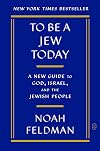
No one ever accused Feldman of being humble; although I found the first third of the book not very interesting (it’s a history of different movements in American Jewish thought, with some reference to non-American developments), the discussion of the relationship between Israel and American Jews was thoughtful, nuanced, and far more complicated than I can do justice to. His argument involves Israel as a redemptive counterweight to the Holocaust as well as Israeli political/religious show more developments—the formation of an actual Israeli state sapped secular Zionism of some of its energy, while religious Zionism gained power and also invested a lot of resources in educating American conservative Jews. (Secular Zionism sought to create a Jewish state in a place with historic meaning for Jews, not to occupy any particular amount or patch of land and therefore accepted UN partition plans; religious Zionism, not so much.) Among other things, he points out that the Holocaust Museum in the US was built before the National Museum of the American Indian or the National Museum of African American History and Culture—and that this was an expression of identity for American Jews. But that itself says a lot about the centrality of the Holocaust to American Jewry—as well as making “a claim of universal significance for the particular Jewish experience of suffering.” For progressive Jews, then, the universalizing meaning led to increasing criticism of the actually existing government of Israel, which is violating the principles of “never again.”
Feldman also explains the higher standard to which Israel is sometimes held as a consequence of its post-WWII creation—in the view of many (Jews and non-Jews) as compensation for the Holocaust. “If Israel was created to be a light until the nations, then when it failed to live up to that ideal, its failure would inevitably be more conspicuous than the failures of other states.” Western Europeans in particular, regarding Israel as essentially Western European in nature, don’t hold Arab or Muslim states to the same Western standards “either because of implicit racism against them or because of a more defensible political relativism.” Relatedly, when the European left became anti-colonial, Israel’s own creation looked like a colonialist legacy—except that the Jews had no other country. There’s a lot more in here, not all of which sits well with me, but if you’re interested in the topic, maybe skip part one and read the rest. show less
Feldman also explains the higher standard to which Israel is sometimes held as a consequence of its post-WWII creation—in the view of many (Jews and non-Jews) as compensation for the Holocaust. “If Israel was created to be a light until the nations, then when it failed to live up to that ideal, its failure would inevitably be more conspicuous than the failures of other states.” Western Europeans in particular, regarding Israel as essentially Western European in nature, don’t hold Arab or Muslim states to the same Western standards “either because of implicit racism against them or because of a more defensible political relativism.” Relatedly, when the European left became anti-colonial, Israel’s own creation looked like a colonialist legacy—except that the Jews had no other country. There’s a lot more in here, not all of which sits well with me, but if you’re interested in the topic, maybe skip part one and read the rest. show less
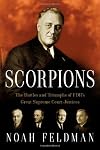
I want to start off by stating unequivocally that I really disliked reading this book. It took me months to read it, I kept abandoning it in favor of many other rivals from my to-be-read pile, and I only forced myself to persevere and complete it because I had obtained it as part of an Early Reviewers program and therefore owed it a fair trial.
It didn’t start off that way. Initially, I really looked forward to cracking the cover and I was hopeful that the material would be captivating. The show more concept seemed sound: four consequential members of the Supreme Court handpicked by FDR -- Felix Frankfurter, Hugo Black, William O. Douglas, Robert Jackson -- chart landmark moments of jurisprudence that still resonate today. Author Noah Feldman promised to demonstrate how four distinguished men with competing egos worked together and against one another to make constitutional history.
A skilled writer would have not only have focused upon the lives of his four subjects, but would have recreated the historical era for the reader, sketched out the institutional edifice of the Supreme Court as a critical branch of government, drawn a sharp biographical outline of FDR (the shaman who anointed these justices), and constructed a foundation of American constitutional law that would provide context for the drama of key decisions on the Japanese-American internment camps, WWII saboteurs, the Rosenberg’s, segregation, free speech and more – as well as the fractured relationships between the justices. As it was, the 433-page book was devoid of any of this, and there was decidedly little drama to boot! One has a suspicion from reading this book that if Noah Feldman had directed the movie Titanic, you would get to meet some of the passengers and crew, learn a little about icebergs, and then the ship would sink.
Perhaps for those who are already familiar with the Supreme Court, the history of American constitutional law, and the cast of characters, this book would be more interesting, but I tend to doubt it. The writing is often simply dull. And while there is no lack of subject material for high drama, the most dramatic moments as presented by the author are entirely anticlimactic. Moreover, the book skips all over the place in theme, biography, and chronology, so by the last chapters I was still confusing character traits of Jackson and Douglas, and was never quite sure who was aligned with whom at what point. Often, Feldman seems as if he is simply chatting with a room full of colleagues who are entirely familiar with the people, events and controversies associated with the subject at hand, something I found highly frustrating. At the end of the day, the book simply failed to hold my interest. A good editor should have shorn off two hundred pages of meandering verbiage and sent the writer back to his desk to weave a tighter narrative with more punch.
I typically read a great deal of history and biography, both scholarly works and those aimed at a more general audience. Some authors are better writers than others, and sometimes the prose is downright tedious, especially in academic works. Yet, usually I feel by the end of a long nonfiction book such as this that I have learned something meaningful that will stay with me. Sadly, I took almost nothing away from Scorpions except relief that I was finally through with it. show less
It didn’t start off that way. Initially, I really looked forward to cracking the cover and I was hopeful that the material would be captivating. The show more concept seemed sound: four consequential members of the Supreme Court handpicked by FDR -- Felix Frankfurter, Hugo Black, William O. Douglas, Robert Jackson -- chart landmark moments of jurisprudence that still resonate today. Author Noah Feldman promised to demonstrate how four distinguished men with competing egos worked together and against one another to make constitutional history.
A skilled writer would have not only have focused upon the lives of his four subjects, but would have recreated the historical era for the reader, sketched out the institutional edifice of the Supreme Court as a critical branch of government, drawn a sharp biographical outline of FDR (the shaman who anointed these justices), and constructed a foundation of American constitutional law that would provide context for the drama of key decisions on the Japanese-American internment camps, WWII saboteurs, the Rosenberg’s, segregation, free speech and more – as well as the fractured relationships between the justices. As it was, the 433-page book was devoid of any of this, and there was decidedly little drama to boot! One has a suspicion from reading this book that if Noah Feldman had directed the movie Titanic, you would get to meet some of the passengers and crew, learn a little about icebergs, and then the ship would sink.
Perhaps for those who are already familiar with the Supreme Court, the history of American constitutional law, and the cast of characters, this book would be more interesting, but I tend to doubt it. The writing is often simply dull. And while there is no lack of subject material for high drama, the most dramatic moments as presented by the author are entirely anticlimactic. Moreover, the book skips all over the place in theme, biography, and chronology, so by the last chapters I was still confusing character traits of Jackson and Douglas, and was never quite sure who was aligned with whom at what point. Often, Feldman seems as if he is simply chatting with a room full of colleagues who are entirely familiar with the people, events and controversies associated with the subject at hand, something I found highly frustrating. At the end of the day, the book simply failed to hold my interest. A good editor should have shorn off two hundred pages of meandering verbiage and sent the writer back to his desk to weave a tighter narrative with more punch.
I typically read a great deal of history and biography, both scholarly works and those aimed at a more general audience. Some authors are better writers than others, and sometimes the prose is downright tedious, especially in academic works. Yet, usually I feel by the end of a long nonfiction book such as this that I have learned something meaningful that will stay with me. Sadly, I took almost nothing away from Scorpions except relief that I was finally through with it. show less
 This review was written for LibraryThing Early Reviewers.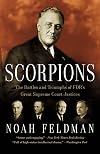
I had heard about this book when it was published but the length of it, 513 pages, kept me from reading it. However, the events of the last years and the importance that conservatives have put on getting conservative judges appointed to fill court vacancies made me think that I should do more reading about how the system works and why so many people think it is failing. In short, I wanted to know how we got to now. That led me to this book.
Basically, this book is a history of the US Supreme show more Court from 1930 to 1960. It is about the judicial philosophies of four Supreme Court Justices. All were appointed by FDR because FDR wanted judges on the court who would advance his political aims. Each of the four men were selected because they had proved themselves valuable to FDR in political ways by finding legal arguments that would advance FDR's New Deal laws. The four justices were, William O. Douglas, Felix Frankfurter, Hugo Black, and Robert Jackson. Two of the three were Solicitor Generals and then Attorney Generals of the U.S. before they were appointed. Black was a senator from Alabama who was a progressive and had voted to advance New Deal policies while in the Senate. Only one, Frankfurter, was an academic, but he was also heavily entwined in New Deal legislation and in the political inner circle in Washington, D. C. Three of the four men had political aspirations. By that, I mean that three of them wanted to run for President.
Perhaps the most surprising thing I learned was that people serving on the Supreme Court did not see themselves as holding a lifetime appointment. They saw it as a stepping stone to higher office, whereas, we now, tend to see appointment to the Supreme Court as the highest job in the land. For instance, Chief Justice Charles Evens Hughes, was appointed to the Supreme Court twice. Twice. He resigned the first time so that he could run for President in 1916. He was then appointed as Chief Justice in 1930. Also surprising was that, while all of them started out as "liberal" - meaning that they supported New Deal ideas, laws, and initiatives, two of them ended up being judicial conservatives, while two of them became judicial liberals, with one, Douglas becoming more and more liberal due to his emphasis on individual rights over those of the states. Douglas was the only one of the four who was not trained in Eastern establishment law schools. He was from Yakima, Washington, and he laid much of the ground work for environmental laws, even going so far as to say that inanimate objects such as rock and rivers have a right to exist and that these rights shouldn't be ignored.
Lastly, all four of these judges believed that all Supreme Court decisions are political. Politics, for them was inseparable from the interpretation of the law. Justice was a different matter. Politics is personal, and while all four of these men came onto the court with different goals and objectives, they all ended up as judicial enemies. (scorpions, in a bottle - hence the title.). Only Black and Douglas remained on personal speaking terms by the 1950's and even that was tenuous.
I also learned that appointment to the Supreme Court was always a political matter. No president took selecting a judge lightly and always considered their political aims when making a selection. What has changed, is Congress. Congress now is so closely divided that it slows down appointment to judgeships to the extent that it now impedes the ability of the courts to implement and interpret laws. This is why the down ballot elections are as important as is the vote for president. That seems to be something that the present day electorate doesn't seem to understand.
This book was a very accessible academic book. It had extensive notes and indexing, but it read like a story. I would class this book as narrative nonfiction - whatever that is. Anybody who has an interest in history or has the desire to know how we got to now, should read this book. At times it was engrossing and at times infuriating, but it was always informative, instructive, and, I believe, important and timely. show less
Basically, this book is a history of the US Supreme show more Court from 1930 to 1960. It is about the judicial philosophies of four Supreme Court Justices. All were appointed by FDR because FDR wanted judges on the court who would advance his political aims. Each of the four men were selected because they had proved themselves valuable to FDR in political ways by finding legal arguments that would advance FDR's New Deal laws. The four justices were, William O. Douglas, Felix Frankfurter, Hugo Black, and Robert Jackson. Two of the three were Solicitor Generals and then Attorney Generals of the U.S. before they were appointed. Black was a senator from Alabama who was a progressive and had voted to advance New Deal policies while in the Senate. Only one, Frankfurter, was an academic, but he was also heavily entwined in New Deal legislation and in the political inner circle in Washington, D. C. Three of the four men had political aspirations. By that, I mean that three of them wanted to run for President.
Perhaps the most surprising thing I learned was that people serving on the Supreme Court did not see themselves as holding a lifetime appointment. They saw it as a stepping stone to higher office, whereas, we now, tend to see appointment to the Supreme Court as the highest job in the land. For instance, Chief Justice Charles Evens Hughes, was appointed to the Supreme Court twice. Twice. He resigned the first time so that he could run for President in 1916. He was then appointed as Chief Justice in 1930. Also surprising was that, while all of them started out as "liberal" - meaning that they supported New Deal ideas, laws, and initiatives, two of them ended up being judicial conservatives, while two of them became judicial liberals, with one, Douglas becoming more and more liberal due to his emphasis on individual rights over those of the states. Douglas was the only one of the four who was not trained in Eastern establishment law schools. He was from Yakima, Washington, and he laid much of the ground work for environmental laws, even going so far as to say that inanimate objects such as rock and rivers have a right to exist and that these rights shouldn't be ignored.
Lastly, all four of these judges believed that all Supreme Court decisions are political. Politics, for them was inseparable from the interpretation of the law. Justice was a different matter. Politics is personal, and while all four of these men came onto the court with different goals and objectives, they all ended up as judicial enemies. (scorpions, in a bottle - hence the title.). Only Black and Douglas remained on personal speaking terms by the 1950's and even that was tenuous.
I also learned that appointment to the Supreme Court was always a political matter. No president took selecting a judge lightly and always considered their political aims when making a selection. What has changed, is Congress. Congress now is so closely divided that it slows down appointment to judgeships to the extent that it now impedes the ability of the courts to implement and interpret laws. This is why the down ballot elections are as important as is the vote for president. That seems to be something that the present day electorate doesn't seem to understand.
This book was a very accessible academic book. It had extensive notes and indexing, but it read like a story. I would class this book as narrative nonfiction - whatever that is. Anybody who has an interest in history or has the desire to know how we got to now, should read this book. At times it was engrossing and at times infuriating, but it was always informative, instructive, and, I believe, important and timely. show less

My books do not live in isolation from each other, but as counterpoint or coincidence. They are always holding conversations behind my back. A recent contretemps between two books in my pile has forced me to resort to a double review, pairing two seemingly disparate works that together had a keen point to make on the writing of History. As I was reading Scorpions by Noah Feldman and Peter Green’s Xerxes at Salamis, I kept overhearing grunts and harrumphs and decided to pay closer attention show more to what was going on between the books.
Feldman’s excellent history of mid-20th c. American constitutionalism, framed as an examination of the experiences of four Supreme Court justices appointed by Franklin Roosevelt, shines a light on everything from racial profiling and segregation to executive power during wartime to the tension between civil liberties and national security, and illuminates far beyond the topics treated in the book. Feldman expertly situates his case studies in context, but in such a way that the reader may ponder the links between the particular and the universal. He knows that, in the real world, principle and ideology always submit to complexity and ambiguity, law-making is seldom rational (as apart from partisan interests or individual motives), and thinking people sometimes change their minds.
Green’s book is an extrapolation from scant material and will appeal to those who like their Ancient History told as a story with kings and warriors as dramatis personae. Lines from Aeschylus and passages from Herodotus or Plutarch are analyzed, supported or corrected with fragments of archaeology. Persian kings are posed as oriental despots, and three decades of 5th-c. Athenian life stand in for the roots of Western Civilization. A single battle in a long war between regional powers almost 3000 years ago becomes the Hinge of History, though this point is to be taken as a matter of faith. Moses Finley warned against treating ancient sources at face value, against supposing that we can know ‘how things really were,’ and against psychologizing the causes of ancient warfare. Would that Green had a copy of Ancient History: Evidence and Models.
Perhaps Aeschylus was able to do what even Shakespeare could not: embody the whole of a cultural mindset in a few lines of a dramatic script. But there is no way to know. Still, many strain to believe that—like good, real Americans—the classical Greeks ‘believed in freedom,’ and without their efforts on our behalf the History of Freedom in the World would have been smothered in the crib. Works like Xerxes at Salamis are stimulating of the imagination, but must be taken with lots of salt.
This is what I think my books were talking about: that Historiography is not just an academic exercise. It is the deployment of critical thinking in the judgment of evidence, assumptions, arguments and conclusions about the past. In disputes about the sources and bases and meanings of ‘freedom’ in American political discourse of the 21st c., for instance, the ‘lessons of history’ are frequently cited to bolster one side or another. The problem is that not everyone learns the same lessons.
One of the lessons from the classical Greeks, assumed by many and reaffirmed by Green, is that the History of the World is the story of the West v. the Rest, and that war makes us free. The evidence from Scorpions and Xerxes at Salamis suggests that the freedoms enjoyed by people in 'the West' are less the consequence of warfare (or strict adherence to ideology, or divine intervention) than the product of a flexible, pragmatic jurisprudence developed over the past one hundred and fifty years—and the gravest threat to those liberties are politicians and our fellow citizens, not foreigners. show less
Feldman’s excellent history of mid-20th c. American constitutionalism, framed as an examination of the experiences of four Supreme Court justices appointed by Franklin Roosevelt, shines a light on everything from racial profiling and segregation to executive power during wartime to the tension between civil liberties and national security, and illuminates far beyond the topics treated in the book. Feldman expertly situates his case studies in context, but in such a way that the reader may ponder the links between the particular and the universal. He knows that, in the real world, principle and ideology always submit to complexity and ambiguity, law-making is seldom rational (as apart from partisan interests or individual motives), and thinking people sometimes change their minds.
Green’s book is an extrapolation from scant material and will appeal to those who like their Ancient History told as a story with kings and warriors as dramatis personae. Lines from Aeschylus and passages from Herodotus or Plutarch are analyzed, supported or corrected with fragments of archaeology. Persian kings are posed as oriental despots, and three decades of 5th-c. Athenian life stand in for the roots of Western Civilization. A single battle in a long war between regional powers almost 3000 years ago becomes the Hinge of History, though this point is to be taken as a matter of faith. Moses Finley warned against treating ancient sources at face value, against supposing that we can know ‘how things really were,’ and against psychologizing the causes of ancient warfare. Would that Green had a copy of Ancient History: Evidence and Models.
Perhaps Aeschylus was able to do what even Shakespeare could not: embody the whole of a cultural mindset in a few lines of a dramatic script. But there is no way to know. Still, many strain to believe that—like good, real Americans—the classical Greeks ‘believed in freedom,’ and without their efforts on our behalf the History of Freedom in the World would have been smothered in the crib. Works like Xerxes at Salamis are stimulating of the imagination, but must be taken with lots of salt.
This is what I think my books were talking about: that Historiography is not just an academic exercise. It is the deployment of critical thinking in the judgment of evidence, assumptions, arguments and conclusions about the past. In disputes about the sources and bases and meanings of ‘freedom’ in American political discourse of the 21st c., for instance, the ‘lessons of history’ are frequently cited to bolster one side or another. The problem is that not everyone learns the same lessons.
One of the lessons from the classical Greeks, assumed by many and reaffirmed by Green, is that the History of the World is the story of the West v. the Rest, and that war makes us free. The evidence from Scorpions and Xerxes at Salamis suggests that the freedoms enjoyed by people in 'the West' are less the consequence of warfare (or strict adherence to ideology, or divine intervention) than the product of a flexible, pragmatic jurisprudence developed over the past one hundred and fifty years—and the gravest threat to those liberties are politicians and our fellow citizens, not foreigners. show less
Lists
Awards


You May Also Like


Associated Authors
Statistics
- Works
- 15
- Also by
- 2
- Members
- 1,432
- Popularity
- #17,967
- Rating
- 3.9
- Reviews
- 30
- ISBNs
- 54
- Languages
- 2
- Favorited
- 1
