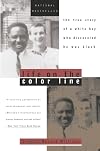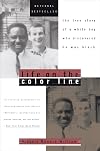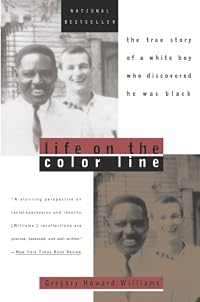
Life on the Color Line: The True Story of a White Boy Who Discovered He Was Black
by Gregory Howard Williams
On This Page
Description
Gregory Howard Williams and his younger brother, Mike, grew up believing they were white and that their darkskinned father was of Italian descent. Then their parents' marriage disintegrated, their mother departed, and their father's business ventures sank into a sea of liquor. Pursued by debt and personal demons, "Tony" Williams took his two boys to his hometown of Muncie, Indiana, where he was known as "Buster," and where there was no escape from the truth he had hidden for so long. The show more truth was as plain as the color of Buster's family. Gregory and Mike Williams were the sons of a brilliant and charming but troubled black man who fled the burden of race until need drove him back to his roots. Suddenly Gregory and Mike discovered they were black as well, strangers in a segregated world about which they knew nothing, forced to learn the strategies of survival amid the poverty, prejudice, and agonizing absurdities of a time and place where racism flourished. In this extraordinary and powerful memoir, Gregory Howard Williams recounts his remarkable journey along the color line and illuminates the contrasts between the black and white worlds: one of privilege, opportunity, and comfort, the other of deprivation, repression, and struggle. He tells the story of his father, a self-destructive man who often neglected his children, yet had faith in his eldest son's ability to succeed in the face of nearly insurmountable obstacles. Of "Miss Dora," a loving family friend who gave Gregory and his brother the food they ate, the clothes on their backs, and the roof over their heads - all on a salary of just twenty-five dollars per week. Of the hostility and prejudice he encountered all too often, from both blacks and whites, and the surprising moments of encouragement and acceptance he found from each. Williams tells the story, too, of the divergent paths he and his brother eventually took, one defying the odds and the advice of teachers and counselors to become a lawyer, the other succumbing to the lure of fun, flash, and the quick buck. Life on the Color Line is a uniquely important book. It is a compelling drama of a man straddling two worlds and two heritages, and a wonderfully inspiring testament of purpose, perseverance, and human triumph. show lessTags
Recommendations







Member Reviews
Wow. Just wow. America in the 1950s and 1960s was a truly messed up place to be. This is an amazing book, told from the perspective of a man who had been raised to believe that his father was Italian and that he was white - with all the privilege that implied. One day his parents split up and he discovers that his father was, in fact, black - with all the discrimination that this implied. Fascinating story of a turbulent time. My only criticism is that the book skims over the last 30 years of the author's life in about 4 pages -- a very abrupt ending, especially considering the struggles that he must have faced in his adult life. Significantly, he married a white woman, and this is barely addressed. Still, an excellent read.
Life on the Color Line shows the rare and unusual view point of a boy who all his life thought he was white but found out that he really was part black. His whole life, his father who is half white and half black has been passing as an "Italian" and it wasn't until his parents' divorce and bankruptcy when Gregory finds out a quarter of him is African American. Even though Gregory looks entirely white and has lived the life of a white person up until then, when people found out that he was part black, they treated him as inferior and discriminated against him. On the other end, Gregory also felt discriminated against because many blacks did not recognize him as African American since he looked so white. The difficult situation that show more Gregory is put in can be arguably described as the "worst of both worlds." Readers follow his account of racism and prejudice that existed in Virginia at that time. This is a very interesting autobiography with a serious message, yet engaging plot. show less
This book tells the interesting story of a boy who thought he was white but turned out to be part black. It was a really eye-opening tale that depicted the racial divide in the 50s and 60s. I sympathized with Greg as he battled discrimination and cheered for him when he overcame his hardships and succeeded in the end. It sent a great message about acceptance and equality.
The racial struggle that is at the heart of this book was only interesting because it was an autobiography. I'm sure there are still racial issues occuring in our country today, but this man's story shows how far our society really has come. His perseverance and detirmination are undeniable. It is uplighting to see the underdog prevail. The ending was great, but only strengthened because it was reality.
WOW. That's all I can say about this book. I led the discussion Life on the Color Line for our book club. It was a difficult book to read. I think Williams is on my list of living people I would most like to meet.
moving, powerful, and inspirational. a true story of hope and survival in the face of a mountain of obstacles. the struggles and betrayal Greg faced are shocking, and his strength and determination astounding. highly recommended. a powerful story of race and prejudice, and one man's struggle to break every boundary. 5 stars
The prose in this is really, really pedestrian. I finished it so fast because I didn't want to spend any more time on it than I had to, not because I wanted to read it.
Members
- Recently Added By
Lists

1990s
309 works; 17 members

Books Read in 2008
336 works; 8 members

Literary Works Read in College
316 works; 15 members

To Read
140 works; 1 member
Author Information

2+ Works 507 Members
Awards and Honors
Common Knowledge
- Canonical title
- Life on the Color Line: The True Story of a White Boy Who Discovered He Was Black
- Original publication date
- 1995-02-01
- People/Characters
- Gregory Howard Williams; Miss Dora; Aunt Bess; Uncle Jim; Big John; Miss Bartlett (show all 7); Grandma Sallie
- Important places
- Muncie, Indiana, USA
- Epigraph
- My old man's a white old man
And my old mother's black.
If ever cursed my white old man
I take my curses back.
If ever I cursed my black old mother
And wished she were in hell,
I'm sorry for that
And now ... (show all)I wish her well.
My old man died in a big fine house
My ma died in a shack.
I wonder where I'm gonna die,
Being neither white nor black!
—Langston Hughes, "Cross" - Dedication
- To the memories of my father, James A. "Buster" Williams, and my "truly mother," Dora Weekly Smith. They gave me the strength to live this story. And to Sara Whitney Williams, who gave me the courage to tell it.
- First words
- The white frame building dwarfed all the other beer joints on U.S. 1 between Alexandria and Fort Belvoir, Virginia.
- Last words
- (Click to show. Warning: May contain spoilers.)"Son, one day this will all pale into insignificance." He was wrong. Muncie has never paled into insignificance. It has lived inside me forever.
Classifications
- Genres
- Biography & Memoir, Nonfiction, General Nonfiction, History
- DDC/MDS
- 305.896073092 — Society, government, & culture Social sciences, sociology & anthropology Social group - Age, Gender, Ethnicity Ethnic and national groups Other ethnic and national groups Africans and people of African descent; Blacks of African origin standard subdivisions / located in North America African Americans {United States Blacks}
- LCC
- KF373 .W474 .A3 — Law Law of the United States Law of the United States (Federal) History
- BISAC
Statistics
- Members
- 506
- Popularity
- 59,800
- Reviews
- 10
- Rating
- (3.95)
- Languages
- English
- Media
- Paper, Ebook
- ISBNs
- 9
- UPCs
- 1
- ASINs
- 5