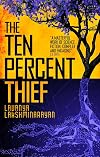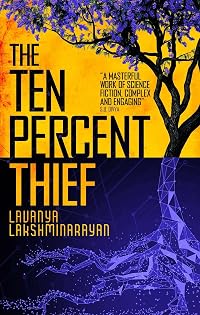
The Ten Percent Thief
by Lavanya Lakshminarayan
On This Page
Description
A bold, bitingly satirical near-future mosaic novel about a city run along 'meritocratic' lines, the injustice it creates, and the revolution that will destroy it. Nothing has happened. Not yet, anyway. This is how all things begin. Welcome to Apex City, formerly Bangalore, where everything is decided by the mathematically perfect Bell Curve. With the right image, values and opinions, you can ascend to the glittering heights of the Twenty Percent - the Virtual elite - and have the world at show more your feet. Otherwise you risk falling to the precarious Ten Percent, and deportation to the ranks of the Analogs, with no access to electricity, running water or even humanity. The system has no flaws. Until the elusive "Ten Percent Thief" steals a single jacaranda seed from the Virtual city and plants a revolution in the barren soil of the Analog world. Previously published in South Asia only as Analog/Virtual, The Ten Percent Thief is a striking debut by a ferocious new talent. show lessTags
Recommendations














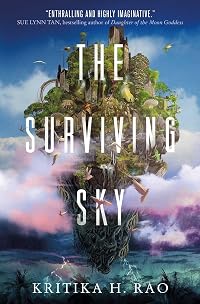
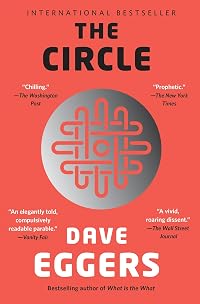

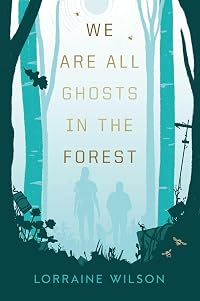
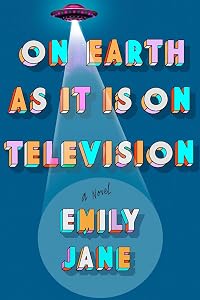










Member Recommendations


Member Reviews
That I picked up this book is a commentary on how I remember it getting good press when the British publication occurred, my continuing interest in what African and South Asian authors are doing with the old tropes of Campbellian science fiction, and because it was convenient!
Levity aside, I was concerned over whether Ms. Lakshminarayan would rise above those old tropes, as I wasn't that interested in reading about some far-future Robin Hood figure. I also wasn't enjoying the "mosaic" approach to writing a novel, as I didn't yet have the confidence that it would all come together.
However, it turns out Lakshminarayan does have a taste for the jugular, as she cheerfully tears to little shreds her far future elite who live and die for the show more algorithm, and their comeuppance is quite satisfying, as the climax comes together.
Going forward, I am now much more interested in the lady's new novel. "Interstellar MegaChef" is not the most auspicious title, but I now appreciate that satire is a big point of Lakshminarayan's writing. show less
Levity aside, I was concerned over whether Ms. Lakshminarayan would rise above those old tropes, as I wasn't that interested in reading about some far-future Robin Hood figure. I also wasn't enjoying the "mosaic" approach to writing a novel, as I didn't yet have the confidence that it would all come together.
However, it turns out Lakshminarayan does have a taste for the jugular, as she cheerfully tears to little shreds her far future elite who live and die for the show more algorithm, and their comeuppance is quite satisfying, as the climax comes together.
Going forward, I am now much more interested in the lady's new novel. "Interstellar MegaChef" is not the most auspicious title, but I now appreciate that satire is a big point of Lakshminarayan's writing. show less
In a Nutshell: A dystopian sci-fi presented in an innovative format – a mosaic novel. Took me a while to get used to the structure, but overall, it was worth it. Found an outstanding Indian fictional work after a long time, though the story isn’t Indian as such.
Story Synopsis:
The cyberpunk elements in the story are quite dominant, what with the astounding details of the futuristic technology coming to the aid of every Virtual. Many of the episodes are satirical, containing exaggerated harmful versions of today's technology, focussing on the obsessions with social-media influencers, and poking fun at the heavy dependence on technology for even basic tasks. It also highlights how digital influence and nepotistic connections are valued over genuine talent, a problem even in our own world. All the sarcastic jabs at our generation’s expense are funny yet thought-provoking.
The Analog world is also sketched realistically, reminiscent of the overpopulated dystopia of ‘Ready Player One’ but without the gadgets or games. Their life, their frustrations and their aspirations all come out well.
The story hits hard in many ways through this strangely straightforward yet convoluted approach. The guaranteed limitations of hubris ensure that we can see the ending coming, but it is still fun to read.
The book was originally published in India a few years ago as ‘Analog/Virtual and Other Simulations of Your Future’. ‘The Ten Percent Thief’ is the title of the new US edition, published on 28th March 2023. I am not a fan of the new name; while it is catchy, it doesn’t represent the novel well. I will not mention any individual characters who made a mark, because unlike what the title suggests, the story doesn’t belong to any single character. On the contrary, every character is necessary for this story to come together into a convincing whole.
I had never heard of the term ‘mosaic novel’ before, and this book was a great way of experiencing this unique style of storytelling. The scenes are set in the same world but come to us from different characters. It takes a while to get into, and the start is especially rocky, but with time, we get to see the jigsaw come together piece by piece. The story is still linear, and we get to see a proper start-middle-end progression, albeit from different perspectives that are almost never repeated. Some characters make an entry in another character’s episode, so if you are reading this through print or audio, better make a character list. Kindle search will come to the help of digital readers.
That said, I don’t think this story will work well on audio – it will be too tricky for most readers to stay abreast of the long list of characters and to track when they make guest appearances in others’ scenes.
Though the story is set in Bangalore (now Bengaluru) in South India, the only thing “Indian” about the novel is the names of the characters and the locations. The dystopian world is so neutrally depicted that it could very well be any metropolis. The world-building is amazing without feeling overwhelming, especially in terms of descriptions. There was only one doubt I had in the world created by the novel: How on earth do the Analogs have physical newspapers if they have no trees?
All in all, I enjoyed this imaginative dystopian sci-fi story, though it took me a while to get into it. The author’s creativity is mind-blowing! After a long while, I feel proud of an Indian writer’s work, and I can’t wait to see what’s coming next from her pen.
Strongly recommended to fans of dystopian sci-fi.
4.25 stars.
My thanks to Simon & Schuster, Solaris, and Edelweiss+ for the DRC of “The Ten Percent Thief”. This review is voluntary and contains my honest opinion about the book.
———————————————
Connect with me through:
My Blog | The StoryGraph | Instagram | Facebook | Twitter show less
Story Synopsis:
In the near-future, everything in Apex City (formerly known as Bangalore) is ruled by Bell Corp and its Bell Curve. Citizens who are born into or fit into the top twenty percent in terms of productivity/success/wealth dictate terms. They are the Virtual Elite, lording it over the next seventy percent who live in constant fear of deportment if their productivity index dips. The bottom ten percent are the Analogs, the ‘scum of humanity’ who live outside theshow more
technologically segregated zone, with no access to even the basic facilities such as running water or electricity. The system is perfect, or at least the Virtuals think so. However, unknown to them, a ‘ten percent’ thief has stolen a jacaranda seed from Apex City’s lush climate-protected gardens, and planted it in the barren soil of the Analog world, thereby setting off a revolution.
The novel is written as a series of vignettes coming from the first-person and third-person perspectives of various characters, both Virtual and Analog.
The cyberpunk elements in the story are quite dominant, what with the astounding details of the futuristic technology coming to the aid of every Virtual. Many of the episodes are satirical, containing exaggerated harmful versions of today's technology, focussing on the obsessions with social-media influencers, and poking fun at the heavy dependence on technology for even basic tasks. It also highlights how digital influence and nepotistic connections are valued over genuine talent, a problem even in our own world. All the sarcastic jabs at our generation’s expense are funny yet thought-provoking.
The Analog world is also sketched realistically, reminiscent of the overpopulated dystopia of ‘Ready Player One’ but without the gadgets or games. Their life, their frustrations and their aspirations all come out well.
The story hits hard in many ways through this strangely straightforward yet convoluted approach. The guaranteed limitations of hubris ensure that we can see the ending coming, but it is still fun to read.
The book was originally published in India a few years ago as ‘Analog/Virtual and Other Simulations of Your Future’. ‘The Ten Percent Thief’ is the title of the new US edition, published on 28th March 2023. I am not a fan of the new name; while it is catchy, it doesn’t represent the novel well. I will not mention any individual characters who made a mark, because unlike what the title suggests, the story doesn’t belong to any single character. On the contrary, every character is necessary for this story to come together into a convincing whole.
I had never heard of the term ‘mosaic novel’ before, and this book was a great way of experiencing this unique style of storytelling. The scenes are set in the same world but come to us from different characters. It takes a while to get into, and the start is especially rocky, but with time, we get to see the jigsaw come together piece by piece. The story is still linear, and we get to see a proper start-middle-end progression, albeit from different perspectives that are almost never repeated. Some characters make an entry in another character’s episode, so if you are reading this through print or audio, better make a character list. Kindle search will come to the help of digital readers.
That said, I don’t think this story will work well on audio – it will be too tricky for most readers to stay abreast of the long list of characters and to track when they make guest appearances in others’ scenes.
Though the story is set in Bangalore (now Bengaluru) in South India, the only thing “Indian” about the novel is the names of the characters and the locations. The dystopian world is so neutrally depicted that it could very well be any metropolis. The world-building is amazing without feeling overwhelming, especially in terms of descriptions. There was only one doubt I had in the world created by the novel: How on earth do the Analogs have physical newspapers if they have no trees?
All in all, I enjoyed this imaginative dystopian sci-fi story, though it took me a while to get into it. The author’s creativity is mind-blowing! After a long while, I feel proud of an Indian writer’s work, and I can’t wait to see what’s coming next from her pen.
Strongly recommended to fans of dystopian sci-fi.
4.25 stars.
My thanks to Simon & Schuster, Solaris, and Edelweiss+ for the DRC of “The Ten Percent Thief”. This review is voluntary and contains my honest opinion about the book.
———————————————
Connect with me through:
My Blog | The StoryGraph | Instagram | Facebook | Twitter show less
In a Nutshell: A dystopian sci-fi presented in an innovative format – a mosaic novel. Took me a while to get used to the structure, but overall, it was worth it. Found an outstanding Indian fictional work after a long time, though the story isn’t Indian as such.
Story Synopsis:
The cyberpunk elements in the story are quite dominant, what with the astounding details of the futuristic technology coming to the aid of every Virtual. Many of the episodes are satirical, containing exaggerated harmful versions of today's technology, focussing on the obsessions with social-media influencers, and poking fun at the heavy dependence on technology for even basic tasks. It also highlights how digital influence and nepotistic connections are valued over genuine talent, a problem even in our own world. All the sarcastic jabs at our generation’s expense are funny yet thought-provoking.
The Analog world is also sketched realistically, reminiscent of the overpopulated dystopia of ‘Ready Player One’ but without the gadgets or games. Their life, their frustrations and their aspirations all come out well.
The story hits hard in many ways through this strangely straightforward yet convoluted approach. The guaranteed limitations of hubris ensure that we can see the ending coming, but it is still fun to read.
The book was originally published in India a few years ago as ‘Analog/Virtual and Other Simulations of Your Future’. ‘The Ten Percent Thief’ is the title of the new US edition, published on 28th March 2023. I am not a fan of the new name; while it is catchy, it doesn’t represent the novel well. I will not mention any individual characters who made a mark, because unlike what the title suggests, the story doesn’t belong to any single character. On the contrary, every character is necessary for this story to come together into a convincing whole.
I had never heard of the term ‘mosaic novel’ before, and this book was a great way of experiencing this unique style of storytelling. The scenes are set in the same world but come to us from different characters. It takes a while to get into, and the start is especially rocky, but with time, we get to see the jigsaw come together piece by piece. The story is still linear, and we get to see a proper start-middle-end progression, albeit from different perspectives that are almost never repeated. Some characters make an entry in another character’s episode, so if you are reading this through print or audio, better make a character list. Kindle search will come to the help of digital readers.
That said, I don’t think this story will work well on audio – it will be too tricky for most readers to stay abreast of the long list of characters and to track when they make guest appearances in others’ scenes.
Though the story is set in Bangalore (now Bengaluru) in South India, the only thing “Indian” about the novel is the names of the characters and the locations. The dystopian world is so neutrally depicted that it could very well be any metropolis. The world-building is amazing without feeling overwhelming, especially in terms of descriptions. There was only one doubt I had in the world created by the novel: How on earth do the Analogs have physical newspapers if they have no trees?
All in all, I enjoyed this imaginative dystopian sci-fi story, though it took me a while to get into it. The author’s creativity is mind-blowing! After a long while, I feel proud of an Indian writer’s work, and I can’t wait to see what’s coming next from her pen.
Strongly recommended to fans of dystopian sci-fi.
4.25 stars.
My thanks to Simon & Schuster, Solaris, and Edelweiss for the DRC of “The Ten Percent Thief”. This review is voluntary and contains my honest opinion about the book.
———————————————
Connect with me through:
My Blog | The StoryGraph | Instagram | Facebook | Twitter show less
Story Synopsis:
In the near-future, everything in Apex City (formerly known as Bangalore) is ruled by Bell Corp and its Bell Curve. Citizens who are born into or fit into the top twenty percent in terms of productivity/success/wealth dictate terms. They are the Virtual Elite, lording it over the next seventy percent who live in constant fear of deportment if their productivity index dips. The bottom ten percent are the Analogs, the ‘scum of humanity’ who live outside theshow more
technologically segregated zone, with no access to even the basic facilities such as running water or electricity. The system is perfect, or at least the Virtuals think so. However, unknown to them, a ‘ten percent’ thief has stolen a jacaranda seed from Apex City’s lush climate-protected gardens, and planted it in the barren soil of the Analog world, thereby setting off a revolution.
The novel is written as a series of vignettes coming from the first-person and third-person perspectives of various characters, both Virtual and Analog.
The cyberpunk elements in the story are quite dominant, what with the astounding details of the futuristic technology coming to the aid of every Virtual. Many of the episodes are satirical, containing exaggerated harmful versions of today's technology, focussing on the obsessions with social-media influencers, and poking fun at the heavy dependence on technology for even basic tasks. It also highlights how digital influence and nepotistic connections are valued over genuine talent, a problem even in our own world. All the sarcastic jabs at our generation’s expense are funny yet thought-provoking.
The Analog world is also sketched realistically, reminiscent of the overpopulated dystopia of ‘Ready Player One’ but without the gadgets or games. Their life, their frustrations and their aspirations all come out well.
The story hits hard in many ways through this strangely straightforward yet convoluted approach. The guaranteed limitations of hubris ensure that we can see the ending coming, but it is still fun to read.
The book was originally published in India a few years ago as ‘Analog/Virtual and Other Simulations of Your Future’. ‘The Ten Percent Thief’ is the title of the new US edition, published on 28th March 2023. I am not a fan of the new name; while it is catchy, it doesn’t represent the novel well. I will not mention any individual characters who made a mark, because unlike what the title suggests, the story doesn’t belong to any single character. On the contrary, every character is necessary for this story to come together into a convincing whole.
I had never heard of the term ‘mosaic novel’ before, and this book was a great way of experiencing this unique style of storytelling. The scenes are set in the same world but come to us from different characters. It takes a while to get into, and the start is especially rocky, but with time, we get to see the jigsaw come together piece by piece. The story is still linear, and we get to see a proper start-middle-end progression, albeit from different perspectives that are almost never repeated. Some characters make an entry in another character’s episode, so if you are reading this through print or audio, better make a character list. Kindle search will come to the help of digital readers.
That said, I don’t think this story will work well on audio – it will be too tricky for most readers to stay abreast of the long list of characters and to track when they make guest appearances in others’ scenes.
Though the story is set in Bangalore (now Bengaluru) in South India, the only thing “Indian” about the novel is the names of the characters and the locations. The dystopian world is so neutrally depicted that it could very well be any metropolis. The world-building is amazing without feeling overwhelming, especially in terms of descriptions. There was only one doubt I had in the world created by the novel: How on earth do the Analogs have physical newspapers if they have no trees?
All in all, I enjoyed this imaginative dystopian sci-fi story, though it took me a while to get into it. The author’s creativity is mind-blowing! After a long while, I feel proud of an Indian writer’s work, and I can’t wait to see what’s coming next from her pen.
Strongly recommended to fans of dystopian sci-fi.
4.25 stars.
My thanks to Simon & Schuster, Solaris, and Edelweiss for the DRC of “The Ten Percent Thief”. This review is voluntary and contains my honest opinion about the book.
———————————————
Connect with me through:
My Blog | The StoryGraph | Instagram | Facebook | Twitter show less
I cannot make up my mind whether this is a 4-star, "favourites" shelf book, rather than a failed attempt at a novel. Gloriously so, mind.
On one side, I was expecting brain chewing-gum, and I was surprised by the chillingly rich world-building and by the dry, exact writing; not to mention the scathing social commentary. Also, I am a sucker for episodic, apparently scattered novels that come together in a bigger narrative: those little details appearing in a character's story in an early flash-chapter, and becoming ominously significant in the dénouement of another character's arc, a hundred pages later.
On the other side, this episodic nature is also the undoing of the novel itself. The episodes never come to a satisfying narrative show more unity, character are unevenly carved, some come to life, some remain a bit of a sketch; especially the conclusion, while satisfying by a plot point of view, comes too early in the intertwining of the episodes and leaves the stories unresolved. It is a pity, since motivations and - when developed - characters are convincing.
A beautiful failure, I would say, stimulating, entertaining, intelligent and worth reading; I am of half a mind about buying a copy for my bookshelf. show less
On one side, I was expecting brain chewing-gum, and I was surprised by the chillingly rich world-building and by the dry, exact writing; not to mention the scathing social commentary. Also, I am a sucker for episodic, apparently scattered novels that come together in a bigger narrative: those little details appearing in a character's story in an early flash-chapter, and becoming ominously significant in the dénouement of another character's arc, a hundred pages later.
On the other side, this episodic nature is also the undoing of the novel itself. The episodes never come to a satisfying narrative show more unity, character are unevenly carved, some come to life, some remain a bit of a sketch; especially the conclusion, while satisfying by a plot point of view, comes too early in the intertwining of the episodes and leaves the stories unresolved. It is a pity, since motivations and - when developed - characters are convincing.
A beautiful failure, I would say, stimulating, entertaining, intelligent and worth reading; I am of half a mind about buying a copy for my bookshelf. show less
Series of linked vignettes about life under the Bell Corporation, which replaced the Indian and other governments with its supposedly meritocratic rule that twenty percent are full citizens, seventy percent partial, and ten percent Analogs who can be harvested for their organs, or much worse. (We eventually learn that “ten percent” is a myth; they just don’t count any kids born to the ten percent, but you can be dumped into the ten percent for being insufficiently Bell-oriented.) It has many of the beats you’d expect with rebels trying to take the system down, but there are some interesting moments with some of the slice-of-life stories, especially the musician struggling between computerized perfection and actual playing.
when I found this ARC in NetGalley I had to request it, my first contact with this author was in best in world SF volume 2, that I actually also read here in NetGalley, ok going back to the story, I was introduced to the first chapter of this story in that book, and in the end it was one of the few stories (on said book) that ended up living rent free on my head, so I really had to read the whole book, basically we have several short stories that come alive in this city, giving a continuation from one story to the other, without a direct link. In geral I did like it, but the story that gives the name to this book is one of the best in the book, some of the stories felt a bit disconnected, but that of course is a personal opinion, I will show more still recommend this book as an interesting take in a dystopian world being brought to life through short stories.
And I definitely will want to read more of this author in the future.
Thank you NetGalley and Rebellion, Solaris for the free ARC and this is my honest opinion. show less
And I definitely will want to read more of this author in the future.
Thank you NetGalley and Rebellion, Solaris for the free ARC and this is my honest opinion. show less
Ratings
Members
- Recently Added By
Author Information

6+ Works 179 Members
Awards and Honors
Awards
Work Relationships
Is contained in
Common Knowledge
- Dedication
- Amma and Appa,
this book is for you,
for plunging into unknowable futures with me - First words
- Nobody notices anything because nothing has happened.
- Blurbers
- Hutchinson, Dave; Das, Indrapramit; Divya, S. B.; Holborn, Stark; Basu, Samit; Choudhury, Chandrahas (show all 8); Singh, Vandana; Santos, Wayne
Classifications
Statistics
- Members
- 89
- Popularity
- 358,991
- Reviews
- 6
- Rating
- (3.65)
- Languages
- English
- Media
- Paper, Ebook
- ISBNs
- 4
- ASINs
- 1