On This Page
Description
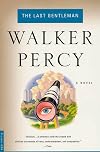
National Book Award Finalist: A lonely Southerner forges a surprising bond with a New York family in this "brilliant" novel by the author of The Moviegoer (Time). Will Barrett has never felt at peace. After moving from his native South to New York City, Will's most meaningful human connections come through the lens of a telescope in Central Park, from which he views the comings and goings of the eccentric Vaught family. But Will's days as a spectator end when he meets the Vaught patriarch show more and accepts a job in the Mississippi Delta as caretaker for the family's ailing son, Jamie. Once there, he is confronted not only by his personal demons, but also his growing love for Jamie's sister, Kitty, and a deepening relationship with the Vaught family that will teach him the true meaning of home. show lessTags
Recommendations



























Member Reviews
Percy creates a quasi-absurd scenario reminiscent of Pynchon, Robbins, or Brautigan, and uses it to explore modern anxiety and existential crisis through the lens of an educated twenty-something Southern boy. Action follows Williston Bibb Barrett as he works his way back home, equally pushed by internal dissatisfaction and pulled by the departure of a Southern girl he followed out of Central Park. Percy's depiction of modern Southern culture is especially successful in countering stereotypes even as his focus is upon the broader American malaise of the 1960s.
Percy's writing is assured and deceptive in its simplicity, his observations recognisably, startlingly accurate (in the manner of sudden recognition) in depicting different show more mannerisms typical of Northern and Southern adults, interactions between black and white Americans, and between generations. These observations are most striking as they manifest in how people behave, their small mannerisms even more than their intended actions, and in their dialogue and conversation. Interestingly, though his characters are well-written whether man or woman, I didn't notice a particular focus on gender differences.
//
Percy alludes to that synthesis of Christian myth presented in his own essay, "The Message in the Bottle" [276]. In the novel, the allegory is deliberately obscure, part of Sutter's diary entries addressed to his sister and unorthodox nun, Val. Interesting that Percy links his take on myth with Sutter, who is not particularly sympathetic to either other characters in the novel or to the reader. Given the essay, it's not surprising so much that Percy incorporates a Christian ethics to guide his story (The Last Gentleman is very much a Christian novel if a covert one) as that the imagery and wording is so explicit and direct.
Will evidently has an ephiphany at the end, and poses a question to Sutton before they drive off together. It's not hidden from Will, but to the reader, and was foreshadowed by the lessening (disappearance?) of Will's fugue states. So what was Will's question? Does it matter what answer Sutton gave him? Perhaps taken up in the sequel, but I suspect it's to be worked out by the reader: part of the theological-philosophical ponderings caught up in the 2 characters throughout the novel.
Percy uses the phrase "a wrinkle in time" [241], possibly a reference to L'Engle's 1963 novel (also Christian allegory) but conceivably used for itself, it's very much the imaginative phrasing he uses throughout the book. show less
Percy's writing is assured and deceptive in its simplicity, his observations recognisably, startlingly accurate (in the manner of sudden recognition) in depicting different show more mannerisms typical of Northern and Southern adults, interactions between black and white Americans, and between generations. These observations are most striking as they manifest in how people behave, their small mannerisms even more than their intended actions, and in their dialogue and conversation. Interestingly, though his characters are well-written whether man or woman, I didn't notice a particular focus on gender differences.
//
Percy alludes to that synthesis of Christian myth presented in his own essay, "The Message in the Bottle" [276]. In the novel, the allegory is deliberately obscure, part of Sutter's diary entries addressed to his sister and unorthodox nun, Val. Interesting that Percy links his take on myth with Sutter, who is not particularly sympathetic to either other characters in the novel or to the reader. Given the essay, it's not surprising so much that Percy incorporates a Christian ethics to guide his story (The Last Gentleman is very much a Christian novel if a covert one) as that the imagery and wording is so explicit and direct.
Will evidently has an ephiphany at the end, and poses a question to Sutton before they drive off together. It's not hidden from Will, but to the reader, and was foreshadowed by the lessening (disappearance?) of Will's fugue states. So what was Will's question? Does it matter what answer Sutton gave him? Perhaps taken up in the sequel, but I suspect it's to be worked out by the reader: part of the theological-philosophical ponderings caught up in the 2 characters throughout the novel.
Percy uses the phrase "a wrinkle in time" [241], possibly a reference to L'Engle's 1963 novel (also Christian allegory) but conceivably used for itself, it's very much the imaginative phrasing he uses throughout the book. show less
This book was placed on my To Read list so long ago that I no longer remember why it was added. The Last Gentleman follows displaced southerner Williston Bibb Barrett from New York City to Alabama to New Mexico as he falls in with a southern family loosely connected to his own southern roots. Barrett suffers from a "nervous condition" and experiences occasional losses of memory, deja vu, and "fugue states," accompanied by an overwhelming feeling that he is lost, or "dislocated" from the rest of the world. The overarching theme of Walker Percy's second novel appears to be what I have seen described elsewhere as Christian Existentialism, as Barrett's relationships throughout his physical journey south coincide with a personal quest for show more identity and purpose. Through Percy's characters, the reader is introduced to his philosophical quandaries regarding American and Southern culture, religion, faith, morality, identity, and death, but does so without preaching a gospel or pretending to have answers to any of the important questions. In fact, Percy might even admit to not knowing all of the questions. Definitely not a casual read, but a good read nonetheless. show less
Having recently reread Walker Percy's first novel, The Moviegoer, I was looking forward to his second foray into the world of the novel. In many ways I was not disappointed. We meet on the first page, an immature Will Barrett, who has spent five years in psychoanalysis; he is a native southerner serving as a “humidification engineer” at Macy’s department store in New York City. An introspective educated man, vaguely aware of his own despair, Barrett is “dislocated in the universe.” Percy’s opening description of Barrett introduces his character: “He had to know everything before he could do anything. . . For until this moment he had lived in a state of pure possibility, not knowing what sort of a man he was or what he must show more do,".
His paralysis toward commitment to abstract knowledge before making decisions leads Barrett to world pervaded by ordinariness. He despairs of clear answers to his nagging questions about the purpose of life—both for himself and others—but he has some dim hopes that his quest will eventually bear fruit.
One day, as he contemplates his station in life while at Central Park, he opts to become, as Binx Bolling had in The Moviegoer, an observer and not merely the observed. He spots a beautiful young woman, Kitty Vaught, through his newly purchased telescope and sets out to meet her. Smitten, Barrett traces her to a New York hospital, where he discovers that she and the Vaught family are comforting her younger brother, Jamie, who is dying. In a somewhat improbable sequence of events, Will Barrett’s southern charm and gentlemanly pose win over each of the Vaught family members, and he is invited to accompany them back home to Atlanta, mostly as companion and confidant to Jamie as he lives out his remaining days. Barrett agrees, interested as he is in staying as close to Kitty Vaught as possible.
During his stay, Kitty’s sister, Valentine, who has joined a Catholic order of nuns that takes care of indigent children, enters Barrett’s life and coerces him to seek Jamie’s conversion, believing that he alone can ensure that Jamie enters eternity as a “saved” person. Soon thereafter, Sutter Vaught, Jamie’s brother, arrives on the scene. Barrett finds in him a curious but appealing sense of daring and courage. He seems to be someone who has lived life and not merely hypothesized about it.
Sutter and Jamie disappear, and it becomes Barrett’s duty to track them down and return Jamie home—a task made all the more alarming and tenuous when Barrett discovers in Sutter’s New Mexico apartment, along with some helpful maps, a stenographic notebook recording Sutter’s jaded outlook on life and community. Barrett familiarizes himself with the notebook during his subsequent trek, as Percy interweaves excerpts from Sutter’s painful explorations with Barrett’s unfolding search for the two brothers. Percy pushes the reader to diagnose the debilitating malady from which both Sutter and Barrett suffer: an utter sense of homelessness in the world that seems to make errant materialism or suicide the only options for the thoughtful individual.
Sutter’s notebook contains some key observations. If man is a wayfarer, he never stops anywhere long enough to hear that there is hope that conquers despair, salvation that conquers death. Will’s amnesia is not a symptom but the human condition: Man struggles to make the world anew at every moment; because he is ill-fitted for this Godlike task, it is not ennobling but pitiable. Sutter’s solution involves extremes of emotion and choice, as if they could somehow exalt a man to the stature necessary to reconstruct the world. Will, however, becomes a preserver of continuity growing from telescopic observer and wayfarer in a Trav-L-Aire named Ulysses, to comforter of a dying friend and agent of salvation for a living one.
Walker Percy takes ample opportunity to observe the passing scene. He wryly comments that though the North has never lost a war, Northerners have become solitary and withdrawn, as if ravaged by war. In sharp contrast, the South is invincibly happy. Will feels most homeless when he is among those who appear to be completely at home: “The happiness of the South drove him wild with despair.” Percy presents no simple solution to the plague of homelessness. If Will is to reenter the South and marry Kitty, he wants Sutter with him. Perhaps Will is still a wayfarer, yet in The Last Gentleman he has stayed around just long enough to hear something of the honest truth. show less
His paralysis toward commitment to abstract knowledge before making decisions leads Barrett to world pervaded by ordinariness. He despairs of clear answers to his nagging questions about the purpose of life—both for himself and others—but he has some dim hopes that his quest will eventually bear fruit.
One day, as he contemplates his station in life while at Central Park, he opts to become, as Binx Bolling had in The Moviegoer, an observer and not merely the observed. He spots a beautiful young woman, Kitty Vaught, through his newly purchased telescope and sets out to meet her. Smitten, Barrett traces her to a New York hospital, where he discovers that she and the Vaught family are comforting her younger brother, Jamie, who is dying. In a somewhat improbable sequence of events, Will Barrett’s southern charm and gentlemanly pose win over each of the Vaught family members, and he is invited to accompany them back home to Atlanta, mostly as companion and confidant to Jamie as he lives out his remaining days. Barrett agrees, interested as he is in staying as close to Kitty Vaught as possible.
During his stay, Kitty’s sister, Valentine, who has joined a Catholic order of nuns that takes care of indigent children, enters Barrett’s life and coerces him to seek Jamie’s conversion, believing that he alone can ensure that Jamie enters eternity as a “saved” person. Soon thereafter, Sutter Vaught, Jamie’s brother, arrives on the scene. Barrett finds in him a curious but appealing sense of daring and courage. He seems to be someone who has lived life and not merely hypothesized about it.
Sutter and Jamie disappear, and it becomes Barrett’s duty to track them down and return Jamie home—a task made all the more alarming and tenuous when Barrett discovers in Sutter’s New Mexico apartment, along with some helpful maps, a stenographic notebook recording Sutter’s jaded outlook on life and community. Barrett familiarizes himself with the notebook during his subsequent trek, as Percy interweaves excerpts from Sutter’s painful explorations with Barrett’s unfolding search for the two brothers. Percy pushes the reader to diagnose the debilitating malady from which both Sutter and Barrett suffer: an utter sense of homelessness in the world that seems to make errant materialism or suicide the only options for the thoughtful individual.
Sutter’s notebook contains some key observations. If man is a wayfarer, he never stops anywhere long enough to hear that there is hope that conquers despair, salvation that conquers death. Will’s amnesia is not a symptom but the human condition: Man struggles to make the world anew at every moment; because he is ill-fitted for this Godlike task, it is not ennobling but pitiable. Sutter’s solution involves extremes of emotion and choice, as if they could somehow exalt a man to the stature necessary to reconstruct the world. Will, however, becomes a preserver of continuity growing from telescopic observer and wayfarer in a Trav-L-Aire named Ulysses, to comforter of a dying friend and agent of salvation for a living one.
Walker Percy takes ample opportunity to observe the passing scene. He wryly comments that though the North has never lost a war, Northerners have become solitary and withdrawn, as if ravaged by war. In sharp contrast, the South is invincibly happy. Will feels most homeless when he is among those who appear to be completely at home: “The happiness of the South drove him wild with despair.” Percy presents no simple solution to the plague of homelessness. If Will is to reenter the South and marry Kitty, he wants Sutter with him. Perhaps Will is still a wayfarer, yet in The Last Gentleman he has stayed around just long enough to hear something of the honest truth. show less
This book was placed on my To Read list so long ago that I no longer remember why it was added. The Last Gentleman follows displaced southerner Williston Bibb Barrett from New York City to Alabama to New Mexico as he falls in with a southern family loosely connected to his own southern roots. Barrett suffers from a "nervous condition" and experiences occasional losses of memory, deja vu, and "fugue states," accompanied by an overwhelming feeling that he is lost, or "dislocated" from the rest of the world. The overarching theme of Walker Percy's second novel appears to be what I have seen described elsewhere as Christian Existentialism, as Barrett's relationships throughout his physical journey south coincide with a personal quest for show more identity and purpose. Through Percy's characters, the reader is introduced to his philosophical quandaries regarding American and Southern culture, religion, faith, morality, identity, and death, but does so without preaching a gospel or pretending to have answers to any of the important questions. In fact, Percy might even admit to not knowing all of the questions. Definitely not a casual read, but a good read nonetheless. show less
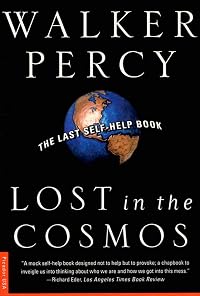
I've had this book on my to-be-read list for years. I really liked The Thanatos Syndrome, and Lost in the Cosmos: The Last Self-Help Book is one of my favorites. I didn't enjoy this book quite as much, though it was very well-written. In general, I'm not a big fan of books with no plot, and there wasn't a lot going on in terms of events with The Last Gentleman. Will Barrett is a Southern white man with a nervous condition: he often enters fugue states where he can't remember who or where he is. In the beginning of the novel, he's in Central Park with a telescope, sees a beautiful girl named Kitty Vaught, and falls in love with her. When he eventually approaches her, he meets not only Kitty but also her father, her ex-sister-in-law Rita, show more and her younger brother Jamie who's dying. Later on, he meets the other members of the family, Rita's ex-husband Sutter and Kitty's sister Val. Will travels with them from New York to the South (Virginia through Louisiana) and eventually to New Mexico in search of his true love, her family members, and the meaning of life. Percy does an excellent job of creating an atmosphere and a specific place - it's a Southern novel in every sense of the word. There's also a lot about race in it; it was published in 1966, so the perspective is quite different from the contemporary sensibility (though not, I think, offensive). In addition, there's a lot of metaphysical speculation, especially in the letters from Sutter to Val, which I quite enjoyed. I also really liked the ending. In sum, this book was hard for me to get through, but it definitely had its moments. There's also a sequel, The Second Coming, which I need to re-read now. show less
I like Percy because he's not preachy, and this is my favorite of his novels (I've read four of them). The characters transform themselves through interaction - would that this could always be something that happens in all our lives...Finally, it's also good plot-wise -- I love the way it unfolds. And who wouldn't want to encounter someone like Percy's last gentleman?
Written in 1966, Percy's second novel following the classic "The Moviegoer." Young, confused Southerner, adrift, suffering 60's-style existential angst, a blank slate whose "radar" lets him know what others want him to be. A vehicle for Percy's ideas on philosophy, theology, the South and more. I suffered existential angst trying to get through it.
Members
- Recently Added By
Published Reviews
ThingScore 100
Walker Percy had a theory about hurricanes. “Though science taught that good environments were better than bad environments, it appeared to him that the opposite was the case,” he wrote of Will Barrett, the semi-autobiographical title character of his second novel, “The Last Gentleman.” “Take hurricanes, for example, certainly a bad environment if ever there was one. It was his show more impression that not just he but other people felt better in hurricanes.” show less
added by elenchus
Lists

National Book Award Finalists - Fiction
377 works; 12 members

Anthony Burgess 99 Post War Novels
99 works; 7 members

Church Times 100 Best Christian Books
106 works; 26 members
Author Information

34+ Works 13,784 Members
Walker Percy, May 28, 1916 - May 10, 1990 Walker Percy, born in Alabama, raised in Mississippi, and a former resident of Louisiana, was a member of a prominent Southern family who lost his parents at an early age and grew up as the foster son of his father's cousin. Percy graduated from the University of North Carolina and received his M.D. from show more Columbia, but was a nonpracticing physician who devoted much of his life to his writing. Percy's first novel, The Moviegoer (1961), won the 1962 National Book Award, but Charles Poore considers The Last Gentleman (1966) "an even better book." Love in the Ruins (1971) marks a sharp change in method and subject from the first two novels. A doomsday story set "at the end of the Auto Age," it exposes many foibles and abuses in contemporary life through sharp satire and extravagant fantasy. Whereas Love in the Ruins is funny, Percy's next novel, Lancelot (1977) is the rather bleak and pessimistic story of a deranged man who blows up his home when he finds proof of his wife's infidelities and then tells his story in an asylum for the mentally disturbed. Its apocalyptic vision is expressed in a more positive and affirmative way in The Second Coming (1980), which takes its title from the fact that it resurrects the character of Will Barret from The Last Gentleman and locates him, a quarter-century older, finding love and meaning in a cave. (Bowker Author Biography) show less

Walker Percy has a Legacy Library. Legacy libraries are the personal libraries of famous readers, entered by LibraryThing members from the Legacy Libraries group.
Some Editions
Awards and Honors
Awards
Distinctions
Series

Work Relationships
Common Knowledge
- Original publication date
- 1966
- People/Characters
- Will Barrett
- Important places
- Cental Park, New York, New York, USA
- Epigraph
- If a man cannot forget, he will never amount to much.-- Soren Kierkegaard, Either/Or (1843)
...We know now that the modern world is coming to an end . . . at the same time, the unbeliever will emerge from the fogs of secularism. He will cease to reap benefit from the values and forces developed by the very Revelatio... (show all)n he denies . . . Loneliness in faith will be terrible. Love will disappear from the face of the public world, but the more precious will be that love which flows from one lonely person to another . . . the world to come will be filled with animosity and danger, but it will be a world open and clean.
--Romano Guardini, The End of the Modern World - Dedication
- For Bunt
- First words
- One fine day in early summer a young man lay thinking in Central Park.
- Quotations
- But if there is nothing wrong with me, he thought, then there is something wrong with the world. And if there's nothing wrong with the world, then I have wasted my life and that is the worst mistake of all.
- Last words
- (Click to show. Warning: May contain spoilers.)The Edsel waited for him.
Classifications
Statistics
- Members
- 998
- Popularity
- 26,217
- Reviews
- 10
- Rating
- (3.87)
- Languages
- English, French, German
- Media
- Paper, Audiobook, Ebook
- ISBNs
- 23
- UPCs
- 1
- ASINs
- 13