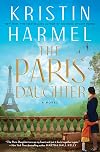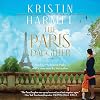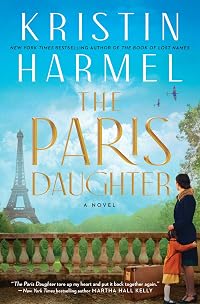
The Paris Daughter
by Kristin Harmel
On This Page
Description
Instant New York Times bestseller!From the bestselling author of the "heart-stopping tale of survival and heroism" (People) The Book of Lost Names comes a gripping historical novel about two mothers who must make unthinkable choices in the face of the Nazi occupation.
Paris, 1939: Young mothers Elise and Juliette become fast friends the day they meet in the beautiful Bois de Boulogne. Though there is a shadow of war creeping across Europe, neither woman suspects that their lives are about show more to irrevocably change.
When Elise becomes a target of the German occupation, she entrusts Juliette with the most precious thing in her life—her young daughter, playmate to Juliette's own little girl. But nowhere is safe in war, not even a quiet little bookshop like Juliette's Librairie des Rêves, and, when a bomb falls on their neighborhood, Juliette's world is destroyed along with it.
More than a year later, with the war finally ending, Elise returns to reunite with her daughter, only to find her friend's bookstore reduced to rubble—and Juliette nowhere to be found. What happened to her daughter in those last, terrible moments? Juliette has seemingly vanished without a trace, taking all the answers with her. Elise's desperate search leads her to New York—and to Juliette—one final, fateful time.
An "exquisite and gut-wrenching novel" (Lisa Barr, New York Times bestselling author) you won't soon forget, The Paris Daughter is also a sweeping celebration of resilience, motherhood, and love. show less
Tags
Recommendations



Member Reviews
Grief And Madness. One of the things I like about this particular book, and the way it parallels my own family's life, is in showing how events during WWII can have generational impacts via creating madness - the older term for insanity, yet which feels like it applies more appropriately here - in some of the survivors of that war. Here, we see it even in two people who were far from soldiers, far from the front lines. They were simply mothers who had daughters at nearly the same time in the same city who happened to become friends... and then had that friendship tested in pretty horrific ways. But the varying types of madness we see here do a great job in showing how the war impacted different people differently, even people as show more connected as these two mothers were. Without giving too much away, we even see the horrors of the Holocaust a bit - and there again, we see survivors trying to pick up the pieces of their shattered lives.
All told this was one of those books where the gut punches land heavy - but early. The "big reveal" is, in fact, rather obvious *much* earlier than the explicit reveal, and yet the way this is done works within the story being told of the varying madnesses and how these survivors are trying to cope in any way they can. So while I can't personally fault Harmel for this, I can see where other more stringent reviewers might. Even the near 400 page length works well here, never feeling bloated or too slow and instead simply packing in a *ton* of rich detail and events, many - even among the seemingly more insignificant in this tale - based on real world events and seemingly quite accurate. (The author's note in the end reveals how one particular incident within the last few pages of the book is actually the author inserting her characters into that particular moment, but otherwise being pretty close to an actual nonfiction report on the incident in question.)
Overall a truly well done, beautifully layered tale of two beautifully broken women and the impacts their choices have across decades. Very much recommended. show less
All told this was one of those books where the gut punches land heavy - but early. The "big reveal" is, in fact, rather obvious *much* earlier than the explicit reveal, and yet the way this is done works within the story being told of the varying madnesses and how these survivors are trying to cope in any way they can. So while I can't personally fault Harmel for this, I can see where other more stringent reviewers might. Even the near 400 page length works well here, never feeling bloated or too slow and instead simply packing in a *ton* of rich detail and events, many - even among the seemingly more insignificant in this tale - based on real world events and seemingly quite accurate. (The author's note in the end reveals how one particular incident within the last few pages of the book is actually the author inserting her characters into that particular moment, but otherwise being pretty close to an actual nonfiction report on the incident in question.)
Overall a truly well done, beautifully layered tale of two beautifully broken women and the impacts their choices have across decades. Very much recommended. show less
The Paris Daughter, Krisitin Harmel, author; Madeleine Maby, narrator
Once again, I have read a book about the Holocaust and discovered that there is no end to the brutality of war or to learning one more fact about it. The violence comes from enemies and friends, because when bombs are dropped, they destroy indiscriminately. This is a different kind of book about the Holocaust, however, because this book is more about the effect of war on the psyche, on the community, on life after the war, on ordinary citizens, not only Jews or gays or those Hitler deemed unfit, not only about those who were arrested and brutalized. It is about the impossible path forward for so many survivors. It is about how one lives during a time of such barbarism, show more helping the vulnerable and giving to others or taking shamefully, abusing and stealing from the vulnerable and targeted who are helpless.
In Paris, two expats from America become such good friends, they become substitutes for family. Their daughters, born close to each other, also grow very close, and by the time they are about three, they are almost clones of each other. When war breaks out in Europe, these two women face impossible choices, as does their close friend Ruth Levy. In times of war, in order to survive, and ensure the survival of others, great sacrifices are called for and made by many. Sometimes, those choices have unintended consequences. Loss, and the grief that comes with it, can cause devastating changes to one’s approach to life.
Elise LeClair and Juliette Foulon, have two different kinds of marriages. Juliette’s husband Paul is devoted to his wife and family, and then to their bookstore, La Librairie des Rêves, the bookshop of dreams. Elise’s husband, a renowned artist, is devoted to his art, his politics and underground work, and then to his family and wife. In short, he is, first and foremost, devoted to himself. His underground work is commendable, but to save those people involved, he compromises others, perhaps selfishly. No one really knows the motivation of desperate people during times of war. They are all forced to make impossible choices.
Ruth Levy was a friend of both expats. She, a Jewish woman who had escaped from Germany, was more and more threatened in Paris and forced to make the impossible decision of saving her children by relinquishing them to strangers. She knew that she might not survive the war, but desperately wanted to save her children. Elise and Juliette could not understand how a mother could willingly give up a child, but they promise to help. Soon, however, Elise was forced to make the same terrible decision, and Juliette agreed to take Mathilde and care for her, along with her other children. Lucy, Alphonse and Claude were her surviving children, having lost a daughter, Antoinette, when she was only days old. She, therefore, understood the profound loss of a child. Her daughter Lucy always played with Mathilde anyway, and the women had promised to make profound sacrifices for each other, if need be. Suddenly, it needed to be.
Errant bombs fall in war, devastation, destruction and death follow, often the innocent suffer unduly and unfairly. Juliette’s bookstore is bombed, and horror visited her family. She took the surviving child to New York. After the war, mothers return. Ruth Levy searches for her children and they search for her. Elise returns and searches for Mathilde. She discovers that the bookstore is gone, along with her child. During the war, the man who managed her husband Olivier’s paintings had promised to protect her apartment and her belongings. When she returned, her apartment was there, but her belongings were gone.
The novel explores not only the impossible choices mothers are forced to make, but also the choices heroes and heroines and those more unscrupulous consider and choose. It explores the devastating effects of the war on the path forward that is impossible for some. Some memories cannot be discarded or erased; some survivors cannot overcome their survivor’s guilt or their refusal to believe that everything they loved is gone. They remain mired in the mud of the past.
The author relies on parts of history that are real, like the bombing of the Renault factory and the resulting mistakes made by the allies as they tried to defeat Hitler, the mistakes made by pilots as they missed their targets, the tragic results in Brooklyn, New York, when a plane veered off course. The author has threaded the parts of this story together with historic moments, but sometimes, the novel required the suspension of disbelief as it descended into a bit of melodrama. show less
Once again, I have read a book about the Holocaust and discovered that there is no end to the brutality of war or to learning one more fact about it. The violence comes from enemies and friends, because when bombs are dropped, they destroy indiscriminately. This is a different kind of book about the Holocaust, however, because this book is more about the effect of war on the psyche, on the community, on life after the war, on ordinary citizens, not only Jews or gays or those Hitler deemed unfit, not only about those who were arrested and brutalized. It is about the impossible path forward for so many survivors. It is about how one lives during a time of such barbarism, show more helping the vulnerable and giving to others or taking shamefully, abusing and stealing from the vulnerable and targeted who are helpless.
In Paris, two expats from America become such good friends, they become substitutes for family. Their daughters, born close to each other, also grow very close, and by the time they are about three, they are almost clones of each other. When war breaks out in Europe, these two women face impossible choices, as does their close friend Ruth Levy. In times of war, in order to survive, and ensure the survival of others, great sacrifices are called for and made by many. Sometimes, those choices have unintended consequences. Loss, and the grief that comes with it, can cause devastating changes to one’s approach to life.
Elise LeClair and Juliette Foulon, have two different kinds of marriages. Juliette’s husband Paul is devoted to his wife and family, and then to their bookstore, La Librairie des Rêves, the bookshop of dreams. Elise’s husband, a renowned artist, is devoted to his art, his politics and underground work, and then to his family and wife. In short, he is, first and foremost, devoted to himself. His underground work is commendable, but to save those people involved, he compromises others, perhaps selfishly. No one really knows the motivation of desperate people during times of war. They are all forced to make impossible choices.
Ruth Levy was a friend of both expats. She, a Jewish woman who had escaped from Germany, was more and more threatened in Paris and forced to make the impossible decision of saving her children by relinquishing them to strangers. She knew that she might not survive the war, but desperately wanted to save her children. Elise and Juliette could not understand how a mother could willingly give up a child, but they promise to help. Soon, however, Elise was forced to make the same terrible decision, and Juliette agreed to take Mathilde and care for her, along with her other children. Lucy, Alphonse and Claude were her surviving children, having lost a daughter, Antoinette, when she was only days old. She, therefore, understood the profound loss of a child. Her daughter Lucy always played with Mathilde anyway, and the women had promised to make profound sacrifices for each other, if need be. Suddenly, it needed to be.
Errant bombs fall in war, devastation, destruction and death follow, often the innocent suffer unduly and unfairly. Juliette’s bookstore is bombed, and horror visited her family. She took the surviving child to New York. After the war, mothers return. Ruth Levy searches for her children and they search for her. Elise returns and searches for Mathilde. She discovers that the bookstore is gone, along with her child. During the war, the man who managed her husband Olivier’s paintings had promised to protect her apartment and her belongings. When she returned, her apartment was there, but her belongings were gone.
The novel explores not only the impossible choices mothers are forced to make, but also the choices heroes and heroines and those more unscrupulous consider and choose. It explores the devastating effects of the war on the path forward that is impossible for some. Some memories cannot be discarded or erased; some survivors cannot overcome their survivor’s guilt or their refusal to believe that everything they loved is gone. They remain mired in the mud of the past.
The author relies on parts of history that are real, like the bombing of the Renault factory and the resulting mistakes made by the allies as they tried to defeat Hitler, the mistakes made by pilots as they missed their targets, the tragic results in Brooklyn, New York, when a plane veered off course. The author has threaded the parts of this story together with historic moments, but sometimes, the novel required the suspension of disbelief as it descended into a bit of melodrama. show less
Do you believe in fate? In her newest novel, The Paris Daughter, Kristin Harmel says that fate has a way of bringing us back to just where we’re supposed to be, that fate will guide you home and sometimes the roads we don’t know we are walking are the ones that lead us to exactly where we’re meant to be. So I guess she certainly believes in fate. In her novel she sets about to prove her point. Two young women, Elise and Juliette, both pregnant meet in a Paris park. Elise has some false labor. Juliette helps her and they become best friends. Elise is an artist, specializing in wood carving, and Juliette owns a book store with her husband, Paul. Both are originally Americans and both are married to Frenchmen. Both deliver girls who show more also become best friends.
But it is the eve of World War II, and their friendship is put to the test. Elise’s life is threatened because her artist husband belongs to a Communist group and he is captured and murdered. She cannot take her daughter, Mathilde with her when she must run. Juliette and Paul agree to care for Mathilde along with their daughter Lucie and two older sons. Tragedy strikes in the midst of war. Will Elise make her way back to her daughter? Soon the book fast forwards to 17 years later and Juliette is living in New York City with her daughter. And as fate will have it a common friend Ruth finds her. Ruth has a strong relationship with Elise and “fatefully” brings them back together.
This is a story of motherhood, of grief, of love and loss, of trauma and heartbreak.
Of course there is a twist. You will see it coming. I did, long before it was revealed. The book jacket alludes to it, at least in the early reviewer copy I read. So if you follow the breadcrumbs you too will guess the twist, but you will still want to know how it was revealed.
I have read two other historical fiction books by Kristin Harmel, and this is my favorite. It is a good story with a well developed plot and interesting characters. The writing is excellent. Too many coincidences, maybe. But it kept me reading right up until I teared up at the end at the sad, yet satisfying ending. show less
But it is the eve of World War II, and their friendship is put to the test. Elise’s life is threatened because her artist husband belongs to a Communist group and he is captured and murdered. She cannot take her daughter, Mathilde with her when she must run. Juliette and Paul agree to care for Mathilde along with their daughter Lucie and two older sons. Tragedy strikes in the midst of war. Will Elise make her way back to her daughter? Soon the book fast forwards to 17 years later and Juliette is living in New York City with her daughter. And as fate will have it a common friend Ruth finds her. Ruth has a strong relationship with Elise and “fatefully” brings them back together.
This is a story of motherhood, of grief, of love and loss, of trauma and heartbreak.
Of course there is a twist. You will see it coming. I did, long before it was revealed. The book jacket alludes to it, at least in the early reviewer copy I read. So if you follow the breadcrumbs you too will guess the twist, but you will still want to know how it was revealed.
I have read two other historical fiction books by Kristin Harmel, and this is my favorite. It is a good story with a well developed plot and interesting characters. The writing is excellent. Too many coincidences, maybe. But it kept me reading right up until I teared up at the end at the sad, yet satisfying ending. show less
"Sometimes the roads we don’t know we’re walking are the ones that lead us to exactly where we are meant to be.” The book overseers at Libby could attest to my ambivalence about reading Kristin Harmel’s latest work. After joining the digital waiting list for this acclaimed work of historical fiction, I clicked “deliver later” at least three times in the span of a couple months. War sagas are generally “not my thing.” When I finally delved into this heart-wrenching tale of Nazi-occupied Paris during World War II and its harrowing aftermath, I was richly rewarded. The twist-filled storyline and intriguing characters kept things moving from beginning to end. The “Authors Notes” shares the efforts Harmel made to weave in show more enlightening historical nuggets. She writes that she has always been fascinated with the prospect of “turning real history into fiction.” True, it’s not a perfect novel. The melodramatic finale (no spoilers here) is a bit much, and I agree with some reviewers who note that the plot’s coincidences require readers to suspend disbelief. Having said that, “The Paris Daughter” is one of the 10 best books I’ve read over the past year. This was the first was my first book by Harmel. It won’t be my last. show less
Kristin Harmel’s latest book weaves a poignant and captivating tale set against the backdrop of Nazi-occupied Paris during World War II. The story revolves around two mothers, Elise and Juliette, who become fast friends in the tumultuous times leading up to the war. As the shadows of conflict creep across Europe, both women are faced with unthinkable choices that will shape their lives and the lives of their children.
Harmel skillfully brings the characters to life, painting a vivid picture of their friendship, the challenges they face, and the sacrifices they make. Elise and Juliette's bond is tested by the harsh realities of war, and their individual journeys are filled with heartbreak, resilience, and courage.
The author's show more storytelling captures the essence of the struggles faced by families torn apart by the war. The exploration of themes like friendship, motherhood, and the impact of war on ordinary lives adds depth to the story. Harmel's prose transported me to the streets of Paris and immersed me in the lives of the characters.
"The Paris Daughter" is a compelling historical fiction novel that not only provides a glimpse into the harsh realities of war but also celebrates the enduring strength of friendship and the strong spirit of mothers. Harmel's ability to blend history with human emotion creates a moving and memorable reading experience. Highly recommended for those who appreciate well-crafted historical fiction with a focus on human connections.
(However, I was left wondering why Jack looked familiar to Elise.) show less
Harmel skillfully brings the characters to life, painting a vivid picture of their friendship, the challenges they face, and the sacrifices they make. Elise and Juliette's bond is tested by the harsh realities of war, and their individual journeys are filled with heartbreak, resilience, and courage.
The author's show more storytelling captures the essence of the struggles faced by families torn apart by the war. The exploration of themes like friendship, motherhood, and the impact of war on ordinary lives adds depth to the story. Harmel's prose transported me to the streets of Paris and immersed me in the lives of the characters.
"The Paris Daughter" is a compelling historical fiction novel that not only provides a glimpse into the harsh realities of war but also celebrates the enduring strength of friendship and the strong spirit of mothers. Harmel's ability to blend history with human emotion creates a moving and memorable reading experience. Highly recommended for those who appreciate well-crafted historical fiction with a focus on human connections.
(However, I was left wondering why Jack looked familiar to Elise.) show less
It is impossible to review this book without feeling like I am gushing. This is such a remarkable book I don't want to sound immature when talking about it.
Kristin Harmel takes the reader through many emotions ranging from heartwrenching to the creativeness of an artist, from having to make impossible decisions to living with the consequences of those decisions, and from depression to sheer joy.
This story is a tear-jerker but you have to believe everything will turn out so you keep reading through the tears 'til the end comes and you breathe a sigh of relief.
This is a story of the ravages of war, of parents making unfathomable decisions to give their children up to strangers to ensure the child's safety. Kristin's prose makes you show more feel what these parents and children went through leaving it up to God to get them back together. The pain and the hope blend effectively to let the reader experience the moments they went through. show less
Kristin Harmel takes the reader through many emotions ranging from heartwrenching to the creativeness of an artist, from having to make impossible decisions to living with the consequences of those decisions, and from depression to sheer joy.
This story is a tear-jerker but you have to believe everything will turn out so you keep reading through the tears 'til the end comes and you breathe a sigh of relief.
This is a story of the ravages of war, of parents making unfathomable decisions to give their children up to strangers to ensure the child's safety. Kristin's prose makes you show more feel what these parents and children went through leaving it up to God to get them back together. The pain and the hope blend effectively to let the reader experience the moments they went through. show less
I really enjoyed this book!!! I was almost to the end and was all choked up but didn’t want it to end…a good sign that it’s a good book! Prior to this one, The Book of Lost Names was my favorite by her, but I think it’s now a tie for first. She puts an amazing amount of research into her books, but also manages to make them read from and to the heart.
(Just tonight I had to talk to my little man about how different people grieve in different ways and in different time frames from one another. I wanted to reference this book because it did a nice job showing a few sides of the coin of this experience.)
Read and enjoy my historical fiction friends!!
(Just tonight I had to talk to my little man about how different people grieve in different ways and in different time frames from one another. I wanted to reference this book because it did a nice job showing a few sides of the coin of this experience.)
Read and enjoy my historical fiction friends!!
Members
- Recently Added By
Lists

Best Historical Fiction
620 works; 262 members

Books Set in France
13 works; 5 members

Books I have Recommended
208 works; 1 member

Holocaust
100 works; 11 members

Top Five Books of 2023
767 works; 317 members

Books Read in 2024
4,727 works; 125 members

Best Mysteries With a Historical Setting
292 works; 160 members

Top Five Books of 2024
795 works; 264 members
Author Information

25+ Works 8,892 Members
Awards and Honors
Awards
Work Relationships
Is contained in
Common Knowledge
- Canonical title
- The Paris Daughter
- Original title
- The Paris Daughter
- Original publication date
- 2023
- People/Characters
- Elise LeClair; Olivier LeClair; Lucie LeClair; Juliette Foulon; Paul Foulon; Claude Foulon (show all 18); Alphonse Foulon; Antoinette Foulon; Mathilde Foulon; Ruth Levy; Suzanne Levy; Georges Levy; Père Clément; Madame Roche; Roland Vasseur; Arthur Lawrence Wolcott; Tommaso Barbieri aka Tommy Barber; Jack Fitzgerald
- Important places
- Paris, France; La Librairie des Rêves, Boulogne-Billancourt; Aurignon, France; New York, New York, USA; Park Slope, Brooklyn, New York, USA
- Important events
- World War II
- Epigraph
- Motherhood: All love begins and ends there.
—-ROBERT BROWNING
Good night, then. Sleep to gather strength for the morning.
For the morning will come.
—-WINSTON CHURCHILL,
TO THE PEOPLE OF FRANCE,
OCTOBER 1940
Do not be afraid; our fate cannot be taken from us;
it is a gift.
—-DANTE ALIGHIERI, INFERNO - Dedication
- To my mom, Carol, and my son, Noah, from whom I learned the exquisite and endless joy of the bond between a mother and her child—the most complex, and at the same time, somehow the simplest love in the world.
- First words
- The summer was lingering, but the air was crisp at the edges that morning, autumn already tapping at the door, as Elise LeClair hurried toward the western edge of Paris.
- Quotations
- Under these stars, fate will guide you home.
Fate has a way of bringing us back to just where we're supposed to be, though, doesn't it?
“I think that love is always difficult, because it requires us to lose a bit of ourselves to gain so much more… But I believe that whatever we give up is worth it in the end, if we give those pieces to someone who loves u... (show all)s back just as fiercely.”
“And the grief, it felt like a flock of birds, so many of them, taking flight with nowhere to go.”
“I think,” he said slowly, “that sometimes, the roads we don't know we're walking are the ones that lead us to exactly where we're meant to be.” - Last words
- (Click to show. Warning: May contain spoilers.)And so, her heart overflowing with joy, Juliette Foulon reached out and, holding tightly to the tiny hand of her little girl, followed her into the light.
- Blurbers
- Scottoline, Lisa; Phillips, Susan Elizabeth; Barr, Lisa; Johnson, Sadeqa; Nguyen, Phan Que Mai; Quinn, Kate (show all 8); Charles, Janet Skeslien; Rosner, Jennifer
Classifications
Statistics
- Members
- 658
- Popularity
- 44,067
- Reviews
- 33
- Rating
- (4.24)
- Languages
- Dutch, English, Greek, Swedish
- Media
- Paper, Audiobook, Ebook
- ISBNs
- 14
- ASINs
- 3