Strange Interlude
by Eugene O'Neill
On This Page
Description
The groundbreaking, Pulitzer Prize-winning drama following the private life of a professor's daughter, by the playwright famed for The Iceman Cometh. Nina Leeds, the daughter of a classics professor at a New England college, has had her dreams shattered by the Great War, in which her fiance? perished. In her grief, she sets out on an aimless path of sordid affairs while rejecting a devoted admirer. When she finally does marry, it is to a pleasant, trusting fellow named Sam. But when she show more hears deeply upsetting news while carrying his baby, her shock leads her on a deceptive path that will cast a shadow over their relationship, and the rest of Nina's life. Debuting on Broadway in 1928 with Lynn Fontanne in the starring role, Strange Interlude earned Nobel laureate Eugene O'Neill one of his four Pulitzer Prizes, and remains one of his most daring and interesting works. show lessTags
Recommendations


















Member Reviews
O'Neill uses an odd device where the actor reveals his inner thoughts in addition to speaking. I'd be interested in seeing it performed just to see how this was accomplished on stage. However, I can't imagine a 9 act play being presented very often. All the main characters are over-wrought and selfish. Not one of O'neill's better works.
Looking at these two works now, one is so struck by the similarities, it is remarkable to consider their differing fates at the time of their appearance. As it happens I finished reading The Awakening the same day as I went to see Strange Interlude, so the points of comparison stood out. Both are American, experimental in form, controversial in content.
Both feature female characters who are constrained by the society in which they live - or perceive themselves as being thus constrained. Edna and Nina are adored by a variety of men and exploit that as suits them. They are both unusual characters who question the social conventions around them.
Edna, in The Awakening, is never a 'good' mother or wife, increasingly dissatisfied with the show more expectations of society, she begins to take steps to live her own life. She more or less abandons her children, she moves out of her house once she has developed a capacity to earn money via her art, she takes lovers - all this whilst her husband attempts to keep up appearances, hoping as a doctor has advised him, that Edna's behaviour is an aberration that will correct itself.
Nina, having lost her juvenile love in WWI, becomes a nurse of wounded soldiers and starts sleeping with them - maybe that will make them feel better. That nothing is going to assuage the guilt she carries for the death of her beloved, is the rationale for all her actions. She then marries a well meaning dullard she doesn't love, so that he can provide the children she needs in her life as a sensible substitute to look after - doubtless even she can see that sex with every injured US soldier isn't going to be possible. Deliberately marrying other than for love, she then finds out that her husband's family has hereditary madness, this after falling pregnant. Her husband is in blissful ignorance of both these things and she continues with scheming to keep it that way. Abortion is no problem, and then taking a secret lover in order to provide a baby with better odds of being born sane. Science in this period raises such moral issues as eugenics.
Chopin writes in the 1890s, O'Neill in the 1920s, so some thirty years later, but nonetheless, both are writing of scandalous, controversial topics. Both writers were known. Yet Chopin's novel was generally critically reviled and forgotten until it received a feminist stimulus in the second half of the twentieth century. Interestingly, from that special interest beginning - 'it is good because....' - it has become considerably elevated to more like - 'it is good' fullstop. O'Neill's play was as long as Chopin's novel was to the point, six hours or so, it was very difficult technically due to his experimention with asides to the audience, a substantial aspect of the play. Undoubtedly he was better known to his audiences, having already won two Pulitzers. Still, although it too received censorial treatment here and there, including banning, it was nonetheless a huge hit.
It is impossible not to wonder about the different immediate fates of these works. Yes, O'Neill was more famous than Chopin, but this does not strike me as sufficient explanation by any means. Male fares better than female? Maybe, but the US by then had lots of hugely popular female writers. Perhaps it is relevant that the 1920s in the US was in general a freer period than before and after.
I wonder, however, if the ways in which these stories end has something to do with it. Nina is a morally ambiguous character. She claims always to be acting to further the happiness of others (at the expense of the happiness of others, we might observe), but even if this claim were true, it means she is doing so through methods that we can scarcely feel happy about. Lying to her husband, a secret abortion, a lover who she keeps even after she no longer needs him for his original purpose. And one can also question if it is true that she is acting in a noble way to further the happiness of others. She is a person who wishes to suffer, this is established right at the start of the play. She never wavers from that, maybe even keeping her lover is to exacerbate her pain. Even after her husband dies and her son, guessing the situation, gives his approval of her marrying her lover, she does no such thing, but instead marries the man who has been her substitute father and a figure to be gently mocked and used over the decades. No straightforward bliss for Nina.
Edna has a husband who is willing to put up with her bad behaviour to an extent we can admire from a distance. She has two lovers, one of which is also a love. Having established her independence, now living on her own, earning enough to support both her and the woman she has to do the 'work', having foisted her children on her own mother, and two lovers at the begging, she suddenly decides to kill herself. Frankly, if I could get Nina and Edna close enough, I'd knock their heads together, hope that brought them to their senses. The ending of The Awakening has no good explanation. I understand, from reading around, that it is due to an inability to otherwise be free of constraint. But there is no such thing as freedom from constraint and Chopin certainly doesn't think there is. How do we avoid the conclusion that this is not a strong woman, but a weak one, maybe even a mentally ill one? It is simply not sufficient to say she was the victim of her society. The author herself lived in an almost entirely female society as far as immediate family went and was not exactly conventional in her own dealings with men. Appreciating the reasons why The Awakening is so highly regarded, it has shortcomings that leave me in doubt overall about it. One must also have doubts about a writer who withdrew the moment her work was criticised. It was not only criticised for content, but also for style and I am sure if Chopin had listened to some of that criticism and acted upon it, she might have ended up an important writer beyond the current justifications for her canonisation. What we can conclude is that Chopin was no driven writer, if she so easily withdrew from it.
Of course, Strange Interlude is nothing if not six hours of shortcomings. The National Theatre's current production of it is cut down to a mere three and a half hours or so and one can only suppose that it has been pruned with an agenda. There is an imbalance between tragedy and comedy which I doubt exists in the original, the one that was so hugely popular when it first appeared. If The Awakening was reviled, Strange Interlude was both pilloried and parodied. Most famously in Animal Crackers, you can see the relevant segment here. And there is Spencer Tracy with Joan Bennett in My and My Gal here.
Continue here:
http://alittleteaalittlechat.wordpress.com/2013/08/16/the-awakening-by-kate-chop... show less
Both feature female characters who are constrained by the society in which they live - or perceive themselves as being thus constrained. Edna and Nina are adored by a variety of men and exploit that as suits them. They are both unusual characters who question the social conventions around them.
Edna, in The Awakening, is never a 'good' mother or wife, increasingly dissatisfied with the show more expectations of society, she begins to take steps to live her own life. She more or less abandons her children, she moves out of her house once she has developed a capacity to earn money via her art, she takes lovers - all this whilst her husband attempts to keep up appearances, hoping as a doctor has advised him, that Edna's behaviour is an aberration that will correct itself.
Nina, having lost her juvenile love in WWI, becomes a nurse of wounded soldiers and starts sleeping with them - maybe that will make them feel better. That nothing is going to assuage the guilt she carries for the death of her beloved, is the rationale for all her actions. She then marries a well meaning dullard she doesn't love, so that he can provide the children she needs in her life as a sensible substitute to look after - doubtless even she can see that sex with every injured US soldier isn't going to be possible. Deliberately marrying other than for love, she then finds out that her husband's family has hereditary madness, this after falling pregnant. Her husband is in blissful ignorance of both these things and she continues with scheming to keep it that way. Abortion is no problem, and then taking a secret lover in order to provide a baby with better odds of being born sane. Science in this period raises such moral issues as eugenics.
Chopin writes in the 1890s, O'Neill in the 1920s, so some thirty years later, but nonetheless, both are writing of scandalous, controversial topics. Both writers were known. Yet Chopin's novel was generally critically reviled and forgotten until it received a feminist stimulus in the second half of the twentieth century. Interestingly, from that special interest beginning - 'it is good because....' - it has become considerably elevated to more like - 'it is good' fullstop. O'Neill's play was as long as Chopin's novel was to the point, six hours or so, it was very difficult technically due to his experimention with asides to the audience, a substantial aspect of the play. Undoubtedly he was better known to his audiences, having already won two Pulitzers. Still, although it too received censorial treatment here and there, including banning, it was nonetheless a huge hit.
It is impossible not to wonder about the different immediate fates of these works. Yes, O'Neill was more famous than Chopin, but this does not strike me as sufficient explanation by any means. Male fares better than female? Maybe, but the US by then had lots of hugely popular female writers. Perhaps it is relevant that the 1920s in the US was in general a freer period than before and after.
I wonder, however, if the ways in which these stories end has something to do with it. Nina is a morally ambiguous character. She claims always to be acting to further the happiness of others (at the expense of the happiness of others, we might observe), but even if this claim were true, it means she is doing so through methods that we can scarcely feel happy about. Lying to her husband, a secret abortion, a lover who she keeps even after she no longer needs him for his original purpose. And one can also question if it is true that she is acting in a noble way to further the happiness of others. She is a person who wishes to suffer, this is established right at the start of the play. She never wavers from that, maybe even keeping her lover is to exacerbate her pain. Even after her husband dies and her son, guessing the situation, gives his approval of her marrying her lover, she does no such thing, but instead marries the man who has been her substitute father and a figure to be gently mocked and used over the decades. No straightforward bliss for Nina.
Edna has a husband who is willing to put up with her bad behaviour to an extent we can admire from a distance. She has two lovers, one of which is also a love. Having established her independence, now living on her own, earning enough to support both her and the woman she has to do the 'work', having foisted her children on her own mother, and two lovers at the begging, she suddenly decides to kill herself. Frankly, if I could get Nina and Edna close enough, I'd knock their heads together, hope that brought them to their senses. The ending of The Awakening has no good explanation. I understand, from reading around, that it is due to an inability to otherwise be free of constraint. But there is no such thing as freedom from constraint and Chopin certainly doesn't think there is. How do we avoid the conclusion that this is not a strong woman, but a weak one, maybe even a mentally ill one? It is simply not sufficient to say she was the victim of her society. The author herself lived in an almost entirely female society as far as immediate family went and was not exactly conventional in her own dealings with men. Appreciating the reasons why The Awakening is so highly regarded, it has shortcomings that leave me in doubt overall about it. One must also have doubts about a writer who withdrew the moment her work was criticised. It was not only criticised for content, but also for style and I am sure if Chopin had listened to some of that criticism and acted upon it, she might have ended up an important writer beyond the current justifications for her canonisation. What we can conclude is that Chopin was no driven writer, if she so easily withdrew from it.
Of course, Strange Interlude is nothing if not six hours of shortcomings. The National Theatre's current production of it is cut down to a mere three and a half hours or so and one can only suppose that it has been pruned with an agenda. There is an imbalance between tragedy and comedy which I doubt exists in the original, the one that was so hugely popular when it first appeared. If The Awakening was reviled, Strange Interlude was both pilloried and parodied. Most famously in Animal Crackers, you can see the relevant segment here. And there is Spencer Tracy with Joan Bennett in My and My Gal here.
Continue here:
http://alittleteaalittlechat.wordpress.com/2013/08/16/the-awakening-by-kate-chop... show less
356. Strange Interlude A Play, by Eugene O'Neill (read 24 Apr 1949) (Pulitzer Drama prize for 1928) I finished reading this on April 24, 1949, and said: "Shakespeare certainly leaves more to his actors, O'Neil has the whole thing interpreted for his actors, they simply have to follow instructions. Reading some parts it seemed to me they'd sure seem awkward on the stage. The frankness I found amusing. It is the story of a girl whose lover dies in the war, She marries a guy with insanity in his family and so won't bear his baby but has another impregnate her. The rest is the story of the mixup and its consequences.
high-brow soap opera
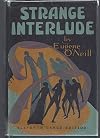
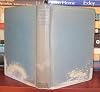
$12.50, First Edition play by eugene o'neill, famous playwright. Very Good condition.
Questo dramma è "un pasticcio d'amore e di odio e di dolore e di maternità", come fa dire l'autore alla sua protagonista, quella Nina che è il deus ex machina della vicenda. E' una donna fatale intrappolata nella sua stessa morbosità e smania di possesso; non un personaggio positivo, ma una straordinaria creazione letteraria. Le sue controparti maschili sono tre, dalle personalità opposte ma accomunati da una passione totalizzante per Nina: carnale quella di Ned, sentimentale e convenzionale quella di Sam, platonica e quasi paterna quella di Charles. Sono i tre lati dell'amore, a cui Nina non vuole rinunciare e che farà di tutto per conservarsi sino alla fine, rovinando di fatto la loro vita e per riflesso anche la sua. [SPOILER] show more Solo quando suo figlio, prodotto e simulacro di questi tre amori, la lascerà sola pronto a farsi una vita lontano dal suo controllo Nina si sentirà finalmente in pace, svuotata ma libera di tornare ad un'esistenza semplice e quasi infantile. [FINE SPOILER]
E' un dramma che riesce ad essere allo stesso tempo figlio dei suoi tempi e molto attuale: la tecnica del flusso di coscienza è tipica del modernismo e le influenze delle teorie Freudiane (che avevano vasta eco in quel periodo) sono evidenti, tra complessi edipici e frustrazioni sessuali; eppure la sensibilità con cui sono tratteggiati i personaggi è vicina alla nostra, sfidano le convenzioni del tempo per diventare universali.
Il dualismo tra i pensieri intimi (esplicitati tramite lunghi monologhi interiori) e i dialoghi veri e propri, per quanto straniante permette un'immersività quasi totale, perchè consente di scandagliare la psiche dei protagonisti, imparando a conoscerne mente e anima.
Un' opera profonda e articolata (ben nove atti che si snodano su più di vent'anni), che ho letto e riletto scoprendone ogni volta qualche lato nuovo: la consiglio a tutti gli amanti del buon teatro. show less
E' un dramma che riesce ad essere allo stesso tempo figlio dei suoi tempi e molto attuale: la tecnica del flusso di coscienza è tipica del modernismo e le influenze delle teorie Freudiane (che avevano vasta eco in quel periodo) sono evidenti, tra complessi edipici e frustrazioni sessuali; eppure la sensibilità con cui sono tratteggiati i personaggi è vicina alla nostra, sfidano le convenzioni del tempo per diventare universali.
Il dualismo tra i pensieri intimi (esplicitati tramite lunghi monologhi interiori) e i dialoghi veri e propri, per quanto straniante permette un'immersività quasi totale, perchè consente di scandagliare la psiche dei protagonisti, imparando a conoscerne mente e anima.
Un' opera profonda e articolata (ben nove atti che si snodano su più di vent'anni), che ho letto e riletto scoprendone ogni volta qualche lato nuovo: la consiglio a tutti gli amanti del buon teatro. show less
May 10, 2020 (Edited)Italian
Members
- Recently Added By
Lists

Trinity College Booklist (1951): Class Ten, English Literature
358 works; 5 members

Best Books of 1926-1935
403 works; 10 members

EGBERTINA'S List of childhood books worthy of merit or unspeakable delight
155 works; 6 members

Essential/Recognized Stage Plays
115 works; 4 members

Publisher's Weekly NON-Fiction list - 1912 - 1975
486 works; 4 members

Recommended Reading : 600 Classics Reviewed, Editors of Salem Press, 2015
634 works; 6 members
My Play Collection
769 works; 3 members
Author Information

283+ Works 13,252 Members
Eugene O'Neill was born in New York City on October 16, 1888, the son of popular actors James O'Neill and Ellen Quinlan. As a young child, he frequently went on tour with his father and later attended a Catholic boarding school and a private preparatory school. He entered Princeton University but stayed for only a year. He took a variety of jobs, show more including prospecting for gold, shipping out as a merchant sailor, joining his father on the stage, and writing for newspapers. In 1912, he was hospitalized for tuberculosis and emotional exhaustion. While recovering, he read a great deal of dramatic literature and, after his release from the sanitarium, began writing plays. O'Neill got his theatrical start with a group known as the Provincetown Players, a company of actors, writers, and other theatrical newcomers, many of whom went on to achieve commercial and critical success. His first plays were one-act works for this group, works that combined realism with experimental forms. O'Neill's first commercial successes, Beyond the Horizon (1920) and Anna Christie (1921) were traditional realistic plays. Anna Christie is still frequently performed. It is the story of a young woman, Anna, whose hard life has led her to become a prostitute. Anna comes to live with her long-lost father, who is unaware of her past, and she falls in love with a sailor, who is also unaware. When Anna finds the two men fighting over her as though she were property, she is so angry and disgusted that she insists on telling them the truth. The man she loves rejects her at first, but then later returns to marry her. Soon O'Neill began to experiment more, and over the next 12 years used a wide variety of unusual techniques, settings, and dramatic devices. It is no exaggeration to say that, virtually on his own, O'Neill created a tradition of serious American theater. His influence on the playwrights who followed him has been enormous, and much of what is taken today for granted in modern American theater originated with O'Neill. A major legacy has been the nine plays he wrote between 1924 and 1931, tragedies that made heavy use of the new Freudian psychology just coming into fashion. His one comedy, Ah, Wilderness (1933), was the basis for the musical comedy, Oklahoma!, itself a groundbreaking event in American theater. O'Neill later began to write the intense, brooding, and highly autobiographical plays that are now considered to his best work. The Iceman Cometh (1946) is set in a bar in Manhattan's Bowery, or skid-row district. In the course of the play, a group of apparently happy men are forced to recognize the true emptiness of their lives. In A Long Day's Journey into Night (1956), O'Neill examines his own family and their tormented lives, a subject he continues in A Moon for the Misbegotten (1957). O'Neill's work was highly honored. He was awarded the Nobel Prize for literature in 1936 and Pulitzer Prizes for Anna Christie, Beyond the Horizon, Strange Interlude (1928), and A Long Day's Journey Into Night, which also received the New York Drama Critics Circle Award. O'Neill died in Room 401 of the Sheraton Hotel on Bay State Road in Boston, on November 27, 1953, at the age of 65. He was also born in a hotel room in Times Square, NYC. (Bowker Author Biography) show less
Some Editions
Awards and Honors
Awards
Distinctions
Notable Lists
Series
Belongs to Publisher Series
Work Relationships
Is contained in
Has as a student's study guide
Common Knowledge
- Canonical title*
- Strano interludio
- Original title
- Strange Interlude
- Original publication date
- 1928
- People/Characters*
- Nina Leeds; Charles Marsden; Ned Darrell; Sam Evans; Signora Evans; Professor Henry Leeds (show all 8); Gordon Evans; Madeline Arnold
- Important places*
- New York, USA; USA
- Related movies
- Strange Interlude (1932 | IMDb); American Playhouse: Strange Interlude (1988 | IMDb)
- First words*
- Lo studio in casa del professor Leeds, in una piccola città universitaria della Nuova Inghilterra.
- Last words*
- (Click to show. Warning: May contain spoilers.)Egli osserva con occhio appagato le ombre della sera che si vanno addensando intorno a loro.
- Original language*
- Inglese
*Some information comes from Common Knowledge in other languages. Click "Edit" for more information.
Classifications
Statistics
- Members
- 190
- Popularity
- 172,419
- Reviews
- 7
- Rating
- (3.75)
- Languages
- 5 — Catalan, English, French, Italian, Swedish
- Media
- Paper, Ebook
- ISBNs
- 8
- ASINs
- 20